Homeowners seeking affordable foundation repair in Mobile, AL, face a unique set of challenges driven by the area's coastal climate, high water table, and expansive clay soils. Protecting a home’s structural integrity requires recognizing early warning signs of failure, understanding local soil dynamics, obtaining professional inspections, and navigating repair methods that balance long-term durability with budget constraints.
Understanding the Soil and Climate Challenges in Mobile, Alabama
The foundation of any structure rests entirely on the earth beneath it, making local geological and meteorological conditions the primary factors in foundation health. Mobile, AL, experiences a humid subtropical climate characterized by heavy annual rainfall, frequent tropical weather systems, and intense summer heat. These environmental conditions create a volatile cycle of soil expansion and contraction that directly impacts residential and commercial foundations.
The Mechanics of Expansive Clay and Coastal Soils
Much of the soil composition throughout Mobile County includes expansive clays or coastal sedimentary deposits. Expansive clay soils have a high volumetric change capacity; they swell dramatically when saturated with water during heavy rainstorms and shrink significantly during prolonged dry spells.
- Soil Saturation: During heavy downpours, water infiltrates the soil around the foundation, causing the earth to expand. This expansion exerts lateral pressure against basement walls or vertical pressure underneath concrete slab foundations.
- Soil Desiccation: During hot summer months, moisture evaporates rapidly from the soil. The clay shrinks, leaving voids beneath the foundation and causing sections of the concrete to drop or settle unsupported.
- Differential Settlement: When one part of a foundation sinks while another remains stable due to varying moisture levels or load distributions, differential settlement occurs. This uneven movement is the root cause of sticking doors, drywall cracks, and structural framing distortions.
The Impact of High Water Tables and Drainage
Mobile’s proximity to the Gulf of Mexico and Mobile Bay results in a high water table and frequent subterranean moisture movement. Poor surface drainage compounds these issues. When gutters, downspouts, and yard slopes fail to direct rainwater away from the foundation perimeter, water pools directly against the footings. Over time, hydrostatic pressure builds up, forcing moisture through concrete pores, eroding supporting earth, and accelerating foundation degradation.
Recognizing the Early Warning Signs of Foundation Failure
Catching foundation problems early is the single most effective way to keep repair costs manageable. Minor hairline cracks or slight settlement shifts can often be remediated efficiently before they cascade into catastrophic structural failures requiring extensive engineering interventions. Property owners should perform routine visual inspections of both the interior and exterior of their homes.
Exterior Structural Indicators
Exterior signs are often visible along brick facades, mortar joints, and siding materials. Because brick and mortar are rigid, they crack easily when subjected to uneven foundational movement.
- Stair-Step Cracking: Cracks that follow the mortar lines of brick veneer in a stair-step pattern usually indicate that a corner or side of the foundation is settling.
- Separation Around Openings: Gaps forming between brick walls and window frames or door casings indicate shifting structural loads.
- Leaning Chimneys: A chimney is heavy and often built on a separate footing. If the soil beneath it shifts independently from the main house, the chimney will tilt away from the structure.
- Displaced Siding or Fascia: Warped or separated siding boards can reveal underlying framing shifts caused by a sinking foundation.
Interior Indicators and Cosmetic Symptoms
Interior symptoms often masquerade as normal settling or cosmetic flaws, but recurring or severe manifestations point directly to foundation distress.
- Sticking Doors and Windows: If interior doors fail to latch properly or windows become difficult to open and close, the door and window frames may have distorted due to a sagging subfloor or shifting walls.
- Drywall and Plaster Cracks: Diagonal cracks radiating from the corners of doors and windows, or horizontal cracks near the ceiling line, are classic signs of wall movement.
- Sloping or Uneven Floors: Walking across a room and noticing a distinct slope, or seeing gaps between the baseboard and the flooring, indicates that the underlying joists or slab have dropped.
- Gaps in Crown Molding: Separation where crown molding meets the ceiling or corners separates highlights shifting wall plates.
Common Foundation Repair Methods and Costs in Mobile, AL
When structural issues are confirmed, selecting the right repair method depends on whether the home sits on a concrete slab, a crawl space, or a basement. Repair costs vary based on the severity of the damage, the depth required to reach stable load-bearing strata, and the linear footage needing stabilization.
| Repair Method | Primary Application | Description | Estimated Cost Range (Mobile, AL) |
|---|---|---|---|
| Steel Push Piers | Slabs & Crawl Spaces | Driven deep into load-bearing strata to lift and stabilize settling foundations. | $1,500 – $3,000 per pier |
| Helical Piers | Lighter Structures / Porches | Screwed into the soil to support settling foundations and correct alignment. | $2,000 – $4,500 per pier |
| Slab Jacking (Mudjacking) | Concrete Slabs | Pumping a stabilizing slurry beneath a sunken slab to raise it level. | $600 – $2,500 total project |
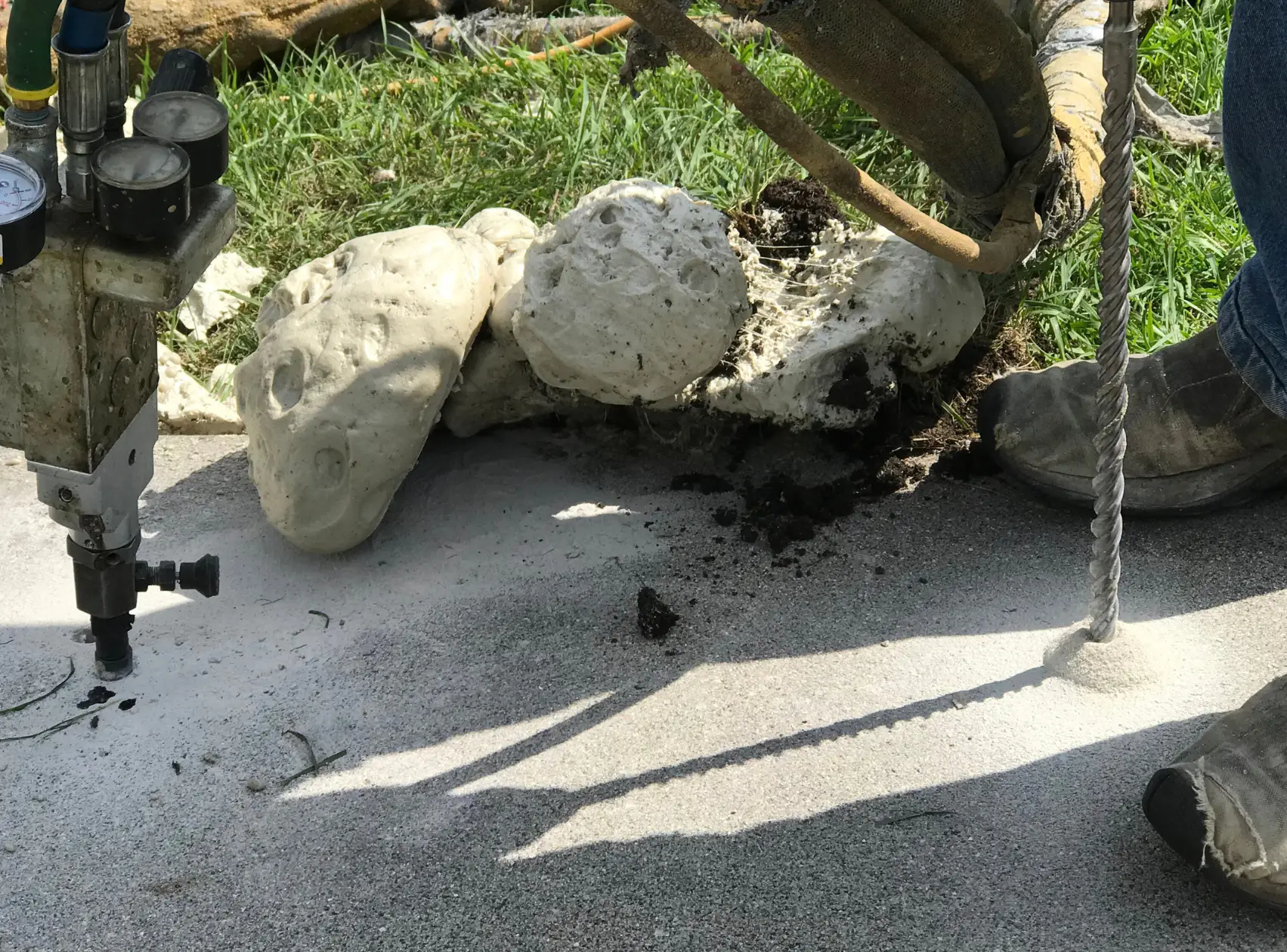
| Polyurethane Foam Injection | Concrete Slabs | Lightweight expanding polymer injected under slabs to lift concrete and fill voids. | $1,000 – $3,500 total project |
| Carbon Fiber Straps | Bowed Basement/Crawl Walls | High-tensile strips epoxy-bonded to masonry walls to halt inward movement. | $500 – $1,000 per strap |
Piering Systems for Structural Settlement
For homes experiencing severe settlement where the foundation is sinking into compromised soil, pier systems are the gold standard.
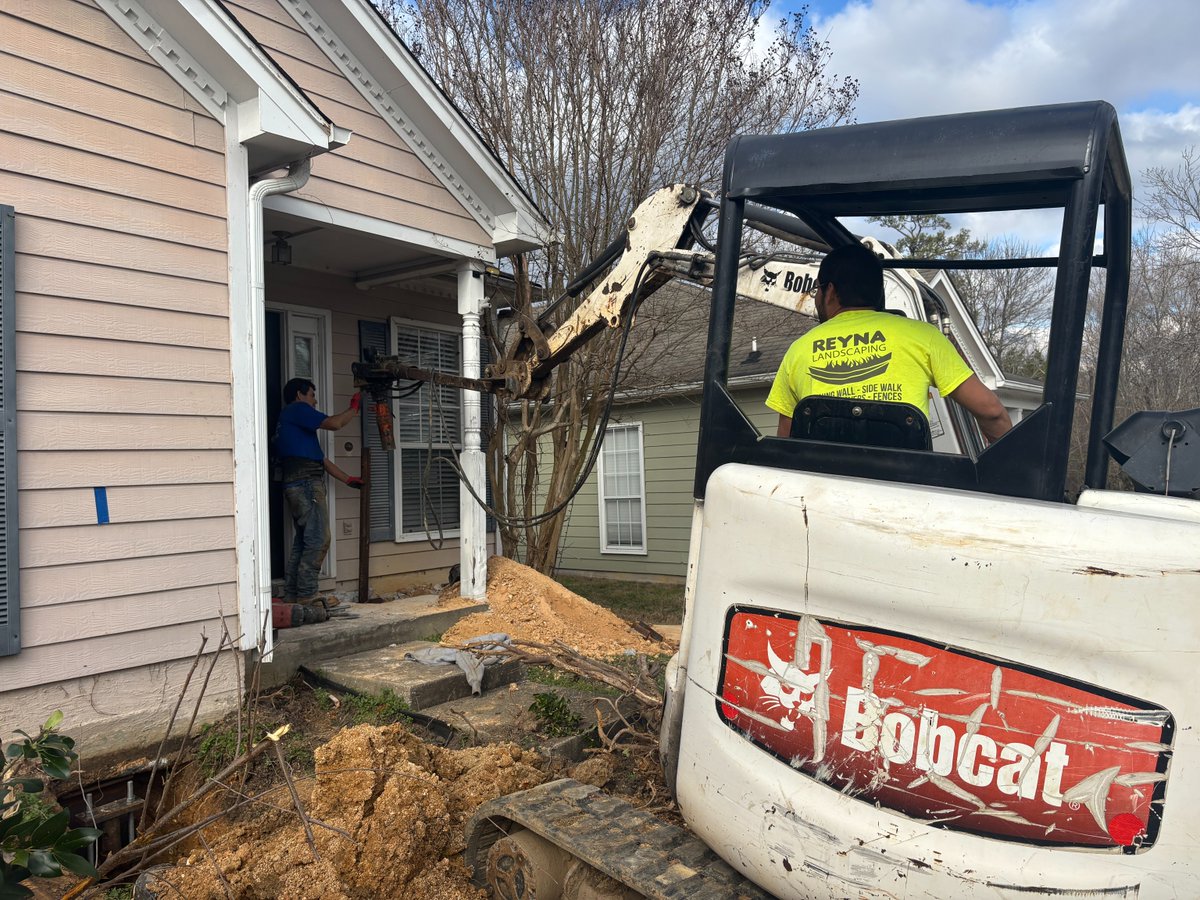
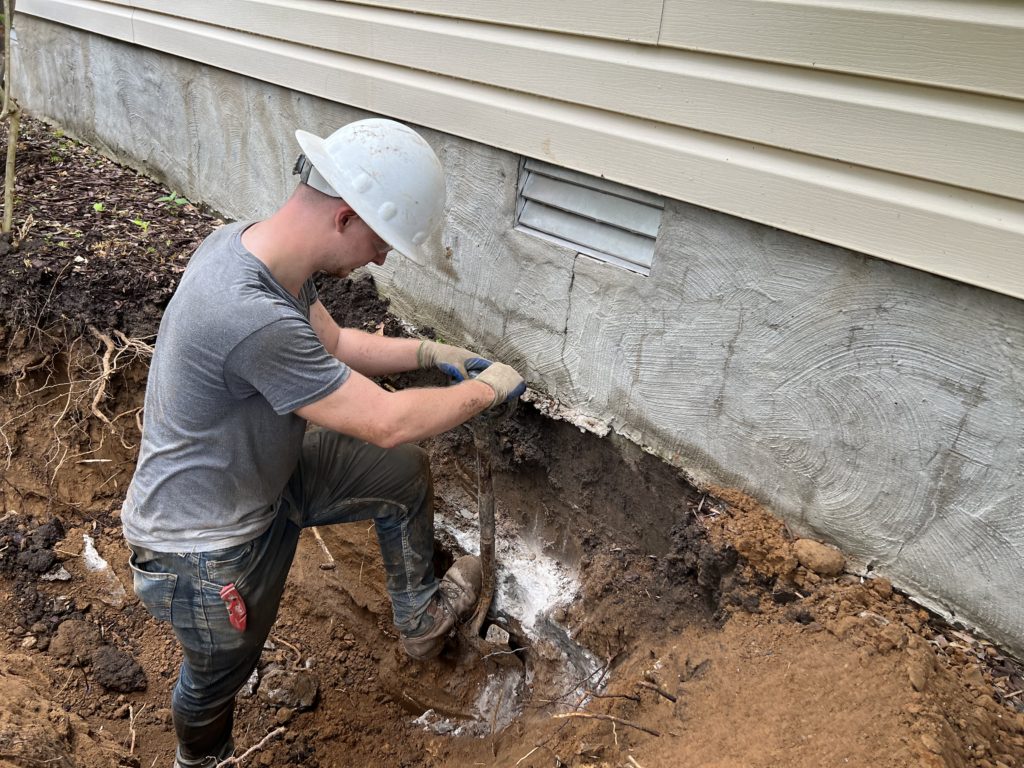
- Push Piers: Heavy-duty steel tubes are driven hydraulically through brackets attached to the footing down to competent bedrock or load-bearing soil layers. The weight of the home is then transferred onto these piers, often allowing the structure to be lifted back toward its original elevation.
- Helical Piers: These resemble large screws with welded steel flights. They are rotated into the ground mechanically until they reach stable depth. Helical piers work exceptionally well for lighter structures, porches, and situations where precise torque monitoring is required during installation.
Concrete Lifting and Slab Stabilization
Sinking interior slabs, driveways, sidewalks, and pool decks do not always require deep pier systems. If the underlying soil has washed away or compacted, lifting methods provide an affordable alternative.
- Mudjacking (Traditional Slab Jacking): A mixture of water, cement, sand, and soil additives is pumped beneath the slab under pressure. This fills voids and lifts the concrete. While economical, the heavier slurry can add minor weight to the sub-grade.
- Polyurethane Foam Injection: A modern alternative to mudjacking, high-density expanding polymer is injected through small drill holes. The foam expands rapidly, fills all voids, and compresses surrounding loose soil while being waterproof and lightweight.
Evaluating Contractors and Securing Affordable Services
Finding an affordable contractor in Mobile requires balancing cost with quality and legitimacy. Low bids can sometimes signal substandard materials, inexperienced labor, or hidden fees that emerge halfway through a project. Homeowners should evaluate structural repair companies systematically.
Verifying Credentials, Licensing, and Insurance
In Alabama, home builders and specialized contractors must hold proper licensing through the Alabama Licensing Board for General Contractors or equivalent specialty designations depending on the project scale.
- General Liability Insurance: Ensure the company carries active liability insurance to protect your property against accidental damage during excavation and lifting.
- Workers' Compensation: Verify that all crew members are covered by workers' comp to shield the homeowner from liability in case of workplace injuries.
- Local Experience: Companies familiar with Mobile’s specific municipal codes, soil profiles, and coastal weather patterns will engineer more resilient solutions than out-of-town storm-chasers.
Obtaining Multiple Independent Estimates
Affordable repairs begin with competitive bidding. Homeowners should gather at least three detailed, written estimates from reputable local foundation repair specialists.
- Detailed Scope of Work: The estimate should specify the exact number of piers, the type of stabilization material, warranty details, and whether excavation and landscaping repair are included.
- Engineering Oversight: Ask if the company employs structural engineers or partners with independent engineering firms to design the repair plan. Complex foundation failures often require a stamped engineering report to ensure safety and compliance with local building codes.
Understanding Warranties and Transferability
A reputable foundation repair company stands behind its work with a robust warranty. Homeowners should look for transferable warranties, which add significant value to the property if sold in the future. Read the fine print to distinguish between lifetime structural warranties and limited material warranties, and clarify what maintenance steps are required to keep the warranty active.
Preventive Maintenance to Protect Foundation Health
The most cost-effective foundation repair is the repair that never has to happen. Implementing proactive property management strategies minimizes moisture fluctuations around a home's perimeter in Mobile.
- Extend Downspouts: Ensure rainwater is discharged at least 4 to 6 feet away from the foundation walls using splash blocks or flexible extensions.
- Maintain Grade Slope: The ground immediately surrounding the foundation should slope away at a rate of at least 6 inches over the first 10 feet.
- Manage Landscaping and Trees: Large trees planted too close to a foundation consume massive amounts of water from the soil during dry spells, causing localized shrinkage. Maintain safe planting distances based on mature tree sizes.
- Install French Drains: For properties prone to standing water or chronic saturation, installing exterior French drains or subsurface sump pump systems safely redirects water away from structural footings.
Frequently Asked Questions
What are the most common signs that my home in Mobile, AL, needs foundation repair?
Common indicators include stair-step cracks in exterior brickwork, sticking interior doors and windows, diagonal drywall cracks radiating from window frames, and sloping or uneven floors. These symptoms suggest that the soil beneath the home is expanding, contracting, or washing away, causing uneven structural settlement.
How much does foundation repair typically cost in Mobile, Alabama?
Costs vary widely based on the repair method and severity of damage. Minor slab lifting via polyurethane foam injection may cost between $1,000 and $3,500. Major structural stabilization using steel push piers typically ranges from $1,500 to $3,000 per pier, with total project costs scaling based on the linear footage requiring support.
Does homeowners insurance cover foundation repair in Mobile?
Standard homeowners insurance policies in Alabama generally do not cover foundation repair. Insurance covers damage resulting from sudden, accidental events like burst pipes or vehicle impacts, but excludes damage caused by normal settling, soil expansion, earth movement, or poor maintenance. Homeowners should review their specific policy or consult an insurance agent for details.
How long does a typical foundation repair project take?
Most residential foundation repair projects, such as installing a series of push piers or executing polyurethane slab jacking, can be completed in one to three days. Larger commercial projects or homes requiring extensive structural wall stabilization and waterproofing may take up to a week depending on weather conditions and curing times.
Can I DIY foundation repair to save money?
Foundation repair is a complex structural engineering discipline that requires specialized equipment, heavy hydraulic machinery, and precise load calculations. DIY attempts on structural elements risk worsening the damage, compromising the safety of the entire building, and violating local building codes. Professional assessment and installation are strongly recommended.
Conclusion and Next Actions
Addressing foundation concerns promptly prevents minor cosmetic cracks from escalating into severe structural failures. Homeowners in Mobile, AL, should start by conducting a thorough visual inspection of their property's interior and exterior. If warning signs are present, contact at least three licensed local foundation specialists for professional evaluations and competitive estimates. Prioritize contractors who offer comprehensive engineering plans, transparent pricing, and transferable warranties to safeguard your home's value and structural integrity for years to come.