Acute stress disorder workers compensation claims provide financial and medical relief for employees who experience a severe psychological reaction following a traumatic workplace event. To qualify in 2026, an individual must receive a formal diagnosis within one month of the trauma and demonstrate that the incident exceeded the normal stresses of their specific occupation.
The intersection of psychological health and labor law has become increasingly complex. As of 2026, workers' compensation systems have refined their approach to "mental-mental" injuries—those where a psychological stimulus causes a psychological injury without a physical component. Acute Stress Disorder (ASD) represents a unique challenge in this framework because of its specific temporal requirements and the high burden of proof required to link the condition directly to employment.
Defining Acute Stress Disorder in a Professional Context
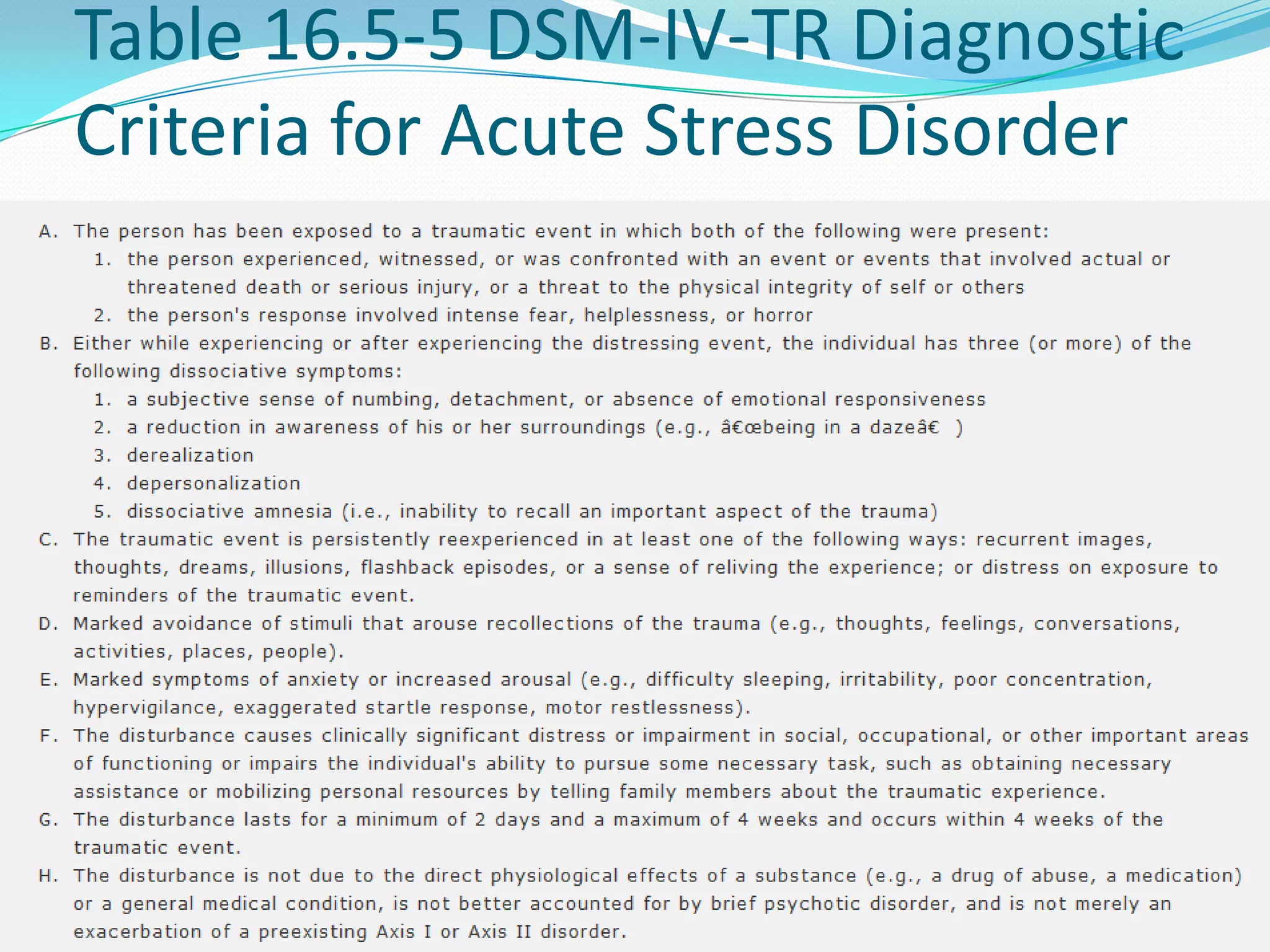
Acute Stress Disorder is a clinical diagnosis defined by the American Psychiatric Association in the DSM-5-TR (and subsequent 2026 clinical updates). It occurs in response to exposure to actual or threatened death, serious injury, or sexual violation. In the workplace, this may involve witnessing a fatal industrial accident, being the victim of an armed robbery, or experiencing a sudden, violent physical assault.
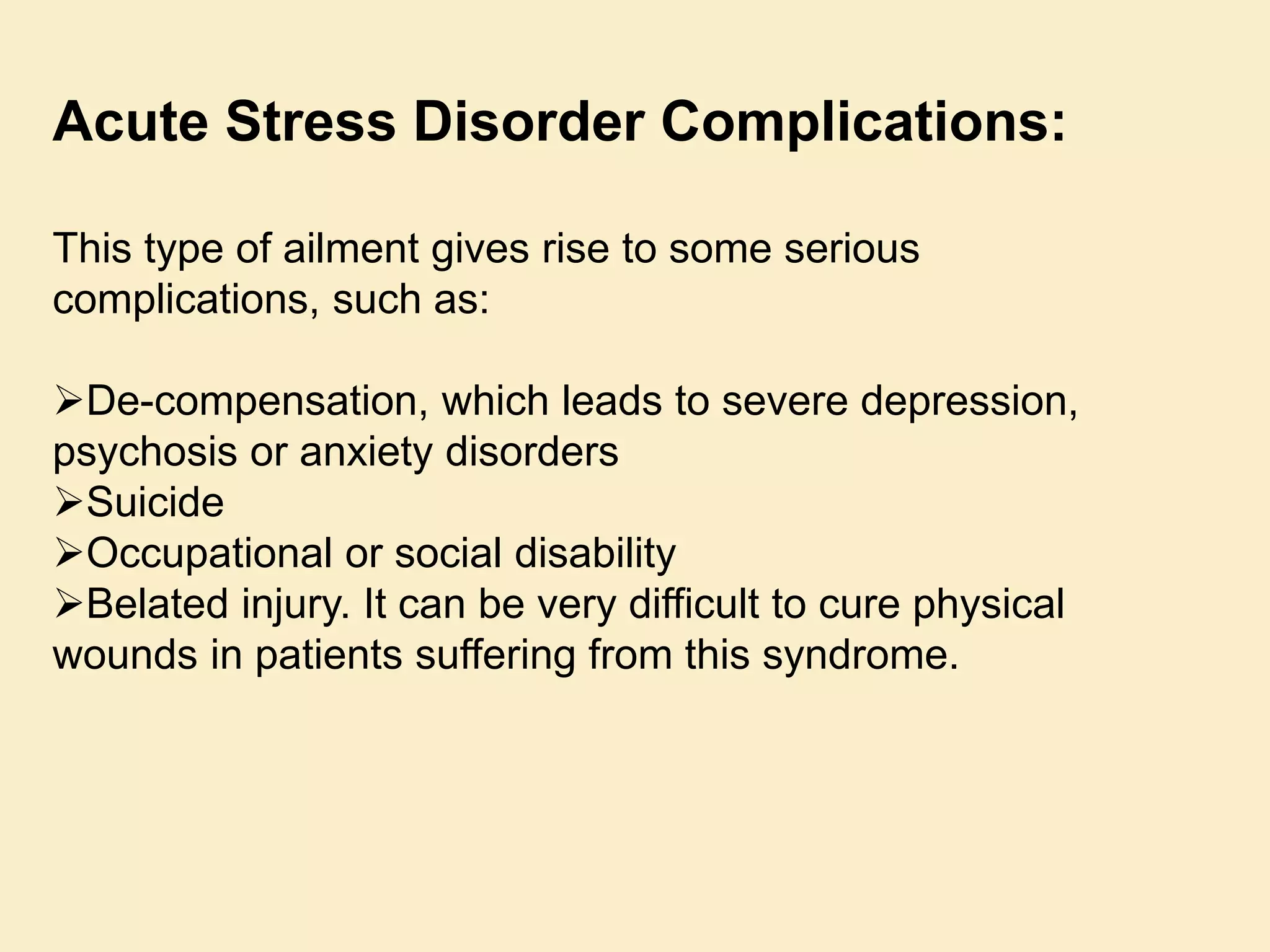
The clinical window for ASD is narrow: symptoms must develop within three days and last no longer than one month after the traumatic event. If symptoms persist beyond the 30-day mark, the diagnosis typically transitions to Post-Traumatic Stress Disorder (PTSD). For the purposes of workers' compensation, documenting this initial month is critical for establishing the "causation" link required by insurance carriers.
Core Symptoms and Workplace Impact
For a successful claim, the medical evidence must document symptoms across five categories:
- Intrusion Symptoms: Recurrent, involuntary, and intrusive distressing memories or dreams related to the workplace event.
- Negative Mood: A persistent inability to experience positive emotions such as happiness or satisfaction.
- Dissociative Symptoms: An altered sense of the reality of one’s surroundings or oneself (e.g., seeing oneself from another’s perspective or being in a daze).
- Avoidance Symptoms: Efforts to avoid distressing memories, thoughts, or external reminders (people, places, or conversations) that arouse recollections of the event.
- Arousal Symptoms: Sleep disturbances, hypervigilance, difficulty concentrating, or exaggerated startle responses.
In a professional setting, these symptoms often manifest as an immediate inability to return to the site of the trauma, profound drops in productivity, or safety risks caused by impaired concentration.
Legal Eligibility for ASD Claims
Workers' compensation is governed by state laws (in the U.S.) or provincial/national regulations elsewhere. Most jurisdictions categorize ASD under "mental-mental" claims. These are generally more scrutinized than "physical-mental" claims (where a physical injury, like a broken limb, leads to depression).
The "Extraordinary Stress" Requirement
In many jurisdictions, a worker cannot claim compensation for "normal" workplace stress, such as a difficult performance review or a heavy workload. To qualify for ASD benefits, the event must be:
- Sudden: It cannot be a slow buildup of stress over years.
- Extraordinary: It must be outside the realm of what a typical employee in that field experiences.
- Identifiable: A specific "shocks to the system" event must be pinpointed.
For certain "high-stress" professions—such as police officers, firefighters, and emergency medical technicians—the legal bar is often different. In some regions, 2026 "Presumptive Coverage" laws assume that certain psychological conditions are work-related for first responders, though they may still need to prove the specific event triggered the ASD.
The Claims Process and Procedural Requirements
Successfully securing workers' compensation for ASD requires strict adherence to timelines and a high volume of corroborating evidence. Because ASD is, by definition, a short-term diagnosis that may or may not evolve into PTSD, the initial filing period is the most volatile.
1. Immediate Reporting
The "statute of limitations" for reporting a workplace injury is often very short. While physical injuries are obvious, psychological injuries must be reported to the employer as soon as the symptoms impair the ability to work. In 2026, many employers use digital portals for incident reporting; ensuring the "nature of injury" is clearly labeled as "psychological trauma" or "acute stress" is vital.
2. Seeking Specialized Medical Care
A general practitioner's note is rarely sufficient for an ASD claim. Insurance carriers usually require an evaluation by a licensed psychiatrist or a doctoral-level psychologist. This evaluation must explicitly link the symptoms to the specific workplace trauma using standardized diagnostic tools.
3. The Role of the Independent Medical Examination (IME)
Insurance companies frequently exercise their right to an Independent Medical Examination (IME). Despite the name, the IME doctor is selected and paid for by the insurance company. Their goal is often to determine if the ASD was caused by "non-work-related stressors," such as family issues or pre-existing mental health conditions.
| Feature | Acute Stress Disorder (ASD) | Post-Traumatic Stress Disorder (PTSD) | General Occupational Stress |
|---|---|---|---|
| Symptom Duration | 3 days to 1 month | More than 1 month | Ongoing/Chronic |
| Triggering Event | Single, sudden trauma | One or more traumatic events | Cumulative pressure/workload |
| Diagnosis Window | Immediate (within 4 weeks) | Can be delayed (months/years) | N/A |
| Claim Complexity | Moderate (Fast filing needed) | High (Long-term proof) | Very High (Often excluded) |
| Benefit Focus | Immediate therapy/Short-term leave | Long-term disability/Rehab | Often denied |
Evidence and the Burden of Proof
The "burden of proof" in workers' compensation lies with the employee. You must prove that it is "more likely than not" (preponderance of evidence) that the work event caused the ASD.
Documenting the Event
Corroboration is essential. If you witnessed a traumatic event, you should gather:
- Witness Statements: Written accounts from coworkers who saw the event or your immediate reaction.
- First Responder Reports: Police or EMT records if they were called to the scene.
- Security Footage: If available, visual evidence of the incident can bypass "he-said, she-said" disputes.
Establishing the "Baseline"
The insurance company may look into your past medical history. If you have a history of anxiety or depression, they may argue that the workplace event merely "aggravated" a pre-existing condition rather than causing a new one. However, under the "Eggshell Plaintiff" rule (common in many legal systems), an employer is responsible for the injury even if the employee was more susceptible to trauma than the average person, provided the work event was the primary trigger.
Potential Benefits and Compensation
If an ASD claim is accepted, the benefits generally fall into three categories:
- Medical Coverage: This includes 100% payment for psychiatric sessions, cognitive-behavioral therapy (CBT), and any prescribed medications. In 2026, this often includes specialized treatments like EMDR (Eye Movement Desensitization and Reprocessing) or virtual reality-based exposure therapy.
- Temporary Total Disability (TTD): If a doctor determines you cannot work while suffering from ASD, you are entitled to a portion of your lost wages (typically two-thirds of your average weekly wage).
- Vocational Rehabilitation: If the ASD is so severe that you cannot return to the same work environment (e.g., a bank teller who cannot return to a branch after a robbery), the insurance may cover retraining for a different career.
Common Challenges and Denials
ASD claims are among the most contested in the workers' compensation system. Carriers often deny these claims based on several standard arguments:
- Failure to Meet the "Trauma" Threshold: The insurer may argue the event was "upsetting" but not "traumatically shocking" by legal standards.
- Pre-existing Conditions: Asserting that the stress is a manifestation of personal life issues rather than the work event.
- Timeliness: If the diagnosis is made after the one-month ASD window has closed, the carrier may move to dismiss the claim or force it to be refiled as a PTSD claim, which carries different evidentiary requirements.
- Subjectivity: Since there is no X-ray for ASD, insurers rely on "objective" evidence. If the worker does not appear "distressed enough" during the IME, the claim may be questioned.
Best Practices for a Successful Claim
To protect your rights and ensure your recovery is funded, follow these strategic steps:
- Do not delay medical intervention: The longer the gap between the event and the first psychiatric visit, the harder it is to prove causation.
- Be consistent in your reporting: Ensure that what you tell your employer, your treating doctor, and the IME doctor is identical. Discrepancies are the primary cause of claim denials.
- Keep a "Symptom Journal": Document your daily struggles. For example: "Tuesday: Tried to drive to work, had a panic attack at the parking lot entrance and had to return home." This provides "contemporaneous evidence" that is highly valued in legal proceedings.
- Consult a Workers' Compensation Attorney: Because "mental-mental" laws vary wildly by jurisdiction, a specialist can help navigate the specific nuances of your local statutes, especially regarding 2026 updates in psychiatric injury law.
Frequently Asked Questions
Can I get workers' comp for ASD if I wasn't physically hurt?
Yes, in most jurisdictions, though it is more difficult than a physical injury claim. This is known as a "mental-mental" claim. You must prove that the psychological stimulus (the traumatic event) was extraordinary and that it directly resulted in the ASD diagnosis. Some states, however, still require a "physical impact" for any psychiatric claim to be valid, so checking local laws is essential.
How long do ASD workers' comp benefits last?
ASD is a short-term diagnosis. Benefits for ASD specifically usually cover the first month of treatment and lost wages. If the condition persists beyond 30 days, the medical professional must update the diagnosis to PTSD or another chronic stress disorder to continue receiving long-term benefits and disability payments.
What if my employer fires me for filing an ASD claim?
Retaliation for filing a workers' compensation claim is illegal in almost all jurisdictions. If you are terminated, demoted, or harassed following your filing, you may have grounds for a separate wrongful termination or retaliation lawsuit in addition to your compensation claim.
Does ASD coverage include "Compassion Fatigue"?
Generally, no. Compassion fatigue or "burnout" is typically viewed as a cumulative condition resulting from the nature of the job over time. ASD requires a specific, sudden, and shocking event. While burnout is a serious issue, it is rarely covered under the specific umbrella of "Acute Stress Disorder" in workers' compensation.
Can telehealth be used for the diagnosis of ASD?
As of 2026, most workers' compensation boards accept psychiatric evaluations conducted via telehealth, provided the practitioner is licensed in the worker's jurisdiction and uses validated diagnostic instruments. This has become a standard method for ensuring workers in rural areas receive timely evaluations within the 30-day ASD window.
Moving Forward with Your Claim
If you have experienced a traumatic event at work, your immediate priority is stabilization and health. Once you have sought medical attention, notify your employer in writing of the incident and your symptoms. Because the 30-day window for an Acute Stress Disorder diagnosis is so brief, acting quickly is the most important factor in securing the benefits you need for recovery. For more information on your specific rights, contact your state’s Department of Labor or the Occupational Safety and Health Administration (OSHA) to report unsafe conditions that may have led to the trauma.