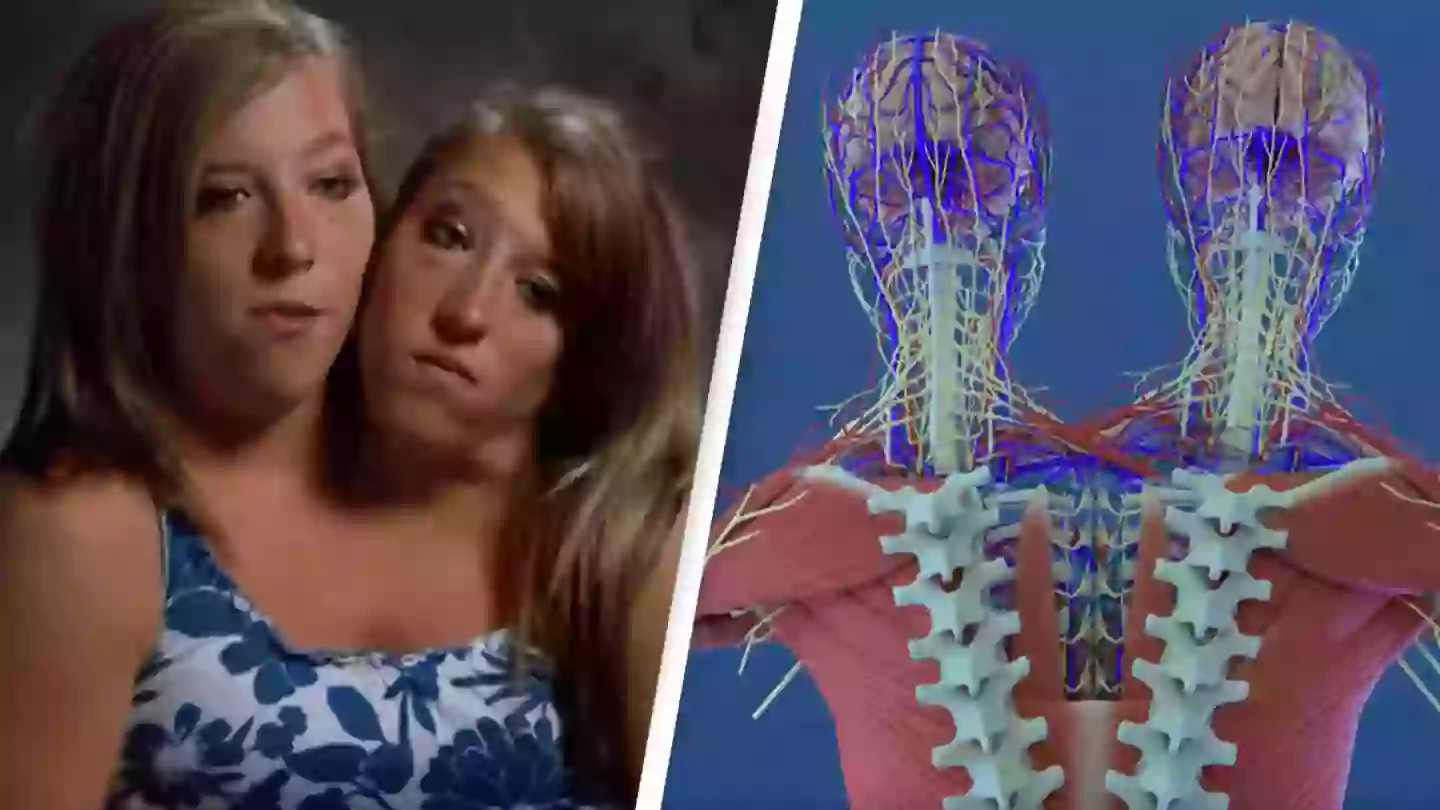
Abby and Brittany Hensel are American conjoined twins born in 1990 who gained international recognition due to their rare anatomical condition, high level of physical coordination, and public advocacy for living independent lives. As dicephalic parapagus twins, they share a single body with separate heads, hearts, and nervous systems, successfully pursuing higher education, teaching careers, and personal milestones.
Anatomical and Physiological Overview
Abigail Loraine Hensel and Brittany Lee Hensel were born on March 7, 1990, in Carver County, Minnesota. They are one of the few documented pairs of dicephalic parapagus twins in medical history to survive infancy and reach adulthood.
Dicephalic parapagus is an extremely rare form of conjoined twinning occurring in approximately 1 out of every 50,000 to 200,000 live births, representing less than 11 percent of all conjoined twin cases. Unlike thoracopagus or omphalopagus twins, who are joined primarily at the chest or abdomen and often possess duplicate limbs, dicephalic parapagus twins share a single torso and lower body while maintaining two distinct heads and necks.
NOTE: At birth, surgical separation was ruled out by medical experts because the twins share vital lower organ systems, a single liver, and shared circulatory and reproductive tracts. Separation would have resulted in the death or extreme disability of one or both twins.
Breakdown of Shared and Separate Organs
The physiological structure of Abby and Brittany presents a remarkable case study in human biology and neuromuscular coordination. Each twin controls her respective side of the shared body. Abby, the right twin, controls the right arm and leg, while Brittany, the left twin, controls the left arm and leg.
The following matrix details the distribution of their organ systems based on established medical records and clinical documentations:
| Biological System / Organ | Anatomical Configuration | Operational Details |
|---|---|---|
| Heads & Brains | 2 Separate | Two distinct central nervous systems; completely independent thought, perception, and cognitive processing. |
| Spinal Cords | 2 Separate | Two independent spinal cords that run parallel down a single modified vertebral column, joining at the sacrum. |
| Hearts & Circulatory System | 2 Separate Hearts | Two fully formed hearts within a shared thoracic cavity; shared circulatory network allows medication taken by one to affect both. |
| Lungs & Respiratory System | 4 Separate Lungs | Three pleural cavities containing four lungs (two per side); breathing rates can operate independently or synchronously. |
| Stomach & Upper GI Track | 2 Separate Stomachs | Two distinct stomachs connected to a merged lower gastrointestinal tract. |
| Liver | 1 Shared | One large, unified liver with separate gallbladders and dual-lobed vascular supply. |
| Kidneys & Excretory System | 3 Kidneys | Two left kidneys and one right kidney (or three distinct renal structures) filtering into a single bladder. |
| Intestines | Shared Lower Tract | Merged small and large intestines leading to a single shared excretory system. |
| Reproductive System | 1 Shared | Single set of female reproductive organs. |
| Limbs | 2 Arms, 2 Legs | Originally born with a third vestigial arm between their heads, which was surgically removed during infancy. |
Neuromuscular Coordination and Motor Control
One of the most remarkable aspects of Abby and Brittany’s physical development is their voluntary motor control. Because each twin possesses an independent motor cortex, spinal cord, and peripheral nervous system controlling only one half of the body, physical actions that require bilateral coordination—such as walking, typing, driving, or playing sports—require precise synchronization.
Mechanics of Bipedal Movement
Walking requires complex feedback loops between sensory inputs and motor outputs across both sides of the body. For Abby and Brittany, bipedal locomotion is not governed by a single nervous system, but by mutual anticipation and real-time sensory calibration.
- Weight Bearing and Stride: Abby stands slightly taller than Brittany (Abby is approximately 5 feet 2 inches, while Brittany is approximately 4 feet 11 inches). To balance their stride, Brittany walks on tiptoe on her side, or they wear custom footwear to compensate for the height difference.
- Proprioceptive Rhythm: Each twin perceives sensory feedback (touch, pain, temperature) exclusively on her side of the body. If Brittany’s left leg experiences fatigue, Abby cannot feel it directly, though she adjusts her rhythm based on visual cues and mechanical feedback from their joint pelvis.
Motor Tasks and Skill Acquisition
Over decades of shared physical experience, the twins achieved mastery over complex physical activities:
- Typing and Computer Use: Both twins write and type simultaneously. Each twin manages one hand on the keyboard, operating at average to above-average typing speeds without consciously calculating the other's hand movements.
- Driving a Motor Vehicle: The twins successfully passed both their written and practical driver's license exams on their 16th birthday. Operation of the vehicle requires distinct division of labor: Abby operates the accelerator and brake pedals, gearshift, and right-side controls, while Brittany manages the steering wheel left-side inputs, turn signals, and headlights. Both continuously monitor traffic patterns collaboratively.
- Recreational Sports: They developed proficiency in swimming, bicycling, bowling, and playing the piano, demonstrating an intuitive grasp of rhythm and motor cooperation.
Life Milestones: Education, Career, and Legal Status
Despite significant public attention throughout their lives, Abby and Brittany prioritized personal autonomy, formal education, and professional development. Raised in a small Minnesota community, their family actively shielded them from unnecessary media exploitation while fostering self-reliance.
Timeline of Key Milestones:
- 1990: Birth
- 1996: Oprah Appearance
- 2008: Bethel Univ.
- 2012: TLC Show
- 2021: Abby's Marriage
Primary and Higher Education
The twins attended local public schools in Minnesota, where school authorities and educators treated them as two distinct students. They received separate test papers, grading rubrics, and academic evaluations.
- High School Graduation: They graduated from Lutheran High School in Mayer, Minnesota, in 2008.
- Higher Education: They enrolled at Bethel University in Arden Hills, Minnesota. Although they initially considered different majors, they both pursued degrees in education due to their interest in teaching.
- Graduation (2012): Both earned Bachelor of Arts degrees in Elementary Education from Bethel University in 2012, completing separate course requirements and student-teaching practicums.
Professional Career as Elementary Educators
Following graduation from Bethel University, Abby and Brittany secured employment as fifth-grade elementary school teachers in a Minnesota public school district.
From an administrative and practical standpoint, their professional dynamic involves unique contractual and logistical considerations:
- Separate Credentials: Each holds her own teaching license issued by the state licensing board, having independently completed standard teaching examinations and continuing education prerequisites.
- Classroom Management: In the classroom, one twin may focus on instruction and lecturing while the other monitors student engagement, assists individual pupils, or grades assignments.
- Compensation Structure: Because they share a single full-time teaching position workload (one classroom), they initially accepted a shared salary arrangement, while maintaining that as fully licensed individuals performing dual monitoring duties, separate recognition remains a long-term goal.
Media Appearances and Cultural Impact
Abby and Brittany Hensel first gained international prominence in the mid-1990s. Their public appearances have been characterized by a selective approach to media engagement, prioritizing educational awareness over sensationalism.
Major Media Profile Summary
- 1996 - The Oprah Winfrey Show and Life Magazine: At age six, the twins appeared on Oprah and were featured on the cover of Life magazine under the caption "One Body, Two Souls." This coverage established their story in the public consciousness while highlighting their parents' decision against risk-laden separation surgery.
- 2003 - Discovery Channel Special (Joined for Life): A documentary produced by Advanced Medical Productions explored their early teenage years, detailed their spinal fusion surgery to correct scoliosis, and examined their daily routines.
- 2006 - Learning Channel (TLC) Documentary (Joined for Life: Abby & Brittany Turn 16): Documented their milestone 16th birthday, focusing on their driver's license exams, high school activities, and future aspirations.
- 2012 - TLC Reality Series (Abby & Brittany): An eight-episode reality television series aired on TLC chronicling their college graduation, job search, international travel with friends, and preparation for their teaching careers.
Following the 2012 TLC series, the twins deliberately stepped back from public broadcast television, maintaining a low-profile private life in Minnesota to focus on their teaching careers and personal relationships.
Personal Life, Legal Status, and Privacy Nuances
The unique physical reality of conjoined twins raises legal, medical, and ethical questions regarding personal privacy, individual autonomy, and civil status.
Individual Identity vs. Shared Anatomy
Under United States law, state legislation, and federal regulations, Abby and Brittany are legally recognized as two individual citizens.
- Government Identification: They possess individual Social Security numbers, separate U.S. passports, and individual driver's licenses (each requiring separate testing and administrative processing).
- Medical Autonomy: Each twin has independent legal standing to consent to or refuse medical procedures affecting her own head and side of the body, requiring clear communication between both sisters when addressing health interventions.
Marriage and Personal Relationships
In March 2024, public records revealed that Abby Hensel had married Josh Bowling, an army veteran and nurse, in 2021. The news renewed global interest in the twins' personal lives while highlighting the legal and medical distinctions surrounding marriage for conjoined individuals.
From a legal and civil perspective:
- Marriage License: A marriage license is a legal contract between two individuals. Abby Hensel is the named legal spouse in the marriage contract.
- Privacy Protections: The family maintained privacy regarding the ceremony and domestic life, emphasizing that personal relationships fall outside their past professional television work.
- Ethical and Media Considerations: Ethicists and legal scholars point to the Hensel sisters as an example of how individuals with rare physiological conditions navigate civil rights, bodily integrity, and personal privacy in an era of widespread digital news.
Medical and Bioethical Context
To fully contextualize Abby and Brittany Hensel within medical literature, it is necessary to examine how their condition compares with other types of conjoined twins, as well as the bioethical considerations surrounding separation procedures.
Classification of Conjoined Twins
Conjoined twins are classified by the anatomical site where their bodies are joined. The primary types include:
Types of Conjoined Twins:
- Thoracopagus (Joined at chest; shared heart common)
- Omphalopagus (Joined at abdomen; shared liver/GI tract)
- Dicephalic Parapagus (Joined laterally; 2 heads, 1 shared torso/lower body)
- Thoracopagus (35-40% of cases): Joined head-to-toe along the chest. They frequently share a single heart, making surgical separation impossible without fatal consequences for at least one twin.
- Omphalopagus (30% of cases): Joined from the lower chest to the waist. They often share a liver, digestive tract, and abdominal wall, but rarely share a heart. Separation success rates are relatively high.
- Craniopagus (2-6% of cases): Joined at the cranium (skull) but possessing separate bodies. Separation depends heavily on shared cerebral blood vessels and brain tissue.
- Dicephalic Parapagus (Less than 11% of cases): Joined laterally, side-by-side, sharing a single trunk, lower limbs, and pelvic organs, but having two distinct heads and necks. Abby and Brittany represent one of the most fully developed and stable examples of this classification in modern medical history.
The Decision Against Surgical Separation
During infancy, Abby and Brittany's parents, Mike and Patty Hensel, rejected surgical separation after consulting with pediatric surgeons. The clinical consensus concluded that:
- Separation would require dividing shared lower organ systems, the single liver, pelvic structures, and circulatory channels.
- The procedure carried an unacceptably high risk of mortality for both infants.
- Surviving separation would leave each twin with severe physical disabilities, including the loss of one leg and one arm, requiring lifelong prosthetic support and organ reconstruction without guaranteeing long-term health.
The decision to forego separation allowed the twins to retain full mobility, intact internal organ function, and a high quality of life.
Frequently Asked Questions
What type of conjoined twins are Abby and Brittany Hensel?
Abby and Brittany Hensel are dicephalic parapagus conjoined twins. This means they share a single torso, shared lower organs, two arms, and two legs, but possess two distinct heads, necks, brains, hearts, and nervous systems.
How do Abby and Brittany drive a car?
Driving requires physical coordination between both sisters. Abby controls the right side of the cockpit, including the accelerator pedal, brake pedal, gearshift, and right turn signal. Brittany controls the left side, including the steering wheel adjustments, left turn signal, and headlights. Both passed their driver's license exams independently.
Do Abby and Brittany feel the same sensations across their body?
No. Sensory perception is divided along the midline of their body. Abby (the right twin) feels touch, pain, temperature, and muscle feedback on her right side, while Brittany (the left twin) perceives sensations on her left side. Internal sensations, such as stomach pain or hunger, can originate from their separate stomachs, though shared organs like the intestinal tract produce shared signals.
Are Abby and Brittany licensed to teach individually?
Yes. Both Abby and Brittany earned separate Bachelor of Arts degrees in Elementary Education from Bethel University in 2012. Each holds her own teaching license from the State of Minnesota, allowing them to teach elementary school curricula.
Did Abby Hensel get married?
Yes. Legal records made public in 2024 confirmed that Abby Hensel married Josh Bowling, a nurse and U.S. Army veteran, in 2021. The couple lives in Minnesota, maintaining a private lifestyle outside the public media eye.
Strategic Guidance and Resource Summary
For researchers, medical professionals, and students studying dicephalic parapagus twinning, neuromuscular coordination, or bioethics, the following steps provide reliable avenues for further investigation:
- Review Clinical Literature: Consult peer-reviewed pediatric surgery and medical genetics journals (such as the Journal of Pediatric Surgery or American Journal of Medical Genetics) for documented case histories on parapagus twinning dynamics.
- Examine Media Archives: Refer to original documentary coverage produced by Advanced Medical Productions (2003, 2006) and TLC (2012) for primary footage of their physical mobility, coordination, and educational milestones.
- Analyze Legal and Ethical Frameworks: Study bioethical guidelines published by institutions such as the Hastings Center or the American Medical Association (AMA) regarding surgical separation decisions, parental proxy consent, and bodily integrity in conjoined twins.