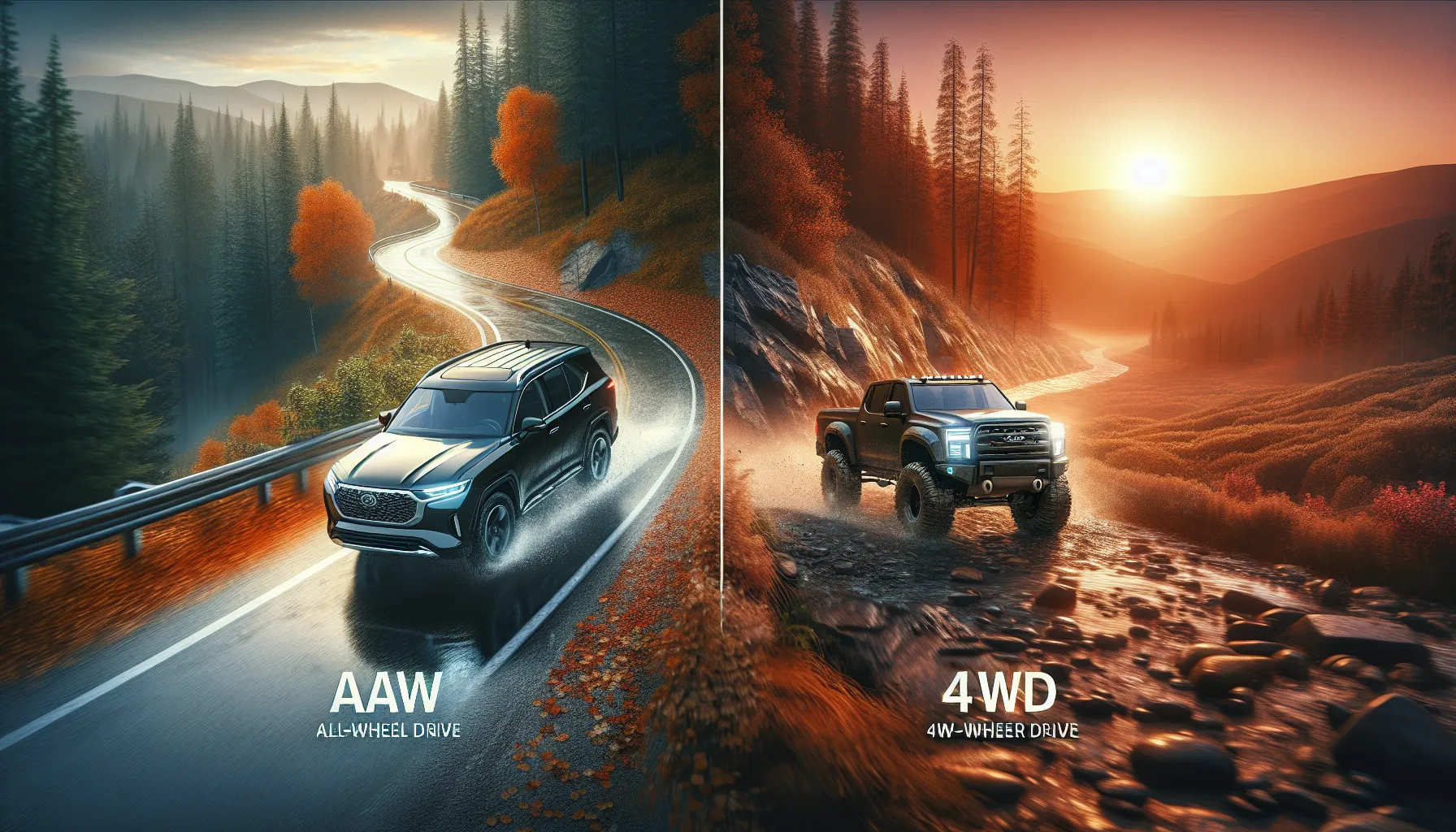
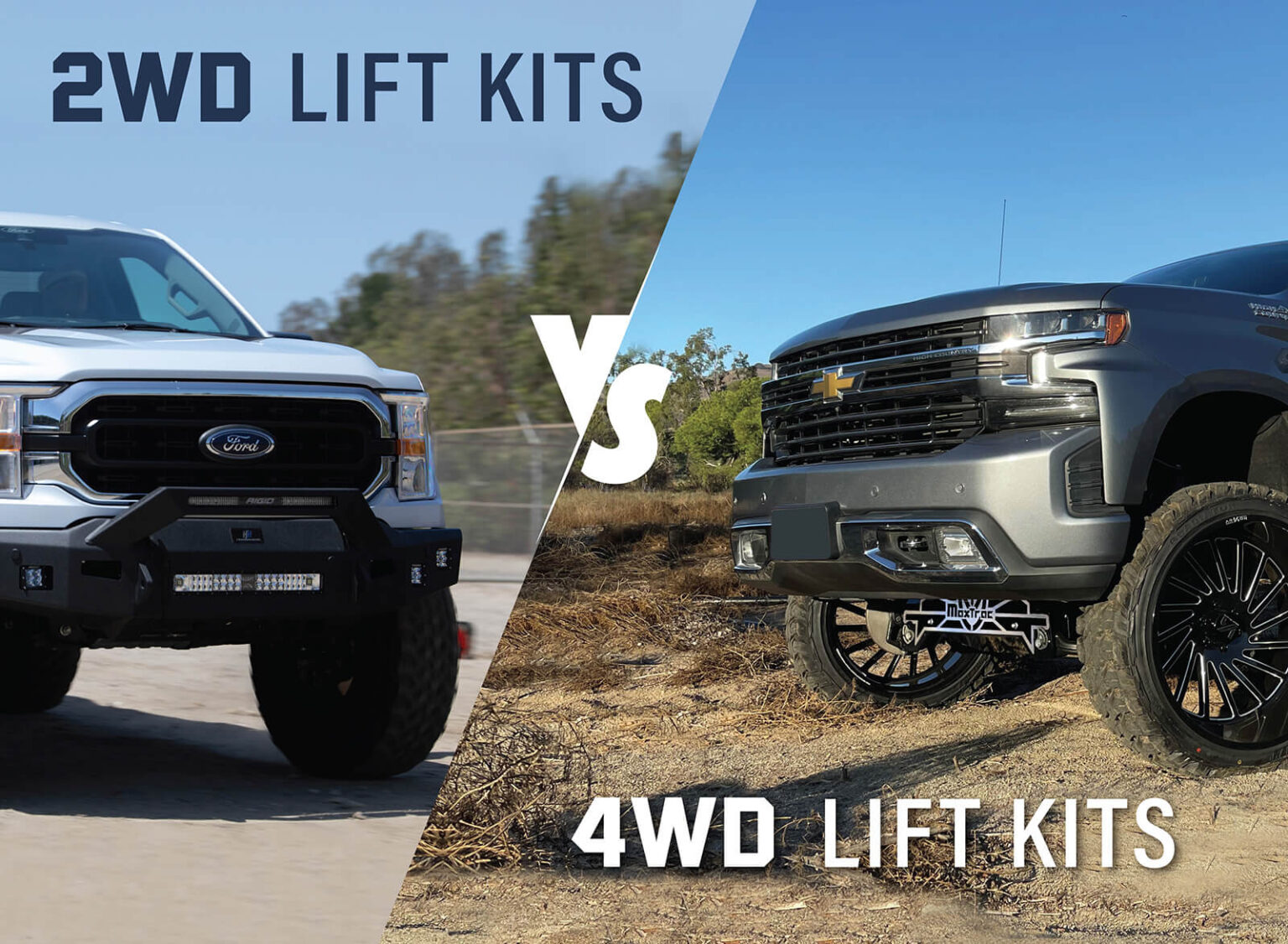
The primary difference between 2WD and 4WD is the number of wheels receiving power from the engine. 2WD sends torque to only two wheels—either front or rear—prioritizing fuel efficiency and lower costs. 4WD can power all four wheels simultaneously, providing maximum traction for off-road terrain, heavy towing, and severe weather.
Selecting the right drivetrain is one of the most consequential decisions when purchasing a vehicle. As we move through 2026, the automotive landscape has evolved with more sophisticated electronic controls, but the fundamental mechanical distinctions between Two-Wheel Drive (2WD) and Four-Wheel Drive (4WD) remains the cornerstone of vehicle performance. Understanding these differences involves looking at mechanical complexity, weight, maintenance requirements, and how power is distributed across the chassis.
Understanding Two-Wheel Drive (2WD)
Two-wheel drive is the most common drivetrain configuration for passenger cars, crossovers, and light-duty pickups. In a 2WD system, the engine's torque is transmitted through the transmission to a single axle. Depending on the vehicle's design, this will be either the front axle or the rear axle.
Front-Wheel Drive (FWD)
Front-wheel drive is the standard for the vast majority of modern sedans and compact SUVs. Because the engine, transmission, and differential are all located in the front of the vehicle, FWD systems are more compact and lighter. This weight concentration over the steered wheels provides better traction in rain and light snow compared to rear-wheel drive.
Furthermore, FWD vehicles typically offer more interior cabin space because there is no need for a "hump" in the floor to accommodate a driveshaft running to the rear. From a manufacturing standpoint, FWD is more cost-effective, which translates to a lower purchase price for the consumer.
Rear-Wheel Drive (RWD)
Rear-wheel drive was once the industry standard but is now primarily found in performance cars, luxury sedans, and full-size trucks. RWD splits the duties of the wheels: the front wheels handle steering while the rear wheels handle propulsion. This separation allows for better balance and more precise handling, which is why it remains the choice for driving enthusiasts.
In the context of trucks, RWD is preferred for heavy towing. When a heavy trailer is hitched to a truck, the weight pushes down on the rear axle. This increased downward force improves the traction of the rear wheels, allowing the vehicle to pull heavy loads more effectively without the front wheels "spinning out" under pressure.
The Mechanics of Four-Wheel Drive (4WD)
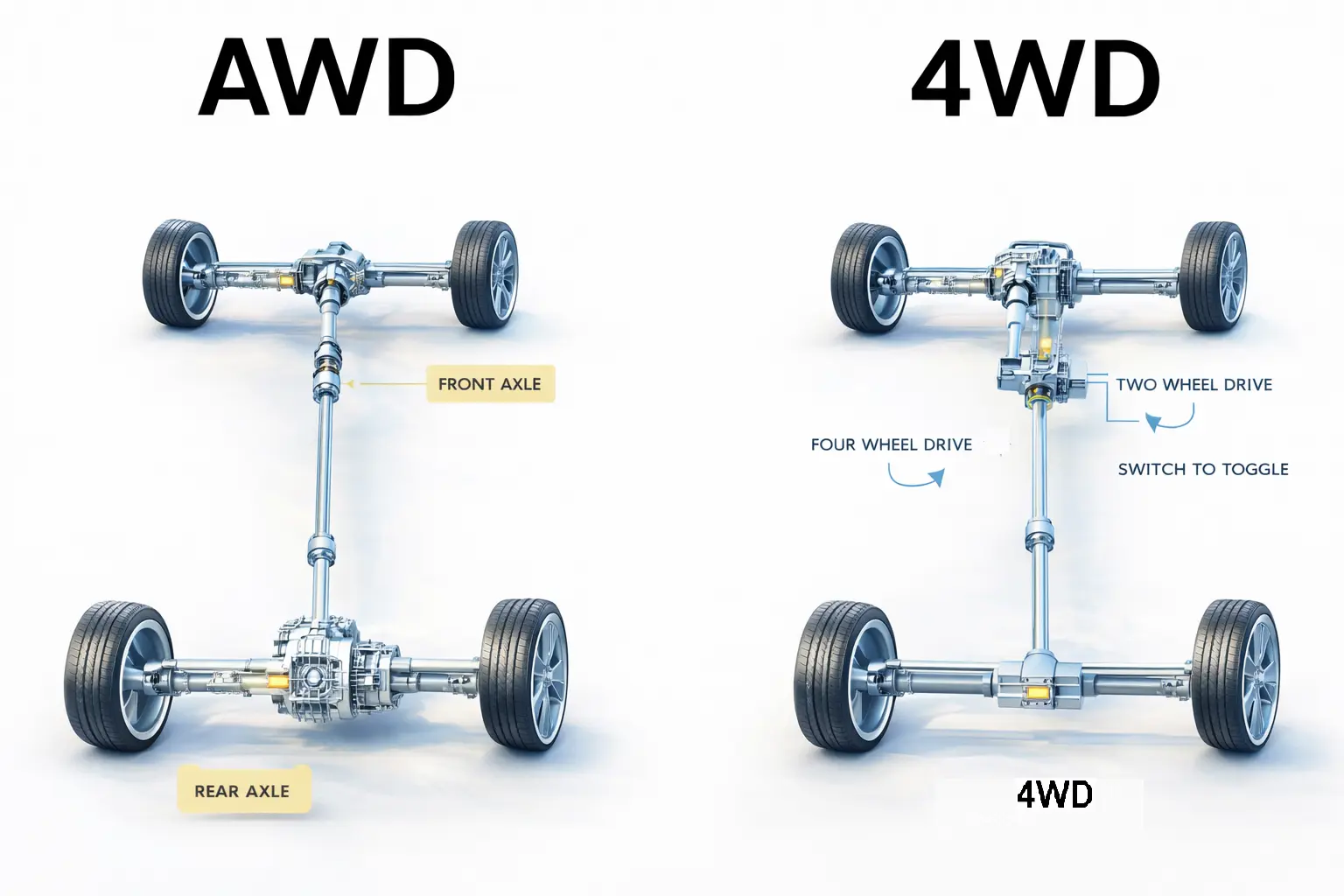
Four-wheel drive is a more robust system designed specifically for rigorous environments. Unlike basic All-Wheel Drive (AWD) systems found in many crossovers, true 4WD systems are typically built for truck-based platforms and feature a component known as a transfer case.
How a Transfer Case Works
The transfer case is the heart of a 4WD vehicle. It is a secondary gearbox positioned behind the main transmission. Its role is to split the power between the front and rear axles. In a 2WD mode, the transfer case directs 100% of the power to the rear wheels. When 4WD is engaged, the transfer case locks the front and rear driveshafts together, forcing them to turn at the same speed.
This "locking" mechanism is what provides 4WD with its legendary off-road capability. Even if one or two wheels lose contact with the ground or are stuck in deep mud, the engine continues to deliver power to the wheels that still have grip.
High Range vs. Low Range
Most 2026 4WD vehicles come with two distinct settings: 4H (4WD High) and 4L (4WD Low).
- 4H (High Range): This setting is used for driving at normal speeds on loose surfaces like gravel, packed snow, or muddy trails. It provides the traction of all four wheels without limiting the vehicle’s top speed significantly.
- 4L (Low Range): This is a specialized gear reduction setting. It provides massive amounts of torque at very low speeds. 4L is essential for "rock crawling," pulling a heavy boat up a steep, slippery ramp, or extricating a vehicle from deep sand. You should never drive at high speeds (typically over 25–30 mph) while in 4L.
2WD vs 4WD: A Detailed Comparison
Choosing between these two systems requires a balanced look at your daily driving habits versus your occasional needs. The following table breaks down the primary technical and economic differences.
| Feature | Two-Wheel Drive (2WD) | Four-Wheel Drive (4WD) |
|---|---|---|
| Primary Use | Daily commuting, highway driving. | Off-roading, heavy towing, deep snow. |
| Fuel Economy | Superior (Lighter weight, less drag). | Lower (Heavy components, mechanical friction). |
| Initial Cost | Lower (Standard equipment). | Higher ($2,000–$6,000 premium). |
| Maintenance | Low (Standard fluid changes). | Higher (Transfer case and front diff service). |
| Traction | Moderate (Adequate for rain/light snow). | Maximum (Best for mud, rocks, and ice). |
| Resale Value | Standard. | Higher (Especially in northern/mountain regions). |
| Complexity | Simple mechanical layout. | Complex (Actuators, lockers, transfer case). |
Operational Limitations and Safety
A common misconception is that 4WD makes a vehicle "invincible" in bad weather. While 4WD significantly improves acceleration and climbing on slippery surfaces, it does not improve braking or cornering on ice. Every vehicle on the road, whether 2WD or 4WD, uses four-wheel braking.
The Weight Penalty
The components required for 4WD—the transfer case, front differential, and additional driveshafts—add significant weight to the vehicle, often between 200 and 400 pounds. This extra mass affects the vehicle’s center of gravity and increases the distance required to come to a full stop. Drivers in 2026 should be aware that 4WD can lead to overconfidence; just because you can reach 60 mph quickly on a snowy highway doesn't mean you can stop when the traffic ahead stalls.
Mechanical Binding (Driveline Bind)
Traditional part-time 4WD systems should not be used on dry pavement. Because the system locks the front and rear axles to turn at the same speed, it creates "binding" when you try to turn a corner. In a turn, the outside wheels must travel a further distance than the inside wheels. On dry pavement, there is too much grip for the tires to "slip" to compensate for this difference, which can lead to broken U-joints or damaged gears in the transfer case.
Cost Considerations and Long-Term Value
The financial difference between 2WD and 4WD extends far beyond the initial MSRP. Prospective buyers must calculate the total cost of ownership over the life of the vehicle.
Fuel Consumption
Even when a 4WD vehicle is operated in 2WD mode, it is generally less fuel-efficient than a dedicated 2WD model. This is due to the "parasitic loss" caused by spinning the extra mechanical parts and the aerodynamic/weight penalties. In 2026, with fluctuating fuel prices and stricter emissions standards, a 1–3 mpg difference can result in thousands of dollars in extra fuel costs over five years.
Maintenance Schedules
4WD vehicles require more frequent inspections and fluid replacements. The transfer case and the front differential both contain specialized oils that must be changed periodically—especially if the vehicle is used for towing or submerged in water during off-roading. Neglecting these services can lead to catastrophic mechanical failure, with repair costs often exceeding $3,000 for a transfer case rebuild.
Resale Value
In certain geographic regions, such as the Rocky Mountains or the Northeast United States, 2WD trucks and SUVs are much harder to sell. In these markets, the 4WD option often pays for itself at the time of resale, as used buyers prioritize all-weather capability. Conversely, in sun-belt states like Florida or Arizona, 2WD is often preferred for its lower maintenance and better efficiency.
The 2026 Landscape: Electric and Hybrid Drivetrains
As of 2026, the definition of 4WD is shifting due to the rise of Electric Vehicles (EVs). Many modern EVs achieve "four-wheel drive" without a traditional transfer case or driveshaft. Instead, they use a dual-motor setup—one motor for the front axle and one for the rear.
These systems are controlled entirely by software. They can shift power between axles in milliseconds, providing the benefits of 4WD traction with the precision and efficiency of electric propulsion. For buyers considering an EV or Hybrid, the choice between "Single Motor" (2WD) and "Dual Motor" (4WD/AWD) is the new frontier of this debate. While dual-motor setups offer incredible performance, the 2WD variants remain the range-leaders for those concerned with maximum mileage per charge.
Frequently Asked Questions
Is 4WD better than AWD?
"Better" depends on the use case. 4WD is superior for heavy-duty off-roading and deep snow because it can be mechanically locked and often features a low-range gear. All-Wheel Drive (AWD) is better for everyday road driving and moderate weather because it operates automatically and can be used on dry pavement without damaging the drivetrain.
Can I drive in 4WD on the highway?
You can drive in 4H (4WD High) on the highway only if the road surface is covered in snow, ice, or loose gravel. If the pavement is dry or merely wet from rain, you should remain in 2WD to avoid "driveline bind" and unnecessary wear on your tires and transmission.
Does 4WD help with towing?
Yes, particularly when starting from a standstill on an incline or a slippery surface like a boat ramp. However, for highway towing on dry pavement, 2WD (specifically Rear-Wheel Drive) is usually sufficient and more fuel-efficient. 4WD is a "safety net" for the beginning and end of a towing journey where traction might be limited.
How often should I engage 4WD?
If you have a part-time 4WD system, it is recommended to engage it at least once a month for a few miles on a loose surface (like a dirt road). This keeps the internal components lubricated and ensures the electronic or manual actuators do not seize up from disuse.
Is 2WD enough for a snowy winter?
In many cases, yes. A 2WD vehicle (especially FWD) equipped with high-quality dedicated winter tires often outperforms a 4WD vehicle with standard "all-season" tires. Tires are the only part of the car that touches the road; if they can't grip, it doesn't matter how many wheels are spinning.
Final Recommendation
When deciding between 2WD and 4WD in 2026, let your routine dictate your choice rather than your aspirations.
If you live in a suburban or urban area, commute on plowed roads, and rarely venture further off-road than a gravel parking lot, 2WD is the smarter investment. You will save money on the purchase price, enjoy better fuel economy, and face lower maintenance bills over the vehicle's lifespan.
However, if your lifestyle involves frequent trips to mountain resorts, boat launching, or navigating unpaved rural roads, the extra cost of 4WD is a necessary insurance policy. The peace of mind and mechanical capability provided by a true 4WD system are invaluable when the pavement ends or the weather turns severe. For those in between, consider if a modern AWD system might offer the "best of both worlds" for your specific vehicle class.