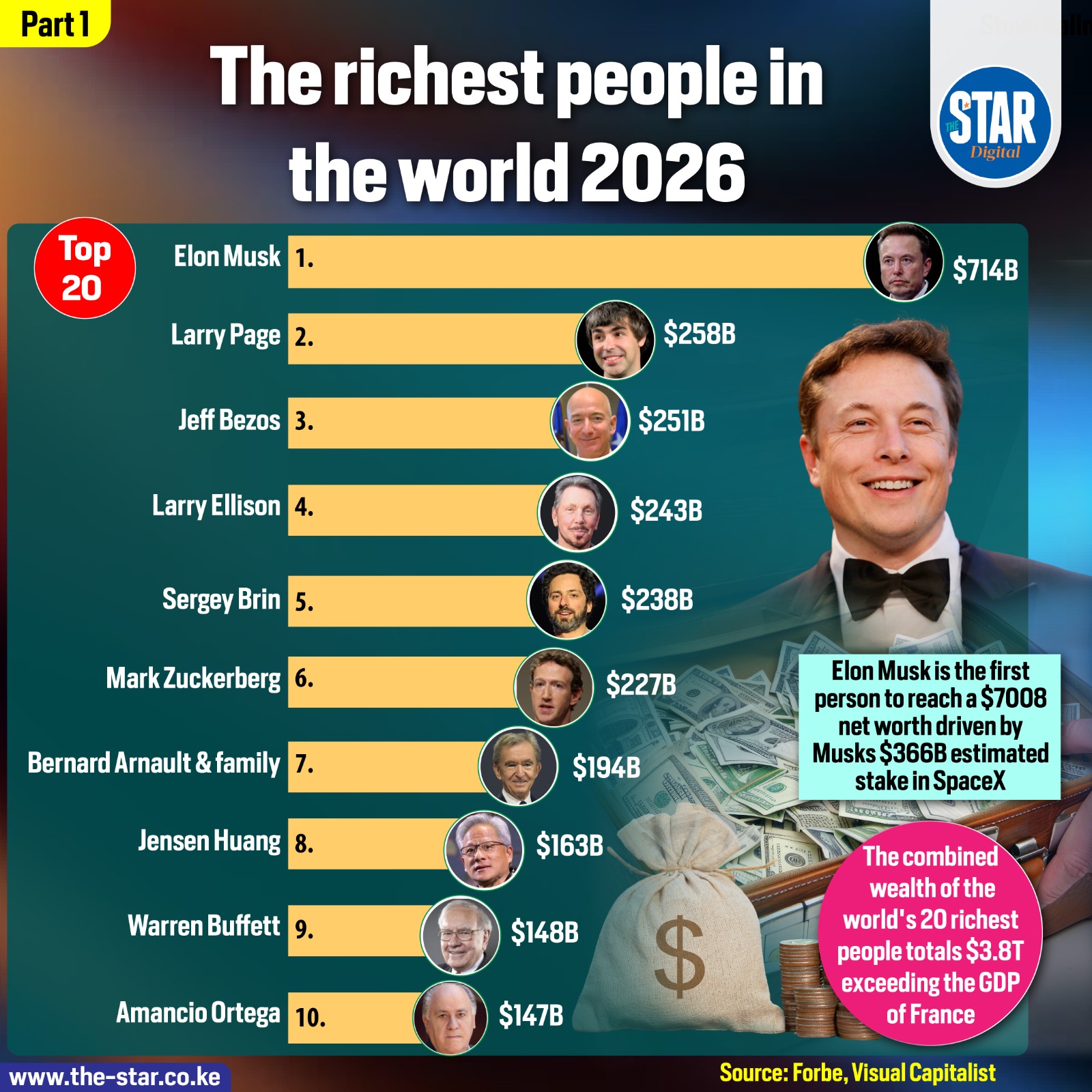
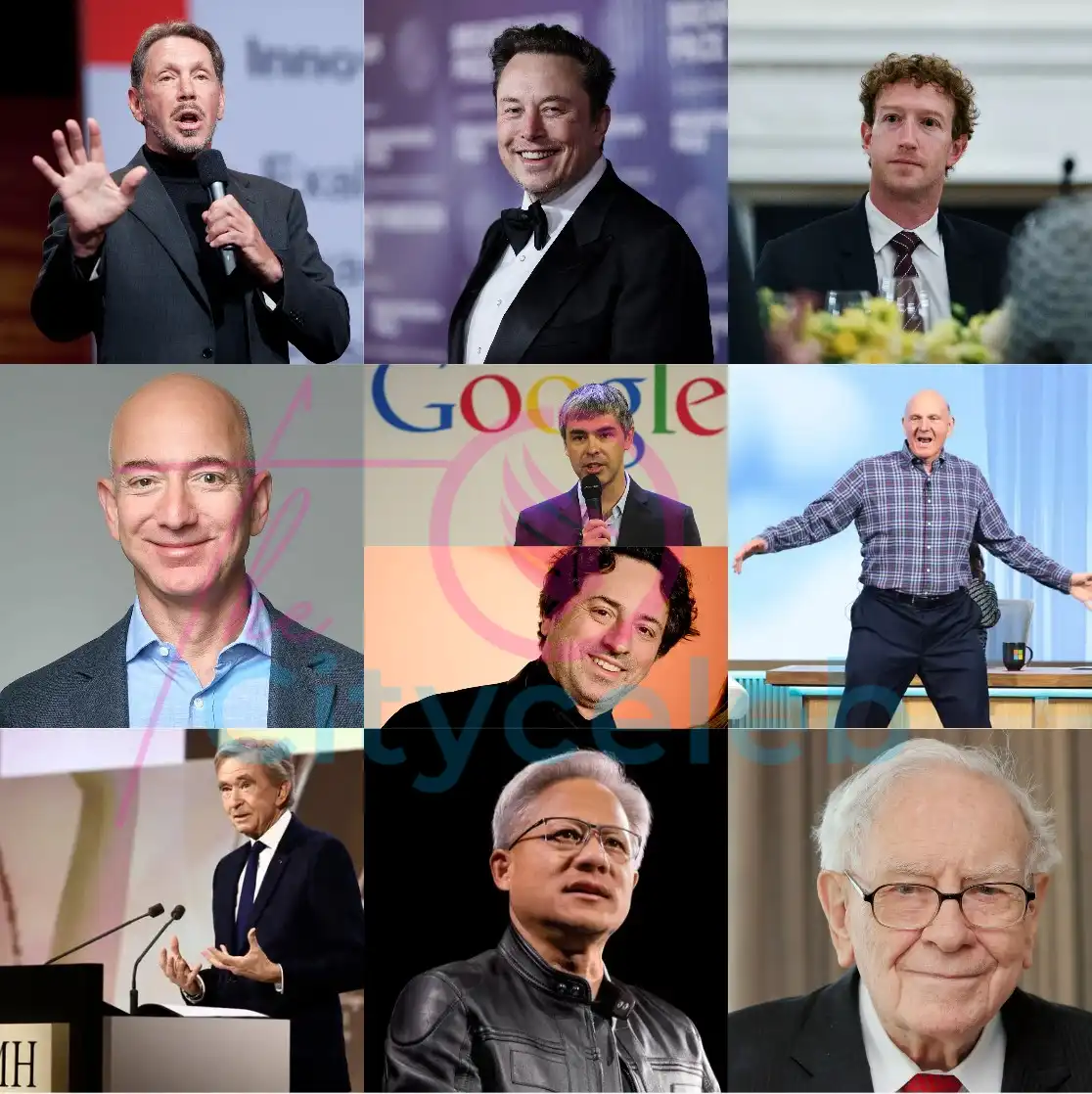
As of 2026, Elon Musk remains the world's richest person, primarily fueled by the soaring valuations of SpaceX and his AI venture, xAI. He is followed by Jeff Bezos, Bernard Arnault, Mark Zuckerberg, and Larry Ellison. Together, these five individuals control over $1.1 trillion in cumulative personal wealth.
The landscape of global wealth in 2026 is defined not just by traditional equity in e-commerce or luxury goods, but by the aggressive integration of generative artificial intelligence and private aerospace dominance. While the names at the top of the list remain familiar to those following financial markets over the last decade, the composition of their wealth has shifted toward private equity and specialized tech infrastructure.
1. Elon Musk: The Frontier of Multi-Planetary Wealth
Elon Musk continues to occupy the top spot on the global rich list in 2026. Unlike many of his peers whose wealth is tied almost exclusively to publicly traded stock, Musk’s net worth is a complex tapestry of public equity in Tesla and massive private valuations in SpaceX and xAI.
The SpaceX and xAI Influence
By 2026, SpaceX has moved beyond being a mere launch provider. With the Starship program reaching operational maturity and the Starlink satellite constellation providing high-speed internet to over 10 million subscribers worldwide, the private valuation of SpaceX has exceeded $250 billion. Musk’s significant ownership stake in this private entity provides a "wealth floor" that is less susceptible to the daily volatility of the NASDAQ compared to his holdings in Tesla.
Furthermore, xAI has emerged as a cornerstone of his portfolio. As large language models (LLMs) became integrated into every facet of industrial automation, xAI’s "Grok" ecosystem achieved a valuation that rivals traditional tech giants. This diversification has allowed Musk to maintain his lead even during periods of correction in the electric vehicle (EV) market.
Tesla’s Pivot to Autonomy
While Tesla remains a significant portion of his wealth, the narrative in 2026 has shifted from "units delivered" to "autonomous miles driven." Tesla’s evolution into a robotics and AI firm, rather than just an automaker, has sustained its high price-to-earnings (P/E) ratio. Investors now value the company based on its potential for robotaxi fleets and the Optimus humanoid robot program, both of which saw significant pilot deployments in late 2025.
2. Jeff Bezos: The Infrastructure of Everything
Jeff Bezos holds the second position in 2026, benefiting from a sustained rally in Amazon stock and the maturing operations of Blue Origin. Bezos has increasingly focused on the "infrastructure of the future," which encompasses both cloud computing and physical space logistics.
AWS and the AI Gold Rush
Amazon Web Services (AWS) remains the primary engine of Bezos’s wealth. In 2026, AWS serves as the backbone for the majority of the world’s AI startups. By providing the specialized compute power (GPUs and custom chips like Trainium and Inferentia) necessary for model training, Amazon has captured a significant portion of the global IT spend. This "toll booth" model ensures that as long as the AI industry grows, Bezos’s net worth grows with it.
Blue Origin’s Commercial Success
In 2026, Blue Origin has successfully transitioned from a research-heavy entity to a commercial powerhouse with the New Glenn rocket. The company’s contracts with NASA for lunar landers and its involvement in commercial space stations have added billions to its internal valuation. For Bezos, Blue Origin represents a long-term asset that mirrors the early days of Amazon’s logistics network—expensive to build, but nearly impossible to replicate.
3. Bernard Arnault: The Titan of Tangible Luxury
Bernard Arnault, the chairman and CEO of LVMH, remains the world’s wealthiest non-tech billionaire. His wealth is built on the enduring appeal of the world’s most prestigious brands, including Louis Vuitton, Christian Dior, and Tiffany & Co.
Resilience in the Luxury Sector
In a world increasingly dominated by digital assets, Arnault’s empire thrives on "absolute scarcity." LVMH’s ability to maintain high margins despite global economic fluctuations is a testament to Arnault’s strategy of "desirability over volume." In 2026, the group has successfully expanded into high-end hospitality and experiential luxury, ensuring that the Arnault family wealth is diversified across physical goods and services.
Succession and Stability
A key factor in Arnault’s sustained rank is the structured involvement of his five children within the LVMH ecosystem. This internal stability reassures institutional investors, preventing the "leadership vacuum" discounts that often plague other family-led conglomerates. LVMH remains a defensive play for the ultra-wealthy, often gaining value when tech stocks face regulatory headwinds.
4. Mark Zuckerberg: The Meta Renaissance
Mark Zuckerberg has seen a dramatic resurgence in his net worth, placing him firmly in the top five. After a period of skepticism regarding the "Metaverse," Zuckerberg successfully pivoted Meta’s core focus toward Open Source AI (Llama) and AI-driven advertising efficiency.
The Llama Ecosystem
By 2026, Meta’s Llama models have become the industry standard for open-source AI development. While Meta does not charge for the models themselves, the integration of these tools into Facebook, Instagram, and WhatsApp has led to record-breaking engagement levels. Zuckerberg’s wealth has benefited from Meta’s stock reaching all-time highs as the company proved it could monetize AI more effectively than almost any other social media entity.
Wearable Technology and Reality Labs
The 2026 release of Meta’s third-generation augmented reality (AR) glasses marked a turning point for the Reality Labs division. No longer seen as a "money pit," the hardware division began showing a path to profitability. This shift from a software-only company to a hardware-software integrated titan has drawn comparisons to Apple, significantly boosting Zuckerberg’s personal valuation.
5. Larry Ellison: The Cloud Architect
Larry Ellison, the co-founder of Oracle, rounds out the top five. Ellison’s wealth has seen a late-career surge due to Oracle’s strategic positioning in the cloud database market.
Oracle’s Cloud Transformation
In 2026, Oracle is no longer viewed as a legacy software provider. Its specialized cloud infrastructure, which offers high-performance database management for AI applications, has made it a favorite among enterprise clients. Ellison, who owns a massive percentage of Oracle’s outstanding shares, has seen his wealth balloon as Oracle Cloud Infrastructure (OCI) took market share from larger competitors.
Personal Investments and Real Estate
Beyond Oracle, Ellison’s wealth is bolstered by his extensive real estate holdings, including the majority of the Hawaiian island of Lanai. His investments in healthcare technology and data-driven wellness have also matured, providing a diversified stream of assets that keep him ahead of other tech pioneers like Bill Gates or Warren Buffett.
Comparative Wealth Statistics for 2026
The following table outlines the estimated net worth and primary industries of the top five billionaires as of early 2026. These figures are subject to market fluctuations but represent the baseline for global wealth leadership.
| Rank | Name | Estimated Net Worth (USD) | Primary Source | Key Industry |
|---|---|---|---|---|
| 1 | Elon Musk | $315 Billion | Tesla, SpaceX, xAI | Technology / Aerospace |
| 2 | Jeff Bezos | $230 Billion | Amazon, Blue Origin | E-commerce / Cloud |
| 3 | Bernard Arnault | $215 Billion | LVMH | Luxury Goods |
| 4 | Mark Zuckerberg | $205 Billion | Meta Platforms | Social Media / AI |
| 5 | Larry Ellison | $190 Billion | Oracle | Enterprise Software |
How Billionaire Wealth is Calculated and Verified
Understanding who "reigns" at the top requires an understanding of how net worth is actually measured. It is rarely a reflection of "cash in the bank."
Public Equity Valuation
For individuals like Mark Zuckerberg and Larry Ellison, the majority of their wealth is tied to the share price of their respective companies. These figures are tracked via 13F filings with the Securities and Exchange Commission (SEC), which mandate the disclosure of large holdings. When the stock price of Meta or Oracle rises by 1%, the owner's net worth can increase by billions in a single afternoon.
Private Equity and "Shadow" Wealth
The most difficult part of 2026 wealth tracking is valuing private companies. Elon Musk’s SpaceX and xAI are not traded on public exchanges. Their value is determined by the last "funding round" or "tender offer." If a venture capital firm buys shares at a price that implies a $250 billion valuation, that figure is used to calculate the owner's stake. However, these assets are highly illiquid, meaning they cannot be sold as easily as shares of Amazon or Tesla.
Liabilities and Pledged Shares
It is a common mistake to look only at assets. Many billionaires use their shares as collateral for massive loans to fund their lifestyles or new ventures. While their "gross" wealth might be high, their "net" wealth must account for these debts. Professional trackers like the Bloomberg Billionaires Index and Forbes Real-Time Billionaires list attempt to account for these variables to provide a more accurate picture.
The Economic Influence of the Top 5
The concentration of wealth in these five individuals has significant implications for the global economy in 2026.
- Political Influence: These individuals often control the platforms through which information is disseminated (X, Meta, Amazon) and the infrastructure upon which modern society runs (AWS, SpaceX, Oracle).
- Philanthropic Trends: The way these billionaires choose to spend their wealth—whether through the Giving Pledge or personal foundations—dictates the funding of global health, climate change initiatives, and education.
- Market Benchmarking: The investment moves of these five are closely watched by institutional investors. When Jeff Bezos sells a block of Amazon stock to fund Blue Origin, it can trigger market-wide ripples.
Frequently Asked Questions
Who is the youngest person in the top 5?
Mark Zuckerberg remains the youngest individual in the top 5. Having co-founded Facebook while in college, his wealth has had decades to compound, even as he remains younger than many of his tech contemporaries.
Are there any trillionaires in 2026?
As of early 2026, there are no confirmed trillionaires. While Elon Musk is the closest candidate, reaching a trillion-dollar net worth would require a massive, sustained rally in both Tesla stock and the private valuation of SpaceX, likely requiring a combined market capitalization of several trillion dollars for his entities.
Why isn't Bill Gates in the top 5 anymore?
Bill Gates has intentionally moved down the list through his massive philanthropic efforts. By transferring tens of billions of dollars to the Bill & Melinda Gates Foundation, he has reduced his personal net worth in favor of global health and development initiatives. Additionally, his portfolio has shifted away from a concentrated stake in Microsoft toward a diversified array of assets through Cascade Investment LLC.
How do these billionaires pay taxes?
In 2026, much of the debate regarding billionaire wealth centers on "unrealized capital gains." Because most of their wealth is in stock that they haven't sold, they do not pay traditional income tax on the majority of their net worth. Instead, they often take out loans against their stock holdings to fund expenses, which are not considered taxable income under current regulations.
Does the list change frequently?
Yes. The difference between the 3rd and 5th positions can be as little as $10 billion. A single bad earnings report for Meta or a luxury market slowdown in Asia can cause Arnault and Zuckerberg to swap places within a matter of hours.
Practical Recommendation: Understanding Wealth Trends
For those observing the rise of these billionaires, the lesson for 2026 is clear: diversification into AI and infrastructure is where the most significant wealth creation is occurring. While you may not be a billionaire, the trends shown by the top 5—specifically the shift toward owning the "platforms" of the future (like cloud compute and private space logistics)—can inform long-term investment strategies. Watching the shift from consumer-facing products to back-end infrastructure can help you identify which sectors of the economy are likely to remain resilient in the face of technological disruption.