Yes, a 529 college savings plan is considered an asset and must be included on a statement of net worth. Because the account owner retains control over the funds and maintains the legal right to withdraw them for non-educational purposes—albeit with potential tax penalties—these plans are classified as personal property that contributes to the total value of your financial holdings.
Understanding the Statement of Net Worth
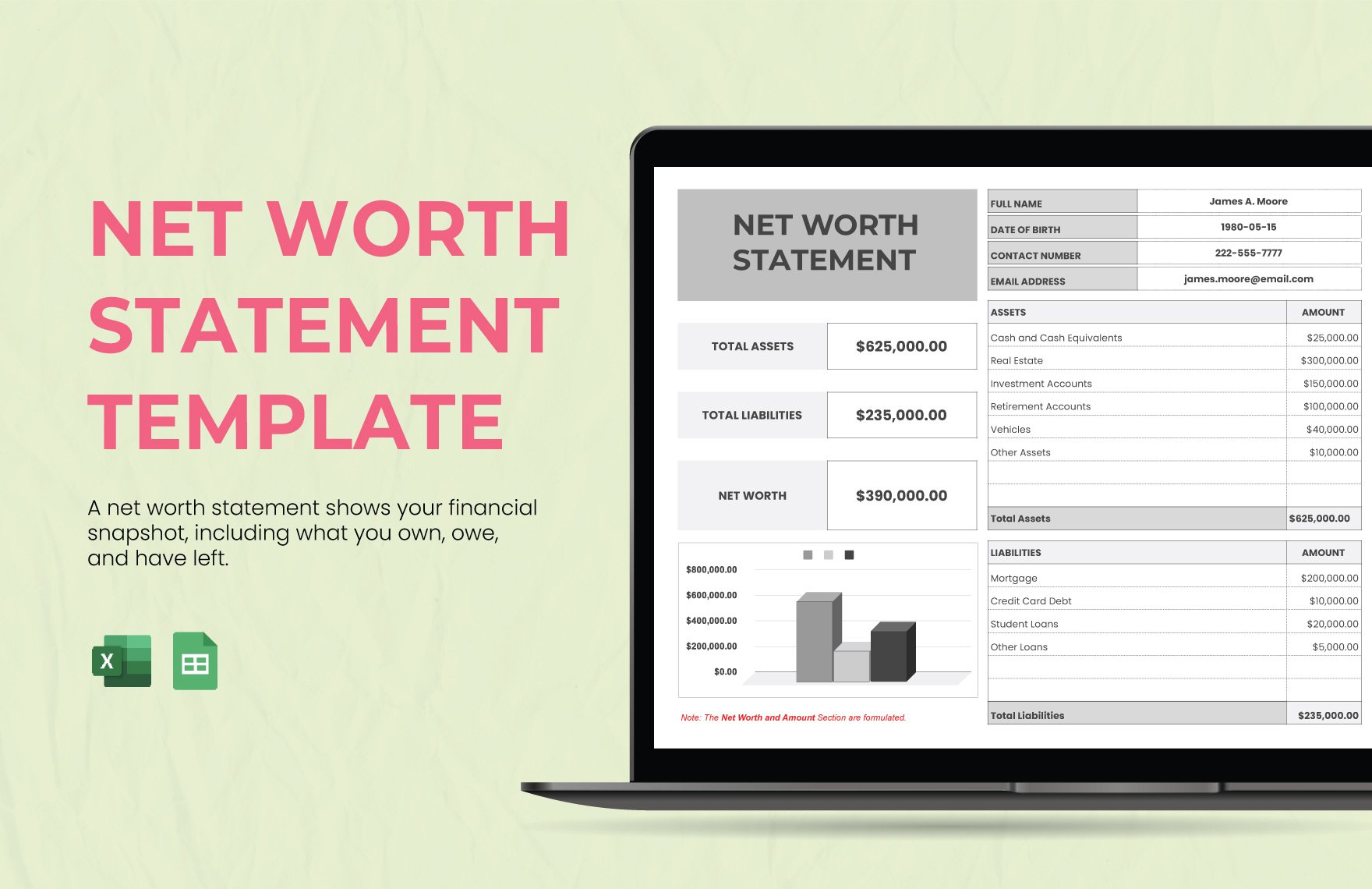
A statement of net worth is a foundational financial document that provides a snapshot of your economic health at a specific point in time. It is essentially a personal balance sheet: you list everything you own (assets) and subtract everything you owe (liabilities). The resulting figure represents your net worth.
Financial institutions, divorce attorneys, and estate planners frequently require this statement to assess creditworthiness, divide marital assets, or establish a legacy plan. When drafting this document, the objective is to capture an accurate representation of all financial resources available to you. Because a 529 plan represents a significant accumulation of capital intended for future use, omitting it from your asset list would result in an inaccurate, lower-than-actual assessment of your total net worth.
Why 529 Plans Are Categorized as Assets
To determine whether an item belongs on a statement of net worth, one must ask: Does this account have monetary value, and does the individual have the right to access or control that value? A 529 plan meets both criteria.
- Ownership and Control: In the vast majority of 529 plans, the account owner (the donor, such as a parent or grandparent) maintains complete control over the account. You have the authority to change the beneficiary, move funds to a different investment option, or liquidate the account entirely. This level of control makes the asset "yours" in the eyes of financial reporting.
- Liquidation Value: While the primary purpose of a 529 plan is to fund qualified higher education expenses, the funds are not "locked" away. They can be withdrawn for any reason. If you withdraw the money for a non-qualified purpose, you will owe income tax on the earnings portion of the distribution, plus a 10% federal penalty. Because the money can be recovered—even at a cost—it carries a current cash value that must be recorded on your net worth statement.
- Future-Directed Value: Some individuals mistakenly believe that because the money is "earmarked" for a child or dependent, it no longer counts as their own asset. This is a common confusion between "intent" and "legal ownership." Legally, the child for whom the account is named has no right to the funds until they are distributed; the account owner remains the sole owner.
How to Value Your 529 Plan for Reporting
When listing your 529 plan on a statement of net worth, accuracy is paramount. Do not simply estimate the balance. Instead, follow these steps to ensure the figure is defensible:
- Request the Current Valuation: Log into your 529 plan provider’s portal to retrieve the most recent statement. Most providers offer a "Total Portfolio Value" or "Current Balance" figure as of the most recent market close.
- Use the Fair Market Value: Unlike some liabilities that are calculated based on present value or amortization, an investment account like a 529 plan is reported at its fair market value on the date of the statement.
- Account for Pending Transactions: If you have initiated a contribution or a rollover that has not yet reflected in the account balance, make a note of this. Professional financial disclosures often require an adjustment for "accrued" or "in-flight" transactions to ensure the net worth calculation is current.
- Document the Provider: Always include the name of the state plan, the account number (or a truncated version for privacy), and the institution managing the assets. This allows a third party to verify the existence and value of the asset if the statement is used for legal or credit-based proceedings.
Differentiating 529 Plans from Other Educational Assets
It is common to confuse 529 plans with other vehicles, such as Coverdell Education Savings Accounts (ESAs) or Uniform Transfers to Minors Act (UTMA) / Uniform Gifts to Minors Act (UGMA) accounts. Understanding the distinction is vital for accurate financial reporting:
- UTMA/UGMA Accounts: These are considered the property of the minor. While the custodian manages the account, the funds legally belong to the beneficiary. Depending on the legal context (such as a divorce proceeding), these may sometimes be excluded from the parent's personal net worth, though they should still be disclosed as assets under the parent’s control.
- Coverdell ESAs: These are also personal assets for the account owner and should be included on a statement of net worth, similar to a 529 plan.
- Trusts: If a 529 plan is held within a trust, the reporting requirements change based on the trust document. Generally, assets held in an irrevocable trust are removed from the grantor's net worth, whereas assets in a revocable trust remain part of the grantor’s personal estate.
Common Pitfalls and Best Practices
When reporting financial data, precision protects you from accusations of misrepresentation. Avoid these common mistakes:
- The "Penalty-Adjusted" Trap: Do not subtract the potential 10% penalty or the income tax you would pay if you liquidated the account today. Unless you are actually planning to liquidate the account, the asset is reported at its full market value. Calculating a "net" value after potential taxes is speculative and generally not accepted in standard financial accounting.
- Duplication of Assets: Ensure that you are not listing the 529 plan as both a personal asset and as a gift to the beneficiary. The money exists in one place: the 529 account. Ensure it is recorded once to avoid inflating your total net worth.
- Inconsistent Reporting: If you are required to submit multiple statements of net worth over time, ensure your valuation methodology remains consistent. If you use the fair market value on June 1 for one report, do not use a projected year-end value for another.
Comparative Table: Asset Disclosure Considerations
| Asset Type | Primary Owner | Included in Net Worth? | Valuation Method |
|---|---|---|---|
| 529 Plan | Account Owner | Yes | Current Market Value |
| UTMA/UGMA | Minor | Varies (Legal context) | Current Market Value |
| Coverdell ESA | Account Owner | Yes | Current Market Value |
| Revocable Trust | Grantor | Yes | Current Market Value |
| Irrevocable Trust | Beneficiary | No (Usually) | N/A |
Frequently Asked Questions
Does the financial aid office view the 529 plan as my asset or the child's? For FAFSA (Free Application for Federal Student Aid) purposes, a 529 plan is generally treated as a parent’s asset if the parent is the account owner. This is distinct from a statement of net worth for personal or legal reasons; always confirm the specific definition of "asset" required by the institution requesting your statement.
Should I list the 529 plan if it is meant for my grandchild? Yes. If you are the legal account owner of a 529 plan, you retain ownership rights. Regardless of who the beneficiary is, the asset is under your control and is therefore part of your total financial net worth.
Can I exclude the 529 plan because it is tax-advantaged? No. The tax-advantaged status of a 529 plan relates to its growth and distribution rules, not its status as an asset. Tax status does not change the fact that the account contains value that belongs to you.
Do I need to attach my 529 plan statement to my net worth report? It depends on the requirements of the entity requesting the statement. If you are applying for a loan or providing documents for a divorce, you will likely need to provide the most recent account statement as verification. Always keep a digital copy of your statements for such requests.
How often should I update the 529 value on my statement? A statement of net worth is a point-in-time document. It is standard practice to update this information annually, or whenever a major financial event occurs that significantly alters your asset distribution.
Final Recommendation
When drafting your statement of net worth, treat your 529 plan with the same transparency as a brokerage account or savings account. List the full fair market value, ensure the owner/beneficiary relationship is clearly defined, and maintain a copy of the most recent quarterly statement as documentation.
Disclaimer: This information is for educational purposes and does not constitute legal, tax, or financial advice. Financial regulations and reporting requirements can vary by jurisdiction. Always consult with a certified financial planner or tax professional before making major financial decisions or submitting statements of net worth for legal or banking purposes.