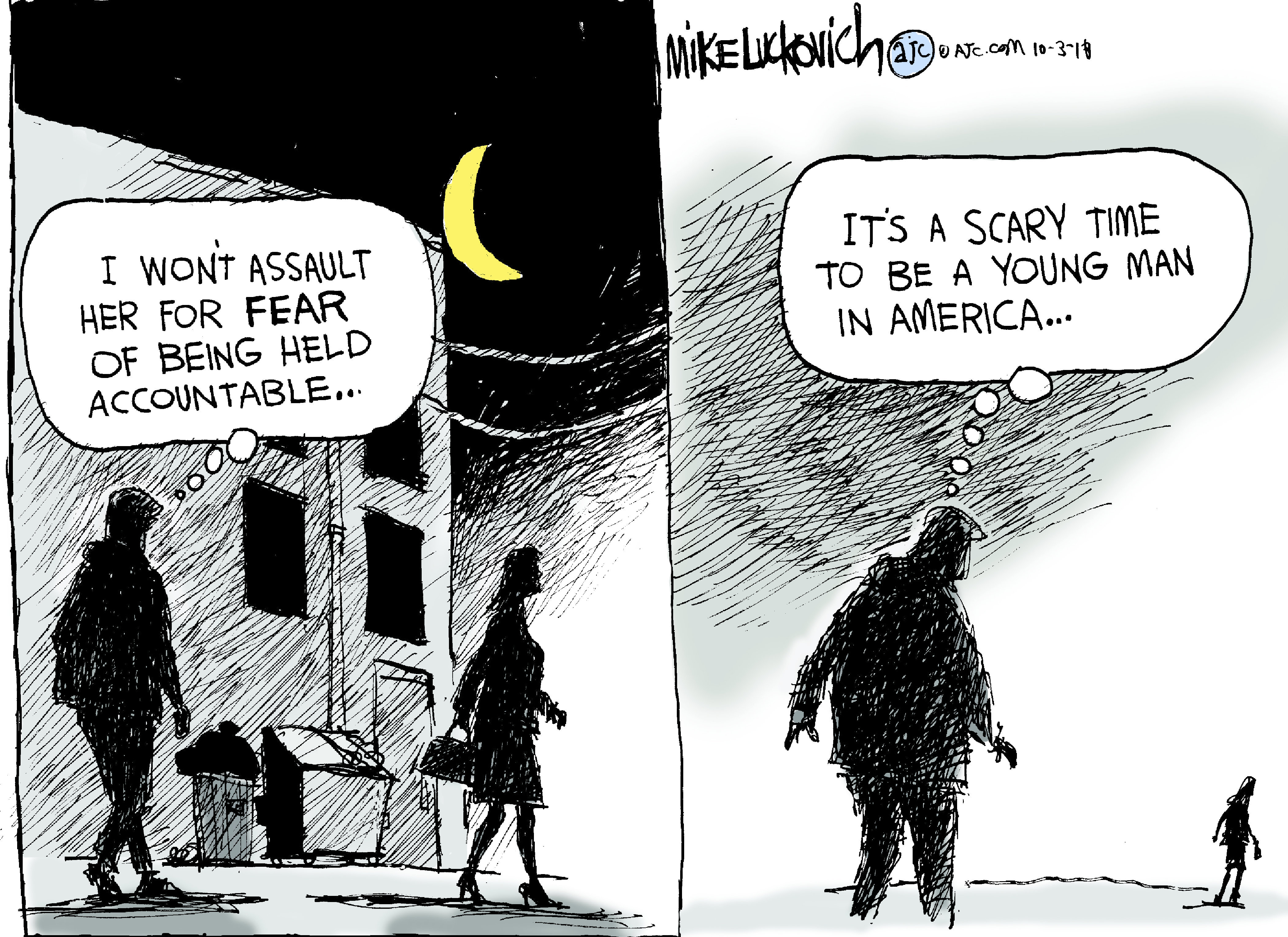
"A scary time for guys" is a phrase that gained significant public prominence following comments made by Supreme Court Justice Brett Kavanaugh during his 2018 confirmation hearings. It refers to the anxiety or frustration felt by men who perceive shifting social norms, accountability structures, and legal standards regarding interpersonal conduct, consent, and allegations of misconduct as potentially threatening to their reputations or career stability.
The Origin and Context of the Phrase
The expression originated during the intense political and cultural environment of the late 2010s, specifically within the backdrop of the #MeToo movement. During his testimony before the Senate Judiciary Committee in September 2018, Justice Kavanaugh remarked that the process had been a "scary time for young men" in America.
This statement was intended to articulate a fear that men might face life-altering accusations without due process or sufficient evidence. Critics at the time argued that the phrase minimized the experiences of survivors of sexual assault and overlooked the systemic barriers that have historically prevented victims from coming forward. Supporters, conversely, viewed it as a valid expression of concern regarding the "presumption of innocence" in the digital age, where social media trials can occur independent of legal proceedings.
Understanding the Cultural Shift
The "scary time" sentiment is rooted in the transition from an era where certain behaviors were socially overlooked to an era of heightened institutional and public accountability. For many, this transition feels like a fundamental change in the rules of social engagement.
The Evolution of Consent and Conduct
In professional and personal spheres, standards for what constitutes appropriate behavior have evolved significantly. Organizations have moved from informal grievance processes to rigorous, documented HR compliance standards. For men, this shift can feel overwhelming as they navigate new boundaries in workplace communication, office interactions, and professional networking. The anxiety often stems from the fear that an ambiguous interaction—one that might have been considered "normal" in the past—could now be interpreted as professional misconduct.
Digital Permanence and Reputational Risk
The internet has fundamentally altered the stakes of interpersonal conflict. In the past, rumors or allegations might have remained localized within a specific social or professional circle. Today, an allegation can go viral instantaneously, leading to "trial by social media." This creates a climate of uncertainty where a career can be impacted long before a legal verdict is reached. For many men, the fear is not just of legal repercussions, but of permanent reputational damage that persists regardless of the factual outcome of an investigation.
Institutional Responses and Professional Compliance
Institutions across the corporate, academic, and governmental sectors have overhauled their codes of conduct to address the risks identified in recent years. Understanding how these systems function is essential for men aiming to navigate their professional lives successfully.
- Strict HR Protocols: Most modern organizations employ centralized HR portals for reporting, ensuring that incidents are documented, investigated, and archived.
- Zero-Tolerance Policies: Many companies have adopted explicit zero-tolerance policies, which prioritize the safety of the work environment and mitigate the organization’s liability.
- Mandatory Training: Regular compliance training has become the industry standard. These sessions are designed to move beyond basic legal requirements to address nuance, such as power dynamics and the importance of clear, affirmative consent.
Strategies for Navigating Modern Expectations
Navigating this landscape successfully requires a shift in perspective from fear to intentionality. By adopting a proactive approach to professional and personal conduct, individuals can mitigate the risks associated with modern social uncertainty.
- Prioritize Clarity: In both professional and personal relationships, clarity is the best defense against misunderstanding. When in doubt, communicate intentions explicitly and ensure that signals are clearly understood by all parties.
- Document Professional Interactions: In the workplace, maintaining a record of project-related communications is a standard professional practice. This habit naturally provides a transparent account of interactions, protecting all parties involved.
- Engagement with Compliance: Rather than viewing training as a burden, treat it as a guide for navigating the modern workplace. Understanding the exact definitions used by your organization can help eliminate ambiguity.
- Listen and Reflect: The most effective way to address the anxiety surrounding these changes is to engage in open, respectful dialogue. Listening to the perspectives of others helps clarify why certain behaviors are no longer acceptable, fostering better mutual understanding.
Comparative Analysis of Social and Legal Standards
The table below outlines the differences between traditional perceptions and the current standards governing interpersonal conduct and accountability.
| Feature | Traditional Perception | Current Professional/Social Standard |
|---|---|---|
| Communication | Implicit, often ambiguous | Explicit, affirmative, and documented |
| Misconduct Reporting | Informal, often discouraged | Formal, institutionalized via HR/Policy |
| Due Process | Often settled within social circles | Rigorous, evidence-based investigations |
| Reputational Impact | Localized and often temporary | High risk of permanent, public visibility |
| Focus of Standards | Protection of reputation/privacy | Protection of safety and institutional integrity |
Addressing Ambiguity: Why the Tension Persists
The anxiety reflected in the phrase "a scary time for guys" often stems from a lack of clear demarcation between "private life" and "public accountability." As social media blurs these lines, the traditional notion of a private sphere has eroded.
For some men, the fear is that the nuance of human interaction is being lost. They worry that a minor lapse in judgment, an awkward joke, or a simple misunderstanding will be treated with the same severity as egregious misconduct. While this concern is frequently cited as a source of stress, experts in conflict resolution suggest that the solution lies in increased transparency and self-awareness rather than a return to previous standards of silence.
Frequently Asked Questions
Is the "scary time" sentiment based on legal reality? The sentiment is largely sociological rather than strictly legal. While criminal law continues to rely on the burden of proof, the "scary time" feeling often refers to the court of public opinion, where the burden of proof is lower and the social consequences can be immediate and severe.
How can I ensure my professional conduct is beyond reproach? Focus on professional boundaries. Ensure that all interactions remain focused on work outcomes, respect the personal space and time of colleagues, and utilize established, formal channels for feedback or conflict resolution rather than relying on informal or private communication methods.
Are these changes only applicable to men? No. While the specific discourse around this phrase centers on men, the shift toward professional accountability, clear consent, and rigorous documentation applies to everyone. However, the phrase highlights a specific anxiety among men who feel they are being asked to navigate a new set of rules that were not part of their formative social experiences.
What is the role of HR in mitigating these fears? HR departments are tasked with creating a consistent, objective framework for behavior. By providing clear guidelines and standardized procedures, they reduce the ambiguity that often fuels anxiety, ensuring that every employee knows exactly what is expected of them in the workplace.
Should I be concerned if I have never engaged in misconduct? There is a distinction between the fear of being accused and the likelihood of such an event. Engaging in transparent, respectful, and professional conduct significantly lowers the risk of misunderstanding. Focusing on positive, productive interactions is the most effective way to thrive in any professional environment.
Final Guidance: Cultivating Intentionality
The anxiety surrounding shifting social norms is a natural response to rapid cultural change. However, rather than viewing these developments as a source of perpetual threat, individuals are better served by treating them as an evolution of social competence. By focusing on explicit communication, professional accountability, and the active inclusion of others' perspectives, you can navigate the modern landscape with confidence.
The primary task for men today is to adapt to a standard of conduct that prioritizes transparency and respect. This does not mean abandoning individual personality or connection; it means ensuring that those connections are built on a foundation of mutual understanding, which is the only reliable safeguard against the uncertainties of the digital and professional age.