In Season 1, Episode 10 of Shark Tank, entrepreneur Kim Etheridge pitched her luxury retail boutique, A Perfect Pear, seeking $500,000 for a 15% equity stake. Although she initially secured a deal with Shark Kevin Harrington for 50% equity, the partnership did not survive the due diligence phase. As of 2026, the company serves as a landmark case study in the difficulties of scaling high-end, personality-driven brick-and-mortar retail through traditional franchising models.
The Origins of A Perfect Pear and the Vision for Expansion
Founded by Kim Etheridge in the mid-2000s, A Perfect Pear began as a specialized boutique located in Little Rock, Arkansas. The brand focused on high-end shoes, clothing, and accessories, carving out a niche for "attainable luxury" in a regional market. Before appearing on Shark Tank, Etheridge had built a remarkably successful single-unit operation, generating nearly $1 million in annual revenue with significant profit margins.
The primary subject of the Shark Tank pitch was not just the existing store, but a vision for a national franchise. Etheridge believed that her eye for curation and her "Perfect Pear" branding—which played on the idea of finding the perfect pair of shoes—could be replicated in affluent suburbs across the United States. When she walked into the tank during the show's inaugural season, she brought a level of established revenue that was relatively rare for early-stage Shark Tank contestants.
Breaking Down the Pitch: Valuation and Strategy
Kim Etheridge entered the Tank with a high valuation for a retail business. By asking for $500,000 in exchange for 15% of the company, she valued A Perfect Pear at approximately $3.33 million.
The Revenue Model
At the time of the recording, the business was performing exceptionally well for a local boutique. Etheridge reported:
- Annual Gross Sales: Approximately $800,000 to $1,000,000.
- Net Profit: Roughly $300,000.
- Inventory Management: High turnover rates for designer labels.
The technical depth of the pitch involved Etheridge explaining her "secret sauce"—a combination of personalized customer service and an exclusive inventory selection that wasn't available in major department stores. However, the Sharks immediately questioned the scalability. In retail, a $3.3 million valuation on a single-store operation is difficult to justify unless the growth plan (the "How") is airtight and the capital expenditures (CAPEX) for new locations are low.
The Franchising Proposition
Etheridge’s primary goal was to use the $500,000 to launch a franchising program. She envisioned a network of boutique owners who would pay a franchise fee and a percentage of royalties to use the A Perfect Pear name and benefit from her centralized buying power. This is where the pitch encountered its first major technical hurdle: the "Founder’s Trap." In high-end retail, the success is often tied to the specific taste and personality of the founder. Replicating that through a franchise manual is notoriously difficult.
The Shark Tank Negotiation: Why the Sharks Reacted Differently
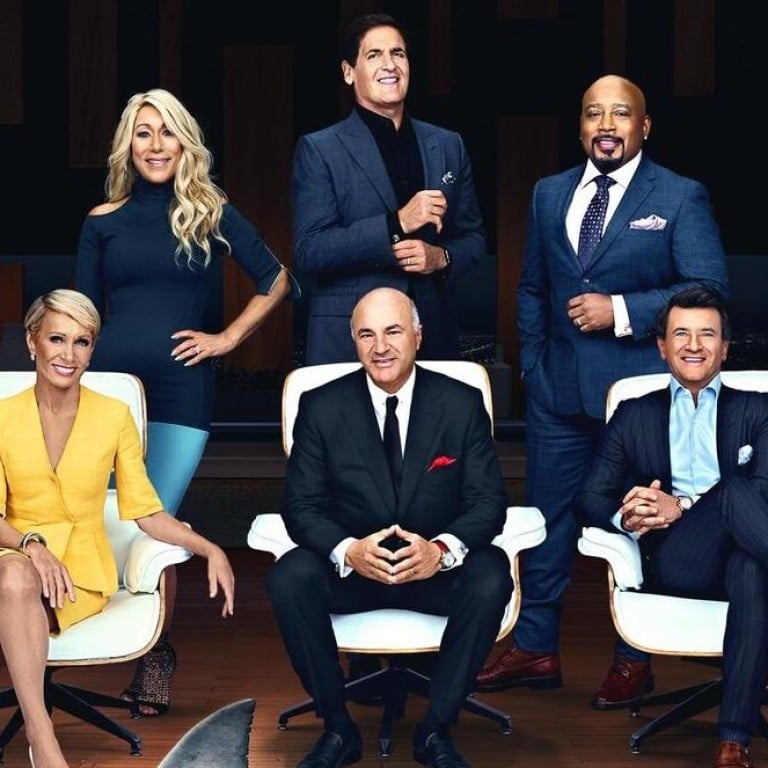
The reaction from the Sharks in Season 1 provided a glimpse into the diverse investment philosophies that would define the show for the next two decades.
- Kevin O'Leary: True to his "Mr. Wonderful" persona, O'Leary focused on the valuation. He argued that the business was a "lifestyle business"—a company that provides a great living for the owner but lacks the exponential growth potential required for venture-style returns. He passed early, citing the risk of the retail sector.
- Daymond John: As a fashion mogul, Daymond John understood the industry. However, he expressed skepticism about the boutique model's ability to compete with burgeoning e-commerce trends and the high overhead of luxury physical spaces.
- Barbara Corcoran: Corcoran, who built a real estate empire based on branding and location, appreciated the aesthetic of A Perfect Pear but felt that Etheridge was "the business." Without Etheridge physically present in every franchise, Corcoran believed the brand would lose its value.
- Robert Herjavec: Herjavec echoed the sentiment that the business was too small for the requested investment and that the franchising plan was too speculative.
The Kevin Harrington Deal
Kevin Harrington, the "pioneer of the modern-day infomercial," saw a different path. Harrington was less interested in the brick-and-mortar franchising and more interested in the branding and the potential for "as seen on TV" product spin-offs or a broader online presence.
Harrington countered Etheridge’s 15% offer with a much more aggressive demand: $500,000 for 50% of the company. This effectively cut the company's valuation from $3.3 million to $1 million. After a brief period of hesitation and some negotiation, Etheridge accepted the deal, primarily to gain Harrington's expertise in national distribution and marketing.
Why the Deal with Kevin Harrington Fell Through
In the years following the 2009 broadcast, it became public knowledge that the deal between Kim Etheridge and Kevin Harrington never closed. This is a common occurrence in the Shark Tank ecosystem, where the "handshake deal" on television is followed by months of due diligence.
Due Diligence Discrepancies
The primary reason the deal dissolved was a misalignment in vision and the logistical realities of the boutique business. Due diligence revealed that the costs of setting up a viable franchise infrastructure were higher than the $500,000 investment could sustain. Furthermore, Harrington’s expertise in mass-market direct-response television did not translate easily to the high-touch, exclusive world of luxury fashion boutiques.
The 2010 Retail Climate
It is also essential to consider the economic backdrop. The pitch occurred in the wake of the 2008 financial crisis. By 2010, the luxury retail market was struggling, and banks were hesitant to lend to new franchisees. This made the "A Perfect Pear" expansion plan significantly more difficult to execute than it appeared during the filming of the episode.
Business Performance Post-Shark Tank (2010–2026)
Following her appearance on the show, Kim Etheridge experienced the "Shark Tank Effect"—a massive surge in traffic and interest. However, without the Shark investment, the national franchise rollout stalled.
| Milestone Period | Status and Developments | Outcome |
|---|---|---|
| 2009 - 2011 | Post-show traffic surge; attempted expansion in Arkansas. | Increased local revenue but high overhead. |
| 2012 - 2015 | Pivot to e-commerce; focus on social media marketing. | Struggled against giants like Net-a-Porter and Revolve. |
| 2016 - 2019 | Consolidation of physical storefronts. | Kim Etheridge began exploring other entrepreneurial ventures. |
| 2020 - 2025 | Impact of global shifts in retail; boutique closure. | The physical A Perfect Pear boutique closed its doors. |
| 2026 Perspective | Brand exists as a legacy case study. | Focus shifted to consulting and personal brand development. |
By 2026, the retail landscape has shifted almost entirely toward experiential physical retail or hyper-optimized e-commerce. A Perfect Pear’s original model of a regional high-end boutique faced intense competition from digital-native brands and the rising cost of commercial leases in premium shopping districts.
Lessons for Retail Entrepreneurs from A Perfect Pear
The A Perfect Pear pitch remains a favorite among business school professors and retail consultants because it highlights three critical technical challenges in the industry.
1. The Scalability of "Taste"
The "Perfect Pears" model relied heavily on Etheridge’s ability to predict fashion trends. When a business is built on a founder's "eye," scaling requires a way to institutionalize that taste. Most boutiques fail at this because they cannot hire enough people with the same level of intuition, leading to inconsistent inventory and declining brand equity.
2. CAPEX vs. OPEX in Franchising
Franchising a retail store requires immense Capital Expenditure (CAPEX) for the franchisee (build-out, initial inventory, signage) and high Operating Expenses (OPEX) for the franchisor (support, training, supply chain management). Etheridge’s $500,000 request was likely insufficient to build a robust support system for a national network.
3. The Valuation Gap
Etheridge's initial valuation was based on a multiple of earnings that is typically reserved for software or highly scalable tech companies, not single-unit retail. For a retail business to command a 10x or 15x multiple, it usually needs to demonstrate "same-store sales growth" across multiple locations first.
Technical Specifications of a Modern Retail Pitch
In 2026, if an entrepreneur were to pitch a business similar to A Perfect Pear, the requirements for success would be vastly different than they were in Season 1. Modern investors look for:
- Omnichannel Integration: A seamless transition between the physical store and the mobile shopping experience.
- Data Analytics: Using customer data to drive inventory purchases rather than just "founder's intuition."
- Micro-Influencer Strategy: A defined plan for localized digital marketing that doesn't rely on expensive national TV spots.
- Sustainability Metrics: Clear documentation of supply chain ethics and environmental impact.
Frequently Asked Questions
Did A Perfect Pear ever open more stores?
While there was significant interest in franchising after the Shark Tank episode, a large-scale national rollout never materialized. Kim Etheridge focused on maintaining the quality of her primary location and expanding her online presence rather than risking the brand's reputation on under-capitalized franchise units.
Is A Perfect Pear still in business in 2026?
The original brick-and-mortar boutique in Little Rock, Arkansas, eventually closed as the retail market evolved. In 2026, the brand is largely considered a historical example of early Shark Tank ventures, and the founder has transitioned into other professional consulting and entrepreneurial roles.
Why did Kevin Harrington want 50% of the company?
Kevin Harrington’s investment strategy often involved high equity stakes because his "As Seen On TV" model required substantial control over the branding and distribution channels. He viewed the 50% stake as a partnership where he would provide the infrastructure and Etheridge would provide the product expertise.
Was the $3.3 million valuation realistic?
For a single-store boutique in 2009, a $3.3 million valuation was considered very high. While the store was profitable, valuations in the retail sector are usually 3x to 5x EBITDA (Earnings Before Interest, Taxes, Depreciation, and Amortization). Etheridge’s ask was closer to an 11x multiple, which is generally only seen in businesses with proprietary technology or massive scale.
What happened to Kim Etheridge after Shark Tank?
Kim Etheridge remained a respected figure in the Arkansas business community. Following the show, she continued to run her boutique for several years, navigating the transition to digital retail. She eventually moved into the "lifestyle and wellness" space, utilizing the lessons learned from her high-stakes retail journey.
Practical Recommendation for Boutique Owners
For entrepreneurs looking to replicate the success of the A Perfect Pear pitch while avoiding its pitfalls, the focus should be on proving the model first. Before seeking a $500,000 investment for franchising, it is advisable to open a second and third corporate-owned location. This demonstrates that the brand and its profitability can exist independently of the founder’s daily presence. Additionally, in the 2026 market, prioritizing a "digital-first" inventory system will make the business much more attractive to investors who are wary of the overhead associated with traditional luxury retail.