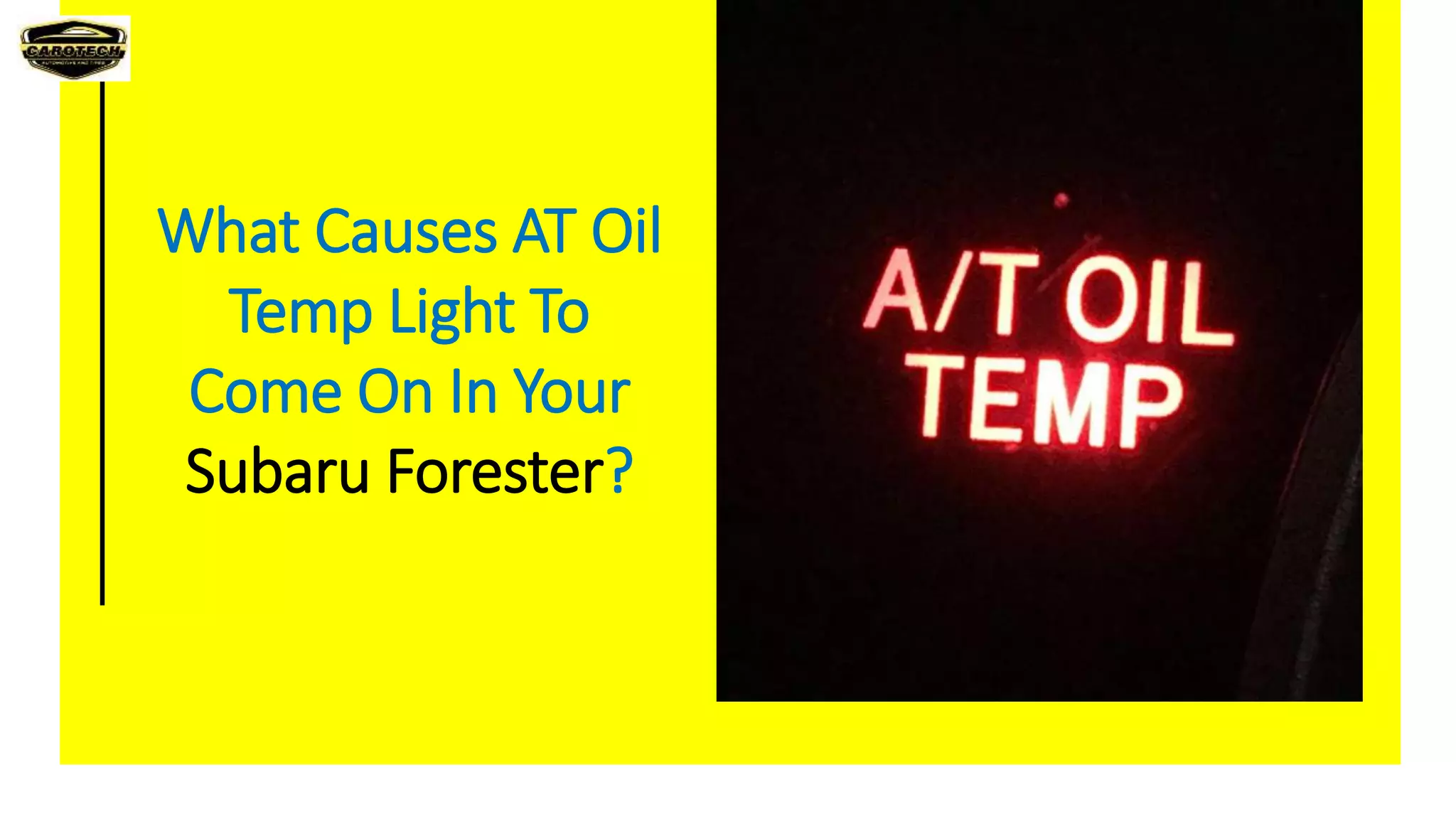
The AT OIL TEMP light on a Subaru Outback indicates that the automatic transmission fluid has exceeded its safe operating temperature or the Transmission Control Module (TCM) has detected an electrical fault. A solid light signals overheating, while a flashing light typically identifies a diagnostic error code related to sensors or solenoids.
The Subaru Outback, particularly those equipped with the Lineartronic Continuously Variable Transmission (CVT), relies heavily on the thermal stability of its transmission fluid. Unlike traditional geared transmissions, a CVT uses a metal chain or belt and two pulleys to provide seamless gear ratio transitions. This process generates significant friction and heat. When the "AT OIL TEMP" (Automatic Transmission Oil Temperature) light illuminates on your dashboard, the vehicle is warning you that the transmission’s health is at immediate risk.
In 2026, as many Subaru Outbacks from the 2015–2022 era reach higher mileage, understanding this warning light is essential for preventing catastrophic mechanical failure. This guide explores the nuances of the light, the mechanical triggers behind it, and the necessary steps to take to protect your vehicle.
The Distinction Between Steady and Flashing Lights
The most critical first step for any Subaru owner is to identify the behavior of the AT OIL TEMP light. Subaru’s onboard diagnostics use the light in two distinct ways to communicate different types of distress.
Solid AT OIL TEMP Light: Thermal Overload
A solid, non-blinking AT OIL TEMP light is a literal warning of heat. It means the fluid inside the transmission has reached a temperature—typically above 250°F (121°C)—where it can no longer effectively lubricate the metal chain and pulleys or provide the hydraulic pressure needed for operation.
At these temperatures, the fluid begins to break down chemically (oxidation), losing its viscosity. If driven in this state, the metal components of the CVT will experience accelerated wear, leading to "slipping" or permanent scoring of the pulley faces.
Flashing AT OIL TEMP Light: Electronic or System Fault
If the AT OIL TEMP light is flashing (usually at a steady rhythm of once per second) immediately upon starting the car or while driving, the issue is likely not temperature-related. Instead, the TCM has detected an electrical malfunction. This could be a failed solenoid, a faulty speed sensor, or a communication error on the CAN bus.
When the light flashes, the vehicle often enters a "Limp Home" mode. In this state, the TCM restricts the transmission's gear ratio range and may reduce engine power to prevent mechanical damage. You may also notice that other dashboard lights, such as the ABS, Traction Control (VDC), and EyeSight warnings, illuminate simultaneously. This is a design feature: the car disables secondary systems that rely on accurate transmission data.
Why the Light Comes On: Primary Causes
Understanding the root cause requires looking at both how you drive the vehicle and the age of its components. In the context of 2026 vehicle maintenance, several common culprits have emerged for the Subaru Outback.
1. Extreme Operating Conditions
The most common reason for a solid light is putting the CVT under high load. This includes:
- Towing: Pulling a trailer that exceeds the Outback’s rated capacity (typically 2,700 to 3,500 lbs, depending on the engine).
- Mountain Driving: Long, steep ascents at low speeds prevent sufficient airflow through the transmission cooler.
- Off-Roading: Navigating deep sand or mud requires high torque and generates immense internal heat.
2. Degraded or Low Transmission Fluid
Subaru traditionally marketed its CVT fluid as "lifetime fluid." However, specialized technicians and high-mileage data have proven that the fluid does break down. Over time, the fluid loses its ability to dissipate heat. Furthermore, even a small leak from the transmission pan or the CVT cooler lines can drop the fluid level low enough to cause rapid overheating.
3. Valve Body and Solenoid Failure
A frequent cause for a flashing light in Outbacks is the failure of the torque converter clutch solenoid or the pressure control solenoids located inside the transmission's valve body. When these solenoids fail—often due to internal electrical resistance changes—the TCM can no longer manage the fluid flow correctly. This is frequently accompanied by OBD-II trouble codes like P0700 (General Transmission Control System) and P2762 (Secondary Pressure Sensor Range/Performance).
4. Cooling System Obstructions
The transmission fluid is cooled by a heat exchanger, often integrated into the bottom of the engine radiator or as a standalone unit. If the radiator fins are clogged with debris or if the internal cooling passages are restricted, the transmission fluid will stay hot even during normal highway driving.
Immediate Response: What to Do When the Light Appears
If the AT OIL TEMP light appears while you are driving, your immediate actions can mean the difference between a minor service and a $7,000 transmission replacement.
- Pull Over Safely: Find a flat, safe area away from traffic as soon as possible.
- Do Not Turn Off the Engine Immediately: This is a common mistake. If the light is solid (overheating), you want the engine to stay running at an idle in Park. Why? Because the transmission fluid pump is driven by the engine. If you shut the engine off, the hot fluid sits still and "soaks" the internal components with heat. By idling, the pump continues to circulate the fluid through the cooler.
- Check for External Factors: Ensure there is nothing blocking the front grille (like a plastic bag or excessive mud) that might be preventing airflow.
- Wait for the Light to Exit: Keep the vehicle in Park and wait. If the light goes out after 10–15 minutes, the fluid has cooled to a safe range.
- Drive Cautiously: If you must continue, drive at moderate speeds and avoid heavy acceleration. If the light reappears quickly, you must stop and call for a tow.
| Light Status | Meaning | Recommended Action | Risk Level |
|---|---|---|---|
| Solid Red/Orange | Fluid Overheating | Stop, idle in Park, let cool. | High (Mechanical Damage) |
| Flashing | Electrical/Sensor Fault | Scan for OBD-II codes immediately. | Moderate (Electronic Failure) |
| Flashing + Limp Mode | Critical System Error | Tow to a specialist; do not drive. | Critical (Total Failure) |
Professional Diagnosis and Expected Repairs in 2026
When you take your Outback to a technician, they will perform a series of checks starting with an electronic scan.
Diagnostic Codes (OBD-II)
The technician will look for "P" codes stored in the TCM. In 2026, the most common codes found on aging Outbacks include:
- P0700: A generic code indicating the TCM has requested the Check Engine Light.
- P01101: Related to the transmission range sensor.
- P2762 / P2764: Specifically related to the lock-up solenoid.
The Valve Body Replacement
If the light was flashing and the codes point to a solenoid, the standard repair is replacing the transmission valve body. While individual solenoids can sometimes be replaced by specialized shops, Subaru typically sells the valve body as a complete unit. In 2026, this repair generally costs between $1,200 and $1,800, including labor and fresh fluid.
CVT Fluid Exchange
If the fluid is burnt or the light was triggered by heat, a fluid exchange is mandatory. This is not a simple "drain and fill" like engine oil. The CVT fluid level must be set at a specific temperature (usually between 95°F and 113°F) using a diagnostic tool to monitor the internal thermistor. Using the wrong fluid—or the wrong level—will almost certainly trigger the AT OIL TEMP light again.
Long-Term Prevention Strategies
To avoid seeing this light in the future, Outback owners should move away from the "lifetime fluid" mentality and adopt a proactive maintenance schedule.
- Fluid Intervals: Despite the manual's "inspect only" recommendation for normal driving, most Subaru specialists recommend a full CVT fluid exchange every 30,000 to 60,000 miles, especially if you tow or live in a mountainous region.
- Auxiliary Coolers: If you frequently tow trailers or a camper, consider installing an aftermarket auxiliary transmission cooler. This adds an extra radiator dedicated solely to the CVT fluid, significantly lowering operating temperatures during high-stress scenarios.
- Battery Health: Modern Subaru TCMs are sensitive to voltage fluctuations. A dying 12V battery can sometimes cause "ghost" flashing lights on the dash. In 2026, ensuring your battery is tested annually is a cheap way to prevent diagnostic headaches.
- Avoid "Off-Brand" Fluids: The Subaru Lineartronic CVT requires specific high-torque fluid (often referred to as CVTF-II or High Torque CVTF-LV). Using a generic "multi-vehicle" CVT fluid can lead to belt slippage and overheating.
Frequently Asked Questions
Can I drive my Subaru Outback if the AT OIL TEMP light is flashing?
Driving with a flashing light is not recommended. While the car may still move, it is likely in a "limp mode" where the transmission cannot adjust ratios correctly. This puts immense strain on the CVT chain. You should drive only as far as necessary to reach a safe parking spot or a repair facility.
Does the AT OIL TEMP light mean I need a new transmission?
No, not necessarily. In many cases, it is a sign of a failed solenoid in the valve body or simply old fluid that needs replacing. However, if the light is ignored and the car is driven while overheating, the internal damage can eventually necessitate a full transmission replacement.
Why do my Brake and ABS lights come on when the AT OIL TEMP light flashes?
This is a standard Subaru safety protocol. The Transmission Control Module shares data with the Vehicle Dynamics Control (VDC) and EyeSight systems. When a transmission fault is detected, the car disables these systems because it can no longer guarantee they will function correctly without accurate torque and speed data from the transmission.
How much does it cost to fix an AT OIL TEMP light issue?
Costs vary based on the cause. A fluid exchange typically costs $300 to $500. A valve body replacement ranges from $1,200 to $1,800. If the transmission has suffered internal mechanical failure, a remanufactured CVT can cost $6,000 to $8,000.
Is there a recall for Subaru Outback transmission overheating?
While there have been various Technical Service Bulletins (TSBs) and extended warranties (such as the 10-year/100,000-mile warranty extension for 2010–2018 models), there is no universal "permanent" recall. Check your VIN on the NHTSA website to see if your specific vehicle has outstanding campaigns related to the transmission.
Next Steps for Owners
If your AT OIL TEMP light is currently on, your first action should be to check your fluid levels (if you have a dipstick, though most newer Outbacks do not) and scan for trouble codes. If you have exceeded 60,000 miles on your current fluid, schedule a professional fluid exchange regardless of whether the light stays off. Prevention is the only way to ensure the longevity of the Subaru Lineartronic CVT system.