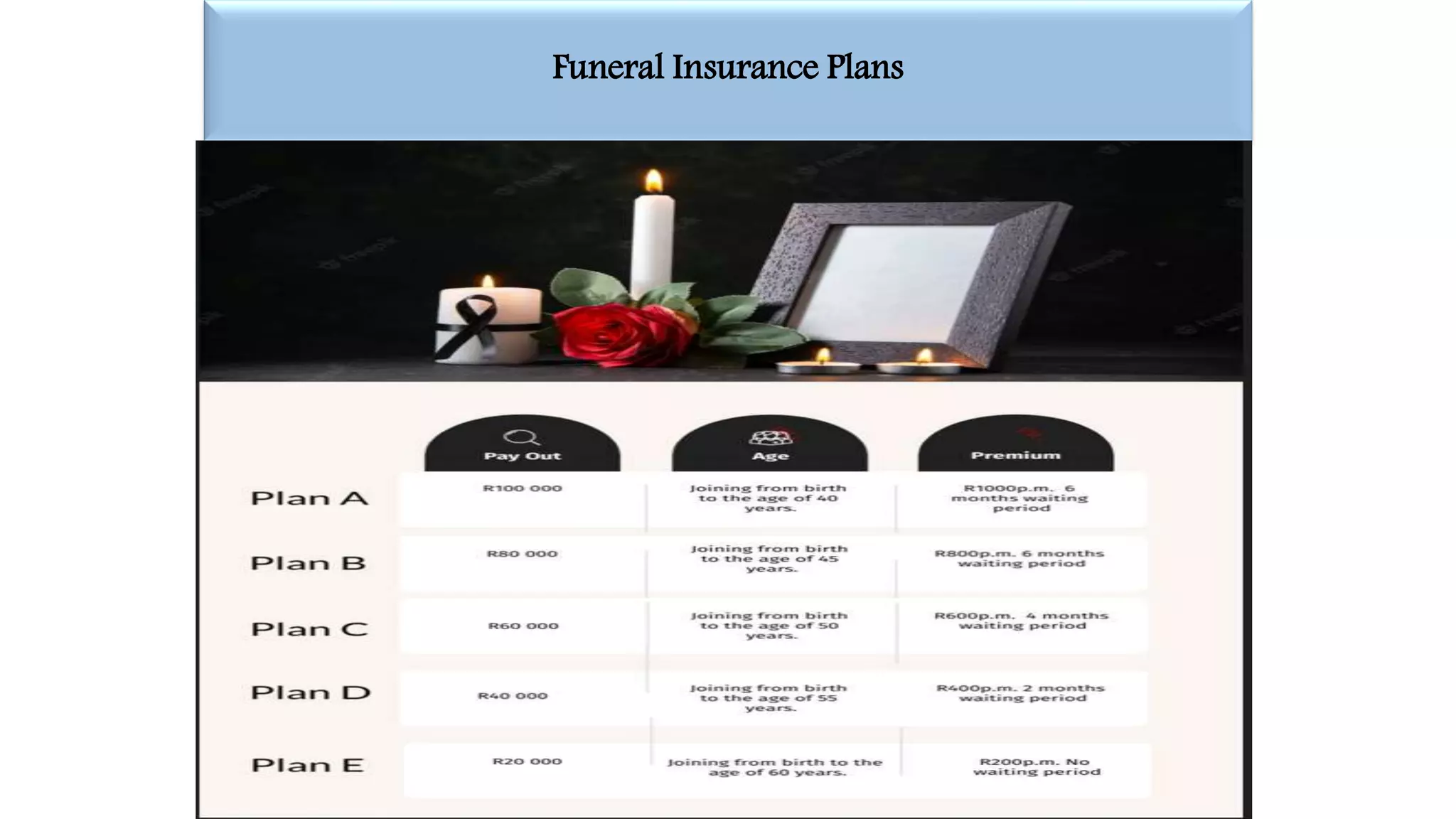
Life insurance and funeral insurance differ primarily in their scope, payout scale, and qualification requirements. Life insurance provides a substantial lump sum designed for income replacement or debt settlement, often requiring medical underwriting. In contrast, funeral insurance is a smaller, simplified-issue policy specifically intended to cover end-of-life expenses like burial or cremation services.
Choosing the right financial instrument to protect your family after you pass away is one of the most significant legacy decisions you will make. As of 2026, the landscape of personal finance has become increasingly specialized, offering a variety of products tailored to specific needs. Two terms that are frequently conflated but serve vastly different roles are life insurance and funeral insurance (often referred to as final expense insurance or burial insurance).
While both products provide a death benefit to beneficiaries, the mechanisms by which they operate—and the financial problems they solve—are distinct. Understanding these nuances is essential for ensuring that your loved ones are not left with unmanageable debt or the burden of immediate out-of-pocket funeral costs.
What is Life Insurance? A Comprehensive Overview
Life insurance is a broad category of financial contracts between an individual and an insurer. In exchange for regular premium payments, the insurer guarantees a payout to designated beneficiaries upon the death of the insured party. In 2026, the primary goal of life insurance remains the same as it has been for decades: to provide a financial safety net that replaces the lost income of the deceased or covers major liabilities.
Term Life vs. Permanent Life Insurance
To understand how life insurance differs from funeral insurance, one must first understand the two main branches of life insurance:
- Term Life Insurance: This is the most straightforward form of coverage. It provides protection for a specific period, such as 10, 20, or 30 years. If the insured passes away during this "term," the death benefit is paid out. If the term expires while the insured is still alive, the coverage ends unless it is renewed (usually at a much higher cost).
- Permanent Life Insurance (Whole or Universal): These policies are designed to last the insured's entire life. They often include a "cash value" component that grows over time, which the policyholder can borrow against or withdraw. Because these policies are guaranteed to pay out eventually, they are significantly more expensive than term life insurance.
The Role of Underwriting
A defining characteristic of traditional life insurance is the underwriting process. To secure a policy with a high death benefit—ranging from $100,000 into the millions—insurers must assess the risk of the applicant. This typically involves a detailed medical questionnaire and, in many cases, a physical examination, blood tests, and a review of medical records. In 2026, while "accelerated underwriting" uses data algorithms to speed this up, the health of the applicant remains a primary factor in determining the premium cost and eligibility.
What is Funeral Insurance? Defined and Explained
Funeral insurance, also known as final expense insurance, is technically a type of whole life insurance, but it is marketed and structured very differently from standard life policies. Its specific purpose is to provide a small, rapid payout to cover the immediate costs associated with a person's death—specifically the funeral, burial, cremation, and perhaps minor outstanding medical bills.
Simplified and Guaranteed Issue
The hallmark of funeral insurance is the ease of acquisition. Most funeral insurance policies are "simplified issue" or "guaranteed issue."
- Simplified Issue: Requires answering a few basic health questions but no medical exam.
- Guaranteed Issue: No health questions are asked, and no medical exam is required. As long as you are within a certain age bracket (typically 50 to 85), you cannot be turned down.
Because the insurer takes on a higher risk by not screening for health conditions, the premiums per dollar of coverage are higher than traditional life insurance. However, because the total coverage amount is low—usually between $5,000 and $25,000—the monthly premiums remain manageable for many seniors on fixed incomes.
The "Graded" Death Benefit
A critical detail often found in funeral insurance in 2026 is the "graded" death benefit. For many guaranteed issue policies, if the insured dies of natural causes within the first two or three years of the policy, the beneficiary may only receive a refund of the premiums plus a small amount of interest, rather than the full face value. This prevents individuals with terminal illnesses from taking out a policy days before passing.
Primary Differences Between Life and Funeral Insurance
While both provide a payout upon death, the differences in application, cost, and utility are significant.
1. Benefit Amounts and Intended Use
Standard life insurance is designed for "big picture" financial stability. It is used to pay off a mortgage, fund a child’s college education, or provide 10 years of replaced salary for a surviving spouse. Death benefits are typically $250,000 or higher.
Funeral insurance is "micro-insurance." It is designed for the "final details." With funeral costs in 2026 often exceeding $12,000 when including professional services, caskets, and cemetery fees, these policies provide exactly enough to ensure a dignified send-off without the family having to dip into savings or use credit cards.
2. Qualification and Health Requirements
If you are in excellent health, traditional life insurance will almost always be the more cost-effective choice. However, as individuals age or develop chronic conditions (such as diabetes or heart disease), they may find themselves "uninsurable" by traditional standards. Funeral insurance provides a pathway to coverage for these individuals. It is the "safety net" for those who waited too long to buy traditional life insurance.
3. Payout Speed and Administration
Traditional life insurance claims can sometimes take weeks or even months to process, especially if the policy is large and requires a thorough investigation by the insurer. Funeral insurance companies often prioritize speed, aiming to get funds to the family or the funeral home within 24 to 48 hours of receiving a death certificate, as these funds are needed immediately to secure services.
Comparing Coverage: Which One Solves Your Problem?
Deciding between these two products requires a look at your current life stage and financial goals.
When to Choose Life Insurance
Life insurance is the superior choice for younger individuals, parents, and those with significant financial liabilities. If you have a mortgage, children who rely on your income, or a spouse who would struggle to maintain their standard of living without you, the $10,000 or $20,000 provided by a funeral policy will be woefully inadequate.
By purchasing a term life policy in your 30s or 40s, you can secure $500,000 of coverage for a fraction of what a senior would pay for a small funeral policy. It is a tool for wealth preservation and family protection.
When Funeral Insurance is the Better Option
Funeral insurance is generally best suited for:
- Seniors (Ages 60-85): Those who no longer have a mortgage or dependents but want to ensure their children aren't burdened by funeral costs.
- Individuals with Health Issues: Those who have been denied traditional life insurance due to pre-existing conditions.
- Those with No Savings: Individuals who have not built up an "emergency fund" or "death fund" and want a guaranteed way to pay for their final arrangements.
Financial Implications and Costs in 2026
In the economic climate of 2026, inflation has impacted the cost of both insurance premiums and end-of-life services. According to data from the National Funeral Directors Association (NFDA), the median cost of a funeral has continued to rise, making the "small" policies of the past ($5,000) often insufficient for a traditional burial.
Cost Comparison Table
| Feature | Traditional Life Insurance (Term/Whole) | Funeral Insurance (Final Expense) |
|---|---|---|
| Typical Benefit Amount | $100,000 to $5,000,000+ | $2,000 to $25,000 |
| Medical Exam Required? | Usually yes (or data-driven medical screening) | No (Simplified or Guaranteed Issue) |
| Approval Time | Days to Weeks | Minutes to Days |
| Premium Cost | Lower per $1,000 of coverage | Higher per $1,000 of coverage |
| Age Limitations | Harder to get after age 70 | Available up to age 85 or 90 |
| Cash Value | Yes (Permanent) or No (Term) | Usually yes (small amounts) |
| Primary Goal | Income replacement / Debt payment | Burial, cremation, and funeral costs |
The Underwriting Process: What to Expect
When applying for life insurance in 2026, the process is heavily digitized. You will likely authorize the insurance company to access your digital health records. If you are applying for a "fully underwritten" policy, an examiner may still visit your home to take vitals. The goal is to place you in a "rating class" (e.g., Preferred Plus, Standard, or Substandard). Your premium is a direct reflection of your life expectancy.
When applying for funeral insurance, the process is much more "consumer-facing." Many 2026 providers offer "click-to-buy" policies where you simply enter your age, state, and beneficiary info. If there are health questions, they are usually "knock-out" questions (e.g., "Are you currently in a nursing home?" or "Have you been diagnosed with a terminal illness?"). If you answer "no" to these, you are generally approved instantly.
Common Pitfalls and How to Avoid Them
1. Overpaying for Small Coverage
A common mistake is healthy seniors buying funeral insurance when they could still qualify for a small "Standard" whole life policy. Traditional whole life will almost always be cheaper if you can pass a basic health check. Always check if you qualify for a standard policy before settling for "Guaranteed Issue."
2. Ignoring the Graded Period
As mentioned, most funeral policies have a two-year waiting period for full natural death benefits. If you are in very poor health, this is a risk you must accept. However, if you are healthy, look for "First Day Coverage" policies which pay the full amount even if death occurs shortly after the policy starts.
3. Misunderstanding "Pre-Need" vs. Funeral Insurance
"Pre-need" insurance is purchased directly through a funeral home and is often tied to a specific contract for services. Funeral insurance is a life insurance policy where the money goes to your beneficiary, who then has the flexibility to choose any funeral home or use the money for other urgent needs. In 2026, the flexibility of funeral insurance is generally preferred over the rigid structure of pre-need contracts.
Frequently Asked Questions
Can I have both life insurance and funeral insurance?
Yes. Many people maintain a large term life insurance policy to cover their working years and mortgage, while also holding a small whole life funeral policy to ensure that their final expenses are handled regardless of when they die or when their term insurance expires.
Does funeral insurance pay out directly to the funeral home?
Usually, the payout goes to your named beneficiary (often a spouse or adult child). However, you can often "assign" the benefit to a funeral home. This means the insurance company pays the funeral home directly for the services rendered, and any remaining balance is sent to your beneficiary.
Is funeral insurance a waste of money if I have savings?
If you have a dedicated savings account or an estate worth significantly more than your expected final costs, funeral insurance may not be necessary. However, many people prefer insurance because the payout is tax-free and bypasses the probate process, providing immediate cash when the family needs it most.
What happens if I stop paying the premiums?
For both traditional whole life and funeral insurance, if you stop paying, the policy will lapse. Some policies have a "reduced paid-up" option where the accumulated cash value is used to buy a smaller, permanent death benefit, but generally, consistency in payment is required to maintain coverage.
Why is funeral insurance more expensive for seniors than term life?
It isn't necessarily more expensive in terms of the monthly "bill," but it is more expensive per dollar of coverage. This is because a 75-year-old has a much higher statistical probability of dying within the next ten years than a 30-year-old does, and the insurance company is taking on that risk without a medical exam.
Making Your Decision: Next Steps
To determine which path is right for you in 2026, start by calculating your "Total Liability Gap." Add up your mortgage, outstanding debts, and the amount of income your family would need to survive for 10 years. If that number is high, you need Life Insurance.
If your debts are paid and your children are grown, but you lack $15,000 in liquid cash to cover a funeral, look into Funeral Insurance.
Before signing any contract, verify the insurer's financial strength rating through agencies like A.M. Best or Standard & Poor's. A policy is only as good as the company's ability to pay the claim decades from now. Once you have a policy, ensure your beneficiaries know where the documents are kept and the contact information for the insurance agent, as speed of notification is the key to a smooth payout.