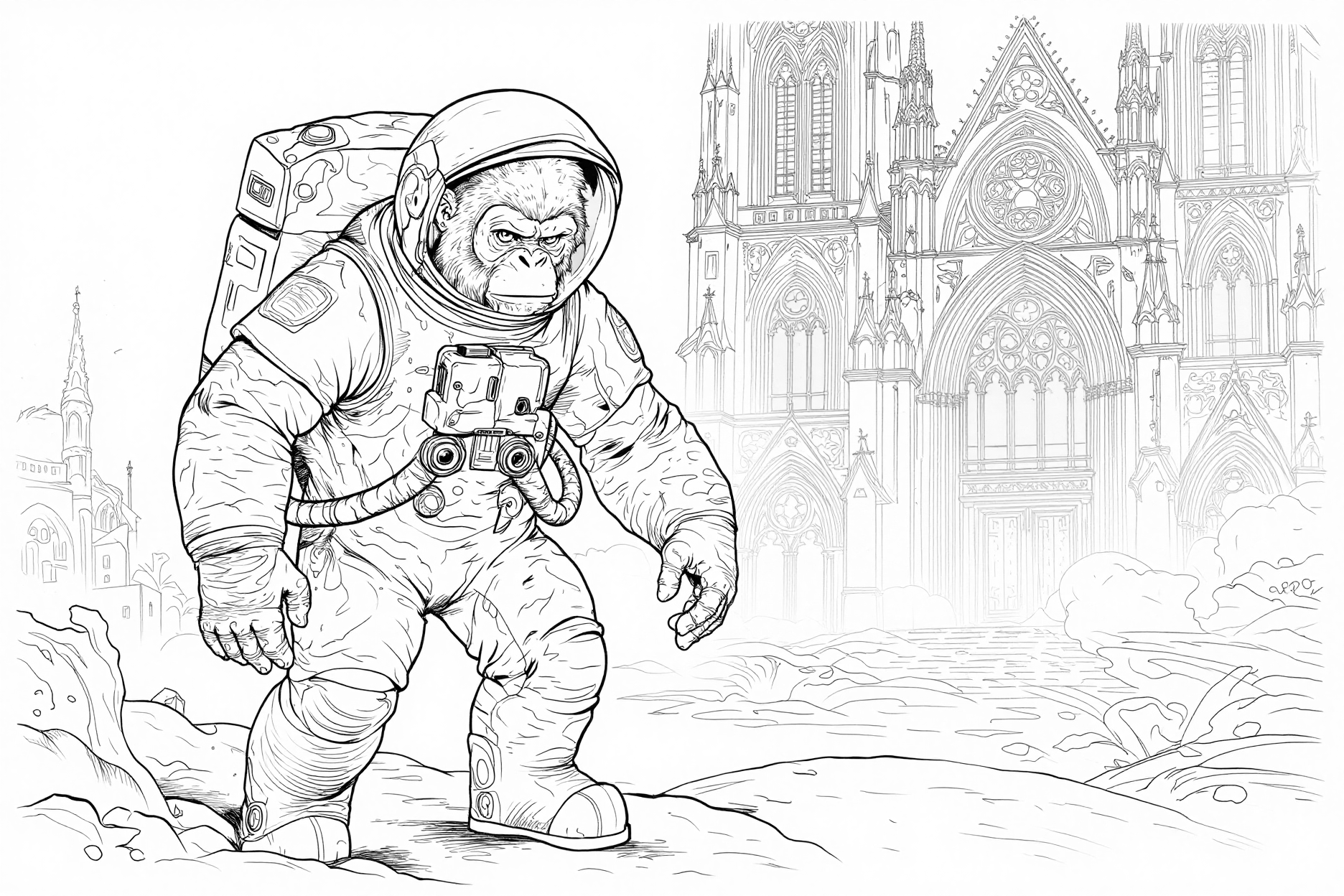
The famous astronaut gorilla suit stunt on the International Space Station (ISS) occurred in February 2016, orchestrated by NASA astronaut Scott Kelly. With the help of his twin brother Mark Kelly, a gorilla suit was delivered via a resupply mission, allowing Scott to surprise crewmates and engage the public during his historic "Year in Space" mission.
The Origins of a Cosmic Prank: Mark and Scott Kelly
To understand how a full-sized gorilla suit ended up orbiting 250 miles above the Earth, one must look at the unique relationship between the Kelly brothers. Both Scott and Mark Kelly were veteran NASA astronauts and Navy captains. In 2015, Scott Kelly embarked on a 340-day mission aboard the ISS—the "One-Year Mission"—designed to study the long-term effects of weightlessness on the human body.
During this period, Mark Kelly, who remained on Earth as the control subject for the groundbreaking "Twins Study," looked for ways to support his brother’s morale. The idea for the gorilla suit was born from a mix of brotherly humor and a desire to humanize the often-austere environment of scientific research. Mark purchased a standard, store-bought gorilla suit and began the complex process of getting it approved for spaceflight.
The Failed First Attempt
The story of the gorilla suit is also a story of the risks inherent in space logistics. The first suit Mark attempted to send never reached the ISS. It was packed aboard a SpaceX CRS-7 resupply mission that launched on June 28, 2015. Unfortunately, the Falcon 9 rocket disintegrated shortly after liftoff due to a structural failure in the liquid oxygen tank. While the loss of the mission was a significant blow to ISS supplies and research, it also meant the original gorilla suit was destroyed.
Undeterred, Mark Kelly arranged for a second suit to be sent. This replacement was successfully launched on a later resupply mission, specifically the Orbital ATK (now Northrop Grumman) Cygnus OA-4 mission, which arrived at the station in December 2015.
Logistics and Launch: How a Gorilla Suit Reaches Orbit
Sending any item to the ISS is a feat of engineering and bureaucracy. Space on cargo vehicles is extremely limited, and every gram of weight is accounted for. In 2026, we often take for granted the regular cadence of orbital deliveries, but in 2016, the cost of launching a kilogram of payload was approximately $20,000 to $50,000 depending on the vehicle.
Vacuum Packaging and Mass Constraints
A standard gorilla suit is bulky and relatively heavy due to its synthetic fur and rubber mask. To minimize the "footprint" of the prank, Mark Kelly had the suit vacuum-sealed. By removing the air from the packaging, the suit was compressed into a dense, hard brick, making it small enough to fit into a standard stowage bag without displacing critical scientific equipment or food supplies.
The Question of "Smuggling"
For years, headlines suggested that Scott Kelly "smuggled" the suit onto the station. In a technical sense, this is a misnomer. Every item on a NASA-contracted resupply ship must be manifested for weight and balance calculations. However, the suit was listed as a "personal item" or "crew care package." While NASA management and the ground control teams were aware of its presence, the other crew members—including British ESA astronaut Tim Peake—were kept in the dark to ensure the prank’s effectiveness.
The Viral Moment: Analyzing the Footage
The video that eventually went viral was released by Scott Kelly in February 2016. The footage shows a large white storage container floating in the ISS. Suddenly, the lid pops open, and a gorilla emerges, seemingly "chasing" a frantic Tim Peake through the laboratory modules.
Cinematic Techniques in Microgravity
The video was edited with a "Benny Hill" style fast-motion effect and accompanied by "Yakety Sax" music. This creative choice emphasized the absurdity of the situation. In reality, moving through the ISS in a bulky suit is difficult. The suit’s fur could easily snag on equipment or obscure the wearer's vision, making the "chase" a carefully managed piece of performance art.
Tim Peake later clarified on social media that he was a willing participant in the video, though the initial appearance of the gorilla was indeed a surprise. The video served as a masterclass in science communication, garnering millions of views and reminding the public that astronauts, despite their high-pressure environment, maintain a sense of humanity.
| Feature | Details of the ISS Gorilla Stunt |
|---|---|
| Primary Actor | Scott Kelly (NASA) |
| Supporting Actor | Tim Peake (ESA) |
| Facilitator | Mark Kelly (on Earth) |
| Delivery Date | December 2015 (Cygnus OA-4) |
| Video Release | February 23, 2016 |
| Duration of Mission | 340 Days (One-Year Mission) |
| Purpose | Morale, Public Engagement, Humor |
Safety and Regulations: The Technical Challenges of "Space Fur"
While the stunt seemed lighthearted, it posed genuine technical challenges. NASA maintains incredibly strict standards for materials allowed inside the ISS cabin, governed by documents such as NASA-STD-6001.
Flammability Standards
The primary concern for any fabric on the ISS is flammability. In a pressurized oxygen-rich environment, fire is the greatest threat to crew safety. Standard synthetic costumes are often highly flammable. The gorilla suit had to be vetted to ensure it did not pose a fire hazard. While the specific details of the suit's treatment remain proprietary to the Kelly family’s arrangements, it likely underwent testing or was approved under "limited quantity" exemptions for personal crew items.
Foreign Object Debris (FOD)
Another concern was "shedding." The ISS is filled with sensitive air filtration systems and electronics. A cheap gorilla suit that sheds synthetic hairs could clog the Environmental Control and Life Support System (ECLSS). Scott Kelly had to ensure that the suit remained intact and that any loose fibers were cleaned up immediately following the stunt to prevent them from entering the station’s ventilation intake grilles.
The Psychological Importance of Humor in Isolation
As we look back from 2026, the gorilla suit stunt is frequently cited in studies regarding long-duration spaceflight psychology. The ISS is an enclosed, high-stress environment where crew members spend months away from family and the natural world.
Combating "Palace Boredom"
Psychologists at NASA’s Human Research Program (HRP) study "behavioral health and performance." One of the challenges of long missions is the monotony of the daily routine—exercise, maintenance, and science. This monotony can lead to "palace boredom," where even the most exciting job becomes a grind. Humor, specifically "high-effort" humor like the gorilla suit, acts as a psychological circuit breaker. It provides a shared memory for the crew and a way to relieve tension.
Public Engagement and Outreach
The stunt also served a secondary purpose: visibility. NASA relies on public support for funding. By creating a moment that was "shareable" on social media, Scott Kelly helped bridge the gap between complex orbital research and the general public. It humanized the "Year in Space" mission, making the scientific goals more accessible to people who might not otherwise follow NASA’s technical updates.
Debunking Myths: Fact vs. Fiction
Several misconceptions have persisted about the gorilla suit stunt. Clearing these up provides a better understanding of how NASA operates.
- Myth: It was a waste of taxpayer money.
- Fact: The suit was purchased privately by Mark Kelly. While the "ride" to the ISS was on a NASA-contracted flight, astronauts are allowed a small weight allowance for personal items (care packages) to support their mental well-being.
- Myth: NASA was furious about the stunt.
- Fact: While some flight controllers prefer a strictly professional environment, NASA’s public affairs office and senior leadership generally supported the stunt because of its massive positive impact on public relations.
- Myth: The suit is still on the ISS.
- Fact: Storage space on the ISS is too valuable to keep a gorilla suit indefinitely. After the mission concluded, the suit was likely disposed of in a departing cargo craft (like the Cygnus or Progress), which burns up upon re-entry into Earth's atmosphere.
The Legacy of Humor in Space Exploration
The gorilla suit was not the first time astronauts brought humor into orbit. During the Apollo 12 mission, the backup crew placed small Playboy centerfolds in the astronauts' wrist-cuff checklists as a prank. In later years, various crews have celebrated holidays with improvised costumes and decorations.
However, the gorilla suit remains the most "viral" example of space humor. It set a precedent for how astronauts use social media to document their lives. Today, in 2026, as crews prepare for longer missions to the Moon and Mars, the lessons learned from Scott Kelly's year in space—including the importance of levity—are being integrated into mission planning.
Frequently Asked Questions
Was the gorilla suit video staged?
While the "chase" was a choreographed skit for the camera, the presence of the suit on the station and the crew's reactions were part of a genuine effort to boost morale. Tim Peake was aware of the filming, but the initial arrival of the suit was a surprise orchestrated by the Kelly brothers.
How did they get the suit back to Earth?
They didn't. Most "soft" items and trash on the ISS are loaded into expendable cargo ships. These ships are undocked and directed to burn up in the Earth's atmosphere over the South Pacific. The gorilla suit likely met a fiery end, disintegrating upon re-entry.
Did the suit interfere with any experiments?
No. Astronauts follow a very strict schedule known as the "Timeline." Any recreational activities, including filming the gorilla video, are done during "crew off-duty time." Scott Kelly was rigorous about his scientific duties, and the prank did not compromise the mission’s research goals.
Why did Scott Kelly choose a gorilla suit specifically?
Mark Kelly chose the suit partly as a joke about "beastly" behavior in a confined space and partly because it was a visually striking, unmistakable costume that would translate well to video without needing explanation. It was a simple, classic gag that appealed to a global audience.
Who filmed the gorilla suit video?
The video was filmed using the station’s internal cameras and handheld cameras typically used for documenting experiments or Earth observation. Crew members often assist each other in filming "PAO" (Public Affairs Office) events or personal videos.
Recommendations for Further Reading
For those interested in the psychological and logistical realities of life on the ISS, the following resources provide verified information:
- Scott Kelly’s Memoir: Endurance: A Year in Space, A Lifetime of Discovery provides a first-hand account of the mission and the suit.
- NASA Human Research Program: Search official NASA archives for "Behavioral Health and Performance" to see how NASA evaluates crew morale.
- ESA Mission Archives: Tim Peake’s "Principia" mission logs offer a different perspective on the 2016 timeframe aboard the station.
In summary, the gorilla suit stunt was far more than a simple joke; it was a calculated piece of crew care and public outreach that required significant planning, logistical hurdles, and a deep understanding of the human element in space exploration. It remains one of the most human moments in the history of the International Space Station.