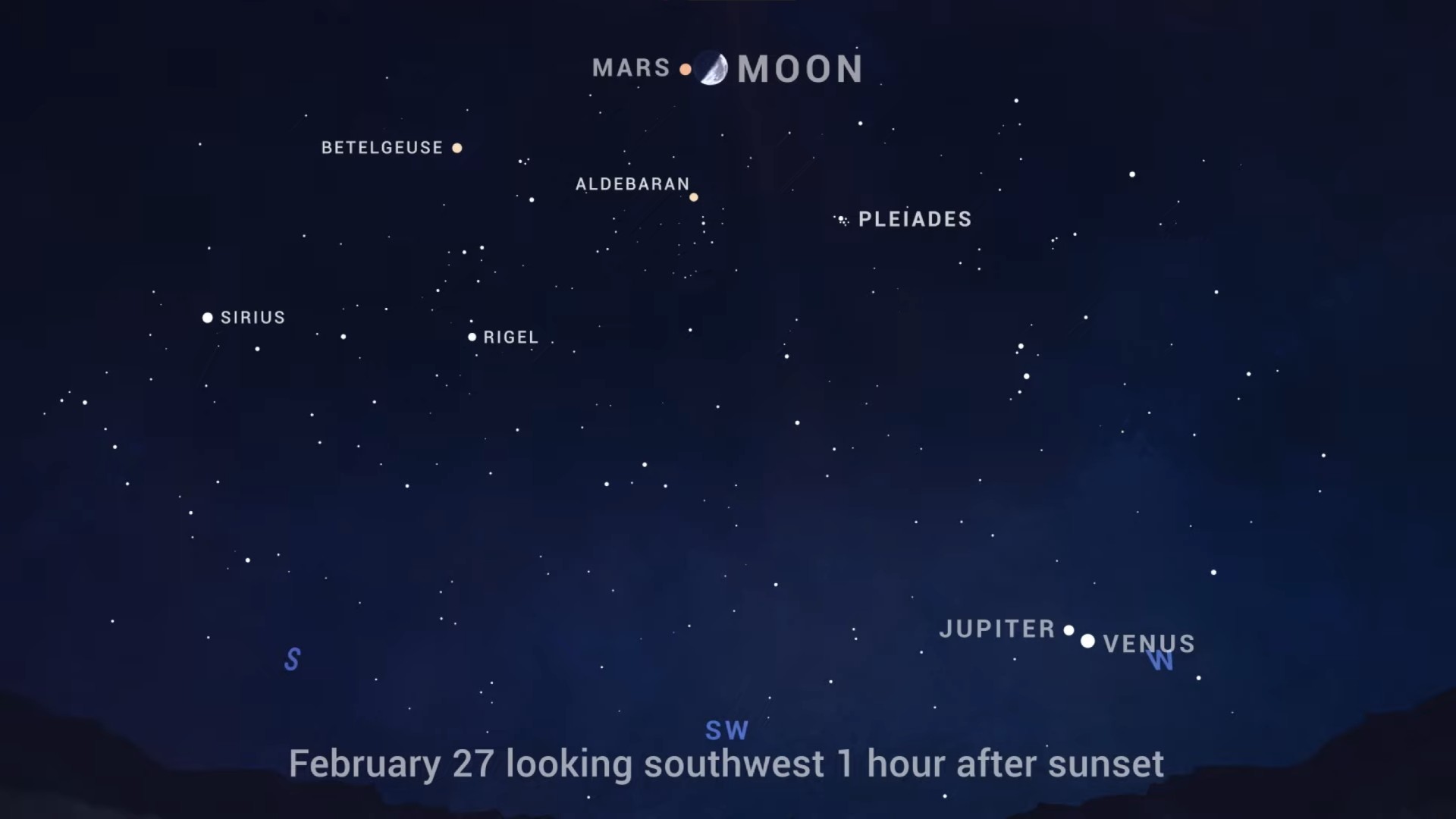
Observing the night sky in 2026 offers a spectacular array of celestial phenomena, highlighted by a historic total solar eclipse in August and a rare Mars opposition in February. This year features prime viewing opportunities for deep-sky objects, planetary alignments, and major meteor showers, providing both amateur and professional astronomers with significant data points and visual rewards.
The year 2026 stands as a landmark period for observers, particularly across the Northern Hemisphere. To make the most of the "sky tonight," one must understand the orbital mechanics and atmospheric conditions that dictate visibility. Whether you are tracking the rare path of a total solar eclipse or timing the peak of the Perseids, the following guide provides the technical specifics and scheduling required for successful observation.
The Total Solar Eclipse of August 12, 2026
The most significant astronomical event of 2026 is the total solar eclipse occurring on August 12. This event is particularly noteworthy as it is the first total solar eclipse visible from continental Europe since 1999. The path of totality will sweep across the Arctic Ocean, Greenland, Iceland, the Atlantic Ocean, and northern Spain.
Understanding the Path of Totality
Totality begins in the remote regions of the Siberian coast and moves across the North Pole toward Greenland. For most observers, the most accessible locations will be Iceland and Spain. In Iceland, the path of totality grazes the western fjords and the capital, Reykjavík, where the sun will be relatively low on the horizon. This provides a unique opportunity for wide-angle photography featuring the solar corona against dramatic terrestrial landscapes.
As the shadow moves into Spain, it will cross major cities including Santander, Bilbao, and Valencia. In these regions, the eclipse occurs late in the day, shortly before sunset. This "sunset eclipse" effect can cause the corona to appear elongated and may interact with atmospheric refraction to create stunning orange and red hues during the minutes of darkness.
Technical Requirements for Observation
Observing a solar eclipse requires specific safety protocols. Until the moment of totality—when the Moon completely obscures the Sun—direct viewing without ISO 12312-2 certified solar filters is strictly prohibited to prevent permanent retinal damage. Once totality is achieved, the filters must be removed to see the solar corona, the Sun’s outer atmosphere, which is otherwise invisible to the naked eye.
Photographers should utilize long focal length lenses (400mm to 800mm) to capture the corona’s intricate structures. Because the August 2026 eclipse occurs during a period of high solar activity (near the solar maximum), observers can expect a more complex, "spiky" corona with numerous solar prominences visible along the limb of the Moon.
Lunar Eclipses: The Blood Moon of March 3
In contrast to the localized path of a solar eclipse, lunar eclipses are visible from any location on the night side of the Earth. On March 3, 2026, a total lunar eclipse will occur, offering a "Blood Moon" for observers in the Americas, East Asia, and Australia.
The Physics of the Copper Hue
During a total lunar eclipse, the Earth moves directly between the Sun and the Moon, casting its shadow (the umbra) across the lunar surface. The Moon does not turn completely black; instead, it adopts a deep red or copper color. This is caused by Rayleigh scattering—the same phenomenon that makes sunsets red. Earth’s atmosphere bends sunlight and filters out the shorter blue wavelengths, allowing only the longer red wavelengths to pass through and illuminate the Moon.
The specific shade of red in 2026 will depend heavily on the amount of dust and volcanic aerosols in Earth’s stratosphere. A clearer atmosphere results in a brighter, orange-red eclipse, while recent volcanic eruptions can lead to a dark, nearly invisible "Brick Red" eclipse (quantified by the Danjon Scale).
Timing and Visibility
The March 3 eclipse is an evening event for the Americas. The partial phase begins as the Moon enters the umbra, leading to a "bite" being taken out of the lunar disk. Totality, when the Moon is fully immersed in the shadow, will last approximately 58 minutes. This duration provides ample time for telescopic observation of lunar features under the strange, dim illumination of the eclipse.
Planetary Highlights: Mars at Opposition
February 19, 2026, marks the date of Mars opposition. This is the point in the Martian orbit where the planet is directly opposite the Sun from our perspective on Earth. Because the two planets are at their closest point in their respective orbits, Mars will appear larger and brighter than at any other time in the two-year synodic cycle.
Why 2026 is a "Great" Opposition
Not all oppositions are equal. Because Mars has a significantly elliptical orbit, the distance between Earth and Mars at opposition varies. In 2026, Mars reaches opposition near its perihelion (its closest point to the sun), which means it will be exceptionally close to Earth.
To the naked eye, Mars will shine with a steady, fiery orange glow, outshining almost every star in the sky. For telescope users, this is the optimal time to observe surface details such as the Syrtis Major Planum or the white expanse of the polar ice caps. Using a high-quality 8-inch or 10-inch Dobsonian telescope with a blue or green filter can help enhance the contrast of these topographical features.
Jupiter and Saturn in 2026
While Mars takes center stage in February, the gas giants remain key targets.
- Saturn: Reaches opposition on October 4, 2026. The rings will be tilted at a very shallow angle relative to Earth. This "ring-plane crossing" period (which occurs every 15 years) makes the rings appear as a thin line, allowing for better observation of Saturn's moons, including Titan and Enceladus.
- Jupiter: Remains a dominant evening object throughout the late autumn and winter of 2026. High-speed "lucky imaging" techniques used by astrophotographers will be particularly effective this year for capturing the Great Red Spot and the intricate cloud belts.
Meteor Showers: Peaks and Viewing Conditions
Meteor showers occur when Earth passes through the debris trails left by comets or asteroids. In 2026, the success of viewing these events is largely dictated by the phase of the Moon, as moonlight can "wash out" the fainter meteors.
The Perseids (August 12-13)
The Perseids are widely considered the best meteor shower of the year due to their high frequency and the warm summer weather. In 2026, the peak occurs just after the total solar eclipse. Fortunately, the Moon will be in its waning crescent phase, meaning it will not rise until late in the night, providing a dark sky for the peak hours (2:00 AM to dawn). Observers can expect between 60 and 100 meteors per hour in dark-sky locations.
The Geminids (December 13-14)
Known for their multi-colored streaks and occasional fireballs, the Geminids are the most prolific shower, often exceeding 120 meteors per hour. However, the 2026 peak coincides with a waxing gibbous moon. To see the most meteors, observers should wait until after moonset or find a location where the moon is obstructed by hills or buildings.
| Event Date | Celestial Event | Best Visibility Region | Observing Note |
|---|---|---|---|
| Feb 19, 2026 | Mars Opposition | Global | Planet appears at its largest and brightest |
| Mar 3, 2026 | Total Lunar Eclipse | Americas, East Asia, Australia | "Blood Moon" visible for approx. 58 mins |
| Aug 12, 2026 | Total Solar Eclipse | Iceland, Northern Spain, Arctic | Totality occurs; solar filters mandatory |
| Aug 13, 2026 | Perseid Meteor Shower | Northern Hemisphere | Dark skies due to favorable moon phase |
| Oct 4, 2026 | Saturn Opposition | Global | Ring-plane tilt is very low; unique view |
| Dec 14, 2026 | Geminid Meteor Shower | Global | High rates, but hindered by moonlight |
Optimizing Your Astronomy "Tonight"
Finding "what is in the sky tonight" depends on your specific latitude and local light pollution levels. Even if no major eclipse or opposition is occurring, the nightly sky offers a rotating gallery of constellations and deep-sky objects.
Tools for Real-Time Observation
To identify objects currently visible, digital planispheres and mobile applications are essential. Tools such as Stellarium (open-source) or SkySafari allow users to input their coordinates and see a 3D map of the sky. These apps utilize the gyroscope in your smartphone to help you point at a specific star or planet and identify it instantly.
For those interested in deep-sky objects (DSOs) like the Orion Nebula (M42) or the Andromeda Galaxy (M31), checking the Bortle Scale of your location is critical. The Bortle Scale measures the night sky's brightness on a scale of 1 to 9, where 1 is a pristine dark sky and 9 is an inner-city sky. Most DSOs require a Bortle 4 or lower for a satisfying visual experience. You can find dark-sky maps through the International Dark-Sky Association.
The Role of Atmospheric Seeing
Even on a clear night, "seeing" can affect your view. Atmospheric seeing refers to the stability of the air. If stars are twinkling aggressively, the air is turbulent, which will blur the fine details on planets like Mars or Jupiter. Astronomers use transparency and seeing forecasts (available on sites like Clear Dark Sky or Astrospheric) to determine if a particular night is suitable for high-magnification observation.
Equipment Considerations for 2026
If you are planning to upgrade your gear for the 2026 events, consider the specific requirements of the year’s highlights.
- For the Mars Opposition: A telescope with a long focal length, such as a Maksutov-Cassegrain or a Schmidt-Cassegrain, is ideal for planetary work. These designs allow for high magnification in a compact tube.
- For the Solar Eclipse: If you are traveling to Spain or Iceland, portability is key. A high-quality pair of 10x50 binoculars equipped with slip-on solar filters can provide a stunning view of the partial phases and the diamond ring effect.
- For Deep-Sky Observing: Wide-field refractors are excellent for capturing large nebulae and star clusters. Given that 2026 features several periods of low lunar interference, this is a great year for wide-field astrophotography.
Frequently Asked Questions
What is the best time to see the Milky Way in 2026?
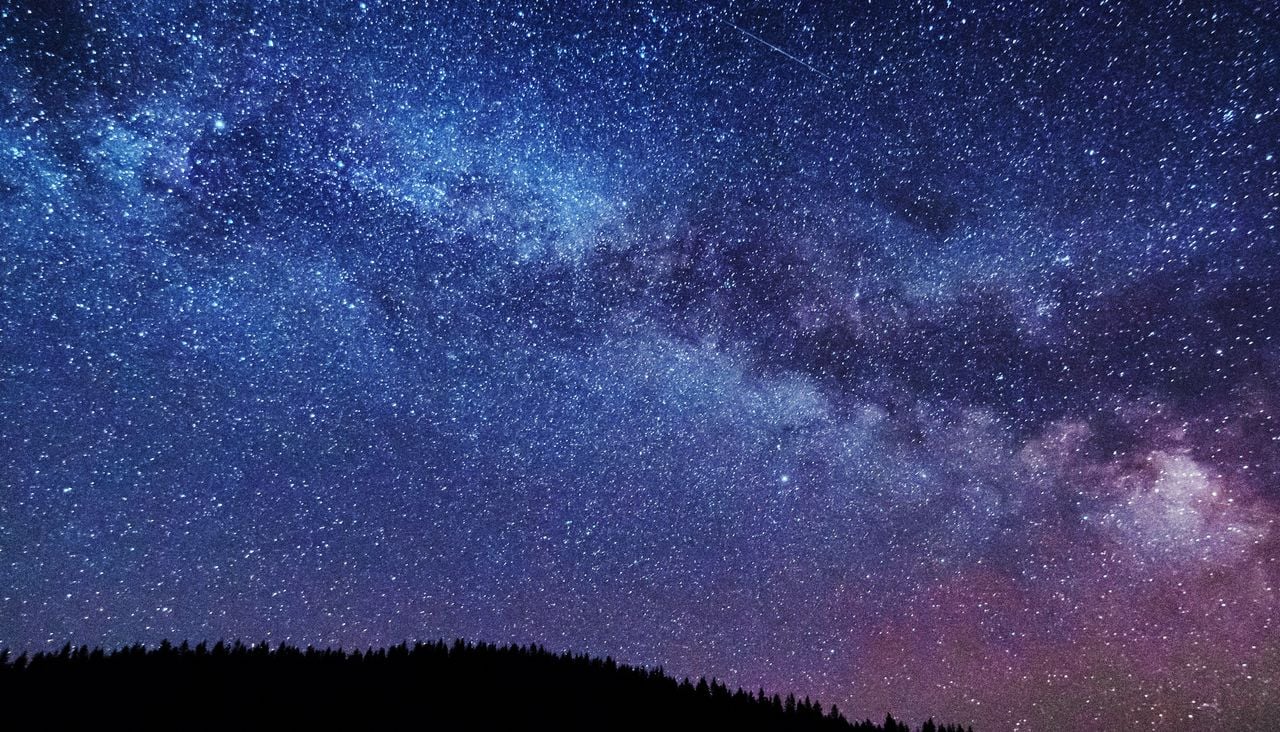
In the Northern Hemisphere, "Milky Way Season" runs from late March to early October. The core of the galaxy, located in the constellation Sagittarius, is most visible during the summer months (June, July, and August) when it sits highest in the southern sky at midnight. You need a moonless night and a dark-sky location (Bortle 4 or better) to see the structure of the galactic rift.
Will the 2026 Total Solar Eclipse be visible in the United States?
No, the path of totality for the August 12, 2026, eclipse does not cross North America. It is limited to the Arctic, Greenland, Iceland, and Spain. However, some regions in the Northeastern U.S. and Eastern Canada may experience a very minor partial eclipse near sunrise.
How do I photograph the Mars Opposition?
To photograph Mars in February 2026, you will need a telescope and a dedicated planetary "lucky imaging" camera. Unlike deep-sky photography, which uses long exposures, planetary imaging involves taking thousands of short-exposure frames (video). Software such as AutoStakkert! or Registax is then used to select the sharpest frames and "stack" them to overcome the blurring effects of Earth's atmosphere.
Can I see the International Space Station (ISS) tonight?
The ISS is visible from most locations on Earth as a bright, fast-moving point of light that does not twinkle. Its visibility depends on its current orbital path. You can use NASA's Spot The Station tool to find the exact transit times for your specific city.
What are "conjunctions" and should I look for them?
A conjunction occurs when two or more celestial bodies appear very close to each other in the sky. While they have no physical proximity, they are visually striking. Throughout 2026, keep an eye out for "Moon-Planet" conjunctions, which occur monthly. These are excellent opportunities for beginners to identify planets by using the Moon as a guidepost.
Practical Recommendation
To maximize your astronomical success in 2026, start by securing your equipment for the August Total Solar Eclipse at least six months in advance. Solar filters and travel accommodations in the path of totality (especially in Spain and Iceland) will be in extremely high demand. For immediate observation, download a sky-charting app and identify the current position of Mars; as it approaches its February opposition, its nightly increase in brightness offers a perfect practice target for tracking and focusing your telescope.