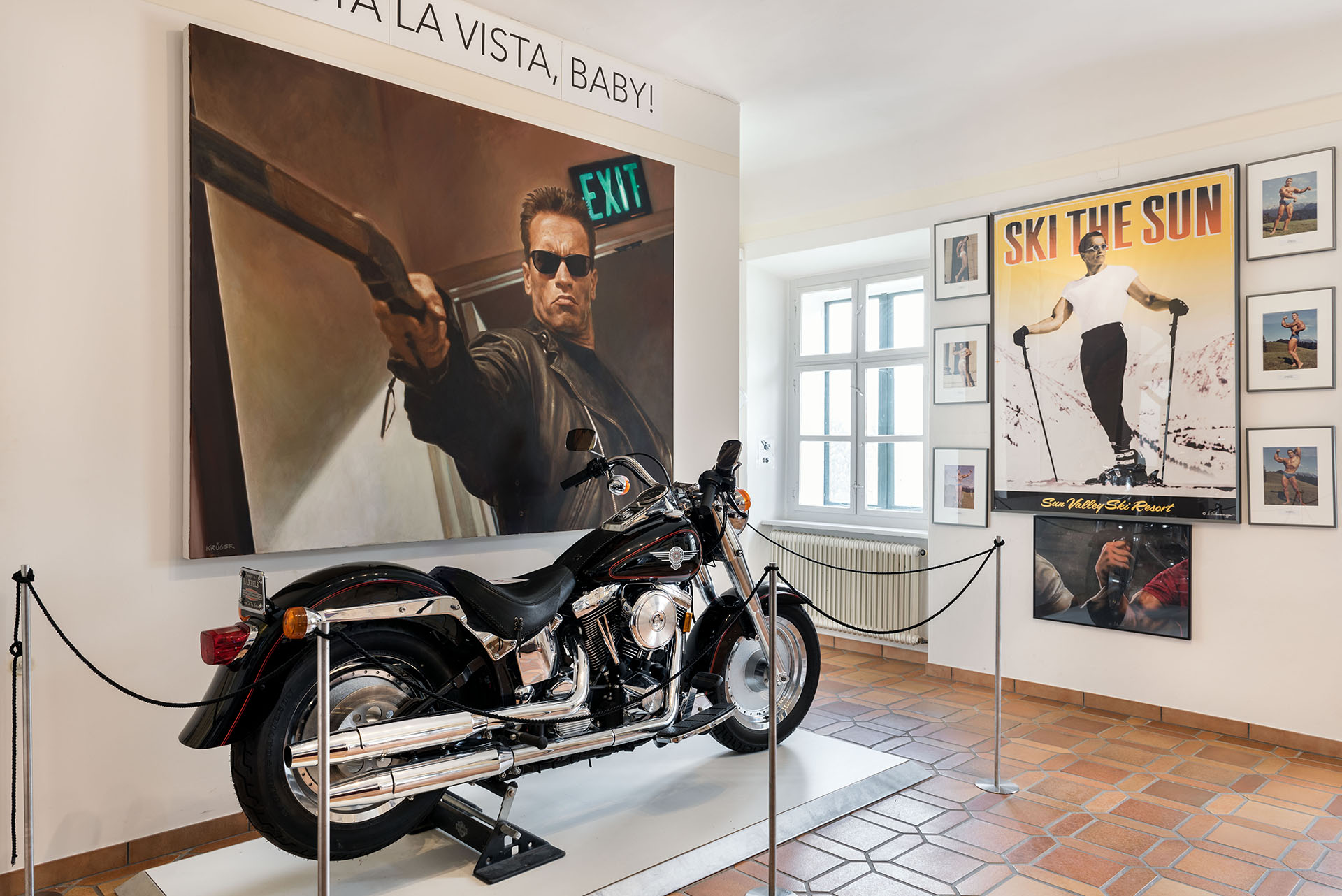
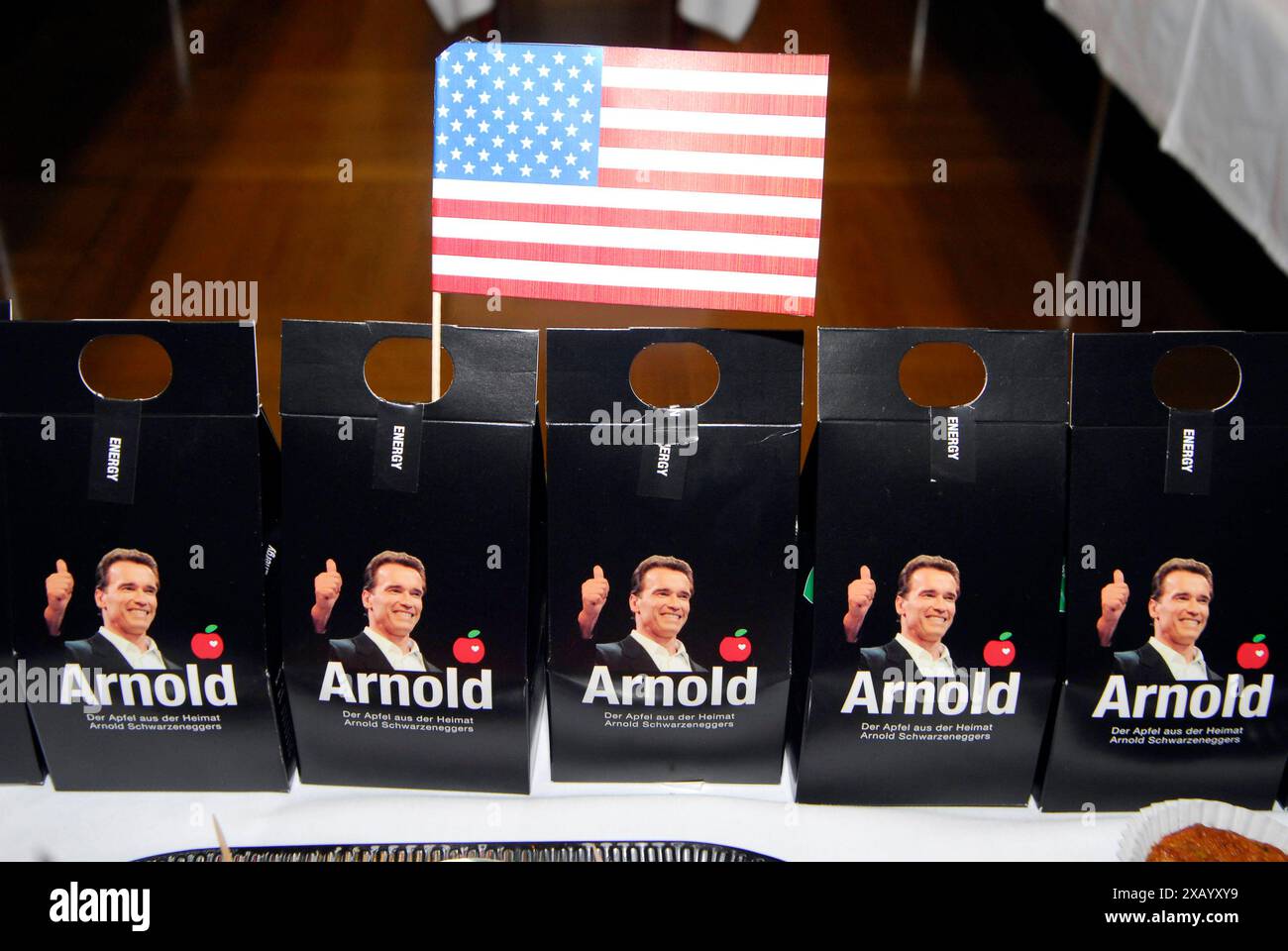
The life of Arnold Schwarzenegger represents a rare trifecta of peak success in bodybuilding, global cinema, and high-level governance. Starting in the small Austrian village of Thal, he transformed himself into a world-champion athlete, the highest-paid actor in Hollywood, and eventually the Governor of California, redefining the American Dream through sheer willpower and strategic branding.
The Formative Years in Thal and the Pursuit of the American Dream
Born on July 30, 1947, in Thal, Austria, Arnold Alois Schwarzenegger grew up in a world far removed from the glitz of California. His childhood was defined by the post-World War II environment, characterized by strict discipline and modest means. His father, Gustav Schwarzenegger, was a local police chief who fostered a competitive atmosphere between Arnold and his older brother, Meinhard. This environment, while often harsh, instilled in Arnold a resilience that would become his trademark.
Schwarzenegger’s interest in bodybuilding was not a mere hobby; it was a calculated escape route. After seeing Reg Park on a movie screen as Hercules, Arnold realized that physical prowess could be a ticket to the United States. He began training at a local gym in Graz, often breaking in on Sundays when the facility was closed. By the time he entered his mandatory service in the Austrian Army in 1965, his dedication was so absolute that he went AWOL to compete in the Junior Mr. Europe contest, which he won.
The move from Thal to the international stage required more than just muscle; it required a mastery of self-promotion. By 1966, he was competing in London, and by 1968, he had caught the eye of Joe Weider, the "Father of Bodybuilding." Weider brought Schwarzenegger to California, recognizing that the young Austrian had the charisma to move bodybuilding from a niche subculture into the mainstream.
Dominating the Golden Age of Bodybuilding
Upon arriving in the United States, Schwarzenegger settled in Gold’s Gym in Venice, California. This era, often referred to as the "Golden Age of Bodybuilding," saw Arnold refine his physique to a level never before seen in the sport. His approach was scientific and psychological; he famously used "mind games" to psych out opponents like Lou Ferrigno and Sergio Oliva.
Between 1970 and 1975, Schwarzenegger won six consecutive Mr. Olympia titles. He briefly retired to focus on other ventures but returned in 1980 to win a seventh title in Australia, a comeback that remains one of the most discussed events in the sport’s history. His impact on bodybuilding is solidified through the Arnold Sports Festival, which, as of 2026, remains one of the largest multi-sport events in the world, second only to the Olympics in terms of athlete participation.
Beyond the trophies, Schwarzenegger’s greatest contribution to the sport was the 1977 documentary Pumping Iron. The film showcased his immense personality and helped demystify the world of weightlifting for the general public. It transformed the "muscleman" stereotype into something aspirational, laying the groundwork for the fitness boom of the 1980s.
The Strategic Ascent to Hollywood Stardom
Schwarzenegger’s transition to Hollywood was met with significant skepticism. Early agents told him his body was "too weird," his name was too long, and his accent was too thick for leading roles. His first film, Hercules in New York (1970), saw his voice dubbed over entirely. However, Schwarzenegger viewed these perceived weaknesses as unique selling points.
His breakthrough came with Conan the Barbarian (1982). Director John Milius famously noted that if Schwarzenegger didn't exist, they would have had to build him. The film was a commercial success, but it was James Cameron’s The Terminator (1984) that propelled him to superstardom. As the T-800, his stoic delivery and imposing presence turned a low-budget sci-fi film into a multi-billion-dollar franchise.
During the late 1980s and early 1990s, Schwarzenegger engaged in a legendary box-office rivalry with Sylvester Stallone. This competition pushed both actors to dominate the action genre. Recognizing that he could not rely solely on action, Arnold pivoted to comedy with Twins (1988), alongside Danny DeVito. This move was a masterclass in business; he opted for a share of the profits rather than a salary, resulting in one of the biggest paydays of his career.
Critical Milestones in Schwarzenegger's Career
| Era | Primary Focus | Key Achievement | Impact/Legacy |
|---|---|---|---|
| 1965–1980 | Bodybuilding | 7-time Mr. Olympia Winner | Popularized fitness and weight training globally. |
| 1982–2003 | Hollywood | Global Box Office Leader | Redefined the action hero and became a cultural icon. |
| 2003–2011 | Politics | 38th Governor of California | Led the world's 5th largest economy through major crises. |
| 2011–2026 | Activism & Media | Environmental Advocacy | Established the Schwarzenegger Climate Initiative. |
The "Governator" Era: A Political Pivot
In 2003, California faced a historic recall election of Governor Gray Davis. Schwarzenegger, a long-time Republican with socially liberal leanings, announced his candidacy on The Tonight Show with Jay Leno. His campaign was built on the image of the "outsider" who would "clean house" in Sacramento. He won the election handily, becoming the 38th Governor of California.
His tenure, which lasted until 2011, was marked by both significant legislative victories and intense budget battles. One of his most enduring legacies is the Global Warming Solutions Act of 2006 (AB 32). This landmark legislation made California a global leader in climate change policy, setting aggressive targets for reducing greenhouse gas emissions. He proved that environmental protection and economic growth could coexist, a stance he continues to champion in 2026.
Schwarzenegger’s governorship was not without controversy. He faced significant opposition from public sector unions and struggled with the state’s structural deficit, exacerbated by the 2008 financial crisis. Despite these challenges, he focused on infrastructure, redistricting reform, and political centrism, often frustrating his own party by working across the aisle.
Life After Office: Activism and the Return to Media
After leaving the governor’s mansion in 2011, Schwarzenegger did not retreat into a quiet retirement. He returned to the screen in The Expendables franchise and the Netflix series FUBAR, proving that his "action hero" brand remained durable even in his 70s. However, his primary focus shifted toward philanthropy and activism.
As of 2026, his influence is felt most strongly through the Schwarzenegger Climate Initiative and the annual Austrian World Summit. He has used his platform to advocate for clean energy and to challenge global leaders on their climate commitments. Additionally, his "Pump Club" newsletter and fitness app have modernized his original mission: bringing health and fitness to the masses through accessible, evidence-based advice.
His personal life, including his high-profile marriage to and eventual divorce from Maria Shriver, has been a subject of public record. Despite personal setbacks, he has maintained a public image of "the ultimate immigrant," a man who arrived with nothing and used every opportunity to build a legacy that spans three distinct industries.
Common Questions About Arnold Schwarzenegger’s Journey
How did Arnold Schwarzenegger get into politics?
Arnold's entry into politics was facilitated by his marriage into the Kennedy family (via Maria Shriver) and his long-standing involvement in physical fitness advocacy under the Bush and Clinton administrations. The 2003 California recall election provided a unique "populist" window that allowed him to bypass the traditional political ladder and run as a celebrity outsider.
Was Arnold Schwarzenegger a successful Governor of California?
Success is viewed through different lenses. From an environmental perspective, he was highly successful, passing AB 32 and setting a global standard for climate policy. Politically, his record is more mixed; while he passed significant redistricting reforms, he struggled with the state's budget during the Great Recession and left office with low approval ratings, though his reputation has improved in the decade since.
Can Arnold Schwarzenegger run for President of the United States?
Under the current U.S. Constitution, he cannot run for President because he is not a "natural-born citizen." Although he has been a U.S. citizen since 1983, Article II, Section 1 of the Constitution restricts the presidency to those born in the United States. Schwarzenegger has frequently expressed that he would have run if the law allowed it.
What is the Schwarzenegger Climate Initiative?
This is a non-profit organization founded by Schwarzenegger that hosts the annual Austrian World Summit. Its primary goal is to facilitate the exchange of ideas between regional governments, businesses, and NGOs to accelerate the implementation of the Paris Agreement and promote clean energy solutions.
How many languages does Arnold Schwarzenegger speak?
Arnold is bilingual, speaking his native German and fluent English. While his Austrian accent became his trademark in Hollywood, he is also known for his ability to communicate complex political and environmental concepts in both languages, often using his linguistic background to bridge the gap between European and American audiences.
Summary of Impact and Future Directions
The journey from Thal to Hollywood and the Governor's office is more than a series of career changes; it is a blueprint for reinventing one's identity. In 2026, Schwarzenegger stands as a statesman of fitness and environmentalism. For those looking to follow in his footsteps—not necessarily in bodybuilding or politics, but in the pursuit of ambitious goals—the key takeaway is his philosophy of "useful service."
Whether he was training for the Olympia or drafting environmental policy, his focus was on discipline, clear goal-setting, and an refusal to accept the status quo. For the modern reader, his life suggests that professional boundaries are often self-imposed and that a multidisciplinary approach to a career can lead to the most profound impacts.
Next Action: For those interested in the technical aspects of his fitness philosophy, exploring the "Arnold Blueprint" training programs or his 2026 health initiatives provides a practical look at how his early bodybuilding principles have evolved into modern wellness strategies.