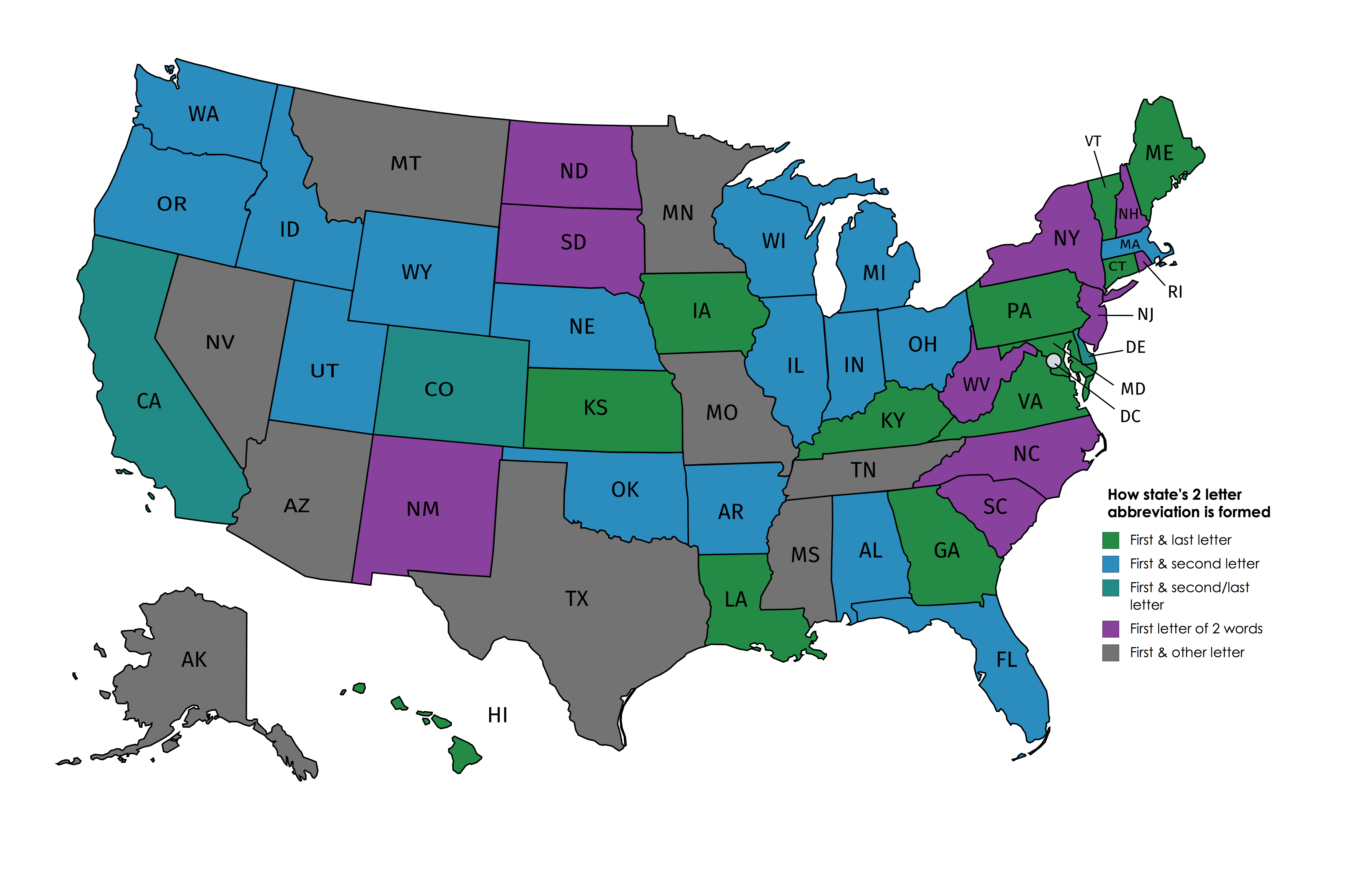
The official two-letter code for Arkansas is AR. This standardized abbreviation was adopted by the United States Postal Service (USPS) in 1963 to facilitate the implementation of ZIP codes and automated mail sorting. Today, the AR code is the primary identifier used in government records, digital databases, and international logistics standards like ISO 3166-2.
The History and Evolution of the Arkansas Abbreviation
To understand why Arkansas is represented by the two-letter code AR in 2026, one must look back at the administrative shift that occurred in the mid-20th century. Before the 1960s, state abbreviations were not standardized for length. Arkansas was commonly abbreviated as "Ark." or sometimes "Arks." in formal correspondence. These traditional abbreviations were sufficient for manual mail sorting, where human eyes could easily distinguish between "Ala." (Alabama), "Ariz." (Arizona), and "Ark." (Arkansas).
However, the introduction of the Zone Improvement Plan (ZIP) code system in 1963 changed everything. The USPS needed to make room on the address line for the new five-digit codes. To ensure that addresses remained legible and fit within the physical constraints of envelopes and sorting machinery, the Post Office Department (now the USPS) transitioned to a uniform two-letter capitalized system for all states.
The selection of "AR" was straightforward, taking the first and second letters of the state's name. Unlike some other "A" states that had to navigate more complex naming overlaps—such as Alaska (AK) and Arizona (AZ)—Arkansas was assigned a code that closely mirrored its phonetic and structural beginning. This transition was not merely a stylistic choice; it was a technical requirement for the burgeoning age of automation. By 2026, this two-letter system has been the standard for over six decades, deeply embedded in every facet of American and international data management.
Technical Standards and Global Recognition
While most people associate the AR code primarily with the mail, its technical utility extends far into global commerce and information technology. Several international and domestic standards bodies recognize "AR" as the unique identifier for the state of Arkansas.
ISO 3166-2:US-AR
The International Organization for Standardization (ISO) maintains the ISO 3166-2 standard, which defines codes for the principal subdivisions of countries. For the United States, the code for Arkansas is US-AR. This is the standard used by international shipping companies, airlines, and global databases. When a package is sent from Tokyo to Little Rock, the "AR" designation ensures it enters the correct logistics stream before it ever reaches U.S. soil.
ANSI and FIPS Codes
Beyond the two-letter alphabetical code, Arkansas is also identified by numerical codes used primarily by the U.S. Census Bureau and other federal agencies. The Federal Information Processing Standard (FIPS) code for Arkansas is 05. This numerical identifier is crucial for developers and data scientists working with Geographic Information Systems (GIS). While the "AR" code is human-readable and preferred for addresses, the "05" code is often the primary key used in relational databases to prevent errors that might arise from character encoding or case sensitivity.
Practical Applications of the AR Code in 2026
In 2026, the use of the Arkansas two-letter code is ubiquitous. Its application spans across various sectors, from the legal industry to the digital economy.
E-commerce and Digital Databases
Every time a resident of the Natural State fills out an online shipping form, they interact with the AR code. Most modern web forms use a standardized dropdown menu or an autocomplete feature that maps the state name "Arkansas" to the "AR" value in the backend. This ensures that the data sent to the merchant's database is consistent. This consistency is vital for calculating state-specific sales tax, shipping rates, and estimated delivery times.
Legal and Financial Documentation
In the legal realm, the AR code is the standard for identifying the jurisdiction of a contract or the location of a business entity. The Arkansas Secretary of State uses the AR prefix in various filing systems. Similarly, the Internal Revenue Service (IRS) and the Arkansas Department of Finance and Administration rely on the AR code to process tax returns. For financial institutions, the code is a mandatory field in the "Know Your Customer" (KYC) protocols, ensuring that a customer’s residency is accurately recorded for regulatory compliance.
Aviation and Telecommunications
In the aviation industry, the Federal Aviation Administration (FAA) and international bodies use the AR code in flight planning and the registration of private aircraft. While airports use three-letter IATA codes (like LIT for Bill and Hillary Clinton National Airport), the administrative tracking of pilots and aircraft owners often defaults to the state’s two-letter postal code. In telecommunications, while area codes (501, 479, 870) define geographic regions, the AR code remains the high-level administrative tag for billing and service area mapping.
Comparison of Arkansas State Identifiers
The following table provides a clear comparison between the different codes and identifiers used for Arkansas to help you choose the correct one for your specific needs.
| Identifier Type | Code/Value | Primary Use Case |
|---|---|---|
| USPS Postal Code | AR | Mailing addresses, shipping labels, and general correspondence. |
| ISO 3166-2 | US-AR | International logistics, global data standards, and shipping. |
| FIPS State Code | 05 | Statistical analysis, Census data, and GIS mapping. |
| Traditional Abbreviation | Ark. | Formal literature, historical citations, and AP Style (older). |
| State Capital | Little Rock | Administrative headquarters and primary urban identifier. |
| Standard Time Zone | Central (CST/CDT) | Scheduling, broadcasting, and business hours. |
Common Mistakes and Disambiguation
Despite the simplicity of the two-letter system, errors are common, particularly due to the high density of "A" states in the U.S. alphabet. Arkansas is one of four states that start with "A" and have two-letter codes that can be easily confused by those rushing through data entry.
- AR vs. AK: This is the most frequent error. AR is Arkansas, while AK is Alaska. In digital systems, selecting the wrong one can lead to significant shipping delays and incorrect tax calculations.
- AR vs. AZ: AZ belongs to Arizona. While phonetically distinct, the visual similarity between "R" and "Z" in some handwritten scripts or low-resolution fonts can lead to processing errors.
- AR vs. AL: AL is the code for Alabama. Both are Southern states, which sometimes leads to geographic confusion for those unfamiliar with U.S. regional identities.
To avoid these mistakes, it is recommended to use "Arkansas" in full whenever the space allows or to utilize software that includes validation logic. In 2026, most advanced data entry systems include "look-ahead" features that display the full state name as the user types the code, significantly reducing the rate of error.
The Role of the Code in Modern Data Science
For developers and IT professionals, the Arkansas two-letter code is more than just a label; it is a standardized data point. When building applications, it is considered a best practice to use the ISO 3166-2 standard for state representation.
Using the AR code instead of the full string "Arkansas" saves storage space in large-scale databases and improves query performance. For example, a database containing millions of customer records will be significantly more efficient if it stores a two-character string (2 bytes) rather than an eight-character string (8 bytes) for the state field. Furthermore, using a standardized code eliminates variations like "Ark" or "ARKANSAS" (all caps), which would otherwise require complex data cleaning and normalization before any analysis could be performed.
In the context of 2026's AI-driven analytics, standardized codes like AR allow machine learning models to accurately group data by region. If a retail company wants to analyze purchasing trends in the Ozarks, having a clean, standardized "AR" field allows the algorithm to instantly filter the relevant data without missing records due to typos or non-standard abbreviations.
Expert Recommendations for Implementation
If you are managing a project that requires the use of state codes, the following expert guidelines should be followed:
- Always Capitalize: The USPS and ISO standards specify that the code should be in all caps (AR). Lowercase versions (ar) may not be recognized by automated sorting systems or strict database schemas.
- Avoid Punctuation: Unlike the traditional "Ark.", the two-letter code AR does not require a period. Adding one (A.R.) can break digital validation rules.
- Use Standard Libraries: When programming, do not hard-code state lists. Use established libraries or APIs that pull from the United States Census Bureau or the USPS Official Website. This ensures your application remains compliant with any future changes to administrative standards.
- Validate at Entry: If you are building a web form, implement a validation step that checks the two-letter code against a known list of the 50 states and territories.
Frequently Asked Questions
Is "Ark." still an acceptable abbreviation for Arkansas?
While "Ark." is still used in some formal writing, legal citations (Bluebook style), and historical contexts, it is not acceptable for mailing addresses or digital data entry. The USPS requires the two-letter AR code to ensure that mail can be processed by high-speed optical character readers. Using "Ark." on an envelope today may result in the piece being diverted for manual sorting, which can delay delivery.
Does the AR code apply to Arkansas City?
No. Arkansas City is a specific municipality (one exists in Kansas and another in Arkansas). The two-letter code AR refers exclusively to the state of Arkansas as a whole. When addressing mail to Arkansas City, AR, you must use the full city name followed by the state code.
Is the AR code used internationally?
Yes, the AR code is part of the ISO 3166-2:US standard. This means it is the recognized code for the state of Arkansas in international shipping, customs documentation, and global administrative records. If you are shipping a package from the United Kingdom to Arkansas, the code AR will be used by international carriers to route the package correctly to the United States.
When did Arkansas change from "Ark." to "AR"?
The transition began in October 1963. This change was part of a broader initiative by the Post Office Department to modernize the mail system and accommodate the five-digit ZIP code. While the public took several years to fully adopt the two-letter system, it has been the mandatory standard for automated mail for over half a century.
Can the AR code be confused with the country code for Argentina?
In a general sense, yes. The ISO 3166-1 alpha-2 code for the country of Argentina is also AR. However, in practice, these are rarely confused because they operate at different levels of the address hierarchy. In an international address, the country code "AR" would appear at the very end (if using ISO codes for countries), whereas the state code "AR" appears before the ZIP code within the United States. Systems that handle both international and domestic data usually distinguish between country_code and state_code fields to prevent this specific ambiguity.
Conclusion and Final Actions
The Arkansas two-letter code AR is a vital tool for communication, logistics, and data integrity in 2026. Whether you are addressing a simple letter, managing an e-commerce platform, or conducting complex demographic research, using the standardized "AR" code ensures that your information is processed accurately and efficiently.
Next Steps for Accuracy:
- Audit Your Data: If you manage a mailing list or a customer database, run a script to ensure all entries for Arkansas are standardized to the uppercase AR code.
- Update Form Validation: Ensure your digital platforms use dropdown menus for state selection to eliminate manual entry errors between Arkansas (AR) and Alaska (AK).
- Reference Official Sources: For legal or technical implementation, always refer to the latest publications from the USPS or ISO to stay compliant with administrative standards.