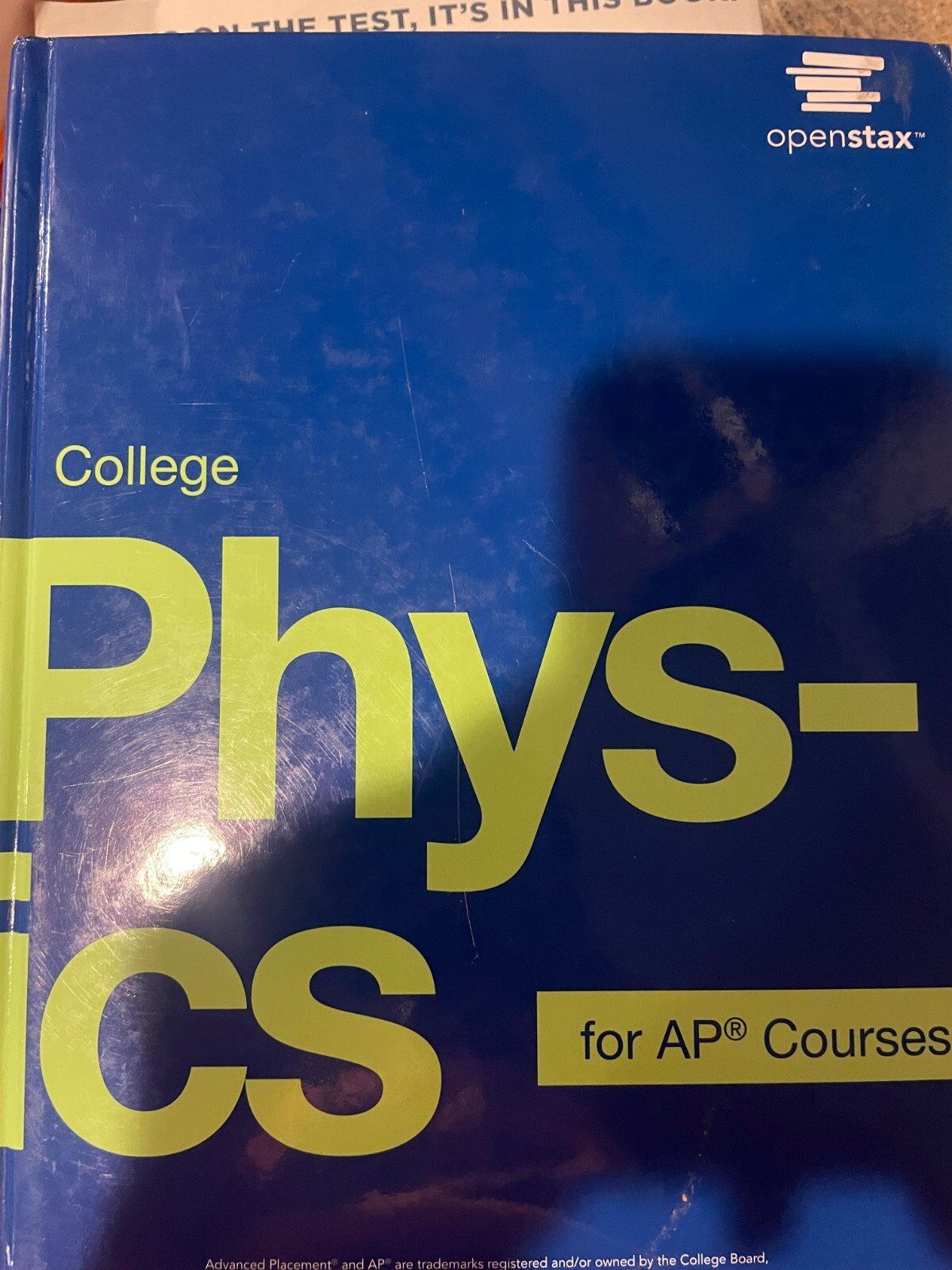
To obtain a legitimate AP Physics 1 textbook PDF, the most reliable source is OpenStax, which offers "College Physics for AP® Courses 2e" as a free, high-quality download. Alternatively, students can purchase or rent digital versions of commercial favorites like Giancoli’s Physics or Knight’s College Physics through platforms like VitalSource or Pearson.
Accessing a high-quality AP Physics 1 textbook in a digital format is a priority for many students and educators in 2026. As the College Board continues to refine the curriculum—most notably with the inclusion of fluids back into the AP Physics 1 syllabus as of the 2024-2025 school year—ensuring your textbook is up-to-date and searchable is essential for success. This guide explores the best legal avenues for acquiring these textbooks and how to utilize them effectively for exam preparation.
Understanding the AP Physics 1 Curriculum in 2026
Before selecting a textbook PDF, it is vital to understand what the exam currently entails. AP Physics 1 is an algebra-based, introductory college-level physics course. In recent years, the College Board standardized the curriculum to ensure a more focused approach to "Big Ideas" in physics.
As of 2026, the course covers eight distinct units:
- Kinematics: Motion in one and two dimensions.
- Dynamics: Newton’s Laws of Motion and force interactions.
- Circular Motion and Gravitation: Exploring planetary motion and centripetal force.
- Energy: Work, power, and conservation of energy.
- Momentum: Impulse and linear momentum.
- Simple Harmonic Motion: Oscillations and pendulums.
- Torque and Rotational Motion: Rotational kinematics and dynamics.
- Fluids: Density, pressure, buoyancy, and fluid dynamics.
When searching for a textbook PDF, ensure the table of contents includes Unit 8: Fluids. Many older editions (published between 2015 and 2023) may lack this unit because fluids were previously relegated to the AP Physics 2 exam. Using an outdated PDF can leave a significant gap in your knowledge.
Top Recommended AP Physics 1 Textbooks for Digital Access
OpenStax: College Physics for AP® Courses 2e
OpenStax, a non-profit initiative based at Rice University, provides perhaps the most accessible AP Physics 1 textbook PDF available today. Their "College Physics for AP® Courses" was designed specifically to align with the College Board’s learning objectives.
- Why it’s a top choice: It is completely free and open-source (OER). The PDF is high-resolution, contains embedded links to simulations (like PhET), and is updated regularly to reflect curriculum shifts.
- How to access: Visit the OpenStax website and select the PDF download option. You do not need an account to download the full 1,000+ page document.
- Best for: Students on a budget and those who prefer a clean, straightforward layout without the heavy marketing of commercial publishers.
Giancoli’s "Physics: Principles with Applications"
Douglas Giancoli’s textbook is often considered the "gold standard" for algebra-based physics. It is widely used in both high schools and universities for its clear explanations and rigorous problem sets.
- Why it’s a top choice: Giancoli excels at breaking down complex concepts like rotational dynamics and torque into manageable steps. The 7th edition (or the updated AP version) remains a staple for 2026 classrooms.
- How to access: Legitimate PDF versions are usually available through Pearson+ or VitalSource. While these are "eTextbooks" rather than loose PDF files, they allow for offline reading, highlighting, and search functions that mimic the PDF experience.
- Best for: Students who want deep conceptual clarity and a massive library of practice problems.
Knight, Jones, and Field: "College Physics: A Strategic Approach"
This textbook is famous for its "Tactics Boxes" and "Model Boxes," which provide students with a specific roadmap for solving physics problems.
- Why it’s a top choice: It uses a research-proven approach to help students overcome common misconceptions in physics (such as the difference between acceleration and velocity). The visual aids are exceptional for 2D kinematics and force diagrams.
- How to access: Available as an eTextbook via Pearson. Schools often provide "Mastering Physics" access, which includes the digital textbook.
- Best for: Visual learners and students who struggle with the "where do I start?" phase of a word problem.
Comparison of Popular AP Physics 1 Digital Textbooks
The following table compares the most common textbooks used for AP Physics 1 prep in 2026 based on their digital availability and features.
| Textbook Title | Publisher | PDF/Digital Format | Best Feature | 2026 Curriculum Sync |
|---|---|---|---|---|
| College Physics for AP® Courses 2e | OpenStax | Free PDF / Web | Direct College Board alignment | Excellent (includes Fluids) |
| Physics: Principles with Applications | Pearson (Giancoli) | eTextbook / Rental | Conceptual depth and clarity | High (AP Edition) |
| College Physics: A Strategic Approach | Pearson (Knight) | eTextbook / Rental | Problem-solving frameworks | High |
| Physics | Wiley (Cutnell) | eTextbook / WileyPLUS | Focus on interactive learning | High |
| College Physics: Explore and Apply | Pearson (Etkina) | eTextbook / Rental | Inquiry-based "Active Learning" | High |
Why Use a PDF Textbook for AP Physics 1?
Transitioning from a physical hardback to a PDF or digital textbook offers several technical and educational advantages for AP students:
- Searchability (Ctrl+F): Physics involves many interconnected terms. If you are struggling with "Moment of Inertia," a quick search through a 900-page PDF will instantly pull up every mention, derivation, and example problem involving that concept.
- Portability: AP Physics 1 is notorious for having some of the heaviest textbooks in the science curriculum. Carrying a digital version on a tablet or laptop saves physical strain and ensures you have your resource available during study halls or library sessions.
- Annotation and Integration: Using a PDF reader like GoodNotes, Notability, or Adobe Acrobat, you can take screenshots of diagrams and paste them directly into your digital notes. This is particularly helpful for drawing Free Body Diagrams (FBDs), which are a core component of the exam.
- Instant Resource Access: Many PDF textbooks contain hyperlinks to external simulations. For example, when reading about projectile motion, a PDF may link directly to a PhET simulation where you can test different launch angles in real-time.
How to Evaluate a "Free" PDF Online
While searching for "ap physics 1 textbook pdf," you will likely encounter sites offering free downloads of copyrighted books (like Giancoli or Knight). It is important to approach these with caution for several reasons:
- Legal and Ethical Issues: Downloading copyrighted material without payment is a violation of intellectual property laws. Furthermore, authors and publishers rely on sales to fund the research and updates that keep these books accurate.
- Malware Risks: "Free PDF" sites are frequently used as vectors for malware, spyware, and phishing. A file that looks like a 50MB textbook could actually be an executable script designed to compromise your device.
- Incomplete or Corrupt Files: Pirated PDFs are often scanned poorly, missing pages, or containing errors in the formulas. In a subject like physics, a missing "minus sign" in a formula can lead to hours of confusion.
- Verification: If you need a free resource, always stick to OpenStax or your school’s provided digital library. Many public libraries also offer textbooks through the Libby or Overdrive apps, which allow you to borrow digital versions legally.
Supplemental Digital Resources Beyond the Textbook
A textbook is only one piece of the puzzle. To score a 4 or 5 on the AP Physics 1 exam in 2026, students should pair their PDF reading with these digital tools:
AP Daily Videos (College Board)
Available through AP Classroom, these short videos are led by experienced AP teachers. They follow the same units found in your textbook and provide a "standardized" view of how the College Board wants you to solve problems.
PhET Interactive Simulations
Created by the University of Colorado Boulder, these simulations are the perfect companion to a digital textbook. If your PDF explains "Conservation of Momentum," you can open a PhET simulation to virtually collide carts and see the math in action.
Flipping Physics
This is a highly recommended YouTube resource. The creator, Mr. P, breaks down the entire AP Physics 1 curriculum into engaging videos. His content is often structured around the same "Big Ideas" found in the OpenStax and Giancoli textbooks.
Digital Review Guides
Books like "5 Steps to a 5" or "Princeton Review" are available in Kindle or PDF format. These are not full textbooks but are essential for the "crunch time" leading up to the May exam. They focus specifically on test-taking strategies and multiple-choice question (MCQ) patterns.
Transitioning from Reading to Practice
A common mistake students make with a PDF textbook is "passive reading"—scrolling through pages without engaging the brain. To master physics, you must move from the PDF to the pencil and paper.
- The 1-to-3 Rule: For every 1 hour you spend reading the textbook, spend 3 hours solving problems.
- Self-Testing: Most high-quality textbooks (like Etkina or Giancoli) have "Check Your Understanding" questions at the end of each section. Do not skip these.
- Use the PDF for Reference, Not Instruction: Try to solve a problem first. Use the PDF only when you get stuck on a formula or a conceptual definition. This builds the "retrieval strength" necessary for the high-pressure environment of the AP exam.
Troubleshooting Common Issues with Digital Textbooks
File Size and Performance: High-resolution physics textbooks can exceed 100MB. If your PDF reader is lagging, try using a specialized app like Foxit Reader or Preview (on Mac), which handle large documents more efficiently than a standard web browser.
Missing Fluids Section: If your teacher assigns Unit 8 (Fluids) and it isn't in your PDF, you likely have an edition printed between 2015 and 2023. You can supplement this by downloading just the Fluids chapter from the OpenStax University Physics Volume 1 or their AP-specific book.
Formatting Errors: Occasionally, complex math formulas (like those involving integrals or Greek symbols) may not render correctly in certain mobile PDF viewers. If a formula looks like a string of gibberish, try opening the file in the official Adobe Acrobat Reader.
Frequently Asked Questions
Is the OpenStax AP Physics 1 textbook really free?
Yes. OpenStax is an Open Educational Resource (OER) funded by philanthropic organizations like the Bill & Melinda Gates Foundation. The digital PDF version is 100% free for students and teachers to use, share, and even modify under a Creative Commons license.
Which edition of Giancoli is best for the 2026 AP Physics 1 exam?
The 7th edition is the most common, but you should look for the "AP Edition" specifically. The AP edition includes specialized test-prep sections and aligns its chapters more closely with the College Board’s unit structure, including the necessary coverage of fluid mechanics.
Can I use an AP Physics 2 textbook to study for the Fluids section?
Yes. Because fluids were part of the AP Physics 2 curriculum for nearly a decade, any AP Physics 2 textbook published before 2024 will have an excellent section on fluids that is perfectly applicable to the current AP Physics 1 exam.
How do I get a legal PDF of a Pearson or McGraw Hill textbook?
You generally cannot buy a "standalone" PDF file from these publishers to prevent piracy. Instead, you purchase a license for an eTextbook. You then access this through their proprietary apps (like Pearson+), which offer a PDF-like experience with added features like interactive quizzing and text-to-speech.
What is the difference between AP Physics 1 and AP Physics C textbooks?
AP Physics 1 is algebra-based, while AP Physics C is calculus-based. Ensure the PDF you download does not have "C" or "Calculus-Based" in the title. If you see integrals ($\int$) and derivatives ($d/dx$) in the first few chapters, you are likely looking at a Physics C textbook, which is much more mathematically rigorous.
Final Recommendation
For the 2025-2026 academic year, the best starting point is downloading the OpenStax College Physics for AP® Courses 2e PDF. It is legally free, fully updated to include the Fluids unit, and directly aligned with the College Board standards. If you find you need more rigorous practice problems or a different explanatory style, consider renting the Giancoli Physics: Principles with Applications eTextbook through a verified vendor. Always ensure your digital reader is capable of handling large files so you can study efficiently without technical interruptions.