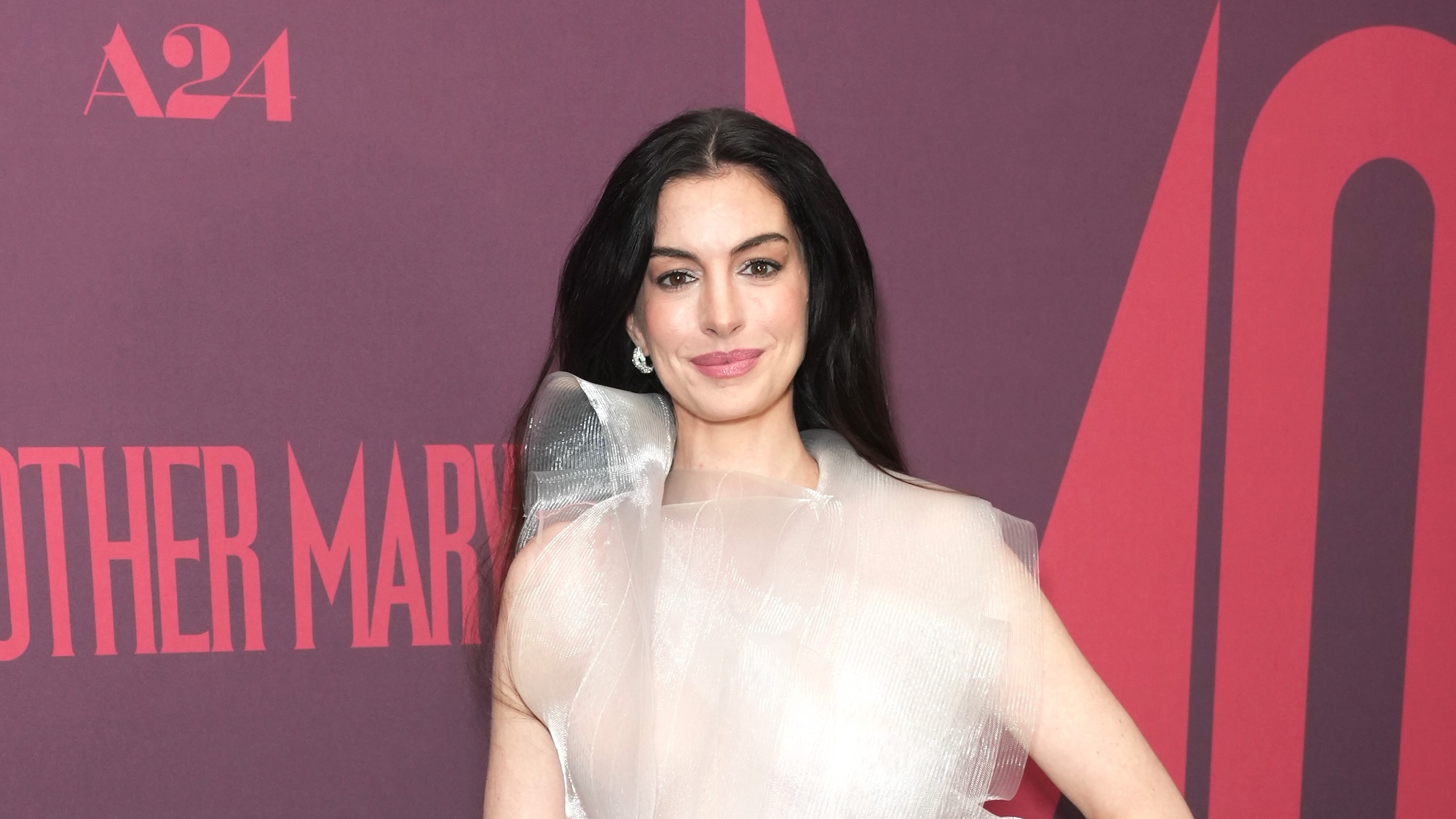
Anne Hathaway’s experience as a mother in Hollywood is defined by a powerful dual narrative: the foundational influence of her mother, stage actress Kate McCauley Hathaway, and Anne’s own public evolution as a parent, advocate, and sober professional. In 2026, she stands as a pivotal figure bridging generational shifts in how actresses navigate family life and career longevity.
The Foundation: Kate McCauley Hathaway’s Influence
To understand Anne Hathaway’s trajectory as a mother in Hollywood, one must first look at the woman who provided the blueprint. Kate McCauley Hathaway was a dedicated stage actress, most notably known for her portrayal of Fantine in the first national tour of Les Misérables. This professional background was not merely a footnote in Anne’s biography; it was the catalyst for her entire career.
Growing up, Anne watched her mother navigate the grueling demands of theater. Kate’s decision to prioritize her children while maintaining her passion for the arts offered Anne a realistic, if challenging, view of the industry. It is a well-documented piece of Hollywood lore that Anne’s desire to play Fantine in the 2012 film adaptation of Les Misérables was deeply rooted in her mother’s history with the role. When Anne eventually won the Academy Award for Best Supporting Actress, her performance was widely viewed as a tribute to Kate's own artistic legacy.
Kate McCauley Hathaway’s influence extended beyond the stage. She acted as a protective shield and a mentor, guiding Anne through the transition from a New Jersey upbringing to global stardom following The Princess Diaries (2001). In an industry that often commodifies young talent, Kate’s presence ensured that Anne remained grounded in the craft of acting rather than the trappings of celebrity—a lesson Anne now applies to her own children.
Anne Hathaway’s Journey to Becoming a Mother
Anne Hathaway’s personal experience with motherhood has been marked by transparency and a refusal to present a "perfect" image. Married to businessman and jewelry designer Adam Shulman since 2012, Hathaway is the mother of two sons: Jonathan Rosebanks Shulman, born in 2016, and Jack Shulman, born in late 2019.
However, her path to parenthood was not without significant hurdles. In 2019, while announcing her second pregnancy on Instagram, Hathaway broke the typical "celebrity announcement" mold by openly discussing her struggles with conception. She noted that for both of her pregnancies, it was "not a straight line," touching upon the "infertility and conception hell" that many women face in silence.
By being vocal about these challenges, Hathaway shifted the conversation for women in Hollywood. She moved the narrative away from the effortless "baby bump" glamour toward a more visceral, honest discussion of reproductive health. This transparency has resonated particularly well with her audience, solidifying her status as a relatable figure despite her A-list status.
The Sobriety Choice: Parenting as a Catalyst for Change
One of the most significant lifestyle changes Anne Hathaway made in the name of motherhood was her decision to quit drinking. In early 2019, she announced during an appearance on The Ellen DeGeneres Show that she would remain sober for as long as her children were living in her home.
The reasoning was practical and deeply personal: she realized that she could not be the present, engaged mother she wanted to be while dealing with the after-effects of alcohol. She famously recounted a story of dropping her son off at school while hungover—an experience that led to a moment of profound clarity. She didn't view her relationship with alcohol as an addiction in the clinical sense, but rather as an impediment to her performance as a parent.
In the years leading up to 2026, Hathaway has remained steadfast in this choice. Her sobriety has become a cornerstone of her "mother in Hollywood" identity, signaling a shift toward extreme intentionality. For Hathaway, motherhood required a level of cognitive and emotional availability that was incompatible with the party-heavy culture often associated with the film industry.
Advocacy and the UN Women Global Goodwill Ambassadorship
Hathaway’s role as a mother in Hollywood is not limited to her private life; it has informed her global advocacy. In 2016, she was appointed as a UN Women Global Goodwill Ambassador. Her primary focus in this role has been the promotion of paid parental leave and the breaking down of gender stereotypes regarding caregiving.
She has argued consistently that the "motherhood penalty"—the professional and financial setbacks women face after having children—is a systemic issue that requires legislative and cultural change. During a 2017 speech at the United Nations, Hathaway highlighted that the current American system often forces mothers to choose between their livelihoods and their children’s early development.
Her advocacy is particularly relevant within the context of Hollywood, an industry that has historically struggled with childcare on set and the "invisible" work of mothers. By using her platform to demand better standards for all parents, not just those in her high-income bracket, Hathaway has expanded the definition of what it means to be a powerful mother in the entertainment world.
Navigating Privacy in the Digital Age
A common challenge for any mother in Hollywood is the management of their children's privacy. Hathaway has been notoriously protective of Jonathan and Jack. Unlike many celebrities who integrate their children into their "personal brand" on social media, Hathaway rarely shares photos of her sons, and when she does, their faces are obscured.
This decision is a direct response to the aggressive nature of paparazzi culture and the permanent digital footprint created by the internet. Hathaway has often spoken about the "commodification" of celebrity children, expressing a desire for her sons to choose their own relationship with the public eye when they are old enough to understand the implications.
In 2026, this stance has become more common among elite actors, but Hathaway was an early adopter of the "zero-exposure" policy. This protective barrier allows her to maintain a clear distinction between "Anne Hathaway the Oscar Winner" and "Anne the Mother," a boundary she considers essential for her family's psychological well-being.
On-Screen Motherhood: Art Mimicking Life
As Hathaway has matured, her film roles have increasingly reflected the complexities of motherhood. In the early 2020s and mid-2020s, she took on projects that explored the darker, more nuanced sides of parenting and maternal identity.
- Mothers' Instinct (2024): In this psychological thriller, Hathaway (alongside Jessica Chastain) explored the themes of grief, suspicion, and the visceral bonds of motherhood. The film allowed her to channel the anxieties of parenting into a high-stakes narrative.
- The Idea of You (2024): Playing a 40-year-old single mother who enters a romance with a younger pop star, Hathaway tackled the societal stigma surrounding mothers who maintain their own desires and identities outside of their children.
- Eileen (2023): While not a "motherhood" film in the traditional sense, her role as a maternal/mentor figure showcased her transition into more "senior" archetypes within the Hollywood hierarchy.
These roles demonstrate that Hathaway is not shying away from her age or her life stage. Instead, she is using her real-world experience as a mother to bring depth to characters that might have once been written as one-dimensional "mom" roles.
Comparing the Generations: Kate vs. Anne
The differences between Kate McCauley Hathaway’s era and Anne’s era highlight the evolution of the industry.
| Feature | Kate McCauley Hathaway (1980s-90s) | Anne Hathaway (2010s-2026) |
|---|---|---|
| Primary Medium | Theater / National Tours | Global Cinema / Streaming |
| Public Stance on Family | Private, traditional career-family balance | Public advocate for paid leave and sobriety |
| Media Environment | Print and Television | Social Media and 24/7 Digital News |
| Parental Leave | Largely non-existent in the arts | Advocate for systemic, legislative change |
| Career Trajectory | Transitioned into family focus | Maintained A-list status while parenting |
The "Working Mom" Reality in 2026
By 2026, the conversation around being a "working mom" in Hollywood has shifted toward sustainability. Hathaway has often noted that the term "balance" is a myth. Instead, she speaks of "integration." For her, being a mother in Hollywood means negotiating contracts that allow for family stability, choosing projects with filming schedules that don't isolate her from her children for months on end, and prioritizing her mental health.
The film industry of 2026 is slightly more accommodating than the one she entered in 2001, thanks in part to the demands made by stars of her stature. On-set trailers now more frequently double as nurseries, and there is a growing (though not universal) understanding that an actress’s value does not diminish once she becomes a parent.
Common Misconceptions About Hathaway’s Motherhood
There are several misconceptions that frequently circulate in the media regarding Hathaway’s life as a mother. One is the idea that her "relatability" is a calculated PR move. However, her long-term commitment to UN Women and her consistent choices regarding sobriety suggest a deeply held personal philosophy rather than a temporary image-making strategy.
Another misconception is that she has "slowed down" her career for her children. On the contrary, the period from 2020 to 2026 has been one of her most productive, with a string of critically acclaimed performances and production credits under her company, Somewhere Pictures. She hasn't slowed down; she has simply become more selective, ensuring that the work she takes on is worth the time spent away from her family.
Frequently Asked Questions
Did Anne Hathaway’s mother appear in any of her movies?
While Kate McCauley Hathaway is primarily a stage actress, she did have a small role in The Princess Diaries (2001) as the choir director. Her presence on set during Anne’s breakout role served as a bridge between Kate’s theater background and Anne’s film future.
How did Anne Hathaway’s mother influence her role in Les Misérables?
Anne’s mother played Fantine in the first national tour of the musical. Anne has stated in numerous interviews that seeing her mother perform the role informed her own understanding of the character’s desperation and maternal love, which eventually helped her win the Academy Award for the film version.
Why did Anne Hathaway stop drinking after becoming a mother?
She stopped drinking because she found that the hangovers made her less present and less patient with her young son. She famously told Ellen DeGeneres that she didn't want to be hungover for a school drop-off, leading to her decision to remain sober while her children are living at home.
Is Anne Hathaway still involved with UN Women in 2026?
Yes, Hathaway continues to serve as a Global Goodwill Ambassador for UN Women. Her work remains focused on advocating for paid parental leave and fighting for gender equality in the workplace, utilizing her Hollywood platform to bring international attention to these issues.
How does Anne Hathaway protect her children's privacy?
She follows a strict "no-face" policy on social media and rarely brings her children to red-carpet events or public appearances. She has been vocal about wanting her children to have a "normal" upbringing away from the scrutiny of the paparazzi.
Final Recommendation for Understanding the Legacy
To truly appreciate Anne Hathaway’s role as a mother in Hollywood, one must view her not just as a celebrity with children, but as a transitional figure. She represents the shift from the "silent struggle" of previous generations (like her mother’s) to a modern era of advocacy, sobriety, and intentionality. For those interested in the intersection of celebrity and family life, Hathaway’s career provides a masterclass in how to maintain professional excellence while setting firm boundaries for personal and familial health. Her legacy will likely be defined as much by her Oscar-winning performances as by her efforts to make Hollywood—and the wider world—a more equitable place for parents.