Anne Hathaway’s journey from a teenage Disney favorite to a multifaceted Hollywood icon is a masterclass in career longevity and artistic reinvention. By balancing commercial blockbusters with gritty independent dramas, she has secured an Academy Award, a Primetime Emmy, and a Golden Globe, cementing her place among cinema's elite performers as of 2026.
The trajectory of Anne Hathaway’s career serves as a blueprint for navigating the often-treacherous transition from child stardom to adult prestige. Unlike many of her contemporaries who struggled to shed their youthful personas, Hathaway utilized a combination of strategic role selection, vocal talent, and an uncompromising work ethic to redefine her public image. From the whimsical hallways of Genovia to the tragic barricades of 19th-century France, her filmography reflects a relentless pursuit of range.
The Disney Genesis and the Mia Thermopolis Legacy
Anne Hathaway’s professional ascent began in the late 1990s, but it was the 2001 release of The Princess Diaries that transformed her into a household name. Directed by the legendary Garry Marshall, the film cast Hathaway as Mia Thermopolis, an awkward teenager who discovers she is the heir to the throne of a small European kingdom.
This role established the "Hathaway Archetype": a blend of relatable clumsiness, expressive physicality, and innate grace. For many young actors, a success of this magnitude becomes a cage. Hathaway, however, leaned into the Disney machine just long enough to build a global fan base, starring in Ella Enchanted (2004) and The Princess Diaries 2: Royal Engagement (2004). Even in these early family-oriented films, critics noted her "luminous" screen presence—a quality often compared to classic Hollywood stars like Audrey Hepburn and Judy Garland.
Marshall famously described Hathaway as "a combination of Julia Roberts, Audrey Hepburn, and Judy Garland." This comparison wasn't merely hyperbole; it identified a specific technical capability. Hathaway possessed a high degree of facial "readability," an essential trait for the silent-era-style physical comedy required in her early roles. Her ability to execute slapstick while maintaining emotional vulnerability made her the definitive "girl next door" of the early 2000s.
Breaking the Mold: The Strategic Shift of 2005
By 2005, Hathaway recognized the need to pivot. The "Disney Princess" label, while lucrative, threatened to limit her access to prestige dramas. Her transition was not accidental; it was a calculated departure into adult territory. This began with the gritty, albeit poorly received, independent film Havoc, where she portrayed a wealthy Los Angeles teenager flirting with gang culture.
The true turning point, however, was her role in Ang Lee’s Brokeback Mountain (2005). Playing Lureen Newsome Twist, the wife of Jake Gyllenhaal’s character, Hathaway displayed a hardness and maturity that shocked audiences familiar only with her crown and tiara. Her performance proved she could hold her own alongside heavyweights like Michelle Williams and Heath Ledger. This role was a declaration of intent: Hathaway was no longer interested in playing the ingenue; she was a serious actress capable of exploring the darker, more complex facets of the human condition.
The Devil Wears Prada and Commercial Sophistication
If Brokeback Mountain proved her range, The Devil Wears Prada (2006) proved her bankability as a leading woman in sophisticated adult comedies. Acting opposite Meryl Streep, Hathaway played Andy Sachs, an aspiring journalist navigating the cutthroat world of fashion.
The film's success was monumental, grossing over $326 million worldwide. More importantly, it established Hathaway as a performer who could act as the "audience surrogate" in high-concept environments. Her chemistry with Streep and Emily Blunt demonstrated a refined comedic timing. In the years following, she would continue this trend with films like Get Smart (2008), proving she could anchor a major studio tentpole without losing her artistic credibility.
Critical Peak: Rachel Getting Married and the Oscar Path
The 2008 release of Rachel Getting Married, directed by Jonathan Demme, was the definitive moment Anne Hathaway transitioned from "successful actress" to "prestige powerhouse." In this film, she portrayed Kym, a recovering addict who returns home for her sister’s wedding.
Hathaway’s performance was a departure from everything she had done previously. Utilizing a naturalistic, almost documentary-style approach, she stripped away the polished "movie star" veneer. Kym was abrasive, selfish, and deeply wounded. This performance earned Hathaway her first Academy Award nomination for Best Actress. The technical depth of her work in this film—her use of silence, her erratic body language, and her mastery of the "unreliable protagonist" trope—placed her in the top tier of her generation’s talent.
Comparative Analysis of Defining Roles (Pre-2015)
The following table highlights the diversity of Hathaway’s roles during her formative years of transition.
| Film | Year | Genre | Role Significance |
|---|---|---|---|
| The Princess Diaries | 2001 | Coming-of-Age/Comedy | Established her as a global teen idol. |
| Brokeback Mountain | 2005 | Neo-Western Drama | Proved her ability to handle mature, dramatic themes. |
| The Devil Wears Prada | 2006 | Comedy/Drama | Confirmed her status as a high-value leading lady. |
| Rachel Getting Married | 2008 | Indie Drama | Earned first Oscar nomination; solidified critical respect. |
| The Dark Knight Rises | 2012 | Superhero/Action | Showcased her physical range as Catwoman (Selina Kyle). |
| Les Misérables | 2012 | Musical/Drama | Won Academy Award; demonstrated vocal and transformative skills. |
The Les Misérables Milestone and the "Hathahate" Phenomenon
In 2012, Hathaway reached a career zenith with her portrayal of Fantine in Tom Hooper’s film adaptation of Les Misérables. Her performance of "I Dreamed a Dream," recorded in a single, grueling take with live vocals, became the defining cinematic moment of the year. To play the role, Hathaway underwent a drastic physical transformation, losing 25 pounds and cutting her hair on camera.
The effort was rewarded with an Academy Award for Best Supporting Actress. However, the subsequent awards season brought an unexpected challenge: the "Hathahate" phenomenon. Social media and tabloid culture turned against her, citing her "over-earnestness" and perceived "theatricality" as irritating.
This period was a crucial test of her resilience. While many celebrities would have retreated or attempted a radical rebrand, Hathaway largely remained silent, letting her work speak for itself. In hindsight, the "Hathahate" era is viewed by cultural critics as a textbook example of sexist media backlash against high-achieving women. Her ability to survive this wave of public scrutiny and emerge with her career intact—and even more robust—is a testament to her professional endurance.
The "Hatharenaissance": Resilience in the 2020s
By the early 2020s, the public tide had shifted. A new generation of fans, primarily on platforms like TikTok and Instagram, began to celebrate her filmography and her status as a fashion icon. This period, often dubbed the "Hatharenaissance," saw her taking on more daring and eclectic roles.
Films like Ocean's 8 (2018) showed her poking fun at her own "diva" public image, while the Amazon series Modern Love (2019) featured her in a powerful episode about living with bipolar disorder. As we look at her standing in 2026, it is clear that she has moved into a "Legacy Phase." She is no longer fighting for a seat at the table; she is the table.
In 2024, her role in The Idea of You—a romantic drama about a 40-year-old mother who enters a relationship with a 24-year-old boy band singer—challenged Hollywood’s traditional views on age and desirability. This film, along with the psychological thriller Mother's Instinct (2024), where she starred alongside Jessica Chastain, demonstrated that her appetite for complex, challenging material has only grown with age.
Fashion, Philanthropy, and Global Influence
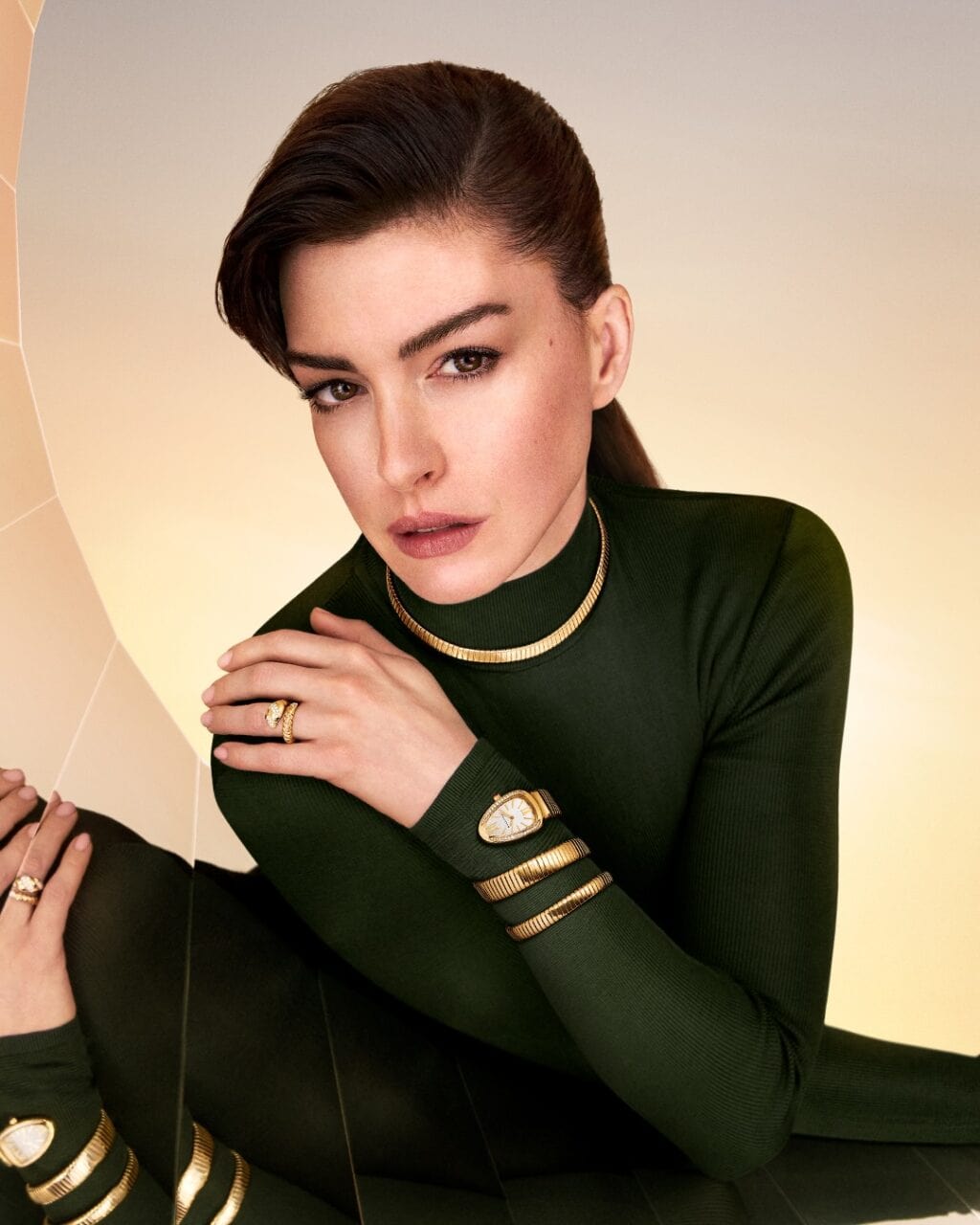
Beyond the silver screen, Hathaway has cultivated a presence as a global fashion icon and a committed humanitarian. Her long-standing relationship with fashion houses like Versace and Bulgari has redefined her as a symbol of sophisticated glamour. In 2026, she remains a fixture at the Met Gala and major fashion weeks, often trending for her ability to blend classic silhouettes with avant-garde styling.
Her work as a UN Women Goodwill Ambassador has also been a cornerstone of her public life. Since 2016, she has been a vocal advocate for paid parental leave and the elimination of the "motherhood penalty" in the workplace. This facet of her career adds a layer of "stateswoman" gravitas to her persona, further distancing her from the teen star image of her youth.
Technical Analysis of Hathaway’s Acting Style
Film historians and acting coaches often point to Hathaway’s "technical precision" as her defining characteristic. She is known for her meticulous preparation, which often involves deep research and physical discipline.
- Vocal Control: Trained in musical theater, Hathaway has a soprano range that she can manipulate for character effect. In The Dark Knight Rises, she lowered her pitch to give Selina Kyle a sultry, dangerous edge.
- Emotional Access: Hathaway is capable of "turning on" high-intensity emotions in a way that feels organic rather than performative. Her work in Interstellar (2014) is a prime example, where she manages to convey profound grief within the constraints of a high-concept sci-fi narrative.
- Physicality: From the clumsy movements of early Mia Thermopolis to the lithe, predatory movements of Catwoman, Hathaway uses her height and limbs to communicate character traits before a single line of dialogue is spoken.
Frequently Asked Questions
What was Anne Hathaway’s first major film?
Anne Hathaway’s breakout role was Mia Thermopolis in the 2001 Disney film The Princess Diaries. Before this, she appeared in the television series Get Real, but the Disney film catapulted her to international stardom.
How many Academy Awards has Anne Hathaway won?
As of 2026, Anne Hathaway has won one Academy Award for Best Supporting Actress for her role as Fantine in Les Misérables (2012). She also received a Best Actress nomination for Rachel Getting Married (2008).
Why was there a period of "Hathahate"?
"Hathahate" refers to a wave of social media backlash around 2013. It was largely fueled by a perception that Hathaway was "too perfect" or "insincere" during her awards season speeches. In the years since, the narrative has shifted, with many viewing the backlash as a result of gendered societal expectations rather than her actual behavior.
Does Anne Hathaway do her own singing in movies?
Yes, Anne Hathaway is a trained singer. She performed her own vocals live on set for Les Misérables and has showcased her singing voice in other films like Ella Enchanted and during her stint hosting the Academy Awards in 2011.
What are some of Anne Hathaway's most recent projects?
By 2026, her most notable recent works include the romantic drama The Idea of You (2024), the psychological thriller Mother's Instinct (2024), and the genre-bending Flowervale Street (2025). She has also been heavily involved in high-profile campaigns for Versace and Bulgari.
Conclusion and Further Exploration
Anne Hathaway’s evolution from a teen star to a Hollywood icon is a story of persistence, talent, and tactical brilliance. She navigated the industry's attempt to box her in, survived a period of intense public scrutiny, and emerged as one of the most respected and bankable actresses of the 21st century.
For those looking to explore her career further, it is recommended to watch her "pivotal three": The Princess Diaries for her origins, Rachel Getting Married for her dramatic depth, and Les Misérables for her transformative peak. Her journey serves as an enduring reminder that in Hollywood, longevity is built not just on talent, but on the courage to constantly redefine oneself.