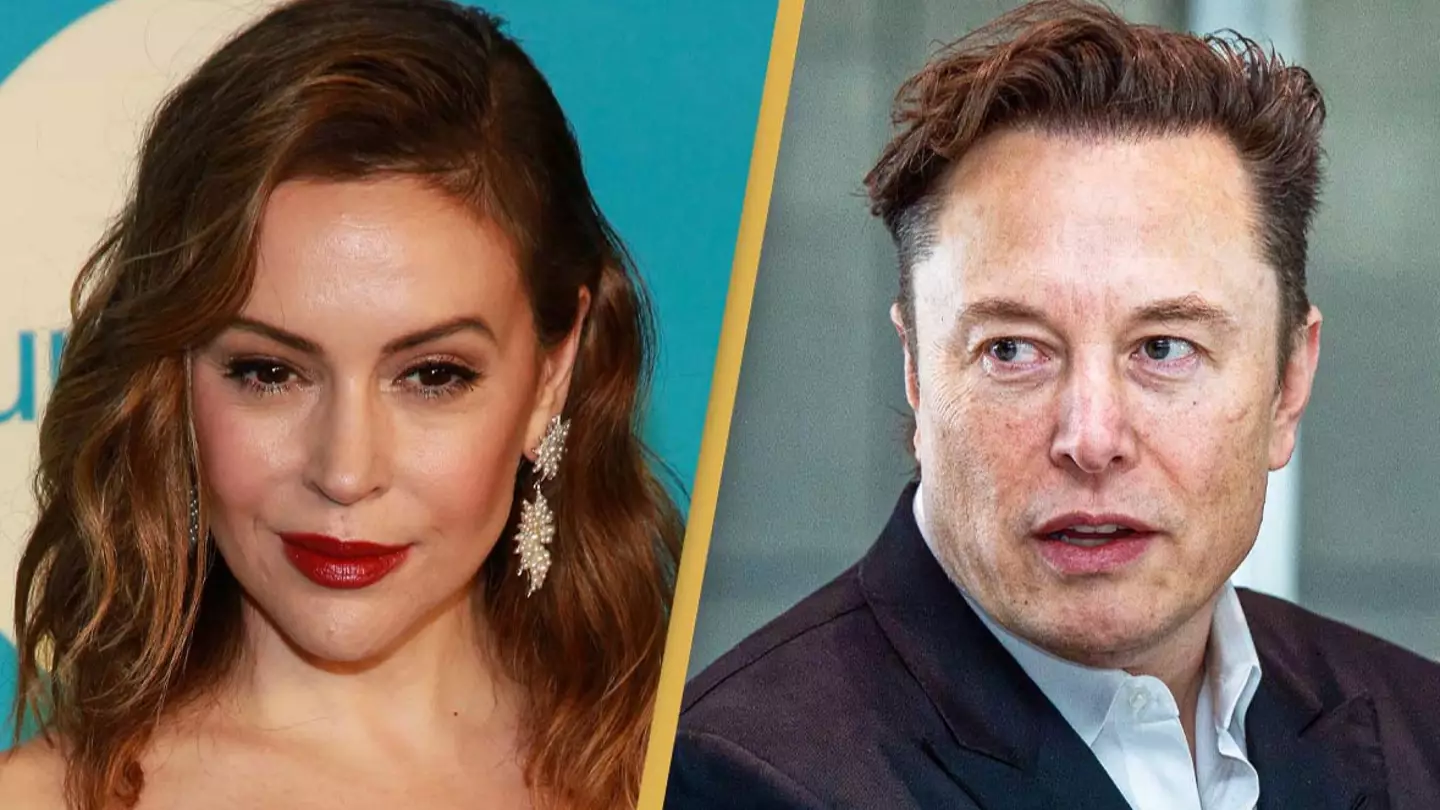
In late 2022, actress and activist Alyssa Milano made headlines by announcing she had traded in her Tesla for a Volkswagen ID.4. This decision was a public protest against Elon Musk’s management of Twitter (now X), citing concerns over hate speech and corporate ethics, sparking a nationwide conversation about political consumerism.
The Catalyst: Elon Musk’s Twitter Acquisition and Public Backlash
The primary motivation behind Alyssa Milano’s decision to "give back" her Tesla was not a technical failure of the vehicle or a lack of performance. Instead, it was a direct response to the shifting leadership at Twitter. In October 2022, Elon Musk completed his $44 billion acquisition of the social media platform. Shortly after, Milano expressed significant concern regarding the platform’s direction, specifically citing an increase in hate speech and the reinstatement of previously banned accounts.
Milano’s exit from the Tesla ecosystem was more than a private transaction; it was a curated public statement. She tweeted to her millions of followers that she had replaced her Tesla with a Volkswagen ID.4, an electric SUV from the German automaker. Her reasoning was rooted in the belief that supporting Tesla was synonymous with supporting Musk, whose leadership of Twitter she found morally untenable. This event became a flashpoint for "ethical consumerism," where high-profile individuals leverage their purchasing power to signal political and social alignments.
From Tesla to Volkswagen: A Technical and Practical Comparison
When Milano transitioned from a Tesla to a Volkswagen ID.4, she moved between two very different philosophies of electric vehicle (EV) design. Tesla, known for its software-first approach and minimalist aesthetics, had long been the gold standard for EV performance and charging infrastructure. Volkswagen, conversely, represents the "old guard" of automotive manufacturing moving into the electric age with a focus on traditional build quality and familiar ergonomics.
For many consumers observing this switch, the question was whether the Volkswagen ID.4 could truly serve as a functional replacement for a Tesla. At the time of the switch, the ID.4 offered a competitive range and a more traditional SUV feel, though it lacked the robust Supercharger network that remains a primary selling point for Tesla owners.
| Feature | Tesla Model 3 (Typical Peer) | Volkswagen ID.4 (Milano’s Choice) |
|---|---|---|
| Estimated Range | 272–358 miles | 209–275 miles |
| Charging Network | Tesla Supercharger (Integrated) | Electrify America / Public CCS |
| Infotainment | 15-inch Touchscreen (Minimalist) | 10 or 12-inch Display (Standard Layout) |
| Interior Feel | Vegan Leather / High-Tech | Cloth or V-Tex / Traditional SUV |
| Software Updates | Frequent Over-the-Air (OTA) | Periodic OTA / Dealer Visits for some |
| Drive System | Rear-Wheel or All-Wheel Drive | Rear-Wheel or All-Wheel Drive |
The transition required Milano to move from Tesla’s proprietary charging standard to the Combined Charging System (CCS), which was the standard for non-Tesla EVs in North America at that time. While Tesla has since opened its Supercharger network to other brands, in 2022 and 2023, this was a significant practical shift for any EV owner.
The "Nazimobile" Controversy and Public Discourse
Milano’s choice of a Volkswagen (VW) as her "ethical" alternative sparked an immediate and intense counter-backlash on social media. Critics were quick to point out the historical origins of Volkswagen, which was founded in 1937 under the Nazi government in Germany. The irony of leaving Tesla due to concerns over "white supremacy" on a social media platform, only to purchase a vehicle from a company with direct ties to the Third Reich, was a central theme of the criticism she faced.
This discourse highlighted the complexities of modern consumerism. Proponents of Milano’s move argued that judging a 21st-century corporation by its 1930s origins was a logical fallacy, noting that VW has spent decades making reparations and rebranding as a leader in sustainability. Critics, however, used the comparison to label Milano’s move as "performative activism," suggesting that the switch was more about public optics than a consistent moral framework.
Furthermore, some critics pointed toward Volkswagen’s more recent "Dieselgate" scandal (2015), where the company was found to have cheated on emissions tests. This added another layer to the debate: can any major global corporation truly be considered "ethical," or is consumerism simply a matter of choosing the "lesser of two evils"?
The Financial Realities of Trading in a Tesla
For the average consumer, "giving back" a car isn't as simple as returning a pair of shoes. It involves significant financial considerations, including depreciation, loan payoffs, and trade-in valuations. While Milano did not disclose the specific financial details of her transaction, the process of moving from a Tesla to another brand typically involves several technical steps:
- Valuation: Teslas have historically held their value better than many internal combustion vehicles, but high-profile price cuts by Tesla in 2023 and 2024 significantly impacted resale values.
- FSD and Software Transfers: One of the biggest hurdles in leaving the Tesla ecosystem is the loss of purchased software features. Features like Full Self-Driving (FSD), which can cost upwards of $12,000 to $15,000, do not transfer to other vehicle brands.
- Home Charging Adjustments: Switching from a Tesla to a VW often required changing the home charging connector or using an adapter (Tesla Wall Connector to J1772), as the ID.4 utilized the CCS standard during that period.
By 2026, many of these friction points have eased as the North American Charging Standard (NACS) has become more universal, but for Milano in 2022, this was a commitment to a completely different hardware and software ecosystem.
Celebrity Influence and the Polarization of the EV Market
The "Milano Effect" was a microcosm of a larger trend observed between 2022 and 2025: the political polarization of car brands. For over a decade, Tesla was the darling of environmentally conscious, often left-leaning celebrities. However, Musk’s increasingly vocal political stances and his acquisition of Twitter shifted the brand’s perception.
Data from the years following Milano’s switch suggested a slight demographic shift in Tesla ownership. While the brand remained the market leader in EV sales due to its superior technology and manufacturing scale, a segment of "liberal" buyers began exploring alternatives like the Rivian R1S, Lucid Air, and the Volkswagen ID series. Milano was simply one of the first and most vocal representatives of this shift.
This period marked a transition in the automotive industry where a CEO’s personal brand became inextricably linked to the vehicle’s brand identity. For Milano, the Tesla was no longer just a car; it was a badge of association with Musk, which she felt was no longer compatible with her public platform.
Analyzing the Long-Term Impact: Was the Switch Successful?
Looking back from 2026, we can evaluate the success of Milano’s switch through two lenses: the personal and the industrial. From a personal perspective, Milano remained a vocal critic of Musk and continued to use her platform to promote alternative EV options. Her move encouraged other high-profile individuals to scrutinize their corporate associations, leading to a broader conversation about brand accountability.
From an industrial perspective, the Volkswagen ID.4 has seen several iterations and improvements since Milano purchased hers. The 2024 and 2025 models addressed many of the early software complaints, making it a more robust competitor in the electric SUV space. However, Tesla’s dominance in the North American market persists, largely due to their aggressive pricing and the expansion of the Supercharger network.
Milano’s action did not cause a mass exodus that crippled Tesla, but it did signal the end of Tesla’s "monopoly on cool" among the Hollywood elite. It forced competitors like Volkswagen, Hyundai, and Kia to step up their marketing to capture the "disaffected Tesla owner" demographic.
Frequently Asked Questions
Why did Alyssa Milano trade in her Tesla?
Alyssa Milano traded in her Tesla in November 2022 as a protest against Elon Musk’s acquisition of Twitter. She cited concerns regarding the rise of hate speech on the platform and Musk’s leadership style, stating that she did not want to support a company led by him.
What car did Alyssa Milano get to replace her Tesla?
She replaced her Tesla with a Volkswagen ID.4. The ID.4 is an all-electric compact crossover SUV produced by Volkswagen, built on the company's MEB platform.
What was the public reaction to her switching to a Volkswagen?
The reaction was highly polarized. Supporters praised her for "voting with her wallet." Critics, however, pointed out the historical ties between Volkswagen and the Nazi party, arguing that switching to VW for "ethical" reasons was hypocritical or poorly researched.
Is the Volkswagen ID.4 better than a Tesla?
"Better" is subjective and depends on the driver's priorities. Tesla generally offers superior software, faster acceleration, and a better charging network. The Volkswagen ID.4 is often cited for having a more "traditional" car feel, better ride comfort, and physical buttons for certain controls that Tesla lacks.
Can you "give back" a Tesla to the company?
You cannot simply "return" a Tesla for a refund outside of very specific, short-lived return policies that have largely been discontinued. Most people who "give back" their Tesla are actually trading it in at a dealership or selling it on the private market to fund the purchase of a different vehicle.
Did other celebrities follow Alyssa Milano’s lead?
Yes, several other public figures expressed similar sentiments or announced they were moving away from Tesla and Twitter in the months following Musk's takeover. While not everyone replaced their vehicles, the event marked a notable shift in how the "celebrity class" viewed the Tesla brand.
Expert Guidance: Navigating Your Own EV Switch
If you are considering "giving back" a vehicle for ethical or political reasons, it is essential to separate the social statement from the practical reality. Before making a switch similar to Alyssa Milano’s, consider the following steps:
- Calculate the Equity: Determine if you owe more on your current vehicle than it is worth (being "underwater"). A political statement can become very expensive if it involves thousands of dollars in negative equity.
- Evaluate Infrastructure: If you are moving away from Tesla, ensure you have reliable home charging or live near high-speed CCS chargers (though many non-Teslas can now use Superchargers with an adapter).
- Research Current Corporate Governance: If ethical consistency is your goal, research the current environmental, social, and governance (ESG) ratings of your intended brand. No large corporation is without controversy, so identify which issues align most closely with your personal values.
- Test Drive Extensively: Moving from a Tesla to a traditional manufacturer like Volkswagen involves a significant change in user interface and driving dynamics (such as regenerative braking feel).
Ultimately, Alyssa Milano's decision was a high-profile example of how personal values can dictate consumer behavior in the modern era. While her choice was controversial, it underscored the growing trend of consumers holding billionaires and their corporations accountable through their purchasing power.