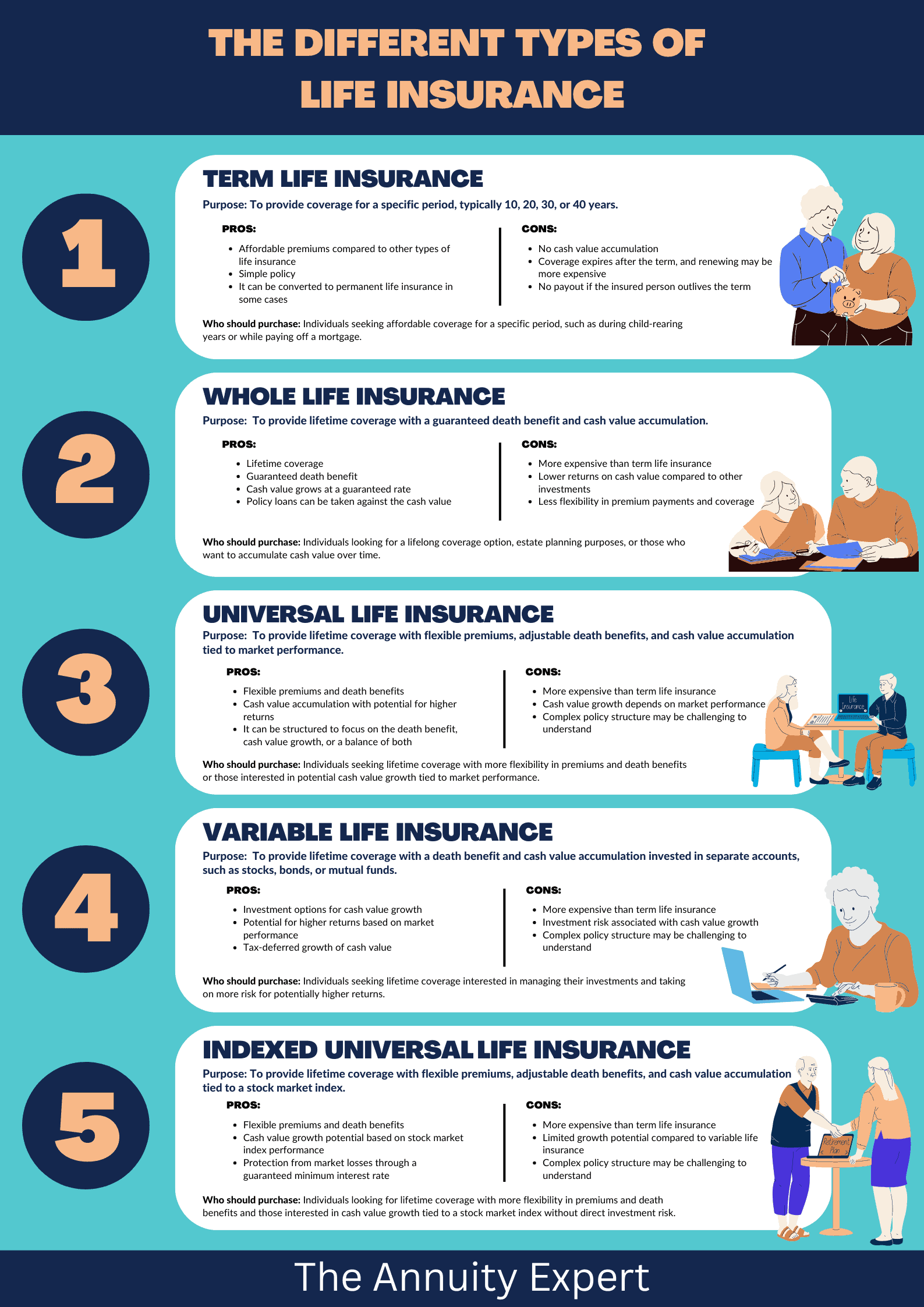
The guaranteed rate period in an Allstate universal life insurance policy refers to the specific timeframe during which the insurer commits to a minimum interest rate on your cash value or ensures the policy remains in force regardless of market fluctuations. In 2026, this typically ranges from a short-term initial interest lock (often 1–5 years) to a long-term no-lapse guarantee that can last until age 95 or 121, depending on the specific policy rider and premium payment history.
Universal life insurance (UL) has long been a staple of the American financial landscape, offering a hybrid of permanent death benefit protection and a flexible cash value component. For those holding policies originally issued by Allstate—many of which are now serviced by Everlake Life Insurance Company following the 2021 divestiture—understanding the "guaranteed rate period" is the difference between a secure retirement asset and a policy at risk of lapsing.
In the current 2026 economic environment, interest rates and the "cost of insurance" (COI) have shifted, making the guarantees within your contract more relevant than ever. This guide explores the mechanics of interest rate floors, no-lapse provisions, and how to verify the status of your Allstate-branded universal life coverage.
The Dual Nature of Guarantees in Universal Life Insurance
When discussing a "guaranteed rate period" in the context of Allstate universal life insurance, it is essential to distinguish between two distinct but related concepts: the Interest Rate Guarantee and the Secondary Guarantee (No-Lapse Guarantee).
1. The Interest Rate Guarantee Floor
Every universal life policy contains a "minimum credited interest rate." This is the floor below which the interest credited to your cash value account cannot fall, regardless of how poorly the market or the insurance company’s general account performs.
For many legacy Allstate policies issued in the late 1990s or early 2000s, these guaranteed floors were often quite generous, sometimes ranging from 3% to 4%. Newer policies issued or distributed through Allstate agencies in the mid-2020s typically feature a lower floor, often around 1% to 2%. The "guaranteed rate period" for this floor is generally the entire life of the contract. However, there is often a "Current Rate" which is higher than the guarantee. The period during which that current rate is locked (before the company can change it) is usually much shorter, typically one year.
2. The No-Lapse Guaranteed Period
This is the more common interpretation of the term for modern policyholders. A No-Lapse Guarantee (NLG) is a provision that ensures the death benefit will be paid even if the policy’s cash value drops to zero, provided a specific "minimum monthly premium" is paid.
The "period" for this guarantee is highly variable. Some policies offer a 10-year or 20-year guarantee period, while "Guaranteed Universal Life" (GUL) products can offer protection to age 90, 95, 100, or even 121. If you miss a payment or take a loan against the policy, you may inadvertently "break" this guarantee period, causing the policy to default to its cash-value performance—which might not be enough to sustain the coverage.
The Evolution of Allstate Life Insurance (2021–2026)
To understand your policy today in 2026, you must recognize the structural changes that occurred in the early 2020s. In 2021, Allstate completed the sale of Allstate Life Insurance Company and Allstate Life Insurance Company of New York to entities managed by Blackstone. This resulted in the creation of Everlake Life Insurance Company.
- Legacy Policies: If you bought an Allstate Universal Life policy before 2021, your policy is likely now owned and serviced by Everlake. The "guaranteed rate" terms in your original contract remain legally binding, but the company name on your statement has changed.
- Newer Distribution: In 2026, if you walk into an Allstate agent’s office to buy life insurance, you are likely being sold a product from a third-party partner, such as Protective Life. These policies have their own specific guaranteed rate periods and contractual language that differ from the legacy Allstate products.
How the Guaranteed Interest Rate Period Functions
The cash value in a universal life policy grows based on the premiums you pay, minus the cost of insurance and administrative fees, plus interest. The guaranteed rate period acts as a safety net.
Mechanics of Interest Crediting
Insurance companies invest the premiums from universal life policies primarily in high-quality corporate bonds and mortgages. When market interest rates are high, the insurer may credit your policy with a "Current Interest Rate" (e.g., 5.5%).
The "Guaranteed Rate Period" applies to the minimum floor. If the market crashes or interest rates plummet, the insurer is contractually obligated to credit you with the minimum rate (e.g., 2%) defined in your policy. In 2026, as we navigate a stabilized but post-inflationary economy, many policyholders are finding that their "Current" rates are hovering just 1% to 2% above their "Guaranteed" floors.
The Impact of the Cost of Insurance (COI)
A common misconception is that a "guaranteed interest rate" means the cash value is guaranteed to grow. This is not necessarily true. Even if you are earning a guaranteed 3% interest, the Cost of Insurance (COI)—the actual price of the death benefit protection—increases as you get older.
If the COI exceeds the interest being credited and the premium being paid, your cash value will dwindle despite the "guaranteed rate." This is why monitoring the duration of your no-lapse guarantee period is more critical for policy longevity than the interest rate alone.
Comparing Guaranteed Rate Structures in Allstate-Related Policies
The following table outlines the typical guaranteed rate structures seen in Allstate-branded or distributed universal life products as of 2026.
| Policy Type | Typical Interest Guarantee (Floor) | Typical No-Lapse Guarantee Period | Primary Risk Factor |
|---|---|---|---|
| Legacy Allstate UL (Pre-2010) | 3.0% - 4.0% | Varies (often age 65 or 20 years) | Rising COI exceeding the high floor. |
| Everlake (Legacy Servicing) | 2.0% - 3.0% | Fixed per original contract | Policy exhaustion due to underfunding. |
| Current Protective UL (Distributed) | 1.0% - 2.0% | Age 90 to 121 (if GUL) | Missing a "catch-up" premium payment. |
| Indexed Universal Life (IUL) | 0.0% - 1.0% | Short-term (5-10 years) | Market volatility affecting index caps. |
Prerequisites for Maintaining the Guaranteed Period
To ensure that your guaranteed rate period remains active and your policy does not lapse prematurely, Allstate (Everlake) and its partners require strict adherence to certain contract rules.
1. The Minimum Premium Requirement
For policies with a No-Lapse Guarantee, the insurer calculates a specific "minimum premium" that must be paid consistently. If you pay even a dollar less than this amount, or if you pay it late, the guarantee period may be permanently forfeited. In such a case, the policy reverts to a "traditional" universal life structure where the cash value must support the insurance costs.
2. Loan and Withdrawal Restrictions
Taking a loan against your Allstate universal life policy is a common way to access liquidity. However, loans and withdrawals reduce the death benefit and the cash value. Most importantly, they usually void the no-lapse guarantee period. If you have a guarantee that the policy will last until age 95, taking a $10,000 loan could cause that guarantee to vanish, leaving you with a policy that might lapse in your 70s if the interest rates don't perform well.
3. Policy Illustrations
In 2026, policyholders are encouraged to request an "In-Force Illustration." This document is a projection of how the policy will perform based on the guaranteed rates versus the current rates. It will explicitly show you when the "guaranteed period" ends based on your current payment pattern.
Navigating 2026 Economic Realities for UL Policies
The financial landscape of 2026 has presented unique challenges for universal life insurance. After years of fluctuating interest rates, many insurers have adjusted their "current" crediting rates.
- Re-evaluating the 1035 Exchange: If your Allstate policy has a very low guaranteed interest rate (e.g., 1%) and a high COI, you might consider a 1035 Exchange. This allows you to transfer the cash value to a newer, more efficient policy without incurring taxes.
- The "Shadow Account" Mechanism: Some Allstate/Everlake policies use a "shadow account" to track the no-lapse guarantee. This isn't real cash you can withdraw, but a mathematical ledger. As long as the shadow account is positive, your guaranteed rate period continues. It is vital to ask your agent for the "shadow account balance" to see how much "buffer" you have left.
Common Mistakes with Guaranteed Rate Periods
- Treating UL like Whole Life: Unlike Whole Life insurance, where the premium and death benefit are usually guaranteed for life, Universal Life depends heavily on the "guaranteed rate period" settings. Assuming it will last forever without checking the contract is a frequent error.
- Ignoring Annual Statements: Allstate and Everlake send annual statements that list the "Guaranteed Interest Rate" and the "Surrender Value." Policyholders often ignore the section that warns: "Based on guaranteed assumptions, your policy will lapse on [Date]."
- Underestimating the "Net" Rate: If your guaranteed rate is 3% but the company charges 1% in administrative fees, your "net" guaranteed growth is only 2%. Always factor in the internal policy expenses (M&E charges, premium loads).
How to Verify Your Allstate Policy Guarantees
If you are unsure about your specific guaranteed rate period, follow these steps in 2026:
- Identify the Underwriter: Check your statement to see if the policy is Everlake, Allstate Assurance, or a distributed product like Protective.
- Locate the "Schedule of Benefits": This page in your original policy contract lists the minimum interest rate and any secondary guarantee riders.
- Contact Customer Service: For legacy Allstate policies, you can visit the Everlake Life website or call their service center.
- Request a "Guaranteed Basis" Projection: Ask for a projection that assumes the company only pays the guaranteed minimum interest and charges the maximum allowable cost of insurance. This shows you the "worst-case scenario" for your policy duration.
Frequently Asked Questions
What happens when the guaranteed interest rate period ends?
The "guaranteed interest rate" (the floor) typically never ends as long as the policy is in force. However, a No-Lapse Guarantee period has a specific end date (e.g., age 85). When that period ends, the policy must rely entirely on its cash value to pay for the cost of insurance. If the cash value is insufficient, you must pay significantly higher premiums to keep the coverage.
Can Allstate change my guaranteed rate?
No. The guaranteed minimum interest rate is a contractual obligation. Once the policy is issued, the insurer cannot lower the floor below what is stated in the contract. They can, however, lower the "Current" interest rate down to that floor.
Is the "Guaranteed Rate" the same as the "Annual Percentage Yield" (APY)?
Not exactly. The guaranteed rate is what is credited to your account value. However, because the insurer deducts monthly fees and insurance costs from that same account value, your actual "yield" may be lower or even negative if the costs are higher than the interest earned.
Does Allstate offer a lifetime guarantee in 2026?
Through their partnership with providers like Protective Life, Allstate agents offer "Guaranteed Universal Life" (GUL) policies that can provide a guaranteed death benefit up to age 121. These are designed for those who want permanent protection without the investment risk of traditional UL.
Why does my statement show a 0% interest rate?
Some newer "Indexed" Universal Life policies (IUL) have a 0% floor to protect against market losses. While you won't lose money due to market performance, the policy's internal costs (COI) will still be deducted, which can result in a decrease in total cash value.
Summary and Practical Recommendation
The "guaranteed rate period" for Allstate universal life insurance is your primary defense against policy lapse. Whether it is a legacy policy with a high interest floor or a modern policy with a long-term no-lapse guarantee, the sustainability of your coverage depends on your understanding of these timelines.
Immediate Action Item: In 2026, the most prudent move for any Allstate or Everlake policyholder is to request an In-Force Illustration. Specifically, ask for the "Years to Lapse" under "Guaranteed Assumptions." If the policy is projected to lapse before your life expectancy, you may need to increase your premiums or consider a life settlement or exchange while the policy still holds value. Understanding the boundaries of your guarantee today ensures that your beneficiaries are protected tomorrow.