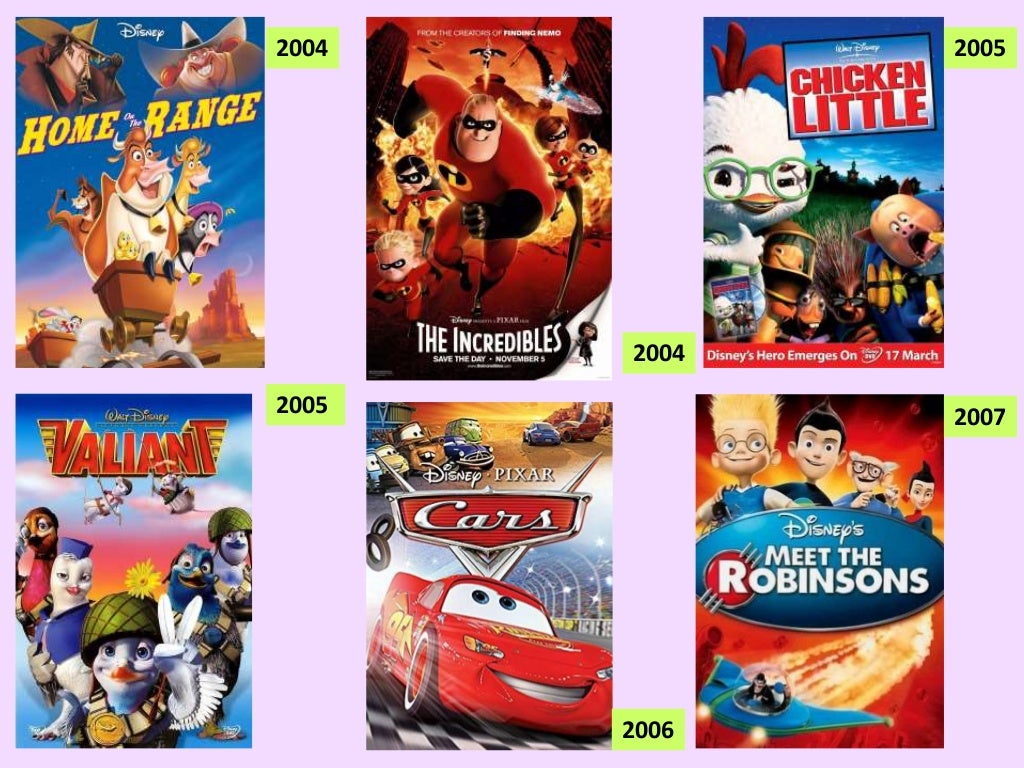
As of 2026, Pixar Animation Studios has produced a total of 31 feature films, ranging from the 1995 groundbreaking Toy Story to the recent 2026 releases Hoppers and Toy Story 5. These films are widely available for streaming on Disney+ and purchase via major digital platforms in 4K Ultra HD resolution.
The Evolution of Pixar: From Computer Science to Storytelling
Pixar Animation Studios began not as a movie studio, but as a high-end hardware company. Originally a division of Lucasfilm known as the Graphics Group, it was eventually spun off with the financial backing of Steve Jobs. The studio’s primary contribution to the industry, beyond its narratives, is RenderMan, its proprietary photorealistic rendering software.
In the early 1990s, the partnership between Disney and Pixar was forged with a risky goal: to create the first ever full-length feature film entirely through computer-generated imagery (CGI). The success of that venture changed the landscape of cinema forever, ending the dominance of traditional hand-drawn animation and ushering in an era where digital physics, lighting, and textures could be used to evoke profound human emotion.
By 2026, Pixar has moved through several distinct leadership eras—from the early days of the "Braintrust" led by John Lasseter, Andrew Stanton, and Pete Docter, to the current era under Chief Creative Officer Pete Docter. Throughout these decades, the technical depth of their work has scaled from simple plastic textures in Toy Story to the complex volumetric clouds in Elio and the sophisticated biological simulations seen in Hoppers.
The Chronological List of All Pixar Movies
To understand Pixar's trajectory, it is helpful to categorize the films by their release periods. Each era represents a shift in both technology and thematic complexity.
The Foundation Era (1995–2004)
This period established Pixar as a box-office powerhouse. The focus was on establishing "what if" scenarios—what if toys were alive, what if monsters were real, or what if fish had a society?
- Toy Story (1995): The film that started it all. It solved the technical hurdle of rendering "hard" surfaces like plastic and wood, which were easier for 1990s computers than organic hair or skin.
- A Bug's Life (1998): This film pushed the studio to handle large crowds and organic environmental elements like translucent leaves and blades of grass.
- Toy Story 2 (1999): Originally intended as a direct-to-video release, it was retooled into a theatrical masterpiece that expanded the emotional stakes of the franchise.
- Monsters, Inc. (2001): A massive technical leap in "fur grooming" technology. Sulley’s millions of individual hairs required a new simulation engine to react realistically to movement.
- Finding Nemo (2003): This film tackled the "physics of water." Pixar developed custom shaders to simulate the way light refracts and scatters underwater (the "murk").
- The Incredibles (2004): Director Brad Bird pushed the studio to animate humans—one of the hardest tasks in CGI—alongside complex fire and destruction simulations.
The Golden Age of Originality (2006–2010)
During this period, Pixar took massive creative risks, often featuring protagonists that seemed unmarketable on paper: a racing car with an ego, a rat who can cook, and a silent robot on a dead planet.
- Cars (2006): Known for its "ray-tracing" technology, which allowed for realistic reflections on the metallic surfaces of the characters.
- Ratatouille (2007): A masterclass in lighting and the simulation of wet, organic surfaces (food).
- WALL-E (2008): This film minimized dialogue for the first 30 minutes, relying on "cinematic" camera work that mimicked real-world anamorphic lenses.
- Up (2009): Famous for its emotional opening, this film utilized advanced physics to manage the movement of thousands of individual balloons.
- Toy Story 3 (2010): A technical and emotional peak that brought the initial Andy saga to a close, utilizing the most advanced global illumination tools of the time.
The Expansion and Sequel Era (2011–2019)
As Pixar grew, it began balancing original intellectual properties with sequels to beloved classics. This era saw the studio refine its "PBR" (Physically Based Rendering) workflows.
- Cars 2 (2011)
- Brave (2012): This film introduced a new hair simulator specifically for Merida’s wild, curly red hair.
- Monsters University (2013): The first Pixar film to use Global Illumination in its entire pipeline, allowing for more natural lighting.
- Inside Out (2015): Explored abstract concepts using "particle-based" character designs for the emotions.
- The Good Dinosaur (2015): Featured photorealistic environments that were almost indistinguishable from live-action footage.
- Finding Dory (2016)
- Cars 3 (2017)
- Coco (2017): A vibrant exploration of light, featuring the "Marigold Bridge" which consisted of millions of individual light-emitting points.
- Incredibles 2 (2018)
- Toy Story 4 (2019): Pushed "micro-detail" to the extreme, showing dust, scratches, and fabric textures at a microscopic level.
The Modern and Streaming Era (2020–2026)
This current era is defined by more personal, diverse stories and a return to high-concept theatrical experiences following the challenges of the early 2020s.
- Onward (2020)
- Soul (2020): Won the Academy Award for Best Animated Feature, focusing on "The Great Before" with ethereal, non-Newtonian character designs.
- Luca (2021): Introduced a "stylized" look, moving away from photorealism toward a hand-crafted, Mediterranean aesthetic.
- Turning Red (2022): Heavily influenced by anime aesthetics, featuring "expressive" animation over literal physics.
- Lightyear (2022): A sci-fi epic that utilized a "cinematic" IMAX-ratio look for certain sequences.
- Elemental (2023): A massive technical undertaking where the main characters were not solid models, but constant fluid and gas simulations.
- Inside Out 2 (2024): Explored new emotions like Anxiety and Ennui, becoming one of the highest-grossing animated films of all time.
- Elio (2025): An intergalactic adventure that pushed the limits of the studio's planetary rendering and alien creature design.
- Hoppers (2026): A recent release focusing on "animal consciousness" and human-animal body-swapping, utilizing groundbreaking muscular-skeletal simulations.
- Toy Story 5 (2026): The latest entry in the flagship franchise, dealing with the intersection of traditional toys and modern technology.
Comprehensive Comparison Table of Pixar Movies
The following table summarizes the key details of every Pixar feature film released or scheduled through 2026.
| Release Year | Film Title | Primary Technical/Narrative Focus | Principal Director(s) |
|---|---|---|---|
| 1995 | Toy Story | First fully computer-animated feature | John Lasseter |
| 1998 | A Bug's Life | Translucency and crowd simulation | John Lasseter |
| 1999 | Toy Story 2 | Emotional depth and franchise expansion | John Lasseter |
| 2001 | Monsters, Inc. | Fur grooming and movement physics | Pete Docter |
| 2003 | Finding Nemo | Underwater lighting and murk simulation | Andrew Stanton |
| 2004 | The Incredibles | Human character design and action choreography | Brad Bird |
| 2006 | Cars | Ray-traced reflections on metallic surfaces | John Lasseter |
| 2007 | Ratatouille | Food rendering and organic lighting | Brad Bird |
| 2008 | WALL-E | Cinematography and lens simulation | Andrew Stanton |
| 2009 | Up | Volumetric balloon physics | Pete Docter |
| 2010 | Toy Story 3 | Climax of the original Andy trilogy | Lee Unkrich |
| 2011 | Cars 2 | International scope and spy-genre tropes | John Lasseter |
| 2012 | Brave | Advanced hair simulation (Taz) | Mark Andrews/Brenda Chapman |
| 2013 | Monsters University | Introduction of Global Illumination (GI) | Dan Scanlon |
| 2015 | Inside Out | Abstract conceptual character design | Pete Docter |
| 2015 | The Good Dinosaur | Photorealistic landscape rendering | Peter Sohn |
| 2016 | Finding Dory | Complex character rigging (Hank the Octopus) | Andrew Stanton |
| 2017 | Cars 3 | Returning to the emotional roots of racing | Brian Fee |
| 2017 | Coco | Light-emitting surfaces and cultural detail | Lee Unkrich |
| 2018 | Incredibles 2 | Modernized family dynamics and updated tech | Brad Bird |
| 2019 | Toy Story 4 | High-fidelity texture and micro-shading | Josh Cooley |
| 2020 | Onward | Fantasy-world light and magic effects | Dan Scanlon |
| 2020 | Soul | Metaphysical soul-rendering (non-solid) | Pete Docter |
| 2021 | Luca | Stylized, "hand-drawn" CGI aesthetic | Enrico Casarosa |
| 2022 | Turning Red | Anime-influenced character expressions | Domee Shi |
| 2022 | Lightyear | Realistic sci-fi world-building | Angus MacLane |
| 2023 | Elemental | Continuous character volume simulations | Peter Sohn |
| 2024 | Inside Out 2 | Expansion of psychological complexity | Kelsey Mann |
| 2025 | Elio | Massive-scale space environments | Adrian Molina |
| 2026 | Hoppers | Animal-human bio-simulation | Daniel Chong |
| 2026 | Toy Story 5 | Modern tech vs. traditional play | Andrew Stanton |
The "Pixar Theory" and Character Interconnectivity
A significant part of the Pixar experience for fans is the Pixar Theory, a popular hypothesis suggesting that all Pixar movies take place within a single, unified timeline. While the studio officially treats each film as its own entity, they intentionally include "Easter Eggs" that fuel this speculation.
- The Pizza Planet Truck: Originally appearing in Toy Story, this yellow Gyoza truck has appeared in every single Pixar movie except The Incredibles (though it appears in the video game).
- A113: A reference to the classroom at the California Institute of the Arts where many Pixar animators studied. It appears as a room number, a license plate, or a coded message in every film.
- The Luxo Ball: The yellow ball with a blue stripe and red star from the original short Luxo, Jr. is hidden in backgrounds throughout the filmography.
- Character Cameos: You might see a Nemo toy in Monsters, Inc. or a postcard from the setting of Up in Toy Story 3. These connections suggest a deep web of shared history that fans have meticulously mapped out.
Technical Specifications: How Pixar Movies are Made
Pixar utilizes a proprietary pipeline that starts with Pre-visualization (Pre-vis), where the story is roughly blocked out in 3D. The technical core is RenderMan, which is also licensed to other major studios like ILM for use in films like Star Wars.
By 2026, Pixar has fully transitioned to GPU-accelerated rendering, which allows animators to see high-fidelity previews in near real-time, rather than waiting hours for a single frame to process. This has enabled the complex "simulation-heavy" characters seen in Elemental and Hoppers. Every Pixar film is now mastered in 4K resolution with High Dynamic Range (HDR), specifically Dolby Vision, which allows for deeper blacks and more vibrant highlights—essential for films like Soul and Coco.
How to Access All Pixar Movies in 2026
For viewers looking to watch the complete library, there are three primary methods:
- Disney+: As of 2026, the Disney+ platform remains the "home of Pixar." Every feature film, along with "SparkShorts" and "Cars on the Road" series, is available in 4K UHD. This is the most cost-effective way to access the entire catalog.
- Digital Purchase: Platforms like Apple TV, Amazon Prime Video, and Vudu offer the films for individual purchase. This is often preferred by those who want "permanent" access without a recurring subscription.
- Physical Media: While the market has shifted toward streaming, Disney continues to release "Ultimate Collector's Edition" 4K Blu-rays for Pixar titles. These are highly valued for their high bit-rate video and lossless Dolby Atmos audio tracks, which surpass streaming quality.
Frequently Asked Questions
What was the first Pixar movie?
The first feature-length Pixar movie was Toy Story, released on November 22, 1995. It was the first film in history to be made entirely with computer animation. Before this, Pixar had only produced short films, such as Luxo, Jr. and Tin Toy, to demonstrate their technical capabilities to the industry.
Are all Pixar movies on Disney+?
Yes, as of 2026, all Pixar feature films are available on Disney+. Occasionally, there may be slight regional variations in availability due to legacy licensing agreements, but in most major markets, the entire catalog—from Toy Story to the most recent theatrical releases (after their theatrical window)—is included in the standard subscription.
What is the highest-grossing Pixar film?
As of 2026, Inside Out 2 (2024) and Incredibles 2 (2018) remain the highest-grossing films in the studio's history, both surpassing the $1 billion mark at the global box office. Toy Story 3 and Toy Story 4 also famously crossed this threshold, proving the lasting power of Pixar's flagship characters.
Is there a new Pixar movie coming out in 2027?
While the 2026 schedule features Hoppers and Toy Story 5, Pixar typically announces its following year's slate during the D23 Expo or Disney investor calls. Rumors suggest an original project from a new director and potentially Incredibles 3 are in the production pipeline for 2027 and beyond.
Who owns Pixar?
The Walt Disney Company owns Pixar Animation Studios. Disney acquired Pixar in 2006 in a deal worth approximately $7.4 billion. Since then, Pixar has operated as a subsidiary under the Disney Entertainment umbrella, maintaining its own separate campus in Emeryville, California.
Practical Recommendation for Viewers
If you are new to the Pixar library or looking to introduce them to a new generation in 2026, the best approach is to watch them in chronological order of release. This allows you to appreciate the incredible evolution of animation technology—seeing the "plastic" look of 1995 transition into the photorealistic and highly stylized worlds of the 2020s. For the best visual experience, always opt for the 4K HDR versions, which preserve the immense detail the animators labored over in the studio's Emeryville "render farm."
For more official information on upcoming releases, you can visit the Official Pixar Website or check the Disney+ Pixar hub.