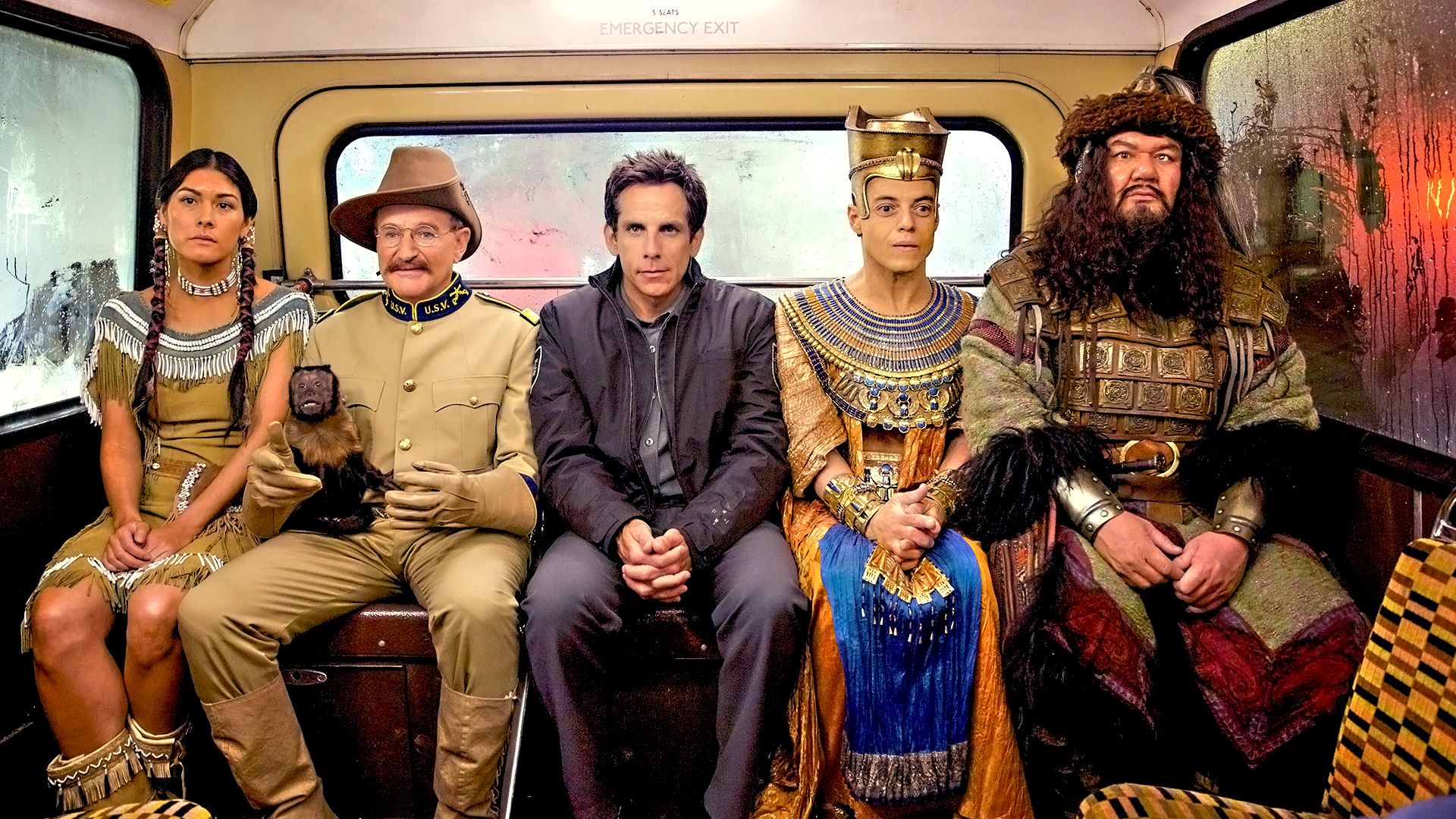
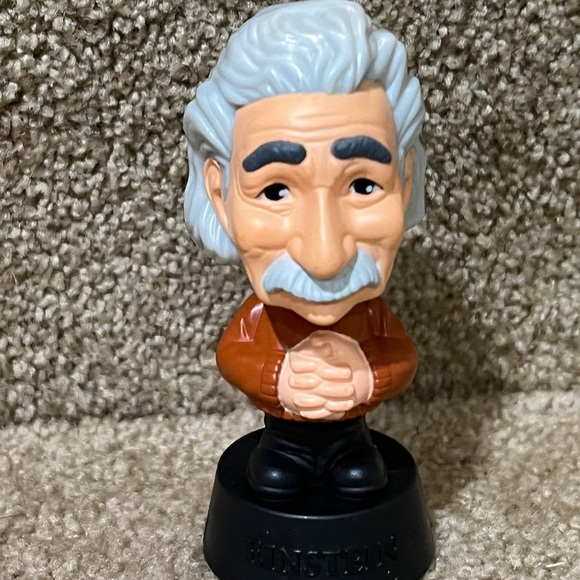
In the 2009 film Night at the Museum: Battle of the Smithsonian, Albert Einstein appears not as a traditional wax statue, but as a collection of multi-lingual, highly intelligent bobbleheads. Voiced by Eugene Levy, these characters provide the crucial mathematical solution to the Tablet of Ahkmenrah’s riddle, helping Larry Daley defeat Kahmunrah.
The Context of Albert Einstein’s Appearance
As of 2026, the Night at the Museum franchise remains a cornerstone of family-friendly adventure cinema, noted for its imaginative personification of historical figures. While the first film centered on the American Museum of Natural History in New York City, the sequel, Battle of the Smithsonian, expanded the scope to the massive Smithsonian Institution in Washington, D.C. This transition allowed the filmmakers to introduce characters that wouldn't necessarily be found in a natural history museum, including a group of Albert Einstein bobbleheads located in the National Air and Space Museum.
The choice to represent one of history’s greatest physicists as a set of souvenir toys was a deliberate comedic and creative pivot. In the logic of the film’s universe, the Tablet of Ahkmenrah’s magical glow brings everything in the museum to life—not just the official exhibits, but also the gift shop items. This distinction is vital for understanding the "Einstein" character in this specific film: they are collective, diminutive, and possess a whimsical, high-pitched synchronization that contrasts with the gravitas usually associated with the real-world Nobel Prize winner.
The Narrative Role: Solving the Riddle of the Tablet
The primary function of the Albert Einstein bobbleheads is to serve as the "brain trust" for the protagonist, Larry Daley (played by Ben Stiller). Throughout the film, the villainous Kahmunrah—an ancient Egyptian pharaoh—seeks to unlock the Gate of the Underworld. To do this, he requires a specific combination or code for the Tablet of Ahkmenrah.
Larry and his companion, Amelia Earhart (Amy Adams), find themselves in the National Air and Space Museum, seeking a way to decipher the Tablet’s secrets. They encounter the Einstein bobbleheads, who reside in a display case. These figures are portrayed as possessing the collective genius of the real Einstein, combined with a quirky, toy-like personality.
The Mathematical Solution: The Value of Pi
The "explained" aspect of the Einstein characters centers on the riddle they solve. The code required to activate the Tablet’s power is revealed to be the mathematical constant Pi ($\pi$). Specifically, the bobbleheads identify the sequence as 3.14159265.
This inclusion is a clever nod to both science and history. In the real world, Albert Einstein was born on March 14 (3/14), which is celebrated globally as Pi Day. By making the code the value of Pi, the filmmakers created a thematic bridge between the character of Einstein and the mechanical requirements of the plot. The bobbleheads assist Larry not just by reciting the numbers, but by proving that intellect and collaboration are the keys to overcoming brute force.
Character Design and Voice Acting
A significant reason why this specific iteration of Einstein is so memorable is the performance of Eugene Levy. Known for his distinctive comedic timing and "eyebrow-heavy" expressions, Levy provided the voice for the bobbleheads, giving them a slightly neurotic yet endearing quality.
The decision to use bobbleheads rather than a full-sized wax figure served several purposes:
- Visual Comedy: The constant nodding motion of the heads added a layer of physical humor to the dialogue.
- Scale: Having a group of tiny geniuses interact with full-sized humans created a fun visual dynamic.
- Unity: The bobbleheads often spoke in unison or finished each other's sentences, emphasizing the idea of "collective genius."
The character design also leaned into the stereotypical "Einstein look"—the wild white hair, the mustache, and the unassuming sweatshirt. Despite being toys, they were treated by the other characters as the ultimate authority on logic and mathematics within the museum walls.
Scientific Accuracy vs. Cinematic License
While Night at the Museum is a fantasy-comedy, it does ground its Einstein characters in certain historical and scientific truths. However, it also takes significant liberties to suit the narrative.
The Real Albert Einstein
In reality, Albert Einstein was a theoretical physicist who developed the theory of relativity. He was known for his humility and his pacifist views. The film honors his legacy by making the "Einstein" characters helpful and opposed to the tyrannical Kahmunrah. However, the real Einstein obviously never dealt with Egyptian magic or living museum exhibits.
The Cinematic Interpretation
The film uses the bobbleheads to simplify complex concepts for a general audience. The use of Pi as a "secret code" is a classic trope. In 2026, educators still point to this scene as a pop-culture entry point for discussing the importance of mathematical constants with younger students.
| Feature | Real Albert Einstein | Night at the Museum Bobbleheads |
|---|---|---|
| Form | Human (Physicist) | Plastic Souvenir Toys |
| Location | Princeton, NJ (Late Life) | National Air and Space Museum, DC |
| Voice | German-accented, baritone | High-pitched (Eugene Levy) |
| Main "Code" | $E=mc^2$ | $3.14159265$ (Pi) |
| Purpose | Advancing Physics | Solving the Tablet's Riddle |
The Setting: National Air and Space Museum
Understanding the location of the Einstein characters is essential to the "explained" context. The Smithsonian National Air and Space Museum (NASM) houses the largest collection of historic aircraft and spacecraft in the world. In the film, this setting provides a high-stakes environment where Larry and Amelia must navigate through iconic exhibits like the Wright Flyer and the Apollo 11 Command Module.
The Einstein bobbleheads are located specifically in a gift shop display within this museum. This highlights a recurring theme in the sequel: that the "magic" of the museum isn't limited to the artifacts themselves, but extends to the entire institution and its mission of education and inspiration.
Why the Bobbleheads Are Fan Favorites
Among the many historical figures appearing in the franchise—such as Theodore Roosevelt, Attila the Hun, and Napoleon Bonaparte—the Einsteins stand out because they represent the "everyman" toy elevated to greatness. Fans appreciate several key elements of their appearance:
- The "Rub My Belly" Gag: There is a humorous moment involving Larry interacting with the bobbleheads that humanizes the "geniuses" and breaks the tension of the chase.
- Intellectual Superiority: Despite their size, they are the only ones capable of outsmarting the ancient Egyptian magic, proving that size does not equate to power.
- The Ensemble Dynamic: Seeing a dozen tiny Einsteins all bobbing their heads in agreement is a visual that has remained iconic in the years since the film’s release.
Legacy and Pop Culture Impact
By 2026, the Night at the Museum series has transitioned into a classic of the early 21st-century adventure genre. The Einstein bobbleheads, in particular, became a popular merchandise item in museum gift shops across the United States. They serve as a reminder of the film's message: that history and science are not just things to be looked at, but things that are alive and relevant to our current lives.
The "Einstein explained" phenomenon often leads viewers to look deeper into the Smithsonian itself. The film took some creative liberties with where items are placed—for instance, while there are gift shops in the Air and Space Museum, the specific arrangement of bobbleheads seen in the movie was a set construction designed for maximum comedic impact.
Frequently Asked Questions
Which movie features the Albert Einstein bobbleheads?
The Albert Einstein bobbleheads appear in the second film of the trilogy, Night at the Museum: Battle of the Smithsonian, released in 2009. They do not appear in the first film, which was set in New York, or in the primary cast of the third film, Secret of the Tomb, though the character of Einstein is referenced throughout the series.
Who voiced the Einstein characters?
The characters were voiced by the legendary Canadian actor and comedian Eugene Levy. His performance is characterized by a high-pitched, synchronized delivery that became one of the standout comedic elements of the sequel.
What is the code the Einsteins give to Larry?
The code is the mathematical constant Pi ($\pi$), which they provide as 3.14159265. This code is used to lock or unlock the Tablet of Ahkmenrah, preventing the villain Kahmunrah from summoning an army from the underworld.
Why are they bobbleheads instead of a statue?
The filmmakers chose bobbleheads to add a layer of whimsy and to utilize the "gift shop items come to life" mechanic introduced in the sequel. It also allowed for a "collective" version of the character, which was more visually interesting and comedic than a single, stationary wax figure.
Are the Einstein bobbleheads still at the Smithsonian?
While the Smithsonian National Air and Space Museum sells various Einstein-related merchandise and bobbleheads in its gift shops, the specific characters from the movie are fictional representations. However, the museum does feature exhibits related to Einstein’s contributions to our understanding of the universe.
Is the value of Pi they gave actually correct?
Yes, the sequence 3.14159265 provided by the Einsteins is the correct first eight decimal places of Pi. The connection to Einstein’s birthday (March 14) makes the use of this specific number factually and thematically appropriate.
Practical Recommendation for Fans
If you are interested in experiencing the world of the Einstein bobbleheads firsthand, a visit to the Smithsonian National Air and Space Museum in Washington, D.C., is highly recommended. While you won't find the bobbleheads talking back to you, the museum offers an incredible look at the intersection of science and history that the film celebrates. Additionally, for those looking to re-watch the scene, focusing on the background of the National Air and Space Museum sequence reveals many "Easter eggs" of actual aircraft and space modules that Larry and Amelia use during their escape.