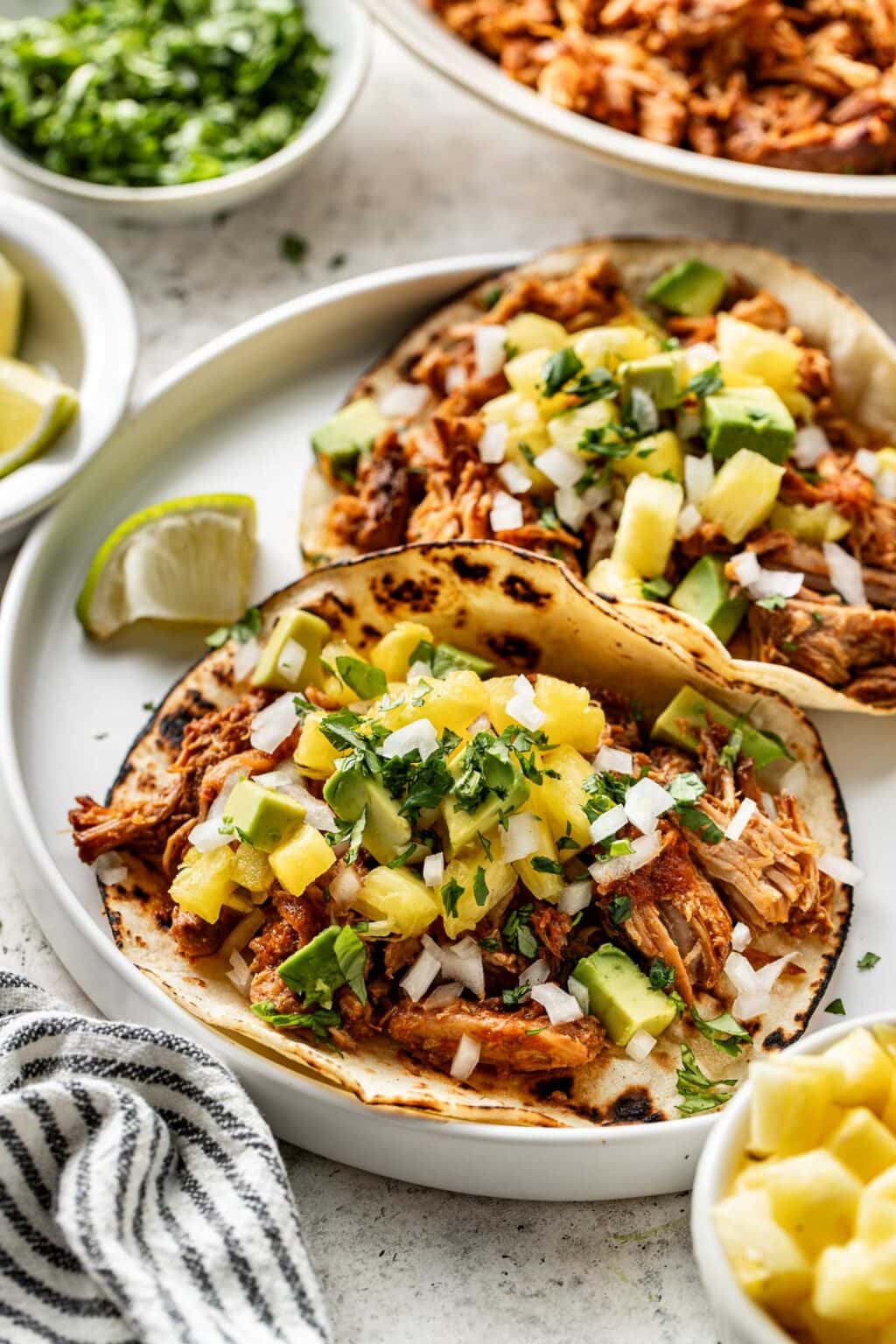
To prepare authentic-tasting Al Pastor in a slow cooker, you must braise a pork shoulder in a marinade of achiote paste, rehydrated Guajillo chilies, and pineapple juice. After 7 to 8 hours on low heat, the pork is shredded and pan-seared to achieve the signature crispy edges found on traditional vertical rotisserie meat.
Understanding the Roots of Al Pastor
Al Pastor, which translates to "shepherd style," is a staple of Mexican street food that showcases the country's rich history of cultural fusion. The cooking method—traditionally involving a vertical spit called a trompo—was brought to Mexico by Lebanese immigrants in the early 20th century. While the original shawarma used lamb, Mexican cooks adapted the recipe to use pork marinated in a complex blend of dried chilies, spices, and achiote.
In 2026, the demand for high-quality, home-cooked versions of this street-food classic has only grown. While most home kitchens do not have a vertical rotisserie, the slow cooker offers a scientifically sound alternative for replicating the tenderness of the meat. The key challenge lies in replicating the texture: the contrast between the succulent interior and the charred, caramelized exterior. By leveraging the low-and-slow braising method and finishing with a high-heat sear, you can achieve a result that rivals the best taquerías.
Core Ingredients and Their Technical Roles
Every ingredient in a slow cooker Al Pastor recipe serves a specific chemical or structural purpose. Understanding these roles helps you adjust the recipe to your specific taste preferences without compromising the integrity of the dish.
The Meat: Pork Shoulder (Boston Butt)
The best cut for Al Pastor is the pork shoulder, often labeled as Boston butt. This cut is rich in intramuscular fat and connective tissue (collagen). During the 8-hour slow-cooking process, the collagen breaks down into gelatin, which provides the meat with a silky mouthfeel and prevents it from drying out. Using a leaner cut, like pork loin, will result in a chalky, dry texture that cannot be salvaged by the marinade.
Achiote Paste: The Color and Earthiness
Achiote is a paste made from annatto seeds, mixed with spices like cumin, coriander, and cloves. It is the primary source of the deep red color characteristic of Al Pastor. Beyond aesthetics, it provides a mild, earthy bitterness that balances the sweetness of the pineapple and the heat of the chilies.
The Chili Trio: Guajillo, Ancho, and Chipotle
A balanced Al Pastor marinade relies on a combination of dried chilies:
- Guajillo: Provides a bright, red color and a mild, tangy heat. It is the workhorse of the marinade.
- Ancho: Adds a rich, dark-fruit sweetness and smokiness.
- Chipotle in Adobo: Adds a layer of intense smokiness and a more direct heat.
Pineapple: The Enzymatic Tenderizer
Traditional Al Pastor is topped with a slice of fresh pineapple on the trompo, allowing the juices to baste the meat. In a slow cooker, pineapple juice serves two purposes: it provides the necessary acidity to balance the fats and contains an enzyme called bromelain. Bromelain breaks down protein chains, further tenderizing the pork. However, caution is required; if left in a fresh pineapple marinade for too long (over 24 hours), the meat can become mushy. For slow cooking, canned pineapple juice is often preferred because the pasteurization process deactivates some of the bromelain, allowing for a more controlled tenderization.
The Definitive Slow Cooker Al Pastor Recipe
This recipe is designed for a standard 6-quart slow cooker and serves approximately 6 to 8 people.
Prerequisites and Preparation
- Prep time: 30 minutes
- Cook time: 7–8 hours (Low) or 4–5 hours (High)
- Total time: Approximately 8.5 hours
- Special equipment: Blender or food processor, large skillet (cast iron preferred).
Ingredients List
- Pork: 4 to 5 lbs pork shoulder, cut into 2-inch cubes.
- Dried Chilies: 5 Guajillo chilies and 2 Ancho chilies (stems and seeds removed).
- Liquid Base: 1 cup pineapple juice, ¼ cup apple cider vinegar.
- Aromatic/Paste: 3.5 oz package of achiote paste, 4 cloves of garlic (peeled), 1 small white onion (chopped).
- Spices: 1 tsp dried Mexican oregano, 1 tsp ground cumin, 1 tsp salt, ½ tsp black pepper.
- Finish: 1 cup fresh pineapple chunks, ½ cup chopped cilantro, ½ cup diced white onion, corn tortillas.
Step-by-Step Instructions
1. Prepare the Chili Base
Toast the dried Guajillo and Ancho chilies in a dry skillet over medium heat for 1–2 minutes until fragrant but not burnt. Submerge them in a bowl of boiling water for 15 minutes to rehydrate. Once soft, discard the soaking water.
2. Create the Marinade
In a blender, combine the rehydrated chilies, achiote paste, pineapple juice, apple cider vinegar, garlic, chopped onion, oregano, cumin, salt, and pepper. Blend on high until the mixture is completely smooth. The consistency should be thick but pourable.
3. Marinate and Slow Cook
Place the cubed pork shoulder into the slow cooker. Pour the marinade over the meat and toss to ensure every piece is thoroughly coated. Set the slow cooker to Low for 7 to 8 hours. Cooking on "Low" is highly recommended over "High" for Al Pastor, as the slower temperature rise allows the fats to render more effectively without toughening the muscle fibers.
4. Shred the Pork
Once the cooking time is complete, the pork should be "fork-tender." Remove the pork from the slow cooker and place it on a large baking sheet or cutting board. Gently shred the meat into bite-sized pieces using two forks. Do not pulverize the meat; you want distinct chunks and strands.
5. The Critical Finish: Pan-Searing
This is the most important step for authenticity. Heat a large skillet (ideally cast iron) over medium-high heat with a tablespoon of oil. Working in batches, add the shredded pork to the skillet. Allow the meat to sit undisturbed for 2–3 minutes until the bottom becomes crispy and charred. Toss the meat and cook for another minute. During the final minute, add some of the reserved juices from the slow cooker to glaze the meat.
Comparing Cooking Methods for Al Pastor
While the slow cooker is highly convenient, it is useful to understand how it compares to other common methods available to the home cook in 2026.
| Feature | Slow Cooker | Traditional Trompo | Oven Roasting |
|---|---|---|---|
| Effort Level | Low (Set and forget) | Extremely High | Moderate |
| Texture | Tender/Succulent | Crispy/Thin-sliced | Crispy/Dry |
| Flavor Depth | High (Deep braise) | Very High (Smoke/Char) | Moderate |
| Time Required | 8 Hours | 4–6 Hours | 3–4 Hours |
| Uniformity | Highly consistent | Variable by carver | Fairly consistent |
Advanced Tips for Technical Success
To elevate the dish from a standard crockpot meal to a gourmet experience, consider these technical adjustments:
Fat Management
If the pork shoulder has an excessively thick fat cap (more than ½ inch), trim a portion of it off, but do not remove it entirely. You need that fat to render into the sauce. If the resulting sauce in the slow cooker has too much oil on top after 8 hours, use a spoon or a fat separator to remove the excess before tossing it with the shredded meat.
Achieving the "Glaze"
The liquid remaining in the slow cooker is liquid gold. It contains concentrated chili flavors and rendered pork fat. When pan-searing the meat, add about ½ cup of this liquid to the pan. As the water evaporates, the sugars in the pineapple juice and the fats will create a sticky, savory glaze that adheres to the crispy pork bits.
Fresh vs. Canned Pineapple
In 2026, food science continues to emphasize the difference in enzymatic activity. If you use fresh pineapple juice, do not marinate the meat for more than 4 hours before starting the slow cooker. If you use canned juice, you can safely marinate the meat overnight in the refrigerator for deeper flavor penetration without risking a "mushy" texture.
Serving and Presentation
Al Pastor is traditionally served as tacos, but the versatility of slow-cooker pork allows for several applications.
- Tacos Al Pastor: Use small corn tortillas, warmed on a griddle until pliable. Top the seared pork with finely diced white onion, fresh cilantro, and a squeeze of lime.
- The Pineapple Element: While the juice is in the marinade, the tacos should be topped with fresh, small chunks of pineapple. For extra flavor, sear the pineapple chunks in the same skillet used for the pork.
- Salsa Selection: A spicy Salsa Verde (tomatillo-based) or a charred Pineapple-Habanero salsa provides the necessary acid and heat to cut through the richness of the pork.
- Gringas: A popular variation where the Al Pastor meat is served on a flour tortilla with melted Oaxacan cheese, then folded and grilled.
Troubleshooting Common Issues
The meat is too dry: This usually happens if a lean cut like pork tenderloin was used, or if the meat was cooked on "High" for too long. To fix this, toss the shredded meat in more of the leftover cooking liquid and reduce the searing time.
The flavor is bland: This is often a result of under-salting. Pork shoulder requires a significant amount of salt to penetrate the dense muscle. Taste the cooking liquid at the 6-hour mark and add more salt or a splash of apple cider vinegar if the flavors aren't "popping."
The sauce is too thin: If the marinade hasn't thickened into a sauce, transfer the liquid to a small saucepan and simmer it on the stove over medium-high heat for 10 minutes to reduce and concentrate the flavors before adding it back to the meat.
Frequently Asked Questions
Can I use a different meat besides pork?
While pork shoulder is traditional, you can substitute it with boneless chicken thighs. Chicken thighs have enough fat to stay moist during the slow-cooking process. Avoid chicken breasts, as they will become unpleasantly dry. For a vegetarian version, large chunks of jackfruit can be used, though the cooking time should be reduced to 3–4 hours on low.
Is achiote paste absolutely necessary?
Achiote is essential for the specific flavor profile and iconic color of Al Pastor. If you cannot find it at a local market, you can find it through major online retailers in 2026. A makeshift substitute involves mixing 1 ½ tbsp paprika, ½ tsp turmeric, ½ tsp cumin, and a splash of white vinegar, but the flavor will lack the specific earthy depth of true annatto.
How long do leftovers stay fresh?
Slow cooker Al Pastor stores exceptionally well because the fat and gelatin content keep the meat moist. It can be kept in an airtight container in the refrigerator for up to 4 days. When reheating, it is best to use a skillet to maintain the crispy texture rather than a microwave, which will make the meat soft.
Can I freeze the cooked Al Pastor?
Yes, this recipe is excellent for meal prep. Freeze the shredded meat with some of the cooking juices in a vacuum-sealed bag or freezer-safe container for up to 3 months. Thaw overnight in the refrigerator before pan-searing.
Do I need to sear the meat before putting it in the slow cooker?
While some recipes suggest searing the whole roast before slow cooking, it is not strictly necessary for Al Pastor. Since the meat is cubed and will be seared after shredding, the final sear provides more surface area for caramelization (the Maillard reaction) than an initial sear would.
Final Recommendation
For the best results, always prioritize the quality of the dried chilies and ensure you do not skip the pan-searing step. The contrast in textures is what defines Al Pastor. If you are serving a crowd, prepare the meat in the slow cooker a day in advance, refrigerate it in its juices, and perform the final sear right before serving to ensure the meat is hot, crispy, and flavorful.