To resolve air conditioning issues in Louisville, homeowners should expect to pay between $150 and $600 for standard repairs, with emergency service calls typically ranging from $100 to $250. Given the Ohio Valley’s high humidity and peak summer temperatures, immediate professional intervention is necessary for refrigerant leaks, electrical failures, or compressor issues to prevent further system degradation and maintain indoor air quality.
Navigating the Louisville Climate: Why HVAC Performance Is Critical
Louisville, Kentucky, situated within the Ohio River Valley, experiences a specific set of climatic challenges that place significant stress on residential and commercial air conditioning systems. In 2026, we continue to see the "urban heat island" effect in downtown Louisville and surrounding neighborhoods like Old Louisville and the Highlands, where brick structures and asphalt trap heat, forcing HVAC units to run for extended cycles.
The primary challenge in Louisville is not just the temperature, which frequently exceeds 90°F in July and August, but the relative humidity. High humidity levels require air conditioners to perform "latent cooling"—the process of removing moisture from the air—before they can effectively lower the "sensible" temperature. When a system is poorly maintained or in need of repair, it fails to dehumidify properly, leading to a "clammy" indoor environment and potential mold growth. In the Louisville market, an air conditioner’s lifespan typically averages 10 to 15 years, slightly shorter than in arid climates, due to the high workload and corrosive humidity.
Common Air Conditioning Problems in the Louisville Area
Understanding the specific failure points common to Louisville homes can help residents identify issues before they lead to a total system breakdown. While some issues are universal, local environmental factors often dictate the frequency of specific repairs.
Clogged Condensate Lines and Drainage Issues
Because Louisville units must remove gallons of water from the air daily during the humid summer months, condensate drainage systems are a frequent point of failure. Algae and sludge can build up in the drain lines, leading to backups. Modern systems in 2026 often include float switches that shut the unit down if water is detected in the secondary drain pan, a safety feature that prevents ceiling damage but requires a professional to clear the blockage and reset the system.
Electrical Component Failure
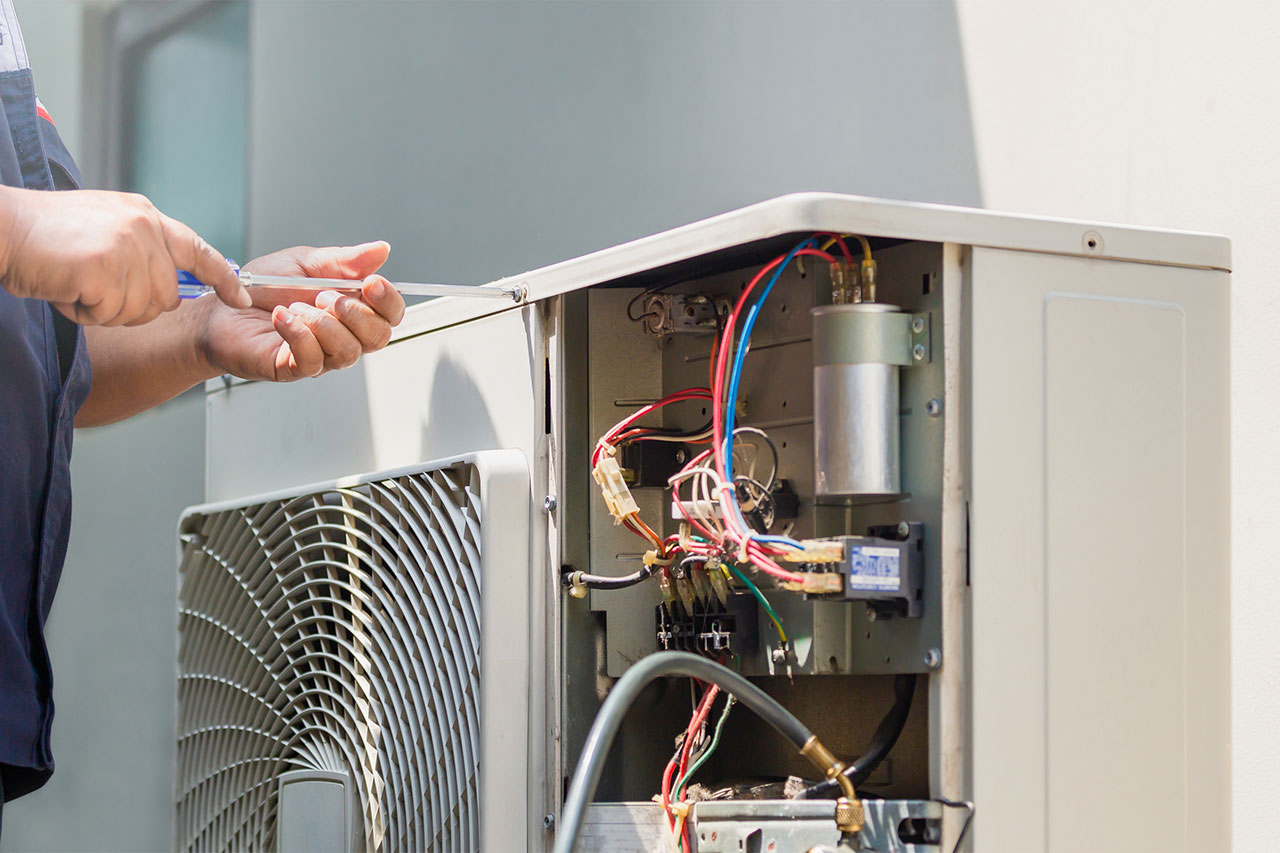
Louisville's frequent summer thunderstorms can lead to power surges and "brownouts." These fluctuations are notorious for damaging sensitive electrical components such as capacitors and contactors. A failed capacitor is perhaps the most common repair; this component provides the initial "jolt" of energy needed to start the compressor and fan motors. If you hear a humming sound coming from your outdoor unit but the fan isn't spinning, a blown capacitor is the likely culprit.
Refrigerant Leaks and the 2026 Regulatory Landscape
As of 2026, the HVAC industry has largely transitioned away from older refrigerants like R-22 and is in the midst of managing the phase-down of R-410A. Most repairs in Louisville now involve R-454B or R-32, which are more environmentally friendly but require specific handling procedures. A leak in the evaporator or condenser coil not only prevents cooling but can also lead to the compressor overheating. Because refrigerants operate in a "closed loop," any need to "top off" the gas indicates a physical leak that must be repaired to comply with Environmental Protection Agency (EPA) Section 608 regulations.
Understanding Repair Costs and Service Fees in 2026
Pricing for air conditioning repair in the Louisville Metro area is influenced by labor availability, parts logistics, and the complexity of the modern SEER2-compliant systems. While prices fluctuate, the following breakdown provides a realistic expectation for the current year.
| Repair Type | Estimated Cost Range (Labor & Parts) | Typical Duration |
|---|---|---|
| Diagnostic/Service Call Fee | $85 – $175 | 30 – 60 Minutes |
| Capacitor Replacement | $150 – $350 | 1 Hour |
| Contactor Replacement | $160 – $300 | 1 Hour |
| Condensate Line Clearing | $120 – $250 | 1 – 2 Hours |
| Fan Motor Replacement | $450 – $900 | 2 – 3 Hours |
| Refrigerant Leak Repair & Recharge | $400 – $1,200 | 3 – 5 Hours |
| Evaporator Coil Replacement | $1,500 – $3,500 | 4 – 8 Hours |
| Compressor Replacement | $2,000 – $4,500 | 6 – 10 Hours |
Note: Emergency or "after-hours" repairs in Louisville usually incur a premium of 50% to 100% on the base diagnostic fee.
DIY Troubleshooting vs. When to Call a Louisville Professional
Before contacting a local HVAC contractor, homeowners should perform basic checks to ensure the issue isn't a simple oversight. However, due to the high-voltage electricity and pressurized chemicals involved, most internal repairs must be left to licensed technicians.
Check the Air Filter
A heavily soiled air filter restricts airflow, which can cause the evaporator coil to drop below freezing. If you see ice on the copper lines leading to your outdoor unit, turn the system off immediately and check the filter. In Louisville, filters should be changed every 30 to 90 days, depending on pet ownership and local pollen counts.
Inspect the Thermostat and Breakers
Ensure the thermostat is set to "Cool" and the temperature is at least five degrees below the current room temperature. Check your home’s electrical panel for a tripped breaker. In Louisville’s older neighborhoods, such as Beechmont or Germantown, aging electrical panels may struggle with the load of a modern high-efficiency AC unit during a heatwave.
Warning Signs Requiring Professional Attention
- Hissing or Bubbling Noises: This often indicates a high-pressure refrigerant leak.
- Rapid Cycling: If the unit turns on and off every few minutes, it may be "short-cycling" due to a faulty sensor or an oversized system.
- Persistent Odors: A "musty" smell usually points to biological growth in the ductwork or drain pan, while a "burning" smell suggests electrical failure.
Evaluating HVAC Contractors in Jefferson County
Kentucky has strict requirements for HVAC professionals. When seeking air conditioning repair in Louisville, it is vital to verify that the technician and the company meet state standards to ensure safety and warranty compliance.
Licensing and Insurance
In Kentucky, HVAC contractors must be licensed through the Kentucky Department of Housing, Buildings and Construction. Always ask for a contractor's "HM" (Master) or "HJ" (Journeyman) license number. Furthermore, any reputable company in Louisville should carry at least $500,000 in general liability insurance and workers' compensation to protect the homeowner from liability in the event of an accident.
Certifications
Look for technicians certified by NATE (North American Technician Excellence). NATE certification is the industry gold standard and ensures the technician has passed rigorous testing on contemporary HVAC systems. Given the complexity of the variable-speed compressors and communicating thermostats common in 2026, specialized training is no longer optional—it is a necessity.
Local Reputation
Check the Better Business Bureau (BBB) of Louisville and Southern Indiana for complaints and ratings. Local reviews on platforms like Google or Angi can provide insight into a company's punctuality and "no-surprise" pricing models. In a city like Louisville, where word-of-mouth remains powerful, a company’s long-term presence in the community is often a reliable indicator of service quality.
SEER2 Standards and Energy Efficiency in 2026
The air conditioning landscape underwent a massive shift following the 2023 implementation of SEER2 (Seasonal Energy Efficiency Ratio 2) standards. By 2026, these standards have influenced how repairs are handled.
SEER2 requires higher external static pressure for testing, meaning that modern systems are more sensitive to ductwork issues than older units. If you are repairing a system installed before 2023, you may find that replacement parts are becoming more expensive or difficult to source as manufacturers pivot to SEER2-compliant components. For units older than 12 years in Louisville, a repair costing more than $1,000 often triggers a "repair vs. replace" consultation. With local utility rates from Louisville Gas and Electric (LG&E) continuing to reflect national energy trends, upgrading to a high-efficiency unit can sometimes pay for itself through reduced monthly cooling bills within five to seven years.
FAQ: Common Questions About Louisville AC Repair
How quickly can I get an AC repair in Louisville during a heatwave?
During peak summer months (June through August), demand for HVAC services in Louisville is extremely high. Most large companies offer 24/7 emergency services, but non-emergency repairs may have a lead time of 48 to 72 hours. It is highly recommended to have a pre-season "clean and check" performed in April or May to avoid being caught in the summer rush.
Is it worth repairing an AC unit that is 15 years old?
Generally, no. In the Louisville climate, a 15-year-old unit is at the end of its functional life. While a minor repair like a capacitor replacement ($200-$300) might buy you another season, a major failure like a compressor or evaporator coil leak usually warrants system replacement. New units are significantly more efficient and use modern refrigerants that are cheaper to maintain.
Why is my AC running but not blowing cold air?
This is usually caused by one of three things: a dirty evaporator coil, a refrigerant leak, or a failed compressor. In Louisville, cottonwood seeds and debris from local foliage can also clog the outdoor condenser unit, preventing it from releasing heat. Try cleaning the exterior of the unit gently with a garden hose; if that doesn't work, a professional diagnostic is required.
Does Louisville have specific codes for AC installation or repair?
Yes, the Louisville Metro government adheres to the Kentucky Building Code. Major repairs or replacements often require a mechanical permit. A professional contractor will handle the permitting process, which ensures that the work is inspected by a city official for safety and compliance with energy standards.
How can I reduce my need for emergency repairs?
The most effective way to prevent mid-summer breakdowns is through annual preventative maintenance. A standard 2026 maintenance visit in Louisville includes checking refrigerant levels, tightening electrical connections, cleaning the condensate drain, and inspecting the heat exchanger. Many local companies offer "Maintenance Agreements" that provide priority service and discounts on repairs in exchange for a yearly fee.
Practical Recommendation for Louisville Homeowners
To ensure your air conditioning system remains reliable throughout the humid Louisville summer, prioritize a professional diagnostic at the first sign of trouble, such as unusual noises or a 15% or higher unexplained increase in your LG&E bill. When selecting a repair service, verify their Kentucky HVAC license and request a written estimate that includes both parts and labor. For systems older than 12 years, always ask the technician for a SEER2-compliant replacement quote alongside the repair estimate to make an informed financial decision regarding the long-term cooling of your home.