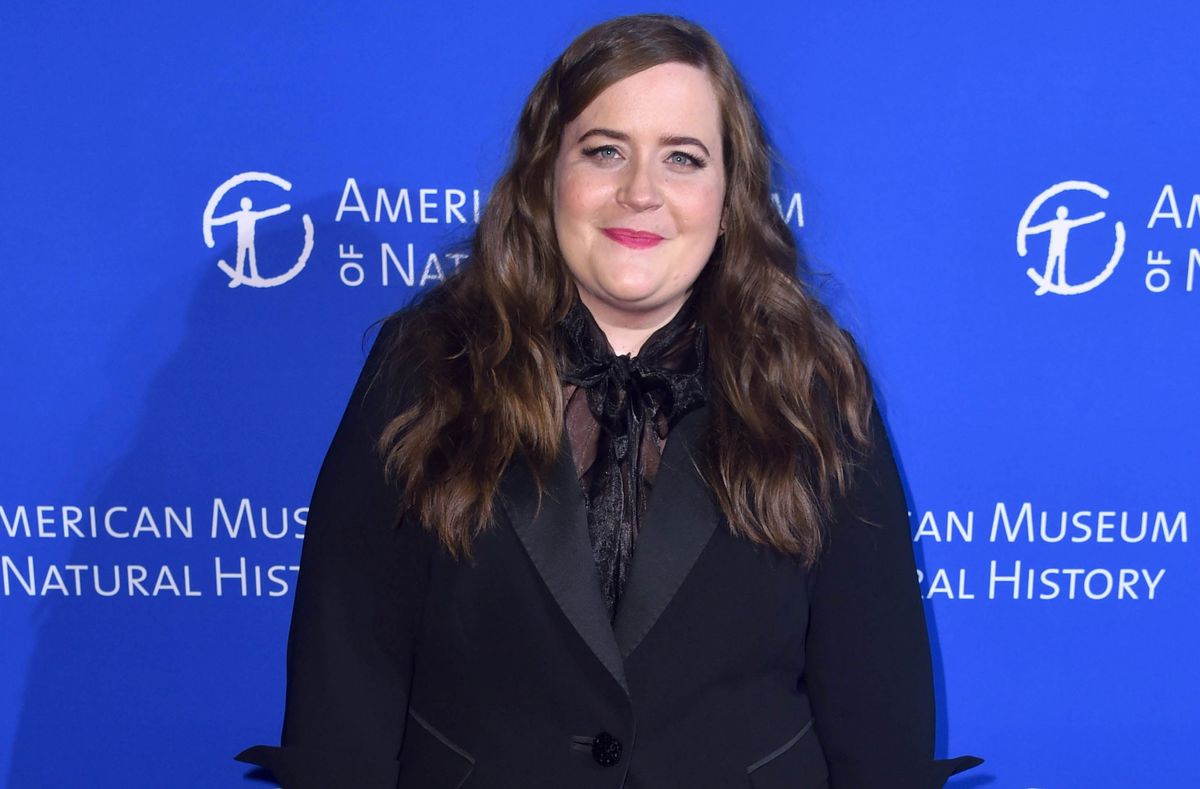
Aidy Bryant and Conner O’Malley are two distinct yet creatively intertwined figures in contemporary American comedy. Bryant is best known for her tenure as a performer and writer on Saturday Night Live and her lead role in the acclaimed series Shrill, while O’Malley is a writer, performer, and digital creator recognized for his idiosyncratic, high-energy comedic style and contributions to various late-night programs.
The Career Trajectory of Aidy Bryant
Aidy Bryant’s rise in the entertainment industry is characterized by her transition from improvisational theater to one of television’s most prestigious stages. Born in Phoenix, Arizona, Bryant sharpened her comedic skills at The Second City in Chicago, a legendary training ground for sketch comedians. Her move to Saturday Night Live (SNL) in 2012 marked a significant professional milestone, where she quickly established herself as a versatile performer capable of handling everything from sharp political satire to absurd character work.
During her decade-long tenure on SNL, Bryant created a series of memorable recurring characters and excelled in sketch segments that required high levels of physical comedy and emotional range. Beyond her sketch work, she expanded her footprint into long-form television as the creator, executive producer, and star of Shrill. Based on Lindy West’s memoir, Shrill allowed Bryant to explore themes of body positivity, workplace dynamics, and self-actualization through a narrative lens. The series was met with critical praise for its honest, grounded storytelling and marked Bryant as a significant creative force behind the camera as well as in front of it.
The Comedic Voice of Conner O’Malley
Conner O’Malley represents a different but equally impactful corner of modern comedy. Known initially for his disruptive and surreal viral videos, O’Malley built a reputation for a confrontational, high-intensity performance style that challenges the traditional boundaries of social media engagement. His early work often involved infiltrating public events or using digital platforms to explore the intersection of absurdity and modern American anxiety.
O’Malley’s professional writing career includes significant contributions to Late Night with Seth Meyers and Joe Pera Talks with You. In Joe Pera Talks with You, O’Malley served as both a writer and a recurring performer, showcasing his ability to pivot between his high-octane persona and the understated, gentle humor required by that specific project. This adaptability has allowed him to transition from niche digital fame to professional writer’s rooms, where his voice—often characterized by a focus on the bizarre underpinnings of suburban and internet life—has become a distinct signature.
Collaborative Dynamics and Creative Intersections
While both individuals maintain robust, independent professional identities, their collaboration is a point of interest for followers of their respective careers. Their work together often emphasizes a shared sensibility regarding the absurdities of daily life and a commitment to nuanced, often character-driven humor.
| Professional Aspect | Aidy Bryant | Conner O’Malley |
|---|---|---|
| Primary Medium | Sketch TV, Sitcoms | Late Night Writing, Digital/Surrealist |
| Notable Project | Saturday Night Live | Joe Pera Talks with You |
| Stylistic Focus | Character work, Narrative | Absurdist, High-energy |
| Career Foundation | The Second City | Stand-up, Viral Video |
The synergy between their creative approaches highlights a broader trend in contemporary comedy: the blending of traditional broadcast success with the hyper-specific, often experimental sensibilities derived from the internet age. Their work reflects how modern performers navigate the transition from cult status to mainstream recognition while retaining the specific quirks that defined their early output.
Professional Milestones and Industry Impact
To understand their impact, one must look at how each has influenced the comedy landscape. Aidy Bryant’s influence is largely defined by her contribution to the evolution of the SNL ensemble. Throughout her time on the show, she helped pivot the program toward more character-driven segments that resonated with younger demographics. By centering stories about the female experience—often with a mix of vulnerability and deadpan wit—Bryant demonstrated that sketch comedy could be both funny and deeply empathetic.
Conversely, Conner O’Malley’s impact is felt in the way he has pushed the form of the comedic "man-on-the-street" and digital interaction. He often uses the tools of digital media to mirror the chaotic nature of the internet back at his audience. His writing on Joe Pera Talks with You is particularly noteworthy; it demonstrated a restraint that stood in stark contrast to his earlier, louder work, proving that his comedic range is far broader than his viral presence might suggest. This evolution from disruptive digital personality to refined television writer is a common arc for many of his generation, but few have navigated it with as much stylistic consistency as O’Malley.
Navigating Career Longevity in Comedy
For aspiring writers and performers, the paths taken by Bryant and O’Malley offer distinct lessons on career longevity. Bryant’s career illustrates the value of institutional training and the importance of finding a "home" where one can refine their voice over many years. Her success at SNL provided the platform, but her ability to translate that success into independent projects like Shrill provided the longevity.
O’Malley’s path highlights the importance of adaptability. By successfully moving his voice from the volatile environment of viral internet videos into the structured, collaborative environment of a late-night writers' room, he proved that a unique creative vision can be scaled for television. Both figures demonstrate that the current comedy industry rewards those who can maintain their personal voice while adhering to the technical and collaborative requirements of television production.
Frequently Asked Questions
Are Aidy Bryant and Conner O’Malley still appearing on the same shows? While both have been involved in the broader comedy sphere, they typically work on separate projects. They have supported each other’s creative endeavors, but their primary professional identities remain tied to their individual writing and performance goals.
What is the defining characteristic of Conner O’Malley’s humor? O’Malley’s humor is often described as absurdist, high-energy, and meta-commentary. He frequently plays characters who are unhinged or overly fixated on mundane aspects of life, using these portrayals to satirize the anxieties of modern society.
How did Shrill change Aidy Bryant’s career profile? Shrill marked a shift from Bryant being viewed primarily as a sketch player to being recognized as a creator, writer, and lead actress. It cemented her ability to carry a serialized narrative and proved that her comedic talents could be effectively adapted into long-form, dramatic-comedic storytelling.
Is it necessary to have an improvisational background to succeed in comedy today? While not mandatory, backgrounds in improvisational theater—such as those at The Second City—often provide performers with the technical foundation needed for sketch and ensemble work, as demonstrated by Bryant. However, as O’Malley’s career shows, a background in digital performance and writing can be equally viable.
Where can viewers find their most recent work as of 2026? As of 2026, their work can be found across various streaming platforms and archival sites that host their respective series, Shrill, Joe Pera Talks with You, and their various sketch contributions to network late-night television.
Practical Advice for Aspiring Comedy Writers
If you are pursuing a career in comedy writing or performance, the takeaway from these two careers is to cultivate a distinct creative point of view. Whether you are aiming for a high-profile sketch program or seeking to develop your own independent digital voice, focus on mastering the technical requirements of your medium. For sketch performers, this means prioritizing character consistency and physical commitment. For writers, it means learning the rhythm of a script and understanding how to collaborate within a team environment without losing the "weirdness" or specificity that makes your work unique. Consistency is the key to longevity; once you have identified your voice, find the platform that allows that voice to be heard by the right audience.