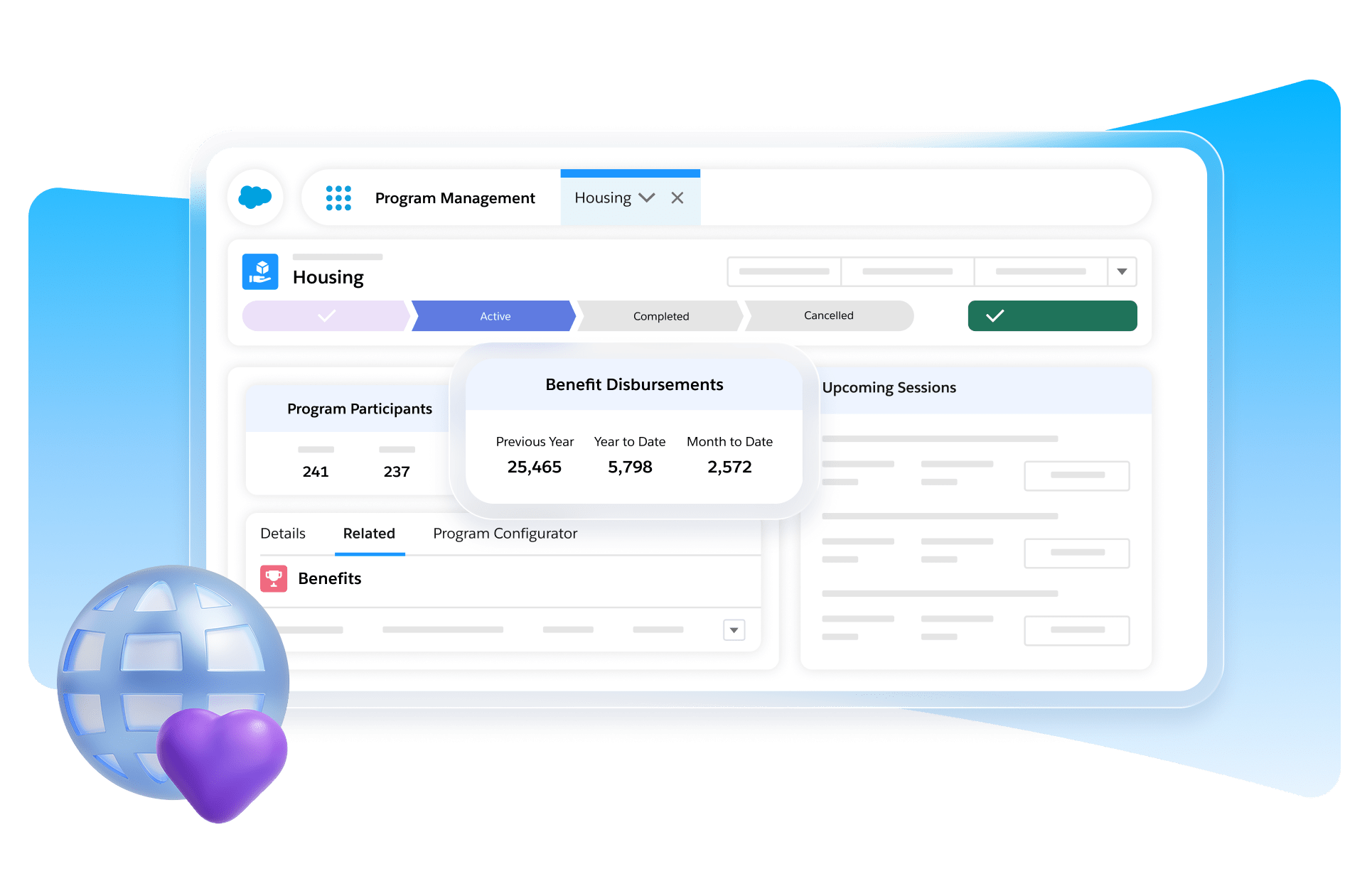
Agentforce for nonprofits is a suite of autonomous AI agents integrated into Salesforce Nonprofit Cloud that automates complex workflows like donor engagement, case management, and grant reporting. Unlike traditional chatbots, these agents use the Atlas Reasoning Engine to analyze data and execute tasks independently, helping organizations scale impact without increasing headcount. By leveraging real-time data from Data Cloud, Agentforce provides nonprofits with a scalable way to manage constituent relationships and operational tasks with minimal human intervention.
The Evolution of AI in the Nonprofit Sector
As of 2026, the nonprofit landscape has shifted from basic automation to autonomous orchestration. In previous years, organizations relied on Einstein Copilot and simple "if-then" workflows to manage their databases. While effective for simple tasks, these tools required constant human prompts to function. Agentforce represents a paradigm shift by introducing agents that do not just assist users but act on their behalf.
For a nonprofit, this means the difference between a system that suggests a donor email and a system that identifies a lapse in giving, researches the donor’s previous interactions, drafts a personalized solicitation, and schedules a meeting—all within the guardrails of the organization's policy. The integration of Agentforce into the Salesforce Nonprofit Cloud provides a "digital workforce" capable of handling high-volume, repetitive tasks, allowing staff to focus on high-touch mission-critical work.
Understanding the Core Architecture: Atlas and Data Cloud
To successfully deploy Agentforce, it is essential to understand the underlying technology that powers these autonomous agents. The system is built on three main pillars: the Atlas Reasoning Engine, Salesforce Data Cloud, and the Einstein Trust Layer.
The Atlas Reasoning Engine
The Atlas Reasoning Engine is the "brain" of Agentforce. Unlike standard Large Language Models (LLMs) that simply predict the next word in a sentence, Atlas iterates through a "Reason-Act-Observe" loop. When a nonprofit agent receives a task—such as "process these 50 grant applications"—Atlas evaluates the request, determines which tools (Flows, Apex, or APIs) are needed, executes the steps, and checks the results for accuracy before finalized output.
Data Cloud Integration
In 2026, Data Cloud is the mandatory foundation for any sophisticated Agentforce deployment. It acts as the single source of truth, ingesting data from disparate sources—email marketing platforms, legacy donation databases, and social media—to create a unified profile of every constituent. Without Data Cloud, Agentforce would be "hallucinating" based on incomplete information. With it, the agent can see a donor's 10-year history and real-time engagement patterns simultaneously.
The Einstein Trust Layer
Privacy is paramount for nonprofits, especially those handling sensitive case management or medical data. The Einstein Trust Layer ensures that any data processed by an agent is stripped of Personally Identifiable Information (PII) before being sent to an LLM. Furthermore, no nonprofit data is used to train the global models of third-party AI providers, ensuring that organizational secrets and donor privacy remain intact.
Primary Use Cases for Nonprofits
Agentforce is not a one-size-fits-all tool; its utility depends on the specific goals of the organization. Below are the primary areas where Agentforce is currently delivering the highest Return on Mission (ROM).
1. Fundraising and Donor Relations
Fundraising agents act as 24/7 development officers. They can monitor incoming donations and automatically trigger personalized "thank you" sequences based on the donor's specific interests (e.g., a donor who supports animal welfare receives photos of rescued animals, while a donor supporting advocacy receives a policy brief).
In 2026, these agents also handle "Gift Officer Support," where they analyze a portfolio of major gift prospects and alert the human fundraiser to the best time to reach out, even drafting the initial briefing document based on the prospect's recent public filings or social engagements.
2. Program Management and Case Work
For human services organizations, the intake process is often a bottleneck. An Agentforce agent can manage the initial intake interview via a web portal, determine eligibility based on complex grant criteria, and assign the case to the appropriate human social worker. By the time the human staff member opens the file, the agent has already summarized the applicant's needs and flagged potential risks.
3. Volunteer Coordination
Managing a volunteer database is notoriously labor-intensive. Agentforce can handle the entire lifecycle of a volunteer, from initial application and background check tracking to shift scheduling and post-event reporting. If a volunteer cancels a shift at the last minute, the agent can automatically identify a qualified replacement and send an urgent outreach message without staff intervention.
4. Grant Management and Compliance
Writing grant reports is a significant administrative burden. Agentforce can query Data Cloud for program outcomes, financial expenditures, and qualitative success stories to draft a comprehensive first version of a grant report. It ensures that the language used aligns with the specific requirements of the foundation or government agency in question.
Prerequisites and Technical Requirements
Implementing Agentforce requires more than just a license. Nonprofits must meet specific technical milestones to ensure the agents are effective and safe.
- Salesforce Nonprofit Cloud (V2): Agentforce is designed to work most effectively with the modern "Industry Cloud" version of Salesforce, rather than the older Nonprofit Success Pack (NPSP), though bridges exist for legacy users.
- Data Cloud Activation: The organization must have Data Cloud provisioned and at least its primary data streams (Donations, Contacts, and Program Engagements) mapped and harmonized.
- Action Library Preparation: Agents do not magically know how to "update a record." They use "Actions." Nonprofits must ensure their existing Salesforce Flows are well-documented and optimized, as these become the tools the agent uses to perform tasks.
- Governance Policy: Before activation, the board and leadership must approve an AI Governance Policy that defines what an agent is allowed to do autonomously (e.g., send emails under $50 value) versus what requires human approval (e.g., approving a $5,000 grant).
Cost Considerations and Licensing in 2026
By 2026, Salesforce has largely moved away from simple per-user pricing for AI. Agentforce for nonprofits typically follows a consumption-based or "per-conversation/per-task" model.
| Feature/Metric | Traditional Automation (Flow) | Agentforce Autonomous Agents |
|---|---|---|
| Logic Type | Linear / Deterministic | Reasoning / Probabilistic |
| Data Requirement | Specific record IDs | Unified Data Cloud Profile |
| User Intervention | High (triggers/clicks) | Low (autonomous monitoring) |
| Setup Complexity | Moderate | High (requires action mapping) |
| Cost Basis | Included in seat license | Consumption/Usage based |
| Primary Benefit | Speed of execution | Complexity of decision-making |
Most nonprofits should budget not just for the licenses, but for the "AI Credits" consumed by the agents. A small organization might use 1,000 "agent actions" a month for basic donor inquiries, while a global NGO might use millions for worldwide program tracking. Salesforce often provides a baseline of credits for qualifying 501(c)(3) organizations through the "Power of Us" program, but high-volume usage will incur additional costs.
Step-by-Step Implementation Strategy
If your organization is ready to move toward autonomous agents, follow this phased approach to minimize risk and maximize adoption.
Phase 1: Data Hygiene and Grounding
An agent is only as good as the data it accesses. This process is known as "grounding." Spend the first 30 days auditing your Salesforce data. Remove duplicate contact records and ensure that your "Program Engagement" records accurately reflect the work being done. If the data is messy, the agent's reasoning will be flawed.
Phase 2: Building Your First Agent
Start with an internal-facing agent. Use the Agent Builder in Salesforce to create a "Staff Assistant" agent. This agent should be trained to answer questions about the nonprofit’s internal policies, previous year's fundraising totals, or grant deadlines. Because this is internal, the stakes are lower, allowing the IT team to refine the "Actions" and "Guardrails."
Phase 3: Defining Actions
Identify the top three repetitive tasks staff hate doing. Perhaps it is "summarizing meeting notes" or "generating tax receipts." Convert these tasks into Salesforce Flows. In the Agent Builder, assign these Flows as "Actions" to your agent. This gives the agent the "hands" it needs to perform work.
Phase 4: Testing and Human-in-the-Loop
Before letting an agent interact with a donor, use the Agent Tester to simulate conversations. Check for tone, accuracy, and "hallucinations." Establish a "Human-in-the-Loop" (HITL) protocol where the agent drafts the output, but a human must click "Send" for the first 90 days of deployment.
Common Challenges and Troubleshooting
Despite the power of Agentforce, nonprofits often encounter specific hurdles during implementation.
- The "Black Box" Fear: Staff may worry that they don't understand why an agent made a certain decision. Use the Agent Reasoning Map feature in Salesforce to view a step-by-step log of the agent's thought process. This transparency helps build trust.
- Over-Automation: It is tempting to automate everything. However, donor relationships often require the "human touch." A common mistake is allowing an agent to handle major donor complaints. These should always be escalated to a human development director.
- Integration Gaps: If your donation platform is not integrated with Salesforce, Agentforce will be blind to those transactions. Ensure all third-party tools are connected via Mulesoft or Data Cloud connectors.
Ethical AI and Donor Privacy
In 2026, donors are more aware of AI than ever. Transparency is the best policy. When an agent is interacting with a constituent (e.g., via a web chat), it is a best practice to state clearly: "I am an AI assistant for [Nonprofit Name]."
Furthermore, nonprofits must ensure their AI usage complies with the latest regulations, such as the EU AI Act or various state-level privacy laws in the U.S. This involves regular audits of the "Trust Layer" logs to ensure no sensitive data is leaking into the prompt history.
FAQs
Can Agentforce replace my fundraising staff?
No. Agentforce is designed to augment staff, not replace them. It handles the administrative "drudge work"—data entry, basic inquiries, and report drafting—so that fundraising staff can spend more time in face-to-face meetings with donors. In 2026, the most successful nonprofits have "Agent-Augmented" teams where humans handle strategy and empathy, while agents handle scale and execution.
Is Agentforce available for small nonprofits?
Yes, through Salesforce's "Power of Us" program, smaller nonprofits often get access to core AI features. However, the technical prerequisite of Data Cloud may be a barrier for organizations without a dedicated Salesforce Administrator. Many small nonprofits opt for "Out-of-the-Box" agents provided by Salesforce partners that require less custom configuration.
How does Agentforce differ from a standard chatbot?
A standard chatbot follows a pre-defined "tree" of questions and answers. If the user asks something outside that tree, the chatbot fails. Agentforce uses the Atlas Reasoning Engine to understand intent. If a donor asks a complex question like "How did my donation last year contribute to the decline in local food insecurity?", the agent can search multiple data objects, synthesize the answer, and provide a custom response.
What happens if the AI makes a mistake?
The Einstein Trust Layer includes "toxicity detection" and "fact-checking" modules. However, mistakes can still happen. This is why Salesforce allows you to set "Guardrails." For example, you can limit an agent's authority so it can never delete a record or commit to a transaction over a certain dollar amount without a human signature.
Do I need to be a coder to set up Agentforce?
While you don't need to be a hard-coded developer, you do need to be a "Low-Code" specialist. Setting up an agent involves using the Agent Builder (drag-and-drop) and Flow Builder. If your organization uses complex custom Apex code, a developer may be needed to expose those functions as "Actions" for the agent.
Strategic Recommendation
For nonprofits looking to stay competitive in 2026, the move to Agentforce should be viewed as a long-term investment in organizational capacity. Begin by consolidating your data into Salesforce Data Cloud immediately; an agent is only as powerful as the information it can access. Focus your initial deployment on internal efficiency—such as grant research or report drafting—before expanding to external constituent-facing agents. By automating the routine, you empower your human workforce to focus on the mission-driven work that AI cannot replicate: building genuine human community and driving social change.