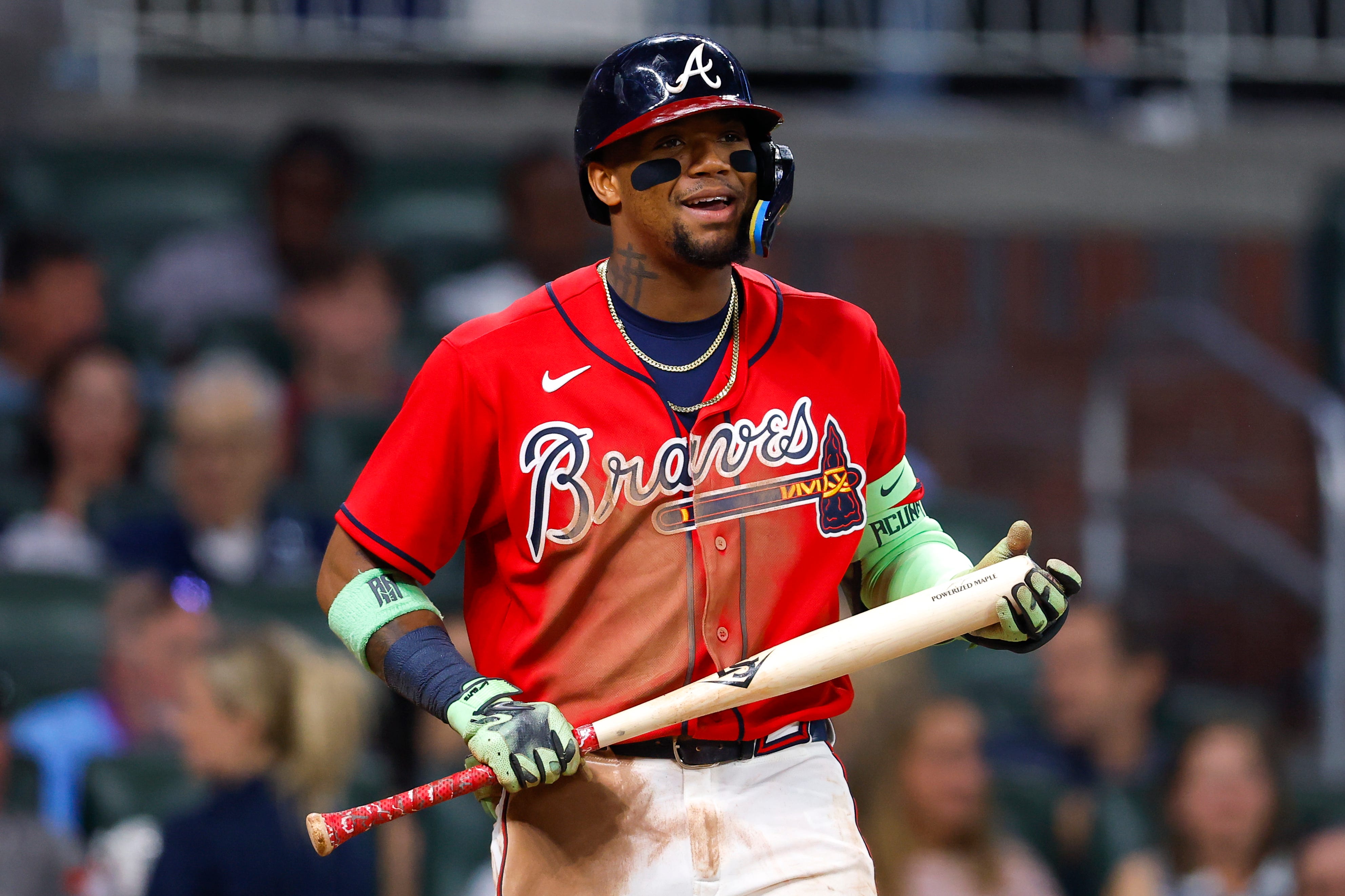
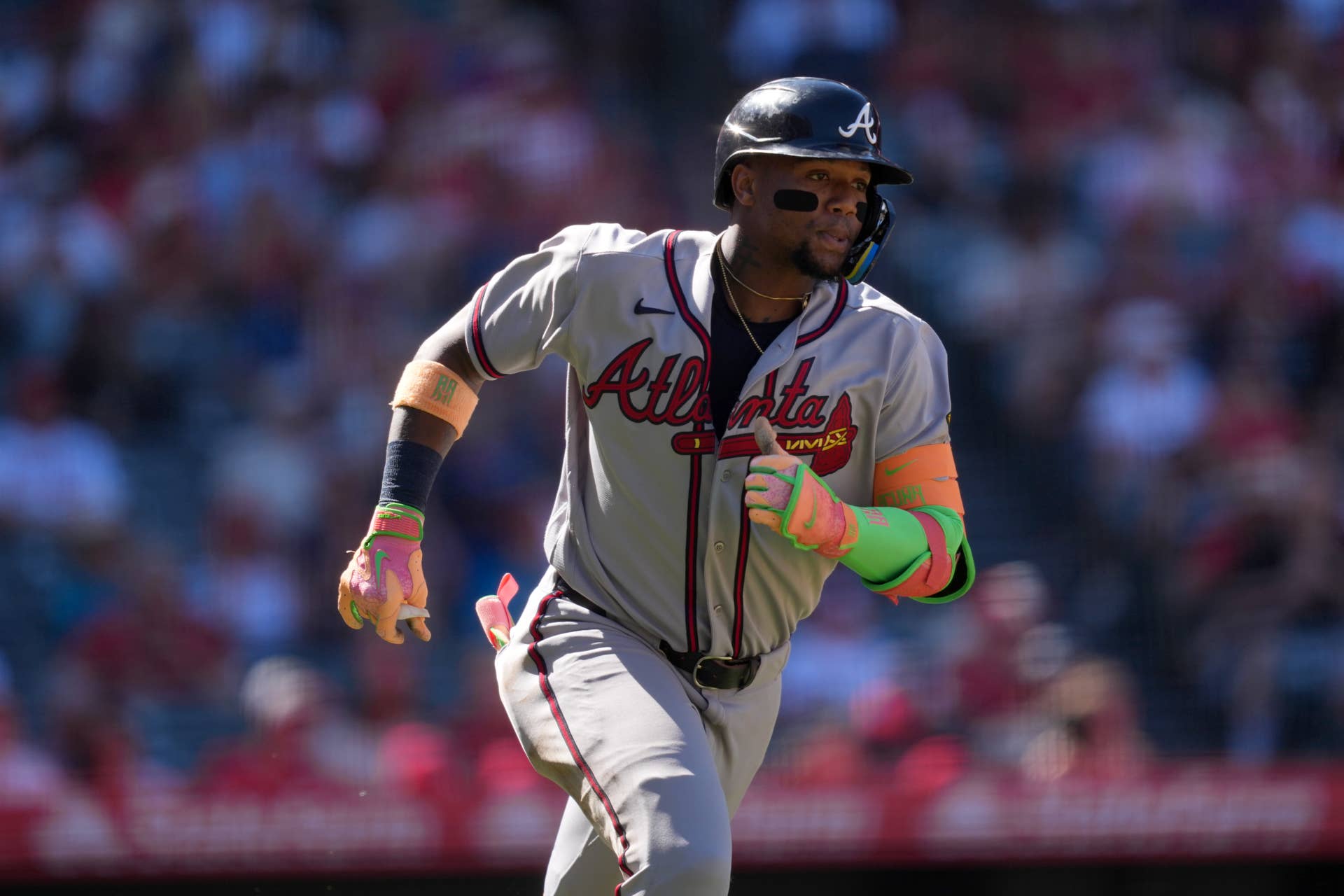
In 2026, Ronald Acuña Jr. earns a base salary of $17 million as part of his landmark eight-year, $100 million contract extension with the Atlanta Braves. This deal, which remains one of the most discussed in professional sports, includes two additional club options for 2027 and 2028, potentially extending the total value to $124 million.
Ronald Acuña Jr. is not just the face of the Atlanta Braves; he is a generational talent whose financial trajectory has become a blueprint for early-career extensions in Major League Baseball (MLB). To understand the Acuña salary details, one must look beyond the annual paycheck and examine the strategic timing of his signing, the comparative market value of his production, and how his contract serves as the cornerstone of the Braves' long-term roster construction. As we move through the 2026 season, Acuña remains in the prime of his career, providing the Braves with elite performance at a price point that significantly undercuts the open market rate for a player of his caliber.
The Architecture of the 8-Year, $100 Million Extension
The foundation of Acuña’s current financial status was laid on April 2, 2019. At the time, Acuña had played only 111 games in the big leagues. Despite his limited service time, the Atlanta Braves front office, led by General Manager Alex Anthopoulos, moved aggressively to secure the young outfielder.
The deal was structured as an eight-year extension worth a guaranteed $100 million. At the time of signing, it was the largest contract ever for a player with less than one year of service time. For Acuña, it provided immediate generational wealth and security, mitigating the inherent risks of injury or performance decline in a sport where players typically wait six years to reach unrestricted free agency. For the Braves, it was a calculated gamble that the reigning National League Rookie of the Year would continue his trajectory toward superstardom.
Breakdown of the Guaranteed Years
The contract was backloaded to account for Acuña’s early years where he would have otherwise been under team control at the league minimum. Here is how the guaranteed portion of the salary was distributed:
- 2019: $1,000,000
- 2020: $1,000,000 (Prorated during the shortened season)
- 2021: $5,000,000
- 2022: $15,000,000
- 2023: $17,000,000
- 2024: $17,000,000
- 2025: $17,000,000
- 2026: $17,000,000
By the time the 2026 season concluded, Acuña had collected the full $100 million in guaranteed base salary. This steady $17 million figure from 2023 through 2026 represents the "plateau" of his guaranteed earnings, a period during which he cemented his status as a perennial MVP candidate and a member of the elite 40-40 (and 40-70) club.
Understanding the Club Options for 2027 and 2028
One of the most critical aspects of the Acuña salary details is the inclusion of two club options. These options give the Atlanta Braves the right to retain Acuña for the 2027 and 2028 seasons at a fixed price, rather than letting him enter the free-agent market where he would likely command a contract exceeding $300 million or $400 million.
Both the 2027 and 2028 options are valued at $17 million each. If the Braves choose not to exercise an option, they owe Acuña a $10 million buyout. From a team perspective, exercising these options is a "no-brainer" provided Acuña is healthy and performing. In the context of 2026, the baseball world is largely watching to see if the Braves will attempt to renegotiate or extend Acuña further before these options expire, or if they will simply enjoy the surplus value provided by these low-cost years.
| Season | Age | Salary / Status | Notes |
|---|---|---|---|
| 2019 | 21 | $1,000,000 | Signed extension in April |
| 2020 | 22 | $1,000,000 | COVID-19 shortened season |
| 2021 | 23 | $5,000,000 | Suffered ACL injury in July |
| 2022 | 24 | $15,000,000 | Return from injury |
| 2023 | 25 | $17,000,000 | NL MVP Season (41 HR, 73 SB) |
| 2024 | 26 | $17,000,000 | Season-ending injury (May) |
| 2025 | 27 | $17,000,000 | Return to elite form |
| 2026 | 28 | $17,000,000 | Current Season |
| 2027 | 29 | $17,000,000 | Club Option ($10M buyout) |
| 2028 | 30 | $17,000,000 | Club Option ($10M buyout) |
Market Value vs. Actual Salary: The "Surplus Value" Concept
In professional sports analytics, "surplus value" is the difference between what a player is worth on the open market and what they are actually paid. For Ronald Acuña Jr., the surplus value generated for the Atlanta Braves is historic.
To put this into perspective, during his 2023 MVP campaign, Acuña produced 8.2 Wins Above Replacement (WAR). On the open market, a single win (1 WAR) is often valued at approximately $8 million to $10 million. Under that valuation, Acuña’s performance in 2023 was worth roughly $65 million to $80 million. By paying him only $17 million, the Braves essentially "saved" $50 million in payroll flexibility that season alone.
In 2026, even as salaries across the league continue to rise—with top-tier stars frequently signing deals with Average Annual Values (AAV) exceeding $35 million—Acuña’s $17 million figure remains an anomaly. It allows the Braves to maintain a high-powered roster, including fellow stars like Austin Riley and Matt Olson, while staying within a manageable luxury tax threshold.
The Impact of Injuries on Financial Security
One cannot discuss the Acuña salary details without acknowledging the physical toll of his high-octane playing style. Acuña suffered a major ACL tear in his right knee in 2021 and another season-ending injury to his left knee in May 2024.
These injuries highlight why players often choose the security of an early extension. Had Acuña opted to go year-to-year through the arbitration process, his earning power might have been significantly diminished by these injuries. Instead, his $100 million was guaranteed. This security allowed him to focus on rehabilitation without the looming fear of financial ruin. Conversely, for the Braves, the injuries represent the "risk" side of the gamble, though his production while healthy has more than compensated for the time lost.
Competitive Balance Tax (CBT) and Payroll Strategy
For the purposes of the MLB Competitive Balance Tax (often called the luxury tax), a player’s salary is calculated based on the Average Annual Value (AAV) of the guaranteed portion of the contract.
For Acuña, the initial $100 million over eight years resulted in a CBT hit of $12.5 million per year. Even as his actual cash take-home pay rose to $17 million in 2026, his "cost" against the luxury tax remained significantly lower. This accounting advantage is a primary reason the Braves have been able to consistently rank among the top ten payrolls in baseball without incurring the massive tax penalties seen by teams like the New York Mets or Los Angeles Dodgers.
The Braves' front office has utilized this "Acuña Model" to sign several other core players to long-term deals:
- Austin Riley: 10 years, $212 million.
- Matt Olson: 8 years, $168 million.
- Michael Harris II: 8 years, $72 million.
- Spencer Strider: 6 years, $75 million.
By locking in Acuña early at a $12.5 million AAV, the Braves created a domino effect, establishing a salary structure where no single player (until Riley) dominated the books, allowing for a deep, balanced roster.
Comparative Analysis: Acuña vs. Other MLB Superstars
When comparing the Acuña salary details to his peers in 2026, the discrepancy is stark. By 2026, the landscape of MLB salaries has been redefined by massive contracts for players like Shohei Ohtani, Juan Soto, and Fernando Tatis Jr.
- Shohei Ohtani: While his deal with the Dodgers included significant deferrals, his market value and cash flow far exceed Acuña’s $17 million.
- Juan Soto: Entering the 2026 season, Soto’s contract (whether via extension or free agency) is widely estimated to carry an AAV of over $45 million.
- Fernando Tatis Jr.: His 14-year, $340 million deal with the Padres averages $24.2 million per year, though his peak annual earnings reach $36 million.
Acuña, who is often ranked in the top three players globally when healthy, is being paid roughly 40-50% of what his peers earn annually. This has led to ongoing speculation among sports agents and analysts regarding whether Acuña will seek a market-correcting extension before his current deal expires after the 2028 season.
Endorsements and Total Earnings
While the $17 million base salary is the core of his income, Ronald Acuña Jr.’s total net worth is bolstered by a robust portfolio of off-field endorsements. As one of the most marketable players in the game—thanks to his flair, speed, and international appeal—Acuña has secured high-profile partnerships.
His endorsement deals include:
- Nike: A long-term footwear and apparel contract.
- Franklin Sports: A signature line of batting gloves.
- BodyArmor: A partnership with the sports drink giant.
- Topps/Fanatics: Exclusive memorabilia and trading card deals.
Estimated annual off-field earnings for Acuña are between $3 million and $5 million, bringing his total 2026 income closer to $20 million or $22 million. While still below the top-earners in sports like basketball or soccer, it places him among the elite earners in the Latin American sports market.
Frequently Asked Questions
When does Ronald Acuña Jr. become a free agent?
Under his current contract, Ronald Acuña Jr. is scheduled to become an unrestricted free agent following the 2028 season, provided the Atlanta Braves exercise both his 2027 and 2028 club options. He will be 31 years old at the start of the 2029 season.
Can the Braves trade Acuña despite his low salary?
Yes, Acuña’s contract does not contain a full no-trade clause. However, his extremely team-friendly salary makes him arguably the most valuable trade asset in baseball, meaning the Braves have virtually no incentive to trade him unless they are entering a total rebuild, which is unlikely given their current window of contention.
Does Acuña have any performance bonuses in his contract?
Acuña’s contract includes various "escalators" and bonuses for achievements such as winning the MVP award, making the All-Star team, or winning a Silver Slugger. For example, winning an MVP can trigger additional payments or increase the value of his buyout, though these are relatively small compared to his base salary.
How much did Acuña lose during the 2020 shortened season?
Like all MLB players in 2020, Acuña received a prorated portion of his salary. Instead of his full $1 million, he received approximately $370,370 based on the 60-game schedule played that year.
Is Acuña the highest-paid player on the Braves in 2026?
No. While Acuña is the team's most impactful player, his $17 million salary is surpassed by teammates like Austin Riley and Matt Olson, whose contracts were signed later and reflected a higher market rate for premium talent.
The Future of the Acuña-Braves Relationship
As we navigate the 2026 season, the primary question surrounding Acuña’s salary is how much longer the status quo can last. While the contract is legally binding through 2028, there is a precedent for teams to "rip up" team-friendly deals to reward a superstar and ensure long-term harmony.
If Acuña continues to perform at an MVP level through 2026, the pressure on the Braves to offer a market-value extension will mount. A potential "correction" extension could look like a 5-year, $200 million add-on, which would keep him in Atlanta through his mid-30s while raising his annual pay to the $40 million range he deserves based on performance metrics.
For now, the Braves continue to benefit from one of the greatest front-office maneuvers in modern sports history. Acuña’s $17 million salary in 2026 is the engine that allows the Braves to remain World Series favorites, providing them with a superstar foundation at a middle-of-the-road price.
Practical Recommendation: For fans and analysts tracking the Braves' payroll, keep a close eye on the 2026 Winter Meetings. This will be the first major window where the Braves might consider a "pre-emptive" extension to avoid the distractions of the 2027-2028 option years and secure Acuña’s legacy as a "Brave for life."