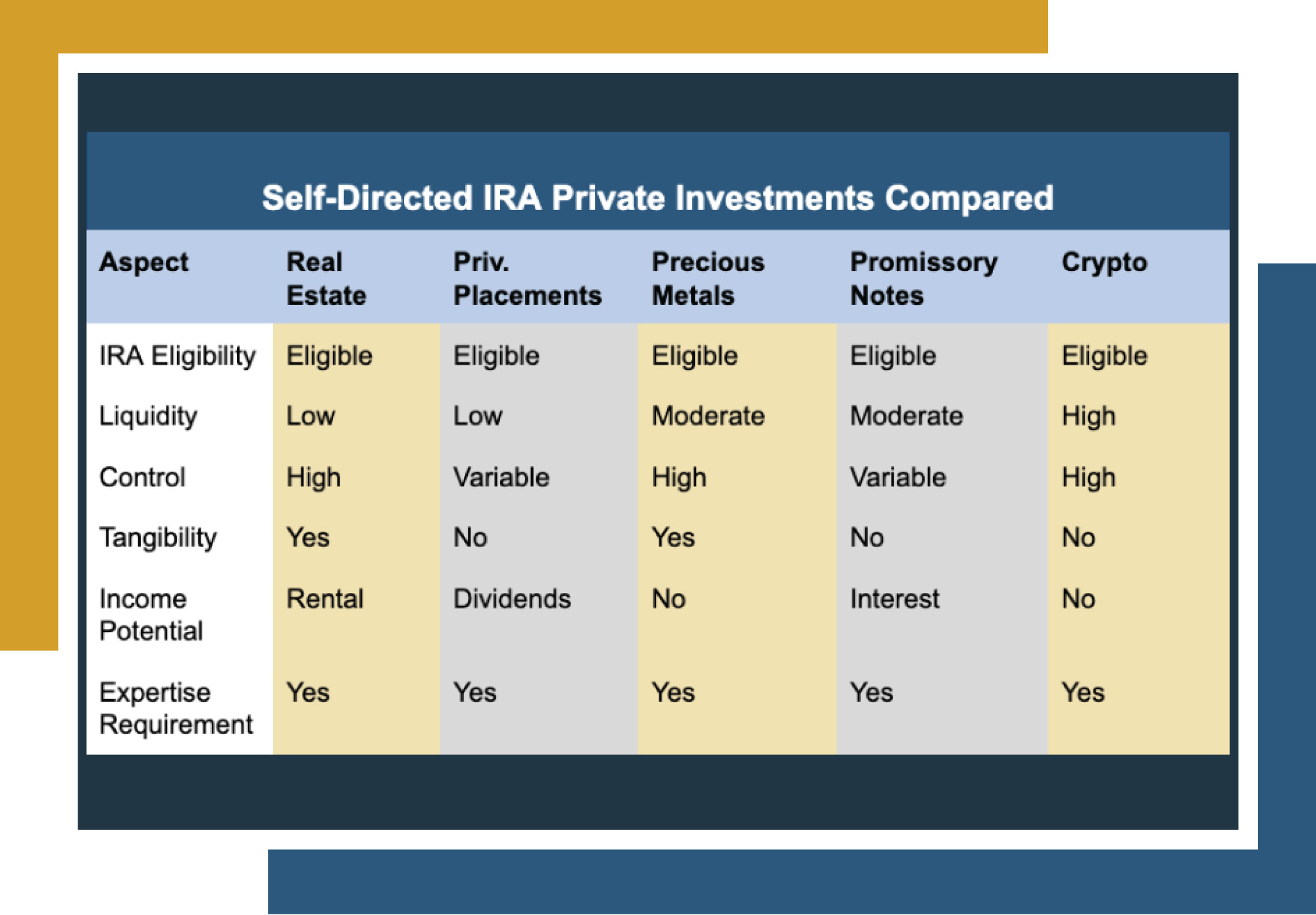
Navigating alternative retirement investments requires a specialized financial partner, making the selection of a reputable self-directed IRA custodian critical for maintaining tax-advantaged status while investing in non-traditional assets like real estate, precious metals, and private equity.
Choosing the right financial partner is the single most important decision an investor makes when moving away from traditional Wall Street assets like stocks, bonds, and mutual funds. Traditional brokerages typically restrict accounts to standard public market securities, forcing alternative investors to look toward specialized financial institutions. These specialized firms, known as self-directed individual retirement account (SDIRA) custodians or administrators, provide the administrative infrastructure, legal compliance reporting, and asset safekeeping necessary to hold physical real estate, promissory notes, cryptocurrency, private placement shares, and precious metals within a tax-advantaged framework.
As the alternative investment landscape matures, selecting among the top market options requires a rigorous examination of fee structures, asset class expertise, administrative responsiveness, and custody models. Because the Internal Revenue Service (IRS) imposes strict rules regarding prohibited transactions and disqualified persons, the custodian’s operational competence directly safeguards your retirement savings from catastrophic tax penalties.
Understanding the Self-Directed IRA Model
A self-directed IRA operates under the same fundamental tax rules as a traditional or Roth IRA. The primary difference lies in the breadth of investment options permitted by the IRS and the administrative capabilities of the institution holding the account. While a standard brokerage firm acts as a custodian for public equities, an SDIRA custodian allows you to direct your funds into virtually any asset class permitted by federal tax code, provided you avoid prohibited transactions.
Custodian Versus Administrator Structures
When evaluating top-tier SDIRA providers, investors typically encounter two distinct structural models: trust companies/banks (custodians) and third-party administrators (TPAs).
- Custodians (Trust Companies and Banks): Regulated directly by state banking authorities or federal agencies, trust companies hold the legal title to your IRA assets. They offer high levels of institutional oversight and direct account protection, though they may carry higher administrative overhead.
- Administrators (TPAs): TPAs handle the day-to-day recordkeeping, IRS reporting, and transaction processing, but partner with an FDIC-insured bank or trust company to legally hold the cash components. Many modern SDIRA platforms operate under a TPA model paired with a partner bank, which streamlines software integration and reduces consumer costs.
The Checkbook Control Option (LLC / IRA)
For investors seeking maximum autonomy and rapid transaction execution, some SDIRA custodians facilitate a "checkbook control" structure. In this setup, the IRA invests its capital into a single-member Limited Liability Company (LLC) or a specialized trust. The IRA owner acts as the non-manager or manager of the LLC, opening a dedicated checking account at a local bank. This eliminates the need to submit paperwork and pay administrative fees to the custodian every time an earnest money deposit or property repair expense must be paid. However, this structure demands meticulous adherence to IRS rules, as any self-dealing instantly invalidates the IRA.
Core Criteria for Evaluating SDIRA Custodians
Before committing capital to any platform, investors must look past flashy marketing and evaluate providers based on transparent, objective operational metrics.
Fee Transparency and Structure
SDIRA custodians typically charge one of two primary fee models: flat-rate or asset-based.
- Flat-Fee Models: The provider charges a standardized annual maintenance fee regardless of whether your account holds $50,000 or $5,000,000. This model heavily favors high-net-worth investors and those holding high-appreciation assets like real estate.
- Asset-Based Models: The provider scales their annual fee as a percentage of your total account value. While entry costs may look lower for smaller accounts, successful long-term investors can end up paying thousands of dollars annually simply because their real estate or private equity holdings appreciated.
Asset Specialization
Not all custodians are created equal. Some firms built their infrastructure around physical precious metals storage, while others optimized their workflows for real estate closings, private placement syndications, or digital assets. Attempting to hold complex private equity notes with a custodian optimized exclusively for gold bullion can lead to sluggish processing times and operational friction.
7 Best Self-Directed IRA Custodians
| Custodian Name | Primary Specialization | Fee Structure Model | Checkbook Control Available? | Best Suited For |
|---|---|---|---|---|
| Rocket Dollar | Private Equity & Software Integration | Flat Subscription Fee | Yes (via LLC) | Tech-savvy investors wanting checkbook control |
| Entrust Group | Comprehensive Real Estate & Notes | Flat or Asset-Based Options | Yes | Traditional real estate and note investors |
| Equity Trust Company | Industry Veteran / Broad Asset Range | Tiered Asset-Based | Yes | Investors wanting high-touch customer support |
| Camaplan | Alternative Real Estate Strategies | Flat-Rate Transparent Fees | Yes | Real estate developers and tax lien investors |
| Advanta IRA | Dedicated Account Managers | Flat Fee Schedule | Yes | Personalized service and complex transactions |
| MidAtlantic IRA | Personalized Boutique Custody | Flat-Rate Maintenance | Yes | Investors seeking boutique customer service |
| Noble Trust / Dedicated Gold Partners | Precious Metals & Alternative Mix | Flat-Rate Storage & Custody | No (Metal-focused) | Investors focusing on physical gold and silver |
Detailed Reviews of Top SDIRA Platforms
1. Rocket Dollar
Rocket Dollar built its reputation on modernizing the historically paper-heavy SDIRA onboarding process. By leveraging automated software integrations, the platform enables investors to establish a checkbook control structure (an IRA-owned LLC) rapidly.
- How It Works: Rocket Dollar partners with specialized banks to establish your IRA, then assists in forming a dedicated LLC. You receive a debit card and checkbook connected directly to the LLC business account, allowing you to fund real estate purchases, peer-to-peer lending, or startup equity without requesting custodian permission for every single transaction.
- Fee Model: Operates primarily on a transparent flat monthly subscription model (with tiered levels depending on whether you want basic custody or checkbook control features).
- Pros: Exceptionally user-friendly digital dashboard; fast turnaround times for LLC formation; transparent subscription pricing.
- Cons: Less hands-on guidance for highly complex, multi-layered international transactions compared to legacy trust companies.
2. The Entrust Group
Operating for decades, The Entrust Group stands as an institutional heavyweight in the self-directed retirement space. They support an extraordinarily wide gamut of alternative assets, ranging from residential and commercial real estate to foreign currencies, private stock, and precious metals.
- How It Works: Entrust acts as a full-service custodian, managing the meticulous paperwork, annual IRS reporting (Form 5498), and asset titling required to keep your retirement account compliant.
- Fee Model: Generally uses a fee schedule based on the asset types held within the account and the total asset valuation.
- Pros: Deep institutional knowledge; robust educational resources and webinars; handles highly complex non-traditional asset classes seamlessly.
- Cons: Processing times can occasionally lag during peak tax season volume; fee structures can become complex if you hold multiple disparate asset types.
3. Equity Trust Company
As one of the largest SDIRA custodians in the United States, Equity Trust Company manages billions of dollars in alternative assets. Their massive scale allows them to invest heavily in proprietary client portals, educational academies, and dedicated customer service teams.
- How It Works: Clients are assigned dedicated support teams to walk them through funding, asset purchases, and distributions. Equity Trust supports both direct custodial holding and checkbook control LLC arrangements.
- Fee Model: Tiered asset-based and transaction-fee structure. Higher-balance accounts pay scaled fees, which requires careful calculation of ongoing costs.
- Pros: Industry-leading educational platform; highly polished online portal; strong network of real estate and private lending investors.
- Cons: Asset-based fees can make long-term holding of appreciating assets more expensive than flat-fee competitors; strict adherence to processing protocols can sometimes feel bureaucratic.
4. Camaplan
Camaplan caters heavily to sophisticated alternative investors, particularly those engaged in real estate development, tax liens, private notes, and promissory lending. Founded by experienced alternative asset investors, Camaplan emphasizes transparent, flat-rate pricing and educational outreach.
- How It Works: Clients work directly with experienced custodial officers who understand the nuance of real estate contracts, earnest money deposits, and contractor lien waivers within an IRA structure.
- Fee Model: Transparent flat-rate annual maintenance fees that do not penalize the investor for strong asset appreciation.
- Pros: Highly responsive customer support team with deep real estate fluency; straightforward fee schedule with no hidden surprise charges.
- Cons: Digital interface is functional but lacks the ultra-modern consumer software polish found in newer fintech-backed platforms.
5. Advanta IRA
Advanta IRA distinguishes itself by assigning a dedicated, named account manager to every client. This personalized touch eliminates the frustrating call-center experience of repeating your situation to a different representative every time you call with a question.
- How It Works: Your dedicated account manager shepherds your transactions from initial funding through final closing documents, ensuring every title document matches IRS titling requirements precisely.
- Fee Model: Straightforward flat-fee schedule based on account activity and asset count rather than total portfolio valuation.
- Pros: Exceptional customer service continuity via dedicated managers; strong educational commitment through local investor meetups and webinars.
- Cons: Regional footprint means physical office interactions are limited to specific states, though national remote onboarding is fully supported.
6. MidAtlantic IRA
MidAtlantic IRA provides boutique, high-touch custody services for individuals seeking tailored administrative support. They focus on minimizing administrative friction for real estate investors and private placement participants.
- How It Works: Clients receive personalized assistance in establishing traditional, Roth, or SEP self-directed IRAs, with streamlined workflows for purchasing physical property or funding private syndications.
- Fee Model: Competitive flat-fee maintenance schedules designed to keep costs predictable.
- Pros: Boutique feel with accessible senior staff; straightforward processing for real estate transactions.
- Cons: Smaller marketing footprint and fewer software integrations compared to enterprise-scale custodians.
7. Precious Metals & Specialized Custodians (e.g., Noble Trust / Dedicated Gold Partners)
For investors specifically looking to hedge against systemic economic volatility by holding physical gold, silver, platinum, or palladium inside an IRA, specialized metal custodians provide seamless integration with secure, IRS-approved third-party depositories (such as Delaware Depository or Brinks).
- How It Works: The custodian coordinates the purchase of IRS-approved bullion from vetted dealers, processes the retirement funds, and arranges secure transport to a segregated or non-segregated vault facility.
- Fee Model: Flat annual storage and custodial fees combined with dealer spreads on metal purchases.
- Pros: Expert handling of strict IRS purity standards for precious metals; secure vault partnerships.
- Cons: Narrow asset focus; generally unsuitable for investors wanting to hold real estate or private equity.
Important Compliance Rules and Pitfalls to Avoid
Operating a self-directed IRA places the ultimate compliance burden squarely on your shoulders. While traditional custodians tightly police your investments by blocking unauthorized trades, an SDIRA custodian acts primarily as an administrative recordkeeper. Consequently, violating IRS regulations can result in your entire IRA being deemed distributed, triggering immediate income tax liabilities and steep early withdrawal penalties.
The Prohibited Transaction Rules (IRC Section 4975)
Under Internal Revenue Code Section 4975, you, your lineal descendants, your ancestors, and any entities you control are classified as "disqualified persons." You cannot engage in any direct or indirect transaction between your IRA and a disqualified person. Common violations include:
- Buying a rental property with your SDIRA and renting it out to your adult child or living in it yourself.
- Selling a personal property you own individually to your own SDIRA.
- Using personal funds to pay for a roof repair on an IRA-owned rental property, or conversely, taking personal income from an IRA-owned property before it hits the IRA account.
Unrelated Business Income Tax (UBIT) and Debt-Financed Income
If your SDIRA utilizes leverage (a mortgage or non-recourse loan) to purchase real estate, or if your IRA participates in an active operating business structured as a pass-through entity (such as an LLC or partnership generating active business income rather than passive rental income), your account may trigger Unrelated Business Income Tax (UBIT) or Unrelated Debt-Financed Income (UDFI) tax liabilities. Investors must consult with a qualified CPA or tax attorney experienced in SDIRA taxation before executing leveraged real estate acquisitions.
Frequently Asked Questions
Can I buy a home to live in using a self-directed IRA?
No. An IRA-owned property cannot be used as a personal residence, vacation home, or office space by you or any disqualified person. Doing so constitutes an immediate prohibited transaction, which legally disqualifies the IRA and forces a taxable distribution of the entire account value. All income generated by the property—such as monthly rent—must flow directly back into the IRA account, and all expenses must be paid using IRA funds.
What is the difference between a custodian and a checkbook control LLC?
A custodian is the institutional financial entity holding the legal title and maintaining IRS compliance records for your retirement account. A checkbook control LLC is a specialized single-member limited liability company owned entirely by your IRA. With checkbook control, you manage the LLC's checking account directly, enabling instant deployment of capital without paying per-transaction administrative fees to the custodian, though you must still maintain strict separation from personal funds.
Are all alternative assets permitted inside an SDIRA?
While the IRS permits a wide array of alternative investments, federal law explicitly bans certain items. You cannot hold life insurance contracts or collectibles (such as artwork, rugs, antiques, metals not meeting specific purity fineness standards, gems, stamps, or alcoholic beverages) inside a self-directed IRA. Cryptocurrencies are permitted, provided they are held through qualified digital asset custodians or compliant IRA structures.
How long does it take to transfer funds from a traditional IRA to an SDIRA?
A direct trustee-to-trustee transfer or rollover typically takes between 7 to 14 business days, depending on the responsiveness of your outgoing financial institution. Initiating an indirect rollover—where funds are sent directly to you—carries severe risks, including mandatory 60-day replacement windows and potential tax withholding penalties if mishandled. Always execute direct transfers.
Do SDIRA custodians provide investment advice or vet deals?
No. SDIRA custodians are strictly administrative entities. They do not evaluate the financial viability, legal soundness, market value, or legitimacy of any investment opportunity you choose. Performing due diligence, verifying sponsor backgrounds, and ensuring legal compliance remains entirely the responsibility of the investor.
Conclusion
Selecting the best self-directed IRA custodian depends heavily on your specific investment strategy, preferred fee model, and desire for checkbook control. Real estate and note investors often thrive with flat-fee platforms like Rocket Dollar, Camaplan, or Advanta IRA, while those seeking deep institutional infrastructure and extensive educational frameworks frequently gravitate toward Equity Trust Company or The Entrust Group. By carefully evaluating fee schedules, understanding IRS compliance restrictions, and maintaining meticulous recordkeeping, investors can successfully leverage alternative assets to build resilient, diversified retirement portfolios.