When working with precise measurements, encountering fractional sizing like seven-eighths can introduce confusion, especially when converting between imperial systems, decimals, and metric units. The 7/8 equivalent metric represents a specific point of transition on the ruler, translating to approximately 22.225 millimeters or 2.2225 centimeters, serving as a critical threshold in engineering, manufacturing, woodworking, and plumbing contexts.
Understanding the Fraction: What Does 7/8 Mean in Context?
Fractions remain a foundational element of the imperial measurement system, dividing a standard unit—typically an inch—into equal fractional parts. In the case of seven-eighths ($7/8$), the denominator of eight indicates that the whole inch is split into eight equal segments, while the numerator of seven specifies that you are taking seven of those segments.
To visualize this on a standard imperial ruler, look between the zero and one-inch marks. The inch is split by larger hash marks for halves, quarters, and eighths. The seven-eighths mark sits just one short eighth-inch increment away from the full one-inch mark, sitting immediately after the three-quarter ($3/4$ or $6/8$) line.
This specific fraction frequently appears where fine adjustments are necessary, surpassing the coarser resolution of quarters and halves. Whether sizing a structural fastener, selecting a drill bit, or cutting sheet materials, recognizing the exact physical span of $7/8$ of an inch prevents costly errors. Because machinery and global fabrication standards increasingly rely on the metric system, converting this fractional value into millimeters or decimals is a frequent requirement for technicians and hobbyists alike.
The Mathematical Breakdown: Converting 7/8 to Decimals and Metric Units
To bridge the gap between imperial fractions and the metric system, you must execute a two-step conversion process: first converting the common fraction into a decimal inch, and then scaling that decimal inch into metric units.
Step 1: Converting the Fraction to a Decimal Inch
To convert $7/8$ into a decimal, divide the numerator by the denominator: $$7 \div 8 = 0.875$$ Therefore, $7/8$ of an inch is precisely $0.875$ inches. This decimal form is often used in computer-aided design (CAD) software, digital calipers, and high-precision machining blueprints.
Step 2: Converting Decimal Inches to Millimeters
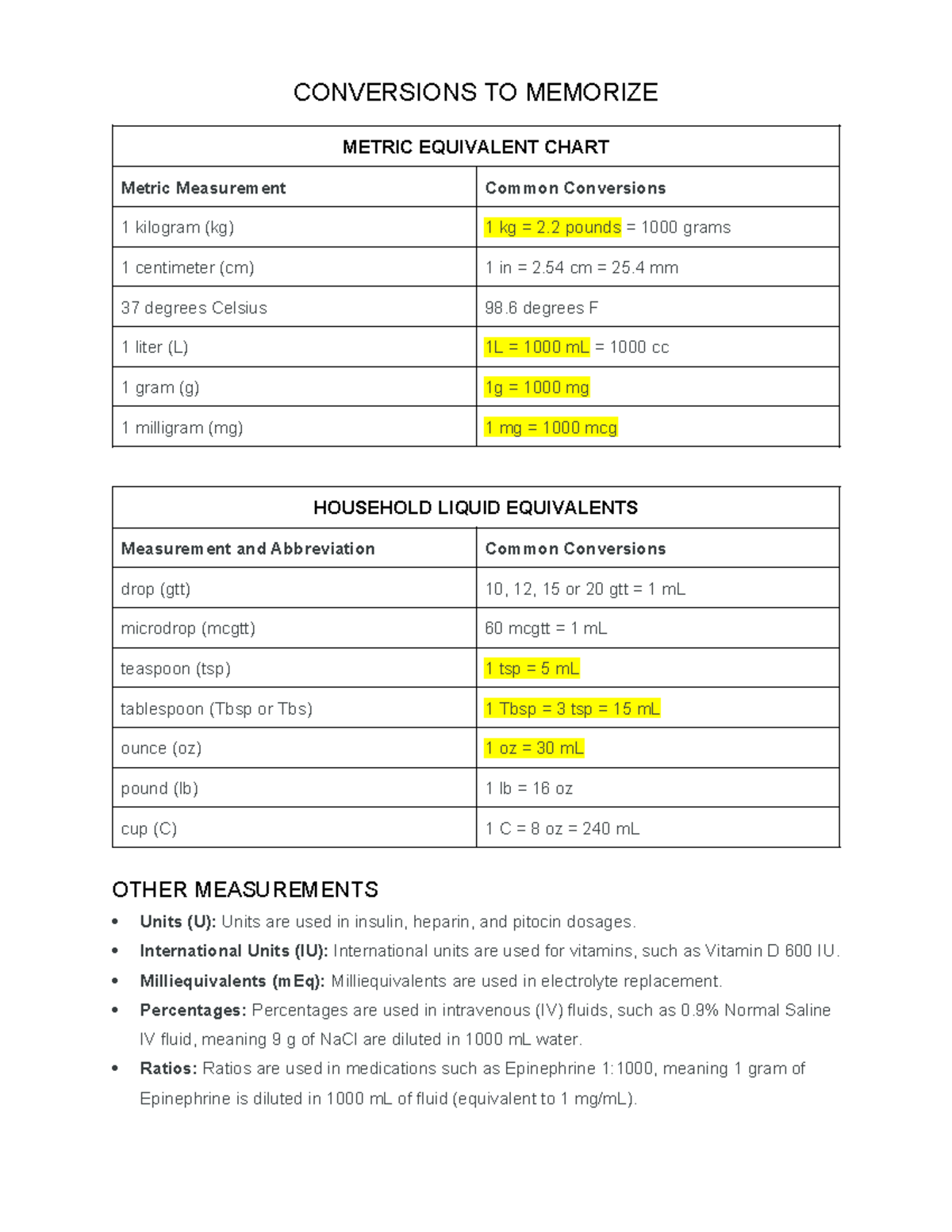
The international yard and pound agreement of 1959 established the exact conversion factor between inches and millimeters: exactly $25.4$ millimeters per inch. To find the metric equivalent of $7/8$ inches, multiply the decimal inch value by $25.4$: $$0.875 \text{ inches} \times 25.4 \text{ mm/inch} = 22.225 \text{ mm}$$
Thus, the exact metric equivalent of $7/8$ of an inch is $22.225$ millimeters or $2.2225$ centimeters.
Common Equivalents Reference Table
To assist with quick conversions on the workbench or office desk, the following table outlines $7/8$ alongside its closest fractional, decimal, and metric neighbors.
| Imperial Fraction | Decimal Inches | Metric Millimeters (mm) | Metric Centimeters (cm) |
|---|---|---|---|
| $3/4$ | $0.750$ | $19.050$ | $1.905$ |
| $13/16$ | $0.8125$ | $20.6375$ | $2.06375$ |
| 7/8 | 0.875 | 22.225 | 2.2225 |
| $15/16$ | $0.9375$ | $23.8125$ | $2.38125$ |
| $1.0$ (Full Inch) | $1.000$ | $25.400$ | $2.540$ |
Practical Applications Across Industries
The $7/8$ metric equivalent surfaces in various trade disciplines, where precise fitment dictates structural integrity and operational safety.
Automotive and Mechanical Engineering
In fastener sizing, $7/8$-inch bolts, sockets, and wrenches are common on heavy machinery, legacy equipment, and specific performance vehicles. When a technician lacks an exact imperial wrench size, knowing that $7/8$ equals $22.225$ mm highlights why a $22$ mm wrench is often slightly too small, while a $23$ mm wrench introduces excessive play. Using a metric socket that is off by a fraction of a millimeter can round off bolt heads under high torque, emphasizing the importance of utilizing exact equivalents or dedicated tools.
Plumbing and Pipefitting
Pipe diameters often blur the lines between nominal sizing and actual physical measurements. In copper tubing, steel piping, and PVC systems, outer and inner diameters frequently map to fractional increments. A fitting designed for a $7/8$-inch outer diameter tube requires metric adapter components scaled closely to $22.225$ mm to maintain a leak-free seal under pressure.
Woodworking and Metal Fabrication
Carpenters and metalworkers frequently transition between fractional imperial tape measures and digital readouts on modern machinery that display metric values. Setting a fence or a router bit to an exact $22.225$ mm setting guarantees that stock cut with metric tools will mate seamlessly with components measured using imperial standards.
Potential Pitfalls and Rounding Errors
When applying the $7/8$ equivalent metric, understanding tolerance and rounding conventions prevents costly mistakes.
- The Danger of Aggressive Rounding: In casual conversation or quick estimates, people often round $22.225$ mm down to $22$ mm or up to $23$ mm. In high-tolerance applications—such as bearing housings, threaded assemblies, or electronics enclosures—a difference of over two-tenths of a millimeter ($0.225$ mm) can cause an interference fit failure or a loose, vibrating joint.
- Measuring Tool Calibration: Analog calipers and tape measures can wear or warp over time. Always verify whether your measuring instrument is set to read true decimals or fractional graduations to avoid misinterpreting a $7/8$-inch mark as a metric reading.
- Nominal vs. Actual Sizing: Remember that a nominal size (such as a $7/8$-inch dowel or pipe) may feature manufacturing tolerances that make its actual physical dimension slightly smaller or larger than the theoretical $22.225$ mm calculation. Always measure physical components with a digital caliper rather than relying solely on mathematical conversion.
Frequently Asked Questions
What is the exact millimeter equivalent of 7/8 of an inch?
The exact metric equivalent of $7/8$ of an inch is $22.225$ millimeters. This is calculated by converting the fraction to its decimal form ($0.875$) and multiplying it by the standard conversion factor of $25.4$ millimeters per inch.
Can I use a 22 mm wrench on a 7/8-inch bolt?
While a 22 mm wrench is very close to $22.225$ mm, it is slightly undersized. Attempting to force a 22 mm wrench onto a true $7/8$-inch bolt head often results in slippage, stripping, or tool damage, particularly under high torque loads. Always use the proper tool size.
How do I convert imperial fractions to metric without a calculator?
You can convert any fraction by dividing the top number (numerator) by the bottom number (denominator) to get a decimal, and then multiplying that decimal by $25.4$. For quick mental estimates, remember that every $1/8$ of an inch is approximately equal to $3.175$ mm ($7 \times 3.175 = 22.225$).
Is 7/8 of an inch larger or smaller than 23 millimeters?
$7/8$ of an inch ($22.225$ mm) is smaller than 23 millimeters. The difference is $0.775$ mm, which is substantial enough to affect mechanical clearances and sliding fits.
Why do some blueprints mix fractions and decimals?
Blueprints often mix units based on historical industry standards and tool availability. Machinists prefer decimal inches or millimeters for high-precision CNC programming, while general contractors and carpenters prefer fractions for rapid layout work on site.
Conclusion and Next Actions
Mastering the $7/8$ equivalent metric bridges the gap between historical imperial standards and modern metric precision. Whether you are ordering imported hardware, programming a CNC router, or troubleshooting plumbing fittings, remember that $7/8$ inch equals precisely $22.225$ mm. For your next project, utilize digital calipers to measure actual physical stock rather than relying on nominal labels, and always use exact conversion factors when strict mechanical tolerances are required.