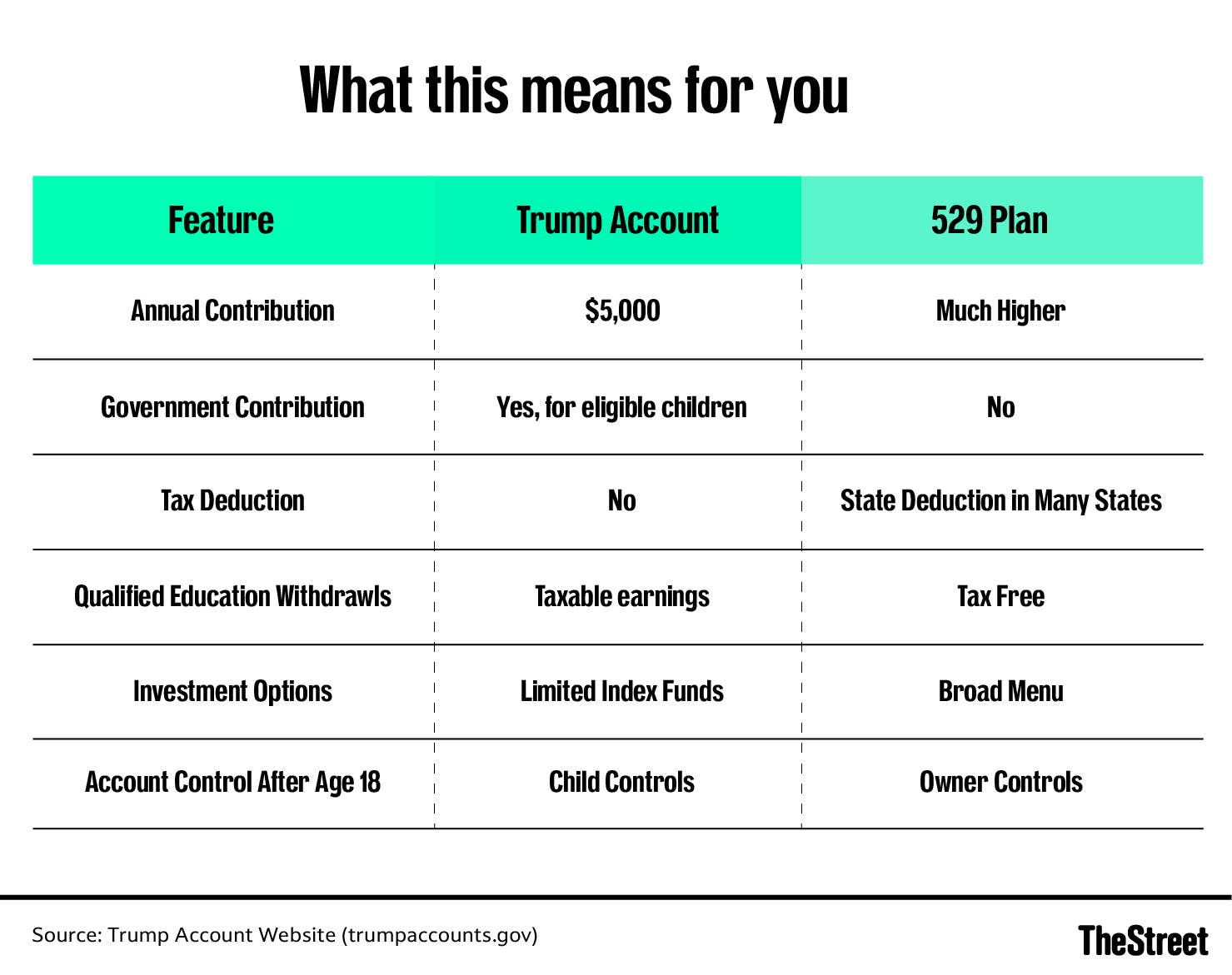
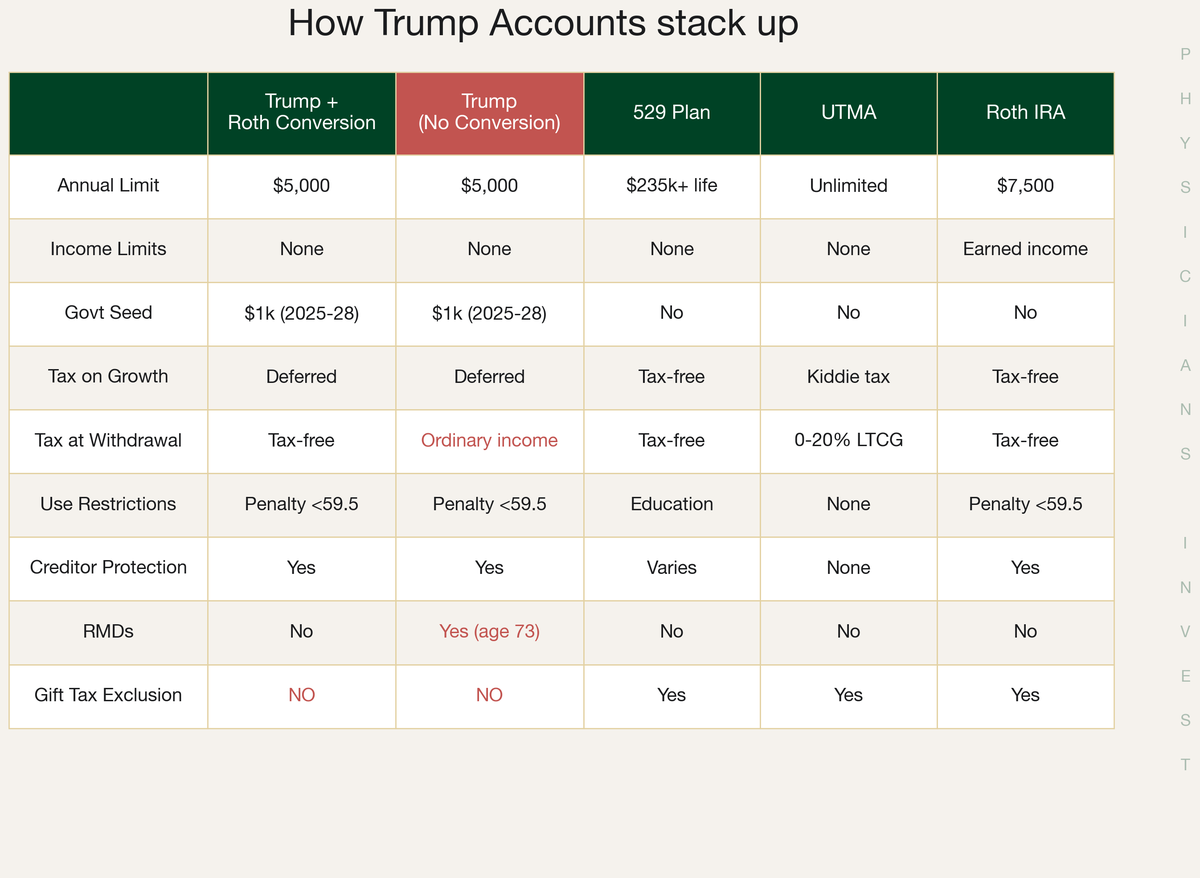
When comparing a 529 account to what is colloquially known as a "Trump account," the distinction usually lies between the traditional 529 College Savings Plan and its expanded versions or the 529A (ABLE) account. While "Trump account" is not a formal legal term, it refers to the significant legislative expansions made to tax-advantaged savings vehicles under the Tax Cuts and Jobs Act (TCJA) of 2017.
The primary difference is their intended use: 529 plans are designed for post-secondary education and limited K-12 tuition, while "Trump accounts"—specifically 529A ABLE accounts—are designed for individuals with disabilities to save for life expenses without losing government benefits. In 2026, these distinctions are more critical than ever as several provisions of the TCJA face potential sunsetting or permanent adjustment, and the ABLE Age Adjustment Act significantly expands eligibility.
Understanding the 529 College Savings Account
The 529 College Savings Plan, named after Section 529 of the Internal Revenue Code, is a state-sponsored investment account designed to encourage saving for future education costs. It has evolved from a simple college fund into a versatile financial tool that covers a wide range of educational expenses.
Tax Advantages and Growth
The cornerstone of the 529 plan is its tax treatment. While contributions are made with after-tax dollars (meaning there is no federal tax deduction for putting money in), the funds grow federal tax-deferred. When the time comes to pay for qualified education expenses, withdrawals are entirely tax-free.
Many states offer additional incentives, such as state income tax deductions or credits for contributions. In 2026, these state-level benefits vary significantly, but they remain a primary driver for residents choosing their home state’s plan over a national alternative.
Qualified Expenses
In the current 2026 landscape, "qualified expenses" include more than just tuition. They encompass:
- Room and board (for students enrolled at least half-time).
- Books, supplies, and required equipment.
- Computers, peripheral equipment, and internet access.
- Special needs services for beneficiaries.
- Up to $10,000 (lifetime limit) toward the repayment of qualified student loans.
- Fees, books, and equipment required for registered apprenticeship programs.
Ownership and Flexibility
A unique feature of the 529 plan is that the account owner retains control over the assets, even after the beneficiary reaches the age of majority. If the original beneficiary decides not to attend college, the owner can change the beneficiary to another "member of the family" (including siblings, parents, or even themselves) without incurring taxes or penalties.
Defining the "Trump Account" (The 529 Expansion and ABLE Accounts)
The term "Trump account" gained traction following the 2017 Tax Cuts and Jobs Act (TCJA). It typically refers to one of two things: the expanded 529 plan that allowed for K-12 tuition savings, or the 529A ABLE Account, which saw significant promotion and legislative support during that administration.
The 529 K-12 Expansion
Before the 2017 legislation, 529 plans were strictly for higher education. The "Trump-era" changes allowed families to use up to $10,000 per year, per beneficiary, for tuition at public, private, or religious elementary or secondary schools. For many families in 2026, this is the defining feature of the "new" 529, allowing for tax-advantaged private school funding long before a child reaches college age.
The 529A ABLE Account
Strictly speaking, the Achieving a Better Life Experience (ABLE) Act was passed in 2014, but the TCJA of 2017 introduced the ABLE Financial Planning Act, which allowed for the tax-free rollover of funds from a standard 529 plan into a 529A ABLE account.
An ABLE account is a tax-advantaged savings account for individuals with disabilities and their families. The crucial "Trump-era" benefit was the ability to move "trapped" education savings into a disability account if the beneficiary’s circumstances changed, providing a safety net for families who feared they might lose their 529 investment if the child could not attend college due to a disability.
Key Differences: 529 Plan vs. 529A ABLE Account
While both accounts are part of the Section 529 family, they serve distinct populations and offer different protections under federal law.
| Feature | 529 College Savings Plan | 529A ABLE Account ("Trump Account") |
|---|---|---|
| Primary Purpose | Education (K-12 & Post-secondary) | Disability-related expenses |
| Beneficiary Requirement | No disability requirement | Disability onset before age 26 (Age 46 starting 2026) |
| Annual Contribution Limit | Subject to Gift Tax limits ($18,000 in 2024; adjusted for 2026) | Generally $18,000 (plus ABLE to Work earnings) |
| Maximum Account Balance | $250,000 - $500,000+ (State-dependent) | $100,000 (to maintain SSI benefits) |
| Qualified Expenses | Tuition, Room/Board, Books | Housing, Transport, Health, Education, Basic Living |
| Asset Protection | Limited protection from creditors | Significant protection; excluded from most means-testing |
Eligibility and the 2026 Milestone
As of January 1, 2026, the ABLE Age Adjustment Act has officially taken effect. This is a massive shift in the "Trump account" landscape. Previously, an individual had to have a disability that began before age 26 to open an ABLE account. Now, that age limit has been raised to 46. This allows millions more Americans—including many veterans and those with mid-life onset conditions like Multiple Sclerosis or ALS—to utilize these accounts.
Using 529 Funds for K-12 Tuition
The 2017 expansion remains one of the most debated aspects of modern education savings. In 2026, families using 529 plans for K-12 tuition must be aware of the specific state-level nuances.
Federal vs. State Disconnect: While federal law allows $10,000 per year for K-12 tuition tax-free, not all states have "coupled" their tax laws with the federal changes. In some states, using 529 funds for K-12 is considered a non-qualified withdrawal for state tax purposes, potentially leading to the recapture of state tax deductions and additional state penalties.
Strategic Considerations: For families in 2026, using a 529 for K-12 tuition requires a balance between short-term tuition needs and the long-term benefit of tax-free growth for college. Every dollar spent on 3rd-grade tuition is a dollar that loses a decade or more of potential compound interest.
529 to Roth IRA Rollovers: The SECURE 2.0 Impact
A major development that bridges the gap between traditional 529s and modern retirement planning is the ability to roll over 529 funds into a Roth IRA. This provision, which became active in 2024 and is fully mature in 2026, addresses the common fear of "overfunding" a 529 account.
The Rules for 2026 Rollovers:
- Lifetime Limit: The maximum amount that can be rolled over is $35,000 per beneficiary.
- Account Age: The 529 account must have been open for at least 15 years.
- Contribution Aging: Any contributions made within the last five years (and the earnings on those contributions) are ineligible for rollover.
- Annual Limits: The rollover amount is subject to the annual Roth IRA contribution limits. For example, if the limit in 2026 is $7,500, you cannot roll over more than that in a single year.
This "Trump-era" and subsequent legislative momentum has essentially turned the 529 plan into a multi-purpose financial tool that can start as a college fund and end as a retirement starter kit for a young adult.
Investment Strategies and Risks
Both 529 plans and ABLE accounts offer a variety of investment vehicles, ranging from aggressive equity-heavy portfolios to conservative FDIC-insured cash options.
Age-Based Portfolios
Most 529 plans utilize age-based (or enrollment-based) portfolios. As the beneficiary nears college age, the asset allocation automatically shifts from stocks to bonds and cash. In 2026, with market volatility being a constant factor, many investors prefer these "set-it-and-forget-it" options to mitigate the risk of a market crash just before tuition is due.
ABLE Account Investment Limitations
Unlike standard 529 plans, which allow owners to change their investment strategy twice per calendar year, ABLE accounts are strictly regulated. However, they offer a "Cash Option" that is particularly important for beneficiaries who need to use the funds for monthly living expenses and cannot afford the risk of market downturns.
The Sunset of 2025: What 2026 Users Must Know
The Tax Cuts and Jobs Act of 2017 included many provisions that were temporary. As we stand in 2026, the financial landscape is reacting to the "sunset" of these provisions.
If Congress has not acted to extend certain TCJA rules, the individual tax rates may have reverted to 2017 levels, and the K-12 tuition provision could be under scrutiny. However, the 529 structure itself is generally considered permanent. The risk for 2026 savers is primarily in the tax rates applicable to non-qualified withdrawals and the state-level response to federal tax changes.
Common Pitfalls and Expert Guidance
When choosing between or managing these accounts, several mistakes can lead to unnecessary taxes:
- Non-Qualified Withdrawals: If you take money out of a 529 for something other than education, you will pay ordinary income tax on the earnings, plus a 10% federal penalty. In an ABLE account, non-qualified withdrawals can jeopardize SSI or Medicaid eligibility.
- The $10,000 K-12 Cap: This is a per-beneficiary cap, not a per-account cap. If two parents have separate 529 accounts for the same child, they can still only withdraw a combined $10,000 for K-12 tuition annually.
- Coordination with Financial Aid: 529 accounts owned by a parent are treated as a parental asset on the FAFSA, which has a relatively low impact on the Student Aid Index (SAI). ABLE accounts are generally ignored entirely for financial aid purposes.
Professional Advice Limitation
This information is for educational purposes and does not constitute legal, tax, or financial advice. Tax laws are subject to change and vary by jurisdiction. You should consult with a qualified tax professional or financial advisor before making significant changes to your savings strategy.
FAQs
Can I have both a 529 and an ABLE account?
Yes. It is common for families of individuals with disabilities to maintain both. The 529 can be used for specialized education or vocational training, while the ABLE account (often called the "Trump account" in some disability circles) handles daily living expenses and healthcare. You can also roll over up to the annual contribution limit from a 529 to an ABLE account tax-free.
Is the "Trump account" (ABLE) only for children?
No. In 2026, thanks to the ABLE Age Adjustment Act, individuals who become disabled before age 46 are eligible. This means adults who suffered injuries or developed conditions later in life can now open these accounts to protect their assets while maintaining government benefits like SSI and Medicaid.
What happens to a 529 if my child gets a scholarship?
If the beneficiary receives a scholarship, you can withdraw an equivalent amount from the 529 account penalty-free. You will still owe ordinary income tax on the earnings portion of that withdrawal, but the 10% penalty is waived. Alternatively, you can save the funds for graduate school or change the beneficiary.
Are contributions to these accounts tax-deductible?
There is no federal tax deduction for contributions to 529 or ABLE accounts. However, over 30 states offer a state income tax deduction or credit. In 2026, you should check your specific state's treasury website, as some states allow "out-of-state" plan contributions to be deductible, though most require you to use the in-state plan.
Can I use a 529 account to pay for my own education?
Absolutely. You can name yourself as the beneficiary of a 529 account. This is a common strategy for professionals planning to get an MBA, medical degree, or other certifications. The same tax-free growth and withdrawal rules apply.
Next Actions for Savers in 2026
To maximize the benefits of these accounts, start by determining your primary goal. If you are saving for a child's future education, the 529 College Savings Plan remains the gold standard, especially with the 2026 ability to roll over unused funds into a Roth IRA.
If you or a family member has a disability, immediately investigate the 529A ABLE account, especially if the disability onset was between ages 26 and 46, as this is a new eligibility window for 2026. Review your state's specific tax incentives and ensure your investment allocation matches your timeline—conservative for immediate K-12 needs, and more aggressive for long-term college or retirement goals.