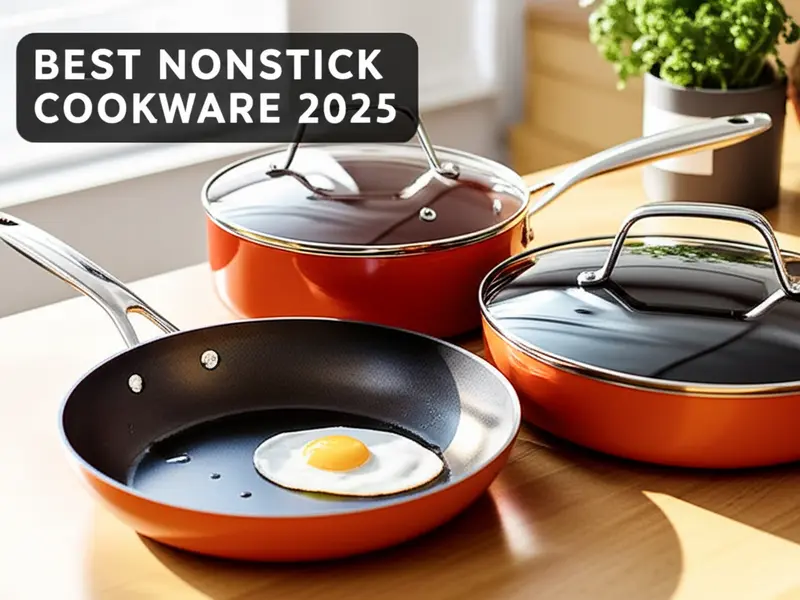
Choosing the right non-stick cookware involves balancing coating technology, core materials, durability, and heat distribution to match your cooking style. This guide examines five top-performing brands known for manufacturing reliable non-stick surfaces, helping you identify which option suits your kitchen requirements and maintenance preferences.
Understanding Non-Stick Cookware Technology and Core Materials
Modern non-stick cookware is defined primarily by its coating and the base material underneath it. The coating prevents food from adhering while minimizing the need for excess oils or fats, but the underlying metal dictates how efficiently heat transfers from your burner to the food. Understanding these components is essential before selecting a brand.
Coating Types: PTFE Versus Ceramic
The two dominant categories of non-stick coatings are traditional polytetrafluoroethylene (PTFE) and sol-gel ceramic. PTFE surfaces, often recognized by brand names like Teflon, offer exceptional release properties and tend to outlast ceramic options under heavy daily use. However, they require careful temperature management to prevent degradation. Ceramic coatings, derived from silica and cured onto an aluminum or stainless steel base, provide a slick surface without plastic polymers and boast higher heat resistance, though their non-stick lifespan is generally shorter.
Core Metals: Anodized Aluminum, Tri-Ply Stainless Steel, and Cast Aluminum
The metal body beneath the coating determines weight, warp resistance, and thermal conductivity.
- Hard-anodized aluminum undergoes an electrochemical bath that hardens the metal, making it twice as strong as stainless steel while offering rapid, even heating.
- Tri-ply stainless steel encapsulates an aluminum core between two layers of stainless steel, delivering rigidity and induction compatibility, though it is heavier.
- Forged or cast aluminum provides a lightweight, budget-friendly option that heats quickly, though thinner gauges may warp over high heat.
The 5 Top Picks for the World's Best Non-Stick Cookware Brands
Evaluating market reputation, user feedback, manufacturing standards, and performance across various price points highlights five standout brands. Each brings a distinct engineering approach to non-stick cooking.
1. All-Clad (H911S26 Hard Anodized / HA1 Series)
All-Clad is globally renowned for professional-grade cookware, and its hard-anodized aluminum lines bring that culinary heritage into the non-stick arena. The All-Clad HA1 series features a heavy-gauge hard-anodized aluminum core paired with a multi-layered, PFOA-free PTFE non-stick coating.
- Performance: These pans offer exceptional heat distribution and heavy-duty warp resistance. The riveted stainless steel handles provide a secure, professional grip.
- Compatibility: Most items in this line are oven-safe up to 500°F and compatible with all cooktops, including induction, thanks to a bonded stainless steel base plate.
- Drawbacks: The heavy gauge makes these pans noticeably heavier than standard non-stick skillets, and premium pricing places them at the higher end of the market.
2. Le Creuset (Toughened Non-Stick PRO)
Le Creuset is legendary for enameled cast iron, but its Toughened Non-Stick PRO (TNS PRO) line establishes a formidable standard in premium non-stick engineering. Utilizing a proprietary hard-anodized forged aluminum body, Le Creuset coats these pans with a triple-layer, textured non-stick surface that is claimed to be four times stronger than previous iterations.
- Performance: The textured interior aids in light browning and searing while ensuring effortless food release. It handles delicate foods like eggs and fish without sticking, even with minimal butter or oil.
- Durability: The manufacturing process creates a surface that resists flaking, peeling, and scratching from metal utensils—though wooden or silicone tools are still recommended to maximize longevity.
- Drawbacks: Premium pricing reflects the brand's luxury status, and the exterior polished stainless steel handles can get warm during prolonged stovetop use.
3. Calphalon (Premier Hard-Anodized Nonstick)
Calphalon pioneered consumer hard-anodized cookware and remains a staple in both home and professional kitchens. The Calphalon Premier Hard-Anodized line features a 3-layer non-stick interior designed to withstand metal utensils and rigorous everyday cooking.
- Performance: Calphalon pans heat evenly and hold up exceptionally well to regular residential use. The hard-anodized exterior resists staining and cleans easily.
- Convenience: A major selling point for this line is its dishwasher-safe construction, a rarity among high-end non-stick pots and pans, though hand-washing remains recommended to preserve coating life.
- Drawbacks: While durable, the non-stick coating will eventually degrade over 3 to 5 years of heavy use, as is standard for PTFE surfaces.
4. Caraway (Ceramic Non-Stick Cookware)
For consumers seeking a chemical-conscious alternative to traditional PTFE surfaces, Caraway has emerged as a dominant force in the ceramic non-stick category. Caraway sets feature an aluminum body coated with a mineral-based ceramic non-stick surface free of PTFE, PFOA, lead, and cadmium.
- Performance: The smooth ceramic coating delivers exceptional release properties out of the box, requiring very little oil. Aesthetic appeal is a major selling point, with vibrant exterior color options and organized storage solutions included.
- Eco-Friendly Focus: Manufacturing processes prioritize ethical labor and lower carbon dioxide emissions compared to traditional non-stick production.
- Drawbacks: Ceramic coatings require strict adherence to low-to-medium heat settings. Exceeding recommended temperatures can carbonize microscopic food residues on the coating, permanently ruining the non-stick performance.
5. GreenPan (Valencia Pro Series)
GreenPan introduced Thermolon, one of the earliest ceramic non-stick coatings, and continues to refine the technology. The Valencia Pro series utilizes a hard-anodized aluminum body infused with diamonds for enhanced thermal conductivity and scratch resistance.
- Performance: The diamond-infused ceramic coating offers superior heat transfer compared to standard ceramic pans, allowing for better searing and browning. Magneto induction bases ensure they work efficiently on induction cooktops.
- Maintenance: Valencia Pro pans are dishwasher safe and oven safe up to 600°F (though glass lids are limited to 425°F), providing greater thermal headroom than most competitors.
- Drawbacks: Like all ceramic cookware, the non-stick lifespan diminishes faster than PTFE if exposed to high heat or abrasive scrubbing pads over time.
Comprehensive Brand Comparison
| Brand | Core Material | Coating Type | Max Oven Safe Temp | Induction Compatible | Primary Advantage |
|---|---|---|---|---|---|
| All-Clad | Hard-Anodized Aluminum | Multi-Layer PTFE | 500°F (Pans) | Yes (Bonded Base) | Professional durability and warp resistance |
| Le Creuset | Forged Hard-Anodized | Textured 3-Layer PTFE | 500°F | Yes | Metal-utensil safe and premium build quality |
| Calphalon | Hard-Anodized Aluminum | 3-Layer PTFE | 450°F | Select Models | Excellent value and dishwasher convenience |
| Caraway | Aluminum | Mineral Ceramic | 550°F | Yes | Toxin-free ceramic with aesthetic storage solutions |
| GreenPan | Diamond-Infused Hard-Anodized | Thermolon Ceramic | 600°F | Yes (Magneto Base) | High heat tolerance and diamond durability |
Best Practices for Extending Non-Stick Lifespan
Even the world's best non-stick cookware will degrade prematurely if subjected to improper maintenance. Protecting your investment requires altering a few routine kitchen habits.
- Control the Heat: Never use high heat on non-stick cookware. High temperatures break down PTFE polymers and permanently bond microscopic food oils to ceramic surfaces, destroying the release property. Medium to medium-low heat is entirely sufficient for almost all non-stick applications.
- Choose the Right Utensils: While brands like Le Creuset rate their coatings as metal-utensil safe, using wooden, silicone, or nylon tools prevents micro-scratches that harbor food particles and accelerate wear.
- Avoid Aerosol Cooking Sprays: Commercial cooking sprays often contain lecithin and propellants that leave an invisible, sticky residue on non-stick coatings. When heated, this residue carbonizes and cannot be washed off, ruining the non-stick effect. Instead, use a mister with pure high-smoke-point oil like avocado or canola.
- Wash by Hand: Even when manufacturers claim dishwasher safety, harsh dishwasher detergents and high-pressure water jets degrade coatings over time. Wash pans with warm, soapy water and a soft sponge.
Frequently Asked Questions
Which non-stick coating lasts longer: PTFE or ceramic?
Traditional PTFE (such as Teflon, All-Clad, and Le Creuset coatings) generally lasts longer than ceramic coatings under normal household use. PTFE maintains its release properties for 3 to 7 years with proper care, whereas ceramic coatings typically begin losing their slickness within 1 to 3 years due to thermal stress and micro-abrasions.
Can non-stick pans be used on induction cooktops?
Yes, but only if the pan features a magnetic metal layer integrated into its base. Solid aluminum is non-magnetic and will not work on induction burners. Brands like All-Clad HA1, Caraway, and GreenPan Valencia Pro incorporate steel base plates or magnetic induction technology specifically to ensure compatibility across gas, electric, and induction ranges.
Is it safe to use metal utensils on modern non-stick cookware?
Some advanced non-stick pans, such as Le Creuset TNS PRO and select reinforced hard-anodized lines, are engineered to withstand occasional metal utensil contact. However, avoiding metal utensils entirely remains the single most effective way to prevent scratching and extend the functional lifespan of any non-stick surface.
Why is my food sticking to a non-stick pan?
Food sticking to a non-stick pan is almost always caused by one of three issues: accumulated carbonized oil residue from previous uses, cooking over excessively high heat, or omitting fat entirely. Clean the pan thoroughly with a paste of baking soda and water to lift invisible grease buildup, and always use a small amount of oil or butter.
When should I replace my non-stick cookware?
You should replace your non-stick pan when the coating exhibits visible flaking, deep scratches that expose the base metal, or persistent food adherence that survives a thorough cleaning. Continuing to cook on a severely compromised PTFE pan can lead to flaking particles entering your food.
Final Recommendation
Selecting the ideal non-stick brand depends on your cooking habits and chemical preferences. If your priority is maximum durability, heavy-duty heat distribution, and professional heft, invest in All-Clad HA1 or Le Creuset TNS PRO. If you prefer a toxin-free, mineral-based ceramic surface with modern visual appeal, Caraway and GreenPan Valencia Pro offer excellent performance when paired with proper low-heat management. Match your purchase to your maintenance style to get the best long-term value from your cookware.