The 3/4 time signature, commonly referred to as waltz time, is a musical meter characterized by three beats per measure, where the quarter note represents a single beat. This rhythmic structure creates a "strong-weak-weak" pulsing pattern that has defined centuries of dance music, classical compositions, and modern folk and pop ballads.
The Anatomy of the 3/4 Time Signature
To understand 3/4 time, one must first deconstruct the two numbers that constitute the time signature. In music notation, the time signature appears at the beginning of a piece, immediately following the clef and the key signature. It serves as a mathematical set of instructions for the performer regarding how to organize rhythm and pulse.
The Top Number: The Numerator
The top number in a time signature indicates how many beats are contained within a single measure (the space between two vertical bar lines). In 3/4 time, the number is 3. This means that every measure must contain the equivalent of three beats. Regardless of how complex the rhythm becomes—whether it involves sixteenth notes, rests, or triplets—the cumulative value of those notes must always return to the number three before the next bar line begins.
The Bottom Number: The Denominator
The bottom number indicates which note value receives one full beat. This number is based on a fractional division of a whole note. In this instance, the number 4 represents a "quarter" (1/4). Therefore, the quarter note is the primary unit of measurement for the pulse. If the bottom number were 8, the eighth note would get the beat; if it were 2, the half note would get the beat. By combining these two numbers, "3/4" literally translates to "three quarter-note beats per measure."
Rhythm and Pulse: The "Feel" of 3/4
Every time signature has a unique "feel" or internal weight distribution. In music theory, this is known as meter. The 3/4 time signature is classified as a simple triple meter. "Simple" means that the main beat can be divided into two equal parts (two eighth notes), and "triple" means there are three main beats per measure.
The Strong Downbeat
The most defining characteristic of 3/4 time is the emphasis on the first beat of every measure. This is known as the downbeat. In a standard 3/4 rhythm, the weight is distributed as Strong-weak-weak. Imagine a ballroom dancer: the first step is a heavy, grounded plunge, followed by two lighter, gliding steps. This circular, revolving feel is what distinguishes triple meter from the "walking" or "marching" feel of 2/4 or 4/4 time.
The Circular Motion
Unlike 4/4 time, which feels symmetrical and balanced (Strong-weak-Medium-weak), 3/4 time feels asymmetrical and driving. It creates a sense of perpetual motion. Because the strong beat returns every three counts rather than every four, the music often feels like it is "leaning" forward. This is why the waltz—a dance based entirely on rotation—relies so heavily on this specific time signature.
How to Count and Conduct 3/4 Time
For students and performers in 2026, mastering the physical internalisation of 3/4 time is essential for rhythmic accuracy. Counting and conducting are the two primary methods used to achieve this.
Verbal Counting
To count 3/4 time, musicians use a steady "1 - 2 - 3, 1 - 2 - 3" cadence. When subdivisions are introduced, such as eighth notes, the counting expands to include "and" syllables: "1 & 2 & 3 &." Even when the music contains rests or longer notes, the underlying count of three remains constant. It is vital to emphasize the "1" vocally to maintain the correct meter: ONE, two, three, ONE, two, three.
The Conducting Pattern
Conducting 3/4 time involves a three-point triangular motion. This helps the ensemble see exactly where they are in the measure:
- Beat 1 (Down): The hand or baton moves straight down from the chest level to the waist. This signifies the strongest beat.
- Beat 2 (Out): The hand moves horizontally away from the body (to the right for right-handed conductors).
- Beat 3 (Up): The hand moves diagonally back up to the starting position. This is the "upbeat," which prepares the performers for the next downbeat.
Musical Notation and Common Note Values in 3/4
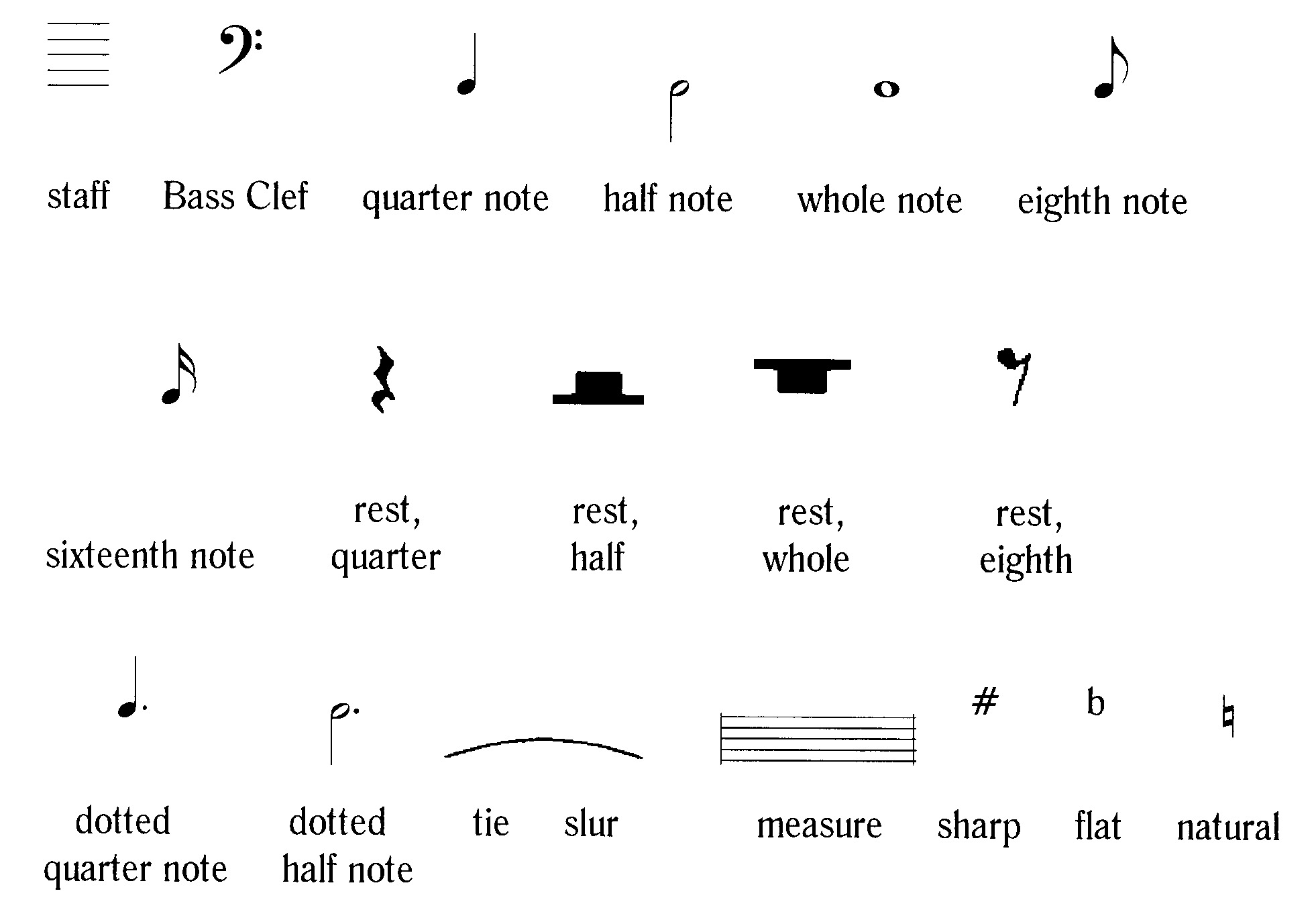
Because a measure of 3/4 must equal three quarter notes, composers use various combinations of notes and rests to fill that space. Understanding the mathematical value of these notes is crucial for reading sheet music.
The Dotted Half Note
The dotted half note is the most common way to fill an entire measure of 3/4 time. A standard half note is worth two beats. In music theory, a dot adds half of the note's original value back to it. Therefore, a dotted half note is 2 + 1 = 3 beats. In a 3/4 score, a dotted half note represents a single tone held for the duration of the entire bar.
Quarter and Eighth Notes
As the primary beat unit, the quarter note appears frequently. A measure might consist of three quarter notes, or it might be broken down into six eighth notes. When writing eighth notes in 3/4, they are often beamed together in groups of two or six to help the performer see the three-beat structure clearly.
Rests in 3/4
Rests follow the same mathematical rules. A measure could contain a half rest (2 beats) followed by a quarter rest (1 beat). However, it is important to note that a whole rest is often used to signify a "full bar rest" regardless of the time signature. Even though a whole note technically equals four beats, a whole rest placed in the center of a 3/4 measure tells the performer to remain silent for all three beats.
Comparison of Common Time Signatures
To better understand where 3/4 fits into the musical landscape, it is helpful to compare it to other common meters used in contemporary and classical music.
| Time Signature | Meter Type | Beats per Measure | Beat Unit | Common "Feel" |
|---|---|---|---|---|
| 3/4 | Simple Triple | 3 | Quarter Note | Waltz, Graceful, Revolving |
| 4/4 | Simple Quadruple | 4 | Quarter Note | March, Pop, Rock, Walking |
| 2/4 | Simple Duple | 2 | Quarter Note | Polka, Galop, Symmetrical |
| 6/8 | Compound Duple | 2 (felt as 6) | Eighth Note | Skipping, Folk-dance, Jig |
| 3/8 | Simple Triple | 3 | Eighth Note | Fast, Light, Brief |
3/4 vs. 6/8: Resolving the Confusion
One of the most frequent points of confusion for intermediate music students is the difference between 3/4 and 6/8. Mathematically, both signatures contain the same amount of "musical time"—the equivalent of six eighth notes. However, the rhythmic emphasis is entirely different.
Simple Triple (3/4)
In 3/4, the measure is divided into three beats, each consisting of two eighth notes. The emphasis is on beats 1, 2, and 3.
- Emphasis: 1 & 2 & 3 &
- Feeling: Three distinct pulses.
Compound Duple (6/8)
In 6/8, the measure is divided into two beats, each consisting of three eighth notes. The emphasis is on beats 1 and 4.
- Emphasis: 1 & a 2 & a (or 1 2 3 4 5 6)
- Feeling: A "skipping" or "swinging" feel. 6/8 feels like two groups of triplets rather than three groups of duplets.
Choosing between 3/4 and 6/8 depends on the desired pulse. If the composer wants a waltz feel, they use 3/4. If they want a sea shanty or a jig feel, they use 6/8.
Historical and Modern Examples of 3/4 Time
The 3/4 time signature has a storied history, evolving from the "perfection" of triple meter in the Medieval period to the dance halls of 19th-century Vienna.
Classical Traditions
The Waltz is the most famous application of 3/4. Johann Strauss II, known as "The Waltz King," utilized 3/4 to create iconic pieces like The Blue Danube. Before the waltz became popular, the Minuet was the standard triple-meter dance in the Baroque and Classical eras, appearing in the symphonies of Haydn and Mozart. These pieces were generally slower and more courtly than the later romantic waltzes.
Modern Pop and Rock
While the vast majority of modern Western music is written in 4/4, 3/4 remains a powerful tool for songwriters who want to evoke emotion or a folk-like quality.
- "Piano Man" by Billy Joel: This is a quintessential modern waltz. The "oom-pah-pah" rhythm of the piano clearly defines the 3/4 structure.
- "Iris" by Goo Goo Dolls: This song utilizes a driving 3/4 (moving into 6/8) feel that provides an urgent, soaring quality.
- "Que Sera, Sera" (Whatever Will Be, Will Be): A classic example used to teach children the "Strong-weak-weak" pulse of triple meter.
Common Mistakes When Playing in 3/4
Even experienced musicians can occasionally struggle with the nuances of 3/4 time, particularly when transitioning from the more common 4/4 meter.
- Rushing the "Weak" Beats: There is a tendency to shorten beats 2 and 3, effectively turning the measure into a lopsided 2/4. It is essential to give beats 2 and 3 their full quarter-note value.
- Over-accenting every beat: If beats 1, 2, and 3 are played with equal volume, the "waltz" feel is lost. The music becomes heavy and mechanical. The performer must maintain a light touch on the upbeats.
- Confusing with 6/8: As discussed, musicians often lose the three-beat pulse and start grouping eighth notes into two sets of three. Using a metronome set to a "click" on every quarter note can help correct this.
- Miscounting Dotted Rhythms: In 3/4, a dotted quarter note followed by an eighth note takes up two full beats. Students often miscalculate the entry of the third beat when these syncopations occur.
Practical Exercises for Mastering 3/4
To truly understand 3/4 time, one must move beyond theory and into physical practice.
- The Metronome Walk: Set a metronome to 100 BPM. Walk through the room taking a heavy step on beat 1 and two light steps (or toe-taps) on beats 2 and 3. This physicalizes the weight distribution.
- Conducting Practice: Stand in front of a mirror and practice the triangular conducting pattern while singing a simple melody like "Amazing Grace" (which is in 3/4). Ensure the "down" motion happens exactly on the first beat of each word.
- Rhythmic Dictation: Listen to various songs and try to identify if they are in 4/4 or 3/4. If you can count "1, 2, 3, 4" comfortably, it’s 4/4. If "1, 2, 3" feels more natural, you’ve found a triple meter.
Frequently Asked Questions
Can 3/4 time have sixteenth notes?
Yes. Since 3/4 time is a simple meter, each quarter note beat can be divided into four sixteenth notes. A single measure of 3/4 time can contain a maximum of twelve sixteenth notes (4 per beat x 3 beats).
Is 3/4 the same as "Triple Time"?
3/4 is a type of triple time. "Triple time" is a broad category that includes any time signature where the number of beats is divisible by three (like 3/4, 3/8, or 9/8). However, in common parlance, when musicians say "triple time," they are most often referring to 3/4.
Why is 3/4 used for waltzes?
The waltz is a dance based on three steps. The first step is a long stride (the downbeat), followed by two smaller steps that bring the feet together. The 3/4 time signature perfectly mirrors this physical movement, providing the necessary "lift" and "reset" for the dancers.
What is the difference between 3/4 and 3/2?
In 3/4, the quarter note gets the beat. In 3/2, the half note gets the beat. While both have three beats per measure, 3/2 is often used in older choral music or large-scale orchestral works to imply a slower, more expansive pulse.
How do you identify 3/4 time in a song without sheet music?
Listen for the "accent." If you hear a heavy beat followed by two lighter beats consistently throughout the song, it is likely in 3/4. Try to clap along: if you find yourself clapping in groups of three, you are in triple meter.
Summary and Next Steps
The 3/4 time signature is a fundamental building block of musical literacy. By mastering the 3-beat measure and the quarter-note pulse, you unlock the ability to perform a vast repertoire of classical, folk, and contemporary music. Whether you are conducting an orchestra, playing the piano, or simply dancing, the "Strong-weak-weak" pulse provides a unique rhythmic playground that differs significantly from the standard 4/4 time.
To progress further, practice reading scores that utilize dotted rhythms and syncopation within 3/4 time. Pay close attention to how composers like Chopin or Tchaikovsky use the third beat to "lead" back into the first beat of the following measure. Developing this sensitivity to the "upbeat" will transform your playing from a mechanical counting exercise into a fluid, musical performance.