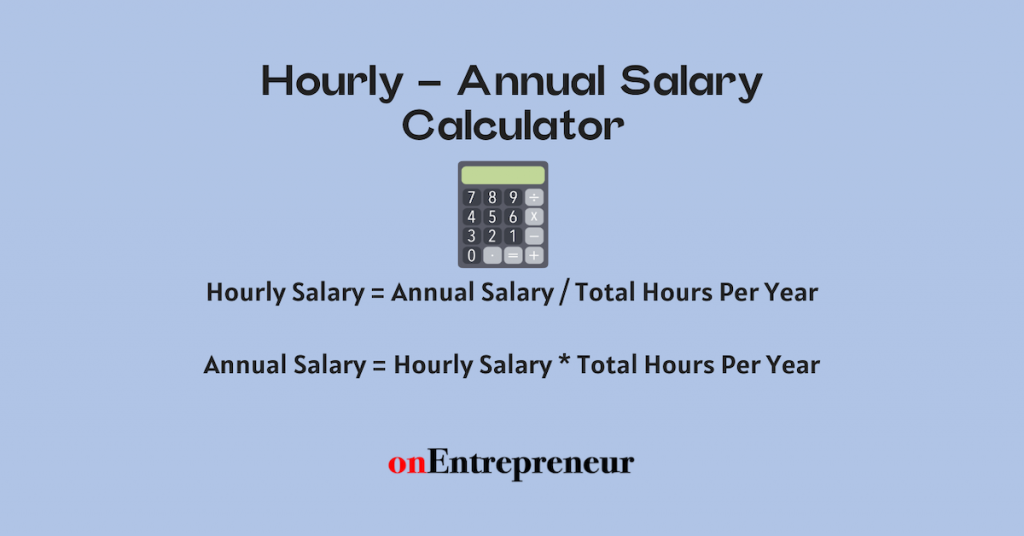
When you earn a wage of $26 an hour, your annual gross income typically totals $54,080. This figure is derived from the standard full-time work schedule of 40 hours per week over 52 weeks in a year. By multiplying $26 by 40 hours, you arrive at a weekly pay of $1,040, which, when extended across 52 weeks, yields the $54,080 annual sum before any taxes or deductions.
The Mechanics of Annualizing Hourly Wages
Translating an hourly rate into an annual salary is a fundamental exercise in financial planning. Most employers calculate compensation based on a 2,080-hour work year. This number is reached by multiplying 40 hours per week by 52 weeks. When you apply your $26 hourly wage to this standard, the math is straightforward: 2,080 hours multiplied by $26 equals exactly $54,080.
However, it is important to distinguish between "gross" income and "net" income. The $54,080 figure represents your gross earnings—the total amount of money you are paid before the government takes its share in taxes or before you contribute to company benefits. Your actual "take-home" pay will likely be lower once federal and state income taxes, Social Security, Medicare, and voluntary payroll deductions like health insurance premiums or 401(k) contributions are subtracted from each paycheck.
Standard Work Schedules and Variations
While the $54,080 calculation assumes a perfect 40-hour work week, professional life often deviates from this ideal. Variations in work hours significantly impact whether your actual annual income will match this baseline.
The Impact of Unpaid Leave and Holidays
Most full-time salaried or hourly roles include paid holidays and potentially paid time off (PTO). If your employer provides paid leave, you will likely achieve the $54,080 mark even if you take vacation days. However, if you are an hourly worker who is not compensated for time off, any unpaid days—such as sick leave or vacation time—will reduce your total annual earnings. If you take two weeks of unpaid time off, your total work year drops to 50 weeks, resulting in an annual income of $52,000 rather than $54,080.
Overtime Considerations
In many jurisdictions, non-exempt hourly employees are entitled to "time and a half" for any hours worked beyond 40 in a single work week. If your position requires frequent overtime, your annual income will exceed $54,080. For example, working just five hours of overtime per week at an overtime rate of $39 per hour (1.5 times your $26 base) adds an additional $10,140 to your annual gross income, bringing your total to $64,220.
Comparing Gross Annual Income vs. Net Take-Home Pay
Financial stability depends more on your net pay than your gross salary. Because tax obligations vary depending on your location, filing status, and dependents, the amount that hits your bank account can differ significantly from person to person, even if they both earn $26 an hour.
| Deduction Type | Typical Impact on $54,080 | Note |
|---|---|---|
| Federal Income Tax | Variable | Depends on tax bracket and deductions |
| Social Security (FICA) | 6.2% | Standard federal payroll tax |
| Medicare (FICA) | 1.45% | Standard federal health insurance tax |
| State/Local Taxes | 0% – 10%+ | Varies by state of residence |
| Benefits/401(k) | Optional | Deductions depend on your election |
When budgeting, it is a best practice to calculate your "effective" pay rate. After taxes and insurance, a $54,080 earner might only see 75% to 85% of that amount deposited into their account. Planning your monthly expenses based on the full $54,080 without accounting for these "hidden" deductions is a common mistake that leads to budget shortfalls.
Strategic Financial Planning for Hourly Earners
Knowing that your base rate is $54,080 allows you to create a structured budget. Because you are paid by the hour, you should view your finances through a "weekly" lens rather than a "monthly" one.
Setting Up a Monthly Budget
If you are paid bi-weekly (26 paychecks per year), your gross paycheck will be approximately $2,080. However, some months contain three pay periods instead of two. Budgeting based on two paychecks per month—effectively ignoring the two "extra" paychecks that occur in certain months—is a conservative strategy that provides a financial buffer for emergencies or unexpected expenses.
Factoring in Benefits
If your employer offers a 401(k) match, the "value" of your $26 an hour position is actually higher than $54,080. If you contribute 5% of your income and your employer matches that contribution, you are receiving an additional $2,704 in compensation that does not appear in your paycheck but contributes directly to your net worth. When evaluating the total compensation of a job, always include the monetary value of health insurance, retirement matching, and other perks alongside your base hourly rate.
Common Misconceptions Regarding Annual Earnings
A frequent error is assuming that $26 an hour is equivalent to a salary of $54,080 regardless of the industry or contract. Many employers offer "salaried" positions where the expectation is that you will work whatever hours are necessary to finish the job, which may exceed 40 hours per week. If you are exempt from overtime pay, your "effective" hourly rate decreases as you work more hours.
Conversely, if you are a freelancer or contractor, you must account for the self-employment tax. While a W-2 employee at $26 an hour pays half of their Social Security and Medicare taxes, a self-employed individual is responsible for the full 15.3% contribution. This means that a freelancer needs a higher hourly rate to achieve the same "take-home" value as a W-2 employee earning $26 per hour.
Frequently Asked Questions
Does $26 an hour include overtime pay?
No, the $54,080 calculation is based strictly on a standard 40-hour work week. Any overtime hours worked will increase your total annual income above this figure.
Why is my paycheck lower than $1,040 per week?
Your paycheck reflects your gross pay minus mandatory withholdings, including federal and state taxes, as well as voluntary deductions like health insurance, dental plans, or retirement account contributions.
How do I account for unpaid holidays?
If your employer does not provide paid holidays, you must subtract the hourly value of those days from your annual total. For instance, if you have 10 unpaid holidays, you would subtract 80 hours of pay ($2,080) from your potential annual earnings.
Is $54,080 enough to live on?
Living affordability is relative to your geographic location, cost of living, debt obligations, and household size. It is recommended to calculate your local cost of rent, utilities, and essential goods to determine if this gross income meets your specific lifestyle requirements.
Should I include my bonus in the $54,080 calculation?
No, the $54,080 figure should be treated as your guaranteed "base" income. Bonuses are variable and should be considered separate from your core salary for budgeting purposes to ensure you do not overspend on the assumption that a bonus is guaranteed.
Taking Next Actions
To gain a precise understanding of your financial situation, start by obtaining your most recent pay stub. Identify the "Gross Pay" for the pay period and verify the number of hours worked. If you are planning for a major purchase or a change in your living situation, use the $54,080 figure as a starting point, but always apply a 20% "cushion" to account for taxes and potential benefit deductions to ensure your financial projections are realistic and sustainable.