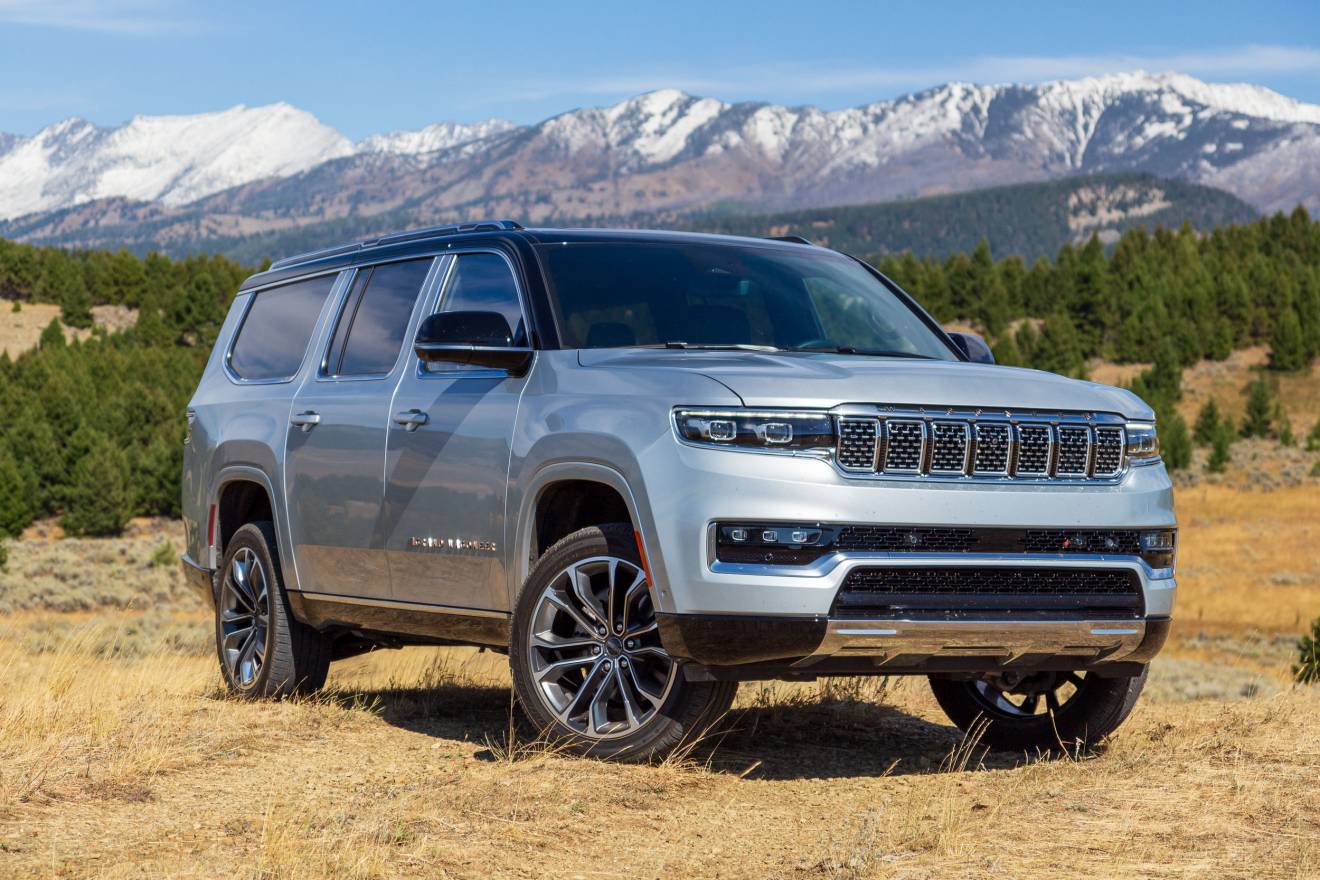
The 2023 Jeep Wagoneer exhibits a mixed reliability profile, characterized by robust mechanical powertrains but frequent electronic and software complications. While the core engines—specifically the 5.7L V8 and the 3.0L "Hurricane" I6—have proven durable over several years of service, owners often encounter persistent issues with the Uconnect infotainment system, battery discharge, and various sensor malfunctions that affect overall dependability ratings.
Understanding the 2023 Wagoneer’s Reliability Context
To accurately assess the 2023 Jeep Wagoneer, one must understand its position in the Stellantis lineup. As the second production year of the revived nameplate, the 2023 model arrived at a transition point for Jeep's engineering. It was the year Jeep began phasing out the venerable 5.7L HEMI V8 in favor of the high-output, twin-turbocharged "Hurricane" Inline-6. This transition created two distinct reliability profiles for the same model year.
Historically, the first and second years of a new vehicle platform are prone to "teething issues." By 2026, we have gathered sufficient data to see that the Wagoneer follows this trend. While it shares a chassis foundation with the Ram 1500—a platform known for its workhorse capabilities—the Wagoneer adds layers of luxury technology and complex air suspension systems that introduce more potential points of failure than its truck cousin.
Powertrain Reliability: V8 vs. Hurricane I6
The most critical factor in a 2023 Wagoneer’s reliability is what lies beneath the hood. Jeep offered two primary engines this year, and their long-term health varies significantly based on maintenance and usage patterns.
The 5.7L HEMI V8 with eTorque
The 5.7L V8 is a legacy engine, but in the 2023 Wagoneer, it is paired with the eTorque mild-hybrid system. This system replaces the traditional alternator with a belt-driven motor-generator unit that assists with the stop-start function and provides a small torque boost.
Reliability for this unit is generally high, but the eTorque system itself has been a point of contention. Some owners have reported issues with the 48-volt battery pack and the tensioner for the heavy-duty drive belt. When these components fail, it can lead to a "no-start" condition or a loss of power steering. However, the internal mechanicals of the V8 are well-understood by mechanics nationwide, making repairs straightforward outside of the hybrid components.
The 3.0L Twin-Turbo Hurricane I6
Introduced mid-year for many trims, the Hurricane engine represents the future of Jeep’s performance. Because it uses two turbochargers to achieve high horsepower from a smaller displacement, it operates under higher thermal and pressure loads than the V8.
By 2026, data suggests the Hurricane is a stout engine, but it is sensitive to oil change intervals. The use of Plasma Transfer Wire Arc (PTWA) coating on the cylinder bores instead of traditional cast-iron liners reduces weight and friction but requires strict adherence to high-quality synthetic oil standards. Early 2023 models occasionally saw "check engine" lights related to turbocharger wastegate actuators, which were typically resolved via software updates or sensor replacements under warranty.
Electronic Systems and the Uconnect 5 Interface
The most frequent complaints regarding the 2023 Jeep Wagoneer do not involve the engine or transmission, but rather the Uconnect 5 infotainment system. As vehicles become "computers on wheels," software stability has become a cornerstone of perceived reliability.
Owners have documented several recurring electronic glitches:
- Screen Blackouts: The central 10.1-inch or optional 12-inch display may intermittently go dark or freeze during navigation use.
- Wireless Connectivity Issues: Difficulties maintaining stable connections with Apple CarPlay and Android Auto are common, often requiring a full system hard reset.
- Battery Drain: A known issue in some 2023 units involves "parasitic draw," where the vehicle’s modules fail to enter "sleep mode" after the ignition is turned off, leading to a dead battery if the car sits for more than 48 hours.
These issues are often addressed through Over-the-Air (OTA) updates. However, if the hardware module (the Radio Control Assembly) is faulty, software patches may only provide a temporary fix. Prospective buyers in 2026 should verify that all available software campaigns have been applied to the vehicle.
Suspension and Chassis Longevity
The Wagoneer offers two suspension setups: a traditional coil-spring arrangement and the Quadra-Lift Air Suspension. While the air suspension provides a class-leading ride quality and adjustable ground clearance, it is a known liability as the vehicle ages.
The Quadra-Lift system uses a closed-loop air compressor and rubber air bladders at each wheel. Over time, particularly in colder climates, the rubber can perish or develop micro-cracks, leading to leaks. If the system has a leak, the compressor must run more frequently to maintain ride height, eventually leading to compressor burnout.
In contrast, the standard coil-spring suspension is nearly bulletproof. It lacks the height adjustability of the Quadra-Lift but offers much lower long-term maintenance costs and a more predictable reliability ceiling as the vehicle crosses the 100,000-mile mark.
Summary of 2023 Jeep Wagoneer Recalls and TSBs
A vital part of assessing reliability is looking at the manufacturer's corrective actions. The National Highway Traffic Safety Administration (NHTSA) has recorded several recalls for the 2023 Wagoneer that owners should be aware of.
| Component | Nature of Issue | Risk Level |
|---|---|---|
| Airbags | Possible improper deployment of side curtain airbags. | High (Safety) |
| Electrical | Loss of rearview camera image during reversing. | Moderate (Compliance) |
| Engine Cooling | Software error causing the engine fan to fail. | High (Engine Damage) |
| Seatbelts | Third-row seatbelt buckles may not latch correctly. | High (Safety) |
| Fuel System | Potential for fuel leaks in early Hurricane engine builds. | High (Fire Hazard) |
Technical Service Bulletins (TSBs) are also frequent for this model year. TSBs are not recalls but are instructions provided to dealership technicians to fix known, recurring problems. For the 2023 Wagoneer, many TSBs focus on reflashing the Transmission Control Module (TCM) to smooth out rough shifts between the first and second gears, a common complaint among early adopters.
Interior Quality and Build Materials
Reliability isn't just about the engine turning over; it's about the vehicle holding together. The 2023 Wagoneer was designed to compete with Cadillac and Lincoln, meaning it features an abundance of leather, wood, and metal accents.
While the materials are premium, the "fit and finish" in the 2023 model year was sometimes inconsistent. Common "nuisance" reliability issues include:
- Rattles in the B-Pillar: Often caused by loose seatbelt pretensioner assemblies.
- Loose Trim: The silver-painted plastic trim around the center console has been known to creak or come loose if exposed to high cabin temperatures.
- Panoramic Sunroof Leaks: Some owners have reported clogged drainage tubes, which can lead to water entering the cabin during heavy rain, potentially damaging electronic components in the dashboard.
Maintenance Requirements for Long-Term Reliability
To ensure a 2023 Jeep Wagoneer remains reliable well into the late 2020s, a proactive maintenance schedule is non-negotiable. Because of the complexity of the eTorque and Hurricane systems, "old school" maintenance intervals (like 10,000-mile oil changes) are generally discouraged by independent master technicians.
- Oil Changes: Perform every 5,000 to 7,500 miles using full synthetic oil that meets FCA Material Standard MS-6395 (for the V8) or the specific requirements for the Hurricane I6.
- Transmission Service: The ZF 8-speed automatic is a reliable unit, but "lifetime fluid" is a misnomer. Changing the fluid and filter at 60,000 miles can significantly extend the life of the gearbox.
- Differential and Transfer Case: For those with 4WD models, changing these fluids every 40,000 miles is essential, especially if the vehicle is used for towing.
Comparing Reliability: Wagoneer vs. Competitors
When evaluating the 2023 Wagoneer, it is helpful to see how it stacks up against its primary rivals in the full-size SUV segment.
- Chevrolet Tahoe / GMC Yukon: These competitors generally offer higher predicted reliability due to their naturally aspirated V8 engines and more mature infotainment systems. However, they often lag behind the Wagoneer in interior material quality and second-row legroom.
- Ford Expedition: The Expedition’s EcoBoost V6 is comparable to the Wagoneer’s Hurricane I6 in terms of complexity. Both suffer from occasional sensor issues but are mechanically sound if maintained.
- Toyota Sequoia: The Sequoia is the reliability leader in this class. Its hybrid powertrain is more efficient and has a better track record for longevity, though the Wagoneer offers a much larger third row and more cargo volume.
Frequently Asked Questions
Is the 2023 Jeep Wagoneer expensive to maintain?
Yes, compared to a standard mid-size SUV, the Wagoneer has higher maintenance costs. This is due to its specialized synthetic oil requirements, the complexity of its hybrid or twin-turbo systems, and the high cost of components like the air suspension and large-diameter tires (up to 22 inches). Expect to pay a premium for dealership service.
Does the 2023 Wagoneer have transmission problems?
The Wagoneer uses the ZF-sourced 8-speed automatic, which is widely considered one of the best transmissions in the industry. Most "problems" reported are software-related, manifesting as "hunting" for gears or a harsh shift from park to drive. These are typically solved with a dealership software flash (TCM update).
How long will a 2023 Jeep Wagoneer last?
With meticulous maintenance, a 2023 Wagoneer is capable of reaching 200,000 miles. However, the cost of keeping the vehicle on the road may increase significantly after 120,000 miles, as electronic modules and air suspension components begin to age out.
Which engine is more reliable: the V8 or the Hurricane I6?
In the short term, the 5.7L V8 is often viewed as more reliable because its architecture is decades old and well-proven. However, the Hurricane I6 was designed with modern cooling and lubrication efficiencies that may prove superior in the long run, provided the turbochargers are treated well (e.g., allowing the engine to idle for a moment after a hard drive).
Is there a common "lemon" issue with the 2023 Wagoneer?
There is no single "engine-killing" defect, but the most common reason for Wagoneers to be flagged under lemon laws is persistent electrical failure. This usually involves the infotainment system or the instrument cluster failing repeatedly despite multiple repair attempts.
Final Recommendation: Should You Buy or Keep a 2023 Wagoneer?
The 2023 Jeep Wagoneer is a high-performance, high-luxury machine that requires a high level of commitment to maintenance. Its reliability is average for the luxury full-size segment, meaning it is not as bulletproof as a Toyota but generally more robust than some European luxury alternatives.
If you are considering a used 2023 model in 2026, prioritize vehicles with a documented service history and, if possible, an extended powertrain warranty. Focus on models that have had their recall work completed—specifically the airbag and cooling fan updates. For current owners, staying ahead of software updates and adhering to a 5,000-mile oil change interval is the best way to ensure your Wagoneer remains a dependable family hauler for years to come.