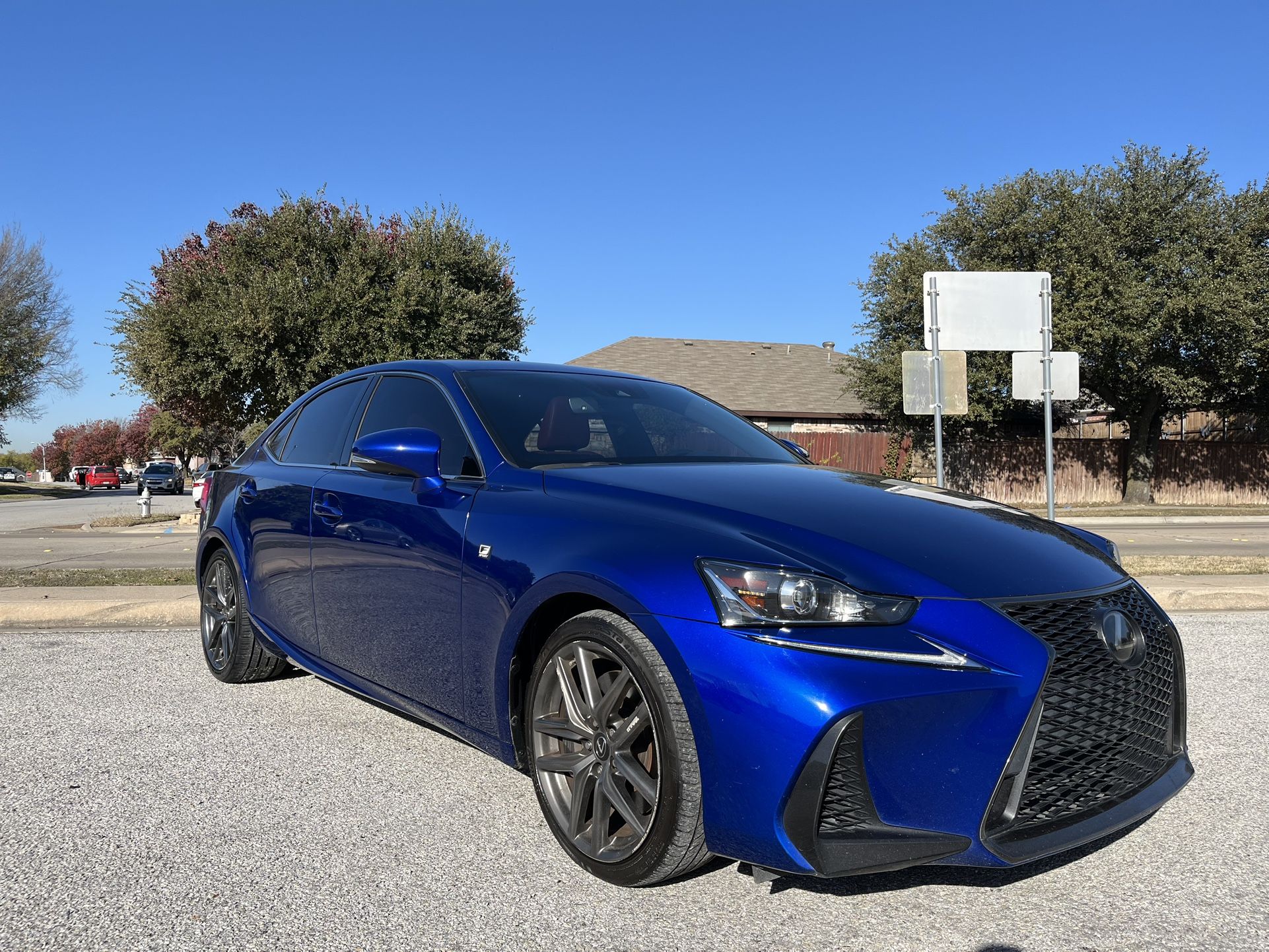
The 2018 Lexus IS 300 accelerates from 0 to 60 mph in approximately 6.1 to 6.7 seconds, depending on whether it is configured with rear-wheel drive or all-wheel drive, as the two systems utilize completely different engine architectures, horsepower outputs, and transmission pairings.
When evaluating compact luxury sport sedans from the late 2010s, enthusiasts and everyday drivers alike frequently look toward powertrain responsiveness and straight-line acceleration metrics. The 2018 model year represents a significant phase in the third-generation Lexus IS lifecycle, following a major styling and equipment refresh introduced for 2017. While the brand is historically celebrated for ride comfort and bulletproof reliability, models bearing the "IS" badge carry the heavy expectation of competing directly with dynamic benchmarks like the BMW 3 Series, Audi A4, and Mercedes-Benz C-Class. Understanding the 0 to 60 mph performance of the 2018 Lexus IS 300 requires a close examination of its drivetrain variants, mechanical specifications, and real-world driving behavior.
Understanding the Dual Powertrain Strategy of the 2018 Lexus IS 300
One of the most critical factors influencing the performance profile of the 2018 Lexus IS 300 is that a buyer choosing a rear-wheel-drive (RWD) model gets a completely different engine under the hood than someone selecting the all-wheel-drive (AWD) variant. This mechanical divergence can cause confusion for consumers comparing acceleration times, fuel economy figures, and overall driving dynamics.
Rear-Wheel Drive (RWD) Configuration
The RWD version of the 2018 Lexus IS 300 is powered by a 2.0-liter turbocharged inline-4 engine (designated 8AR-FTS). This powerplant features a twin-scroll turbocharger, an integrated exhaust manifold, and Lexus's D-4ST direct and port fuel injection system.
- Horsepower: 241 hp at 5,800–6,500 rpm
- Torque: 258 lb-ft at 1,650–4,400 rpm
- Transmission: 8-speed Sport Direct Shift automatic transmission with sequential shift mode and steering wheel-mounted paddle shifters.
- Estimated 0-60 mph Time: Approximately 6.7 seconds.
The turbo-four delivers a broad, flat torque curve that peaks quite low in the rev range, making the RWD IS 300 feel remarkably punchy when pulling away from a standstill or executing urban passing maneuvers. However, the added weight of the compact luxury chassis means that its outright acceleration numbers lean toward the conservative side of the segment.
All-Wheel Drive (AWD) Configuration
To accommodate the physical layout of an all-wheel-drive system, Lexus takes a different mechanical route for the IS 300 AWD. It utilizes a naturally aspirated 3.5-liter V6 engine (designated 2GR-FKS) mated to a traditional planetary-gear 6-speed automatic transmission and an electronically controlled AWD system.
- Horsepower: 260 hp at 6,400 rpm
- Torque: 236 lb-ft at 2,000–4,800 rpm
- Transmission: 6-speed automatic with sequential shift mode.
- Estimated 0-60 mph Time: Approximately 6.1 to 6.3 seconds.
Though the V6 produces less torque than the smaller turbocharged four-cylinder, its higher horsepower output and the superior off-the-line traction afforded by sending power to all four wheels allow the IS 300 AWD to achieve a slightly quicker official 0 to 60 mph time. The power delivery of the naturally aspirated V6 is exceptionally linear, lacking any noticeable turbo lag, which appeals to drivers who prefer traditional throttle response.
| Drivetrain | Engine Type | Horsepower | Torque | Transmission | Estimated 0-60 MPH |
|---|---|---|---|---|---|
| Rear-Wheel Drive (RWD) | 2.0L Turbo Inline-4 | 241 hp | 258 lb-ft | 8-Speed Automatic | 6.7 seconds |
| All-Wheel Drive (AWD) | 3.5L Naturally Aspirated V6 | 260 hp | 236 lb-ft | 6-Speed Automatic | 6.1 – 6.3 seconds |
Detailed Performance Comparison and Testing Realities
When automotive journalists and independent testing organizations strap timing gear to the 2018 Lexus IS 300, the resulting figures often vary slightly depending on weather conditions, elevation, fuel quality, and whether the vehicle is equipped with the F Sport package. The F Sport trim does not alter engine output or mechanical specifications for the IS 300, but it does introduce stiffer suspension tuning, staggered 18-inch wheels with performance tires, and an enhanced sport-plus driving mode that alters throttle mapping and transmission shift points.
RWD Acceleration Characteristics
The 2.0-liter turbo engine in the RWD IS 300 relies heavily on its low-end torque band. Because peak torque arrives at just 1,650 rpm, the car steps off the line cleanly without requiring aggressive brake-torquing. The 8-speed automatic transmission shifts quickly under heavy throttle, keeping the engine operating right in its optimal power band. The primary drawback during maximum acceleration runs is the vehicle's curb weight, which sits at roughly 3,585 pounds. This mass blunts the absolute edge of the 241-horsepower output, keeping the 0-60 mph sprint in the mid-to-high 6-second bracket.
AWD Acceleration Characteristics
The V6-powered AWD model tells a different story from a dead stop. When the driver floors the accelerator, the electronic AWD system instantaneously apportions torque to prevent wheel slip, ensuring maximum traction on dry pavement, rain, or snow. This mechanical grip translates into a sharper initial launch, shaving several tenths of a second off the 0-60 mph run compared to its RWD sibling, bringing it down close to the 6.1-second mark.
However, once past launch, the 6-speed automatic transmission feels slightly dated when compared to the ultra-responsive 8-speed unit found in the RWD model or the ZF 8-speed units utilized by key German rivals. The gear ratios are wider, and kickdown response during mid-range roll-ons can feel marginally more deliberate.
Driving Dynamics, Chassis Engineering, and Suspension
Acceleration figures only tell part of the story when evaluating a luxury sport sedan. The 2018 Lexus IS 300 is built on a rigid platform featuring laser-screw welding and structural adhesives designed to maximize body stiffness. This foundation allows the double-wishbone front suspension and multi-link rear suspension to maintain optimal tire contact patches through corners.
Steering and Handling Feedback
Steering feel in the IS 300 is weighted securely, offering direct feedback through the leather-wrapped steering wheel. While electronic power steering systems in this era sometimes attracted criticism for feeling numb, Lexus calibrated the IS rack to provide progressive resistance as cornering loads increase.
F Sport Enhancements
For drivers prioritizing agility alongside straight-line performance, the F Sport package adds adaptive variable suspension (AVS) on select variants, along with sport-tuned springs and dampers. While the F Sport setup firms up the ride significantly over broken urban pavement, it notably reduces body roll during spirited driving on winding back roads. The car feels planted and secure, though its overall weight means it leans more toward a stable grand tourer than a featherweight track car.
Operating Costs, Fuel Economy, and Practical Ownership Considerations
Purchasing or driving a 2018 Lexus IS 300 requires evaluating efficiency and ongoing maintenance expenses, both of which differ significantly between the RWD and AWD variants due to their distinct engine layouts.
Fuel Consumption
- IS 300 RWD (2.0L Turbo): EPA-estimated fuel economy typically hovers around 22 mpg city, 32 mpg highway, and 25 mpg combined. The smaller displacement engine rewards highway commuters with impressive efficiency for a luxury sedan.
- IS 300 AWD (3.5L V6): EPA ratings drop to approximately 19 mpg city, 26 mpg highway, and 21 mpg combined. The thirstier V6, combined with the mechanical drag of sending power to all four wheels, results in notably higher fuel consumption at the pump.
Reliability and Maintenance
Lexus maintains an exceptional reputation for long-term mechanical durability, frequently topping dependability studies published by J.D. Power. Routine maintenance for the 2018 model year follows standard luxury vehicle intervals:
- Synthetic oil changes every 10,000 miles or 12 months.
- Brake fluid flushes every 30,000 miles.
- Spark plug replacement for the V6 AWD models at 60,000 miles, while the turbo RWD model requires inspection and replacement intervals dictated by operating conditions.
- Transmission fluid inspection, noting that Lexus specifies "lifetime" fluid, though many independent specialists recommend fluid exchanges every 60,000 to 90,000 miles to preserve transmission longevity.
Frequently Asked Questions
Is the 2018 Lexus IS 300 faster than the IS 350?
No. The IS 350 utilizes a higher-output tune of the 3.5-liter V6 engine, producing 311 horsepower in both RWD and AWD configurations. An IS 350 RWD accomplishes the 0-60 mph sprint in approximately 5.6 seconds, making it notably quicker than either version of the IS 300.
Can the 2018 Lexus IS 300 RWD engine be easily tuned for more power?
The 2.0-liter turbocharged four-cylinder engine in the RWD model responds moderately well to aftermarket piggyback tuners and ECU reflashes. Enthusiasts frequently install aftermarket boost controllers, exhaust systems, and intercoolers to increase horsepower, though these modifications may impact factory powertrain warranties if still applicable or alter long-term reliability.
Does the 2018 Lexus IS 300 require premium gasoline?
Yes, Lexus explicitly recommends premium unleaded gasoline with an octane rating of 91 or higher for both the 2.0L turbo engine and the 3.5L V6 engine to ensure optimal performance, prevent engine knock, and maintain EPA-rated fuel economy figures.
What is the top speed of the 2018 Lexus IS 300?
Both the RWD and AWD configurations of the 2018 Lexus IS 300 have an electronically limited top speed of approximately 143 mph. Reaching this velocity requires a closed circuit or unrestricted highway environment and should not be attempted on public roads.
How does the interior space and rear legroom affect performance drivers?
The compact exterior dimensions of the 2018 Lexus IS 300 contribute to its nimble handling dynamics, but they also result in a snug cabin. Rear-seat legroom measures 32.2 inches, which can feel tight for adult passengers on longer journeys. This space penalty is a direct trade-off for the centralized weight distribution that aids the car's cornering balance.
Conclusion and Next Actions
The 2018 Lexus IS 300 strikes a calculated balance between luxury refinement and daily sportiness. With a 0 to 60 mph time spanning 6.1 to 6.7 seconds, it does not challenge pure-bred performance flagships, but it offers more than enough acceleration for confident highway merging and spirited driving. Prospective buyers should carefully weigh whether they prefer the superior off-the-line traction and linear power delivery of the V6 AWD model or the better fuel economy and low-end torque punch of the turbo-four RWD model. Before purchasing a used model, always verify service records, inspect suspension components for wear, and conduct a pre-purchase inspection with an independent technician.