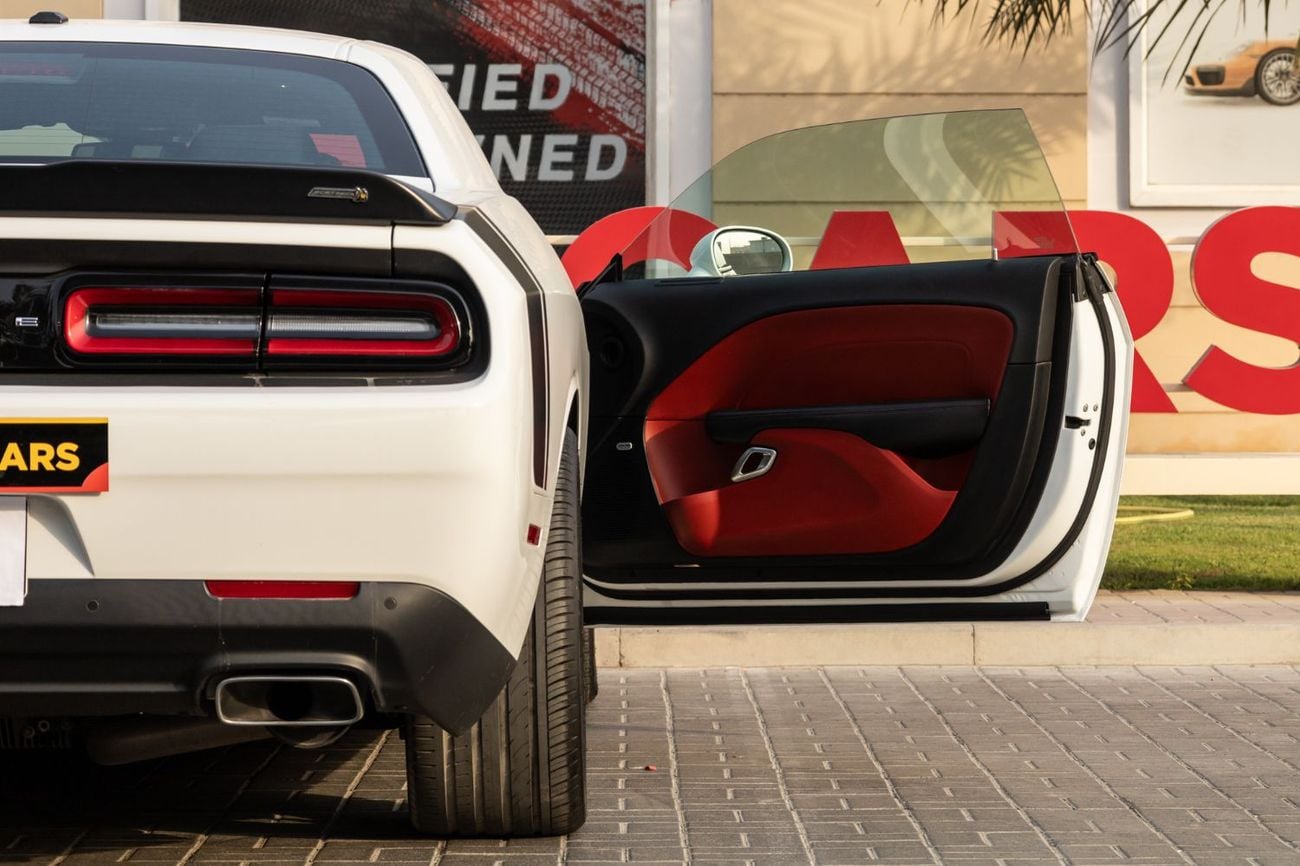
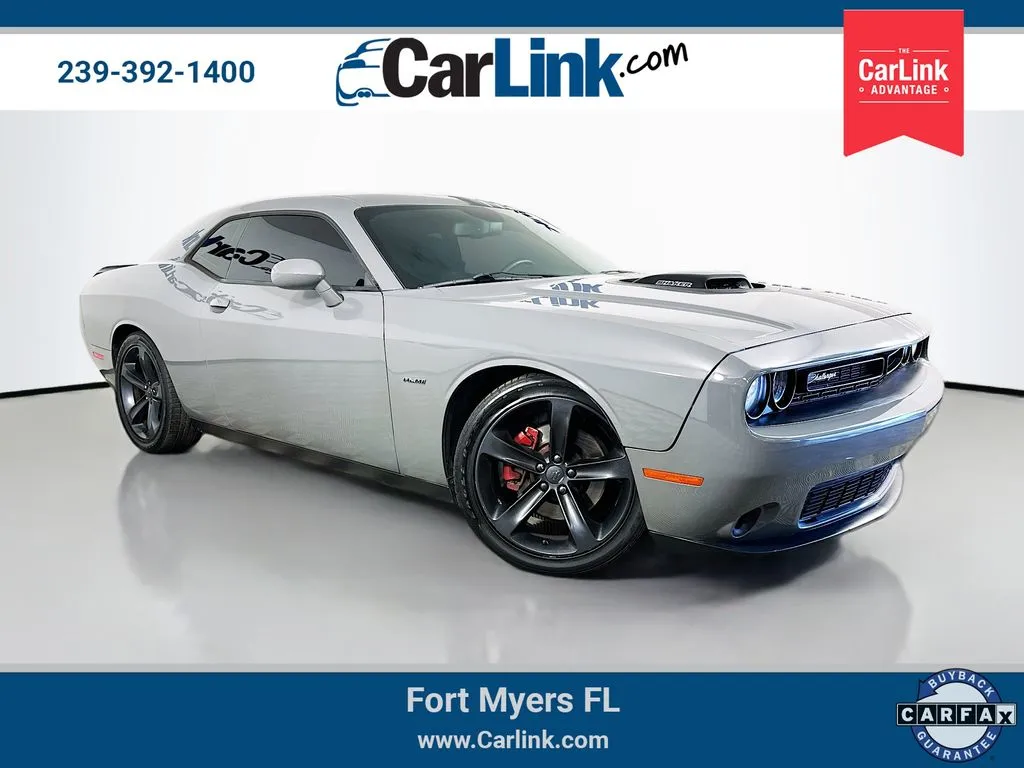
The 2018 Dodge Challenger R/T features a 5.7-liter HEMI V8 engine that produces 375 horsepower when paired with a six-speed manual transmission, and 372 horsepower when equipped with the optional eight-speed automatic transmission. This powertrain delivers 410 lb-ft of torque, serving as a core performance benchmark for Chrysler's modern muscle car lineup within the American automotive market.
Introduction to the 2018 Dodge Challenger R/T Powertrain
Evaluating the 2018 Dodge Challenger R/T horsepower figures requires an understanding of how Dodge structured its performance trim levels for the 2018 model year in the United States. Positioned above the entry-level V6-powered GT and SXT models, the R/T (Road/Track) designation has historically signified the entry point for V8 muscle car performance in the Dodge portfolio.
For the 2018 model year, Dodge retained the tried-and-true 5.7-liter naturally aspirated HEMI V8 engine for the standard R/T trim. However, consumer demand, transmission configurations, and EPA testing protocols created subtle variations in output depending on whether the vehicle rolled off the assembly line in Brampton, Ontario, with a manual clutch pedal or a standard automatic torque converter. For prospective buyers, automotive enthusiasts, and researchers examining American muscle car specifications, understanding these distinct output ratings is essential for proper vehicle identification and performance evaluation.
Detailed Engine Specifications and Output Variations
The beating heart of the 2018 Dodge Challenger R/T is the 5.7-liter (345 cubic inches) small-block HEMI V8 engine. This power plant utilizes a deep-skirt cast-iron block, aluminum cylinder heads with hemispherical combustion chambers, and pushrod-operated overhead valves—a classic layout that honors the heritage of Chrysler's legendary 1960s and 1970s muscle cars while incorporating modern multi-displacement fuel-saving technology.
The horsepower rating changes slightly based on the chosen transmission:
- Six-Speed Manual Transmission (TREMEC TR-6060): Generates 375 horsepower at 5,150 RPM and 410 lb-ft of torque at 4,300 RPM.
- Eight-Speed Automatic Transmission (TorqueFlite 8HP70): Generates 372 horsepower at 5,200 RPM and 400 lb-ft of torque at 4,400 RPM (though torque figures for the automatic are sometimes cited up to 410 lb-ft depending on specific ECU calibrations and secondary accessory loads, official SAE net ratings standardly reflect the slight variance).
The mechanical reason for the horsepower discrepancy between the manual and automatic variants centers on the camshaft profile and tuning calibration. Manual transmission cars received a slightly more aggressive camshaft profile historically referred to by enthusiasts as the "manual trans cam" (or code designation giving it higher lift and duration), which required a manual clutch to manage engagement characteristics off the line. Automatic transmission cars utilized variable valve timing (VVT) and a calibration profile optimized for smooth shift points across eight forward gears, resulting in a minor three-horsepower trade-off.
Transmission Options and Performance Dynamics
Choosing between the manual and automatic gearboxes in the 2018 Challenger R/T significantly alters the driving experience on United States roads. Weighing in at over 4,000 pounds, the Challenger is a heavy grand tourer rather than a lightweight track car, meaning low-end torque delivery and gear spacing are vital to how the vehicle utilizes its 375 horsepower.
The Six-Speed Manual Experience
The TREMEC TR-6060 manual transmission offers a direct, mechanical connection that appeals to traditionalists. Paired exclusively with the 375-hp variant of the 5.7L HEMI, it allows drivers to manage clutch slip and engine RPMs manually during acceleration runs. In real-world driving across American highways and backroads, this setup rewards attentive shifting, though the heavy curb weight means off-the-line traction requires careful throttle modulation to avoid excessive wheel spin.
The Eight-Speed Automatic Experience
The ZF-licensed TorqueFlite 8-speed automatic transmission, operated via a console-mounted T-shifter or steering wheel paddle shifters, completely transforms the drivability of the R/T. Producing 372 horsepower, this configuration delivers quicker, more consistent quarter-mile times than the manual variant due to lightning-fast gear changes and optimized gear ratios that keep the HEMI engine within its optimal power band during wide-open throttle acceleration.
Comparative Overview of 2018 Challenger V8 Trims
To contextualize the 2018 Dodge Challenger R/T horsepower within the broader US market, it must be compared against its immediate stablemates in the 2018 lineup, which ranged from the base V6 up to the supercharged Hellcat variants.
| Trim Level | Engine Displacement | Transmission Options | Horsepower (US Market) | Torque |
|---|---|---|---|---|
| Challenger SXT / GT | 3.6L Pentastar V6 | 8-Speed Automatic | 305 hp @ 6,350 RPM | 268 lb-ft @ 4,800 RPM |
| Challenger R/T | 5.7L HEMI V8 | 6-Speed Manual / 8-Speed Auto | 375 hp (Man) / 372 hp (Auto) | 410 lb-ft / 400 lb-ft |
| Challenger R/T Scat Pack | 6.4L SRT HEMI V8 | 6-Speed Manual / 8-Speed Auto | 485 hp @ 4,200 RPM | 475 lb-ft @ 4,200 RPM |
| Challenger SRT Hellcat | 6.2L Supercharged HEMI V8 | 6-Speed Manual / 8-Speed Auto | 707 hp @ 6,000 RPM | 650 lb-ft @ 4,000 RPM |
As illustrated above, the R/T serves as the approachable gateway to V8 muscle, sitting comfortably between the V6 cruisers and the high-output Scat Pack and Hellcat models.
Real-World Performance and Fuel Economy
On American highways, the 2018 Dodge Challenger R/T offers a balanced blend of cruising comfort and straight-line acceleration. Zero to 60 mph times typically range between 5.1 and 5.3 seconds depending on environmental conditions, elevation, tire condition, and driver reaction times.
A critical mechanical feature contributing to daily usability in the US is the Fuel Saver Technology system, which uses active cylinder deactivation (MDS - Multi-Displacement System). When cruising under light loads on highways—such as long stretches of Interstate across the country—the engine seamlessly deactivates four of the eight cylinders (cylinders 1, 4, 6, and 7), operating temporarily as a V4 to conserve fuel.
According to EPA estimates valid for the 2018 model year:
- Manual Transmission: Approximately 15 mpg city / 23 mpg highway.
- Automatic Transmission: Approximately 16 mpg city / 25 mpg highway.
Real-world fuel economy often matches or slightly exceeds these EPA figures during steady interstate cruising, though aggressive city driving will quickly pull averages down into the low teens.
Common Modifications and Aftermarket Tuning
Given the massive enthusiast culture surrounding American muscle cars in the United States, the 2018 Dodge Challenger R/T is one of the most heavily modified platforms on the market. Owners frequently seek to bridge the horsepower gap between the stock 375 hp and the 485 hp Scat Pack trim through aftermarket upgrades.
Common modifications include:
- Cold Air Intakes: Improves airflow into the throttle body, yielding minor gains in throttle response and a more pronounced HEMI induction sound.
- Cat-Back Exhaust Systems: Replaces restrictive factory mufflers and resonators to unlock a deeper, more aggressive exhaust note while marginally reducing backpressure.
- Custom Engine Calibration (Tuning): Unlocking the factory PCM (Powertrain Control Module) to optimize air-fuel ratios, ignition timing, and transmission shift schedules.
- Supercharger Kits: For owners seeking substantial power increases, bolt-on centrifugal or positive-displacement supercharger kits can push the stock 5.7L engine well past 500–600 horsepower, though this requires careful monitoring of internal engine component limits.
Frequently Asked Questions
What is the exact horsepower of a 2018 Dodge Challenger R/T?
The 2018 Dodge Challenger R/T produces 375 horsepower when equipped with the six-speed manual transmission and 372 horsepower when paired with the eight-speed automatic transmission.
Does the 2018 Challenger R/T have a HEMI engine?
Yes, it features a 5.7-liter naturally aspirated HEMI V8 engine utilizing pushrod architecture and hemispherical combustion chambers.
What is the difference between the 2018 Challenger R/T and the R/T Scat Pack?
The standard R/T features a 5.7L V8 producing 375 horsepower, whereas the R/T Scat Pack steps up to a larger 6.4-liter (392 cubic inches) SRT HEMI V8 that generates 485 horsepower and 475 lb-ft of torque.
Can the 2018 Dodge Challenger R/T run on regular unleaded fuel?
While the engine can technically run on regular 87-octane gasoline thanks to modern knock sensors that retard timing to prevent engine damage, Dodge recommends 89-octane fuel for optimal performance and efficiency in the 5.7L HEMI.
Is the 2018 Dodge Challenger R/T good for daily driving?
Yes, its heavy chassis, comfortable suspension tuning, spacious cabin, and highway-friendly multi-displacement cylinder deactivation make it a popular and comfortable daily driver for automotive enthusiasts in the United States.
Conclusion and Buying Guidance
For drivers searching for a modern American muscle car that balances everyday drivability with authentic V8 power, the 2018 Dodge Challenger R/T represents a highly capable option on the pre-owned market. With 375 horsepower on tap, it delivers classic straight-line performance without the extreme maintenance costs or insurance premiums associated with the higher-tier Hellcat and Demon models. Prospective buyers should carefully verify whether a specific vehicle features the manual or automatic transmission to ensure it matches their personal driving preferences, and inspect the vehicle history for any unrecorded powertrain modifications.