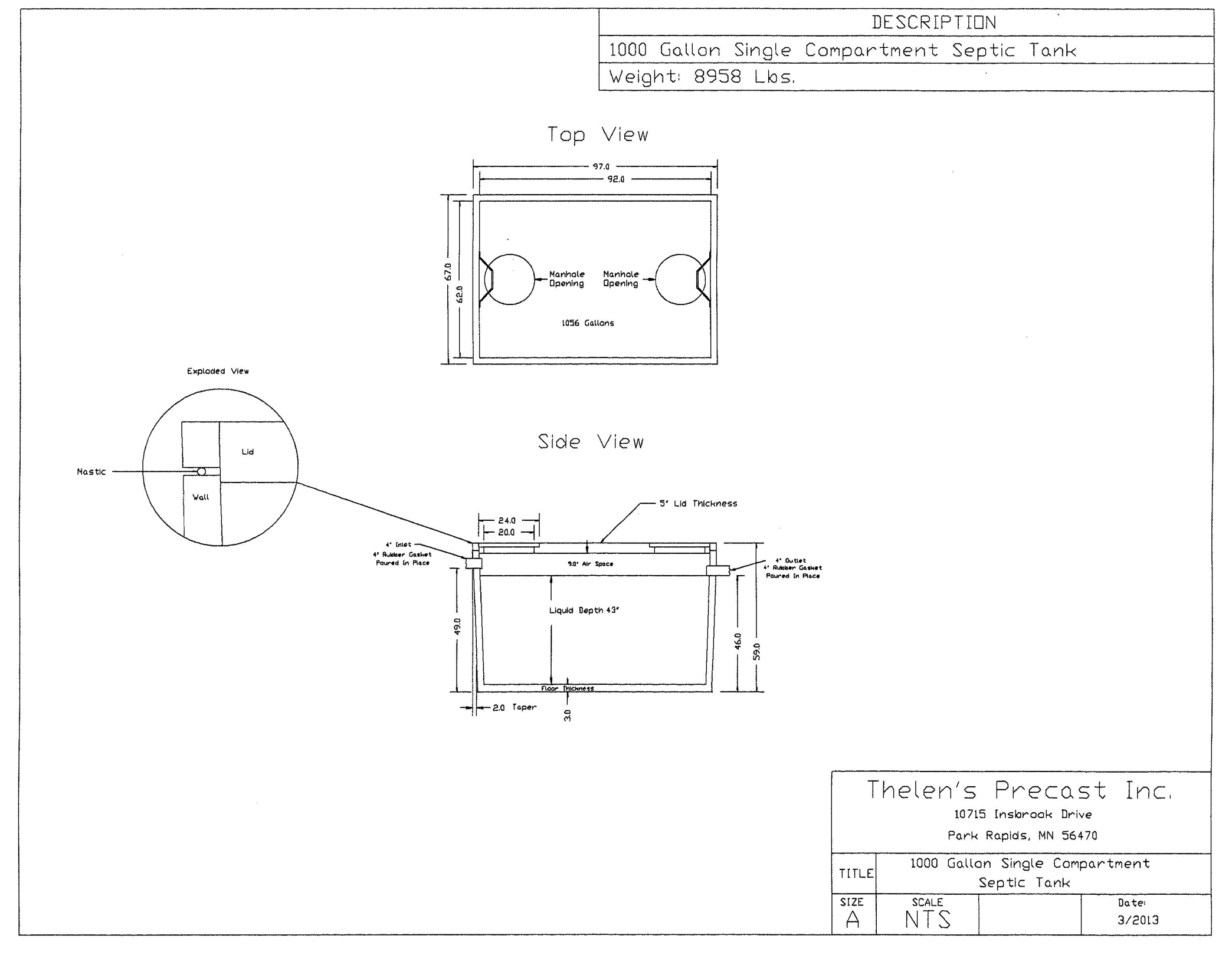
A 1000-gallon storage container typically measures approximately 64 inches in diameter by 120 inches in length for horizontal models, or roughly 86 inches in diameter by 48 inches in height for vertical configurations, though exact dimensions vary significantly based on the manufacturer, material composition, and intended application.
Choosing a 1,000-gallon tank requires balancing physical space limitations, installation complexity, material longevity, and structural trade-offs. Whether the vessel is intended for residential water storage, agricultural fertilizer application, septic management, or commercial fuel retention, understanding the specific dimensions and engineering trade-offs ensures long-term reliability and compliance with local building codes. This guide examines the physical footprints, shape configurations, material alternatives, and critical site-planning considerations for 1,000-gallon tanks.
Understanding the Physical Footprint and Configurations
Before purchasing or placing a 1,000-gallon containment system, buyers must evaluate how shape directly dictates site layout, accessibility, and structural support. A gallon of water weighs approximately 8.34 pounds, meaning a full 1,000-gallon water tank exerts a downward force of over 8,300 pounds—not including the weight of the vessel itself. Heavier liquids, such as certain industrial chemicals or heavy oils, will increase this load substantially.
Tanks of this capacity generally fall into three distinct physical configurations: vertical cylindrical, horizontal cylindrical, and low-profile or underground designs. Each form factor presents unique geometric advantages and constraints that influence placement.
Vertical Cylindrical Tanks
Vertical tanks are the most common choice for above-ground stationary storage. Because they stand upright, they feature a smaller footprint than horizontal models, making them ideal for tight spaces against building exteriors or inside agricultural yards.
- Typical Dimensions: Ranging from 64 to 88 inches in diameter and 64 to 96 inches in height.
- Advantages: Even weight distribution across the base; lower cost per gallon compared to specialized low-profile shapes; easier to clean due to gravity-fed drainage in conical or sloped-bottom variations.
- Disadvantages: High center of gravity when full, requiring rigorous wind-load tie-downs and solid, level concrete pads; harder to access fittings located near the top without a ladder or scaffolding.
Horizontal Cylindrical Tanks
Horizontal tanks, often referred to as leg tanks or transport tanks, are engineered to rest on integrated saddles or cradles. They are frequently utilized in mobile agricultural applications or locations where vertical height clearance is severely restricted.
- Typical Dimensions: Approximately 48 to 64 inches in diameter and 96 to 120 inches in length.
- Advantages: Low center of gravity, which minimizes tipping risks during transport or in high-wind zones; fits beneath low eaves, tree branches, or indoor clearance limits.
- Disadvantages: Requires a continuous, sturdy cradle or matching saddles to prevent structural stress fractures along the hull; occupies a significantly larger ground area than vertical alternatives.
Low-Profile and Underground Configurations
When aesthetics, freezing protection, or strict property setbacks are primary concerns, low-profile or underground tanks are specified. These units are molded with heavy sidewall ribbing to withstand external earth pressures or vehicle load-bearing requirements.
- Typical Dimensions: Wider and shallower, often measuring 90 to 120 inches in length, 48 to 60 inches in width, and 30 to 48 inches in height.
- Advantages: Hidden from view; protected from extreme surface temperature fluctuations and UV degradation.
- Disadvantages: Requires extensive excavation, heavy equipment for placement, specialized backfill materials (such as pea gravel or controlled low-strength material), and buoyant anti-floatation anchoring in high-water-table areas.
Material Options and Structural Trade-offs
The material of a 1,000-gallon tank determines its lifespan, chemical compatibility, weight, and initial investment. Selecting the incorrect material for a specific fluid can result in catastrophic failure, environmental contamination, or premature degradation.
| Material Type | Primary Applications | Common Lifespan | Key Advantages | Major Limitations |
|---|---|---|---|---|
| Cross-Linked Polyethylene (XLPE) | Chemicals, fertilizers, water | 15–25 years | Superior chemical resistance, seamless construction, impact resistant | Difficult to repair if cracked, susceptible to UV degradation if uninhibited |
| Linear Polyethylene (LLDPE) | Potable water, rainwater harvesting | 10–20 years | FDA-compliant for drinking water, lightweight, lower initial cost | Lower stress-crack resistance than XLPE, prone to softening at elevated temperatures |
| Carbon Steel | Fuel, oil, heavy industrial fluids | 20–30+ years | High structural strength, fire-resistant, easily modified with welded fittings | Prone to internal and external corrosion, requires regular coating maintenance |
| Fiberglass (FRP) | Septic, corrosive chemicals, water | 25–30+ years | Rust-proof, lightweight for its strength, excellent chemical versatility | High upfront cost, vulnerable to impact damage during installation |
| Concrete | Septic, underground water, fire suppression | 40–50+ years | Extremely durable, immune to buoyancy issues, high compressive strength | Immensely heavy requiring crane installation, prone to cracking if soil shifts |
Polyethylene Trade-offs
Polyethylene is the industry standard for above-ground water and chemical storage. However, buyers must differentiate between linear low-density polyethylene (LLDPE) and cross-linked polyethylene (XLPE). LLDPE is ideal for potable water because it meets strict health standards, but it has lower structural rigidity than XLPE. Cross-linked polyethylene features interlocking molecular chains that provide superior tensile strength and resistance to environmental stress cracking, making it the preferred choice for aggressive agricultural chemicals. Both types require UV inhibitors; unpigmented or natural translucent polyethylene tanks will allow sunlight penetration, fostering algae growth in water storage applications unless painted or shielded.
Steel and Fiberglass Trade-offs
When storing petroleum products, heating oil, or combustible liquids, steel is frequently mandated by fire codes (such as Underwriters Laboratories UL-142 or UL-2085 standards). Steel tanks offer unmatched impact resistance and security against vandalism. However, they demand vigilant corrosion control, including sacrificial anodes and cathodic protection systems for underground installations, or periodic epoxy recoating for above-ground units. Fiberglass composite tanks eliminate rust concerns entirely and perform exceptionally in acidic environments or underground septic fields, but their brittle nature makes them susceptible to point-load punctures if improper backfill aggregates are used.
Site Preparation, Engineering, and Installation Prerequisites
Installing a 1,000-gallon tank is not a project that should be approached casually. The immense weight of a filled container demands rigorous site preparation to prevent settling, tilting, or structural shearing of inlet and outlet plumbing lines.
Foundation Requirements
Above-ground vertical tanks require a flat, level, and continuous foundation. A reinforced concrete pad that is at least 4 to 6 inches thick is the gold standard. Placing a heavy tank directly onto bare ground, gravel, or timber platforms often leads to uneven settling. As the soil compacts under thousands of pounds of pressure, the tank floor can balloon or stress fracture at the bottom knuckle radius where the sidewall meets the base.
For horizontal tanks, support saddles must match the exact curvature of the tank shell. Uneven pressure points from improper cradling will warp the tank over time, leading to premature seam failure or leakage around bulkhead fittings.
Plumbing, Venting, and Safety Clearances
Proper mechanical integration ensures the longevity of the tank and connected pumps.
- Flexibility: Never connect rigid PVC or metal piping directly to a polyethylene tank bulkhead. Temperature fluctuations cause plastic tanks to expand and contract; rigid connections will snap the fitting. Always incorporate flexible hose connections or swing joints.
- Venting: All closed-top storage tanks require adequately sized vent lines. If a tank fills faster than it vents, internal pressure can rupture the vessel. Conversely, if a pump draws liquid out faster than air can enter, a vacuum collapse can crush the tank inward.
- Setbacks and Regulations: Local municipal codes dictate minimum distance requirements between 1,000-gallon tanks and property lines, septic drain fields, overhead power lines, and residential structures. Fuel and chemical tanks face even stricter environmental containment mandates, often requiring secondary containment berms capable of holding 110% of the tank's total volume.
Common Mistakes to Avoid
Navigating the procurement and installation of a large-capacity storage container involves several recurring pitfalls that can compromise safety and investment value.
- Neglecting Seismic and Wind Loads: In hurricane zones, tornado alleys, or seismic regions, an empty or partially filled vertical polyethylene tank acts like a sail. Failing to secure heavy-duty cable tie-downs to concrete anchor points can result in the tank blowing over, destroying connected infrastructure.
- Ignoring Delivery and Rigging Logistics: A 1,000-gallon tank is exceptionally bulky. Transporting a unit on a standard pickup truck is rarely feasible; delivery usually requires a flatbed trailer or specialized freight carrier. Furthermore, maneuvering the tank from the delivery truck to its final pad often necessitates a crane, forklift, or skid-steer loader.
- Overlooking Fluid Specific Gravity Ratings: Tanks are rated for specific fluid densities (typically 1.0, 1.5, or 1.9 specific gravity). A standard water tank (1.0 SG) has thinner walls than a chemical tank rated for 1.9 SG. Filling a standard water tank with heavy fertilizer or brine will cause the sidewalls to bulge and fail.
- Skimping on Access Openings: Ensure the tank includes a sufficiently sized manway or domed lid (typically 16 to 24 inches in diameter) to allow physical interior inspection, cleaning, and maintenance over the life of the asset.
Frequently Asked Questions
How much space do I need to clear for a 1000-gallon tank?
The physical clearance required depends on the configuration. For a standard vertical tank, plan for a circular pad roughly 8 feet in diameter to allow comfortable working space around the perimeter. For horizontal tanks, account for a footprint roughly 4 feet wide by 10 to 12 feet long, plus additional clearance for piping valves and access maintenance.
Can a 1000-gallon plastic tank be buried underground?
No, standard above-ground polyethylene tanks cannot be buried. Underground burial requires specifically engineered structural tanks designed with ribbed geometry to withstand lateral soil pressures. Burying an above-ground tank will result in immediate structural collapse once earth is backfilled over the top.
What is the average lifespan of a polyethylene storage tank?
High-quality polyethylene tanks treated with UV stabilizers typically last between 15 and 25 years in outdoor environments. Lifespan is heavily influenced by direct sunlight exposure, chemical aggressiveness of stored fluids, and whether the tank is subjected to extreme temperature cycling.
Do I need a permit to install a 1000-gallon tank?
Permit requirements vary significantly by jurisdiction and intended use. Potable rainwater harvesting systems often have minimal restrictions, while fuel oil, propane, or commercial chemical containment systems almost universally require local building, environmental, or fire department permits. Always verify local codes before breaking ground.
How do I prevent algae growth in an outdoor water storage tank?
Algae requires sunlight and moisture to grow. To prevent it, select a tank manufactured from opaque resin or one that features a dark exterior layer (such as forest green or black). If using a translucent natural-colored tank, you must paint the exterior with a UV-blocking block coat or construct a dedicated shade structure over the vessel.
Conclusion and Next Actions
Selecting the right 1,000-gallon tank requires a methodical evaluation of space availability, shape configuration, material compatibility, and foundation engineering. Begin your process by mapping your exact site dimensions, confirming local setback and permitting regulations with your municipality, and matching the tank's specific gravity rating to the exact density of the fluid you intend to store. Consult with certified tank distributors and professional installers to coordinate safe delivery logistics and ensure a level, reinforced foundation that will safely support your investment for decades.