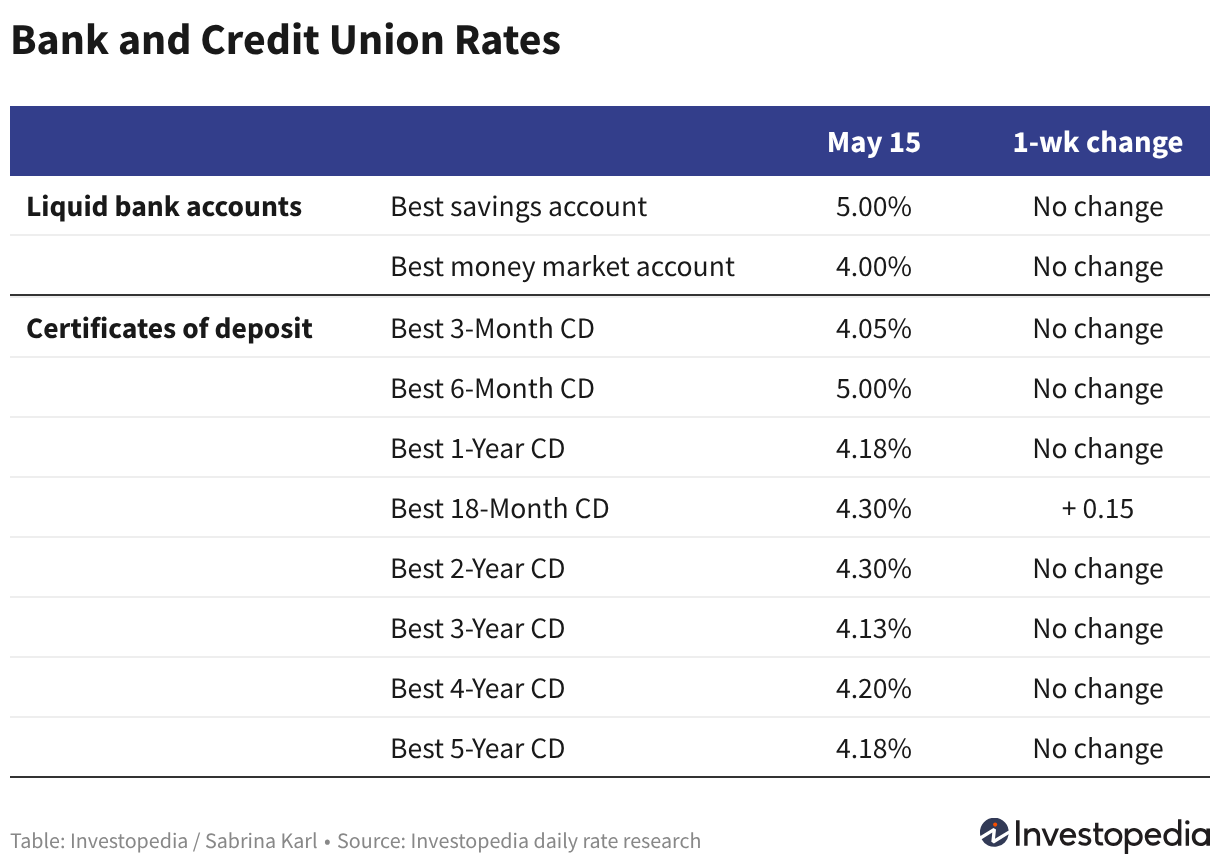
Fidelity Investments provides access to brokered certificates of deposit (CDs) issued by various banks across the United States, allowing investors to manage fixed-income assets directly within their brokerage accounts. For savvy investors seeking yield, stability, and FDIC insurance protection, utilizing a brokerage platform to buy brokered CDs offers distinct structural advantages over traditional bank-administered deposits, including a vast secondary market and the ability to hold multiple institutional offerings under a single login.
When evaluating fixed-income instruments in a portfolio, understanding how brokered certificates of deposit function within a modern brokerage environment is essential. This guide examines how Fidelity sources its fixed-income inventory, compares brokered options against traditional bank products, outlines the nuances of secondary market liquidity, and provides a structured approach for investors looking to optimize cash allocations.
The Mechanics of Brokered CDs Through Fidelity
To understand how CD yields operate on a brokerage platform, it is necessary to distinguish between traditional bank CDs and brokered CDs. When you open a standard retail CD directly with a commercial bank or credit union, your contract is strictly between you and that specific institution. Typically, withdrawing funds prior to maturity triggers an early withdrawal penalty enforced directly by the bank, which can eat into accumulated interest or principal.
Conversely, a brokered CD is purchased through a financial intermediary like Fidelity Investments, which acts as a dealer sourcing inventory from a network of issuing banks.
- Primary Market Purchases: When you buy a new-issue brokered CD through Fidelity, the issuing bank pays a coupon rate, and the security is held in your brokerage account.
- Secondary Market Dynamics: If you need to liquidate a brokered CD before its maturity date, you do not face a traditional bank penalty. Instead, you sell the CD on the secondary market through Fidelity's trading desk at the prevailing market price, which may be higher or lower than your purchase price depending on prevailing interest rate movements.
For savvy investors, this structural difference transforms a traditionally illiquid savings vehicle into a tradable fixed-income asset. However, it also introduces market risk if you are forced to sell before maturity in a rising interest rate environment.
Key Advantages of Utilizing Fidelity for Fixed-Income Allocations
Savvy investors frequently use brokerage platforms for fixed-income management to reduce administrative friction and optimize yield across multiple issuing institutions. Fidelity offers several structural benefits for managing CD ladders and cash positions:
FDIC Insurance and Institutional Diversification
Federal Deposit Insurance Corporation (FDIC) coverage protects depositors against the failure of an insured institution. Standard FDIC insurance limits apply per depositor, per insured bank, up to $250,000.
Because Fidelity sources brokered CDs from dozens of distinct issuing banks, an investor can purchase multiple CDs from different institutions within a single Fidelity account. This enables investors to aggregate large sums of cash—well beyond the $250,000 single-institution limit—while maintaining full FDIC pass-through insurance across separate underlying issuing banks.
Consolidated Portfolio Management
Managing cash across five different regional banks requires tracking separate login credentials, statements, and tax documents (such as Form 1099-INT). By consolidating brokered CDs inside a Fidelity brokerage, retirement, or cash management account, all fixed-income assets appear on a single consolidated statement alongside equities, exchange-traded funds (ETFs), and mutual funds.
Access to Competitive Yields
Because issuing banks compete for institutional funding through brokerage networks, brokered CD yields frequently match or exceed the rates offered by traditional brick-and-mortar retail banks. Fidelity’s fixed-income screener allows investors to sort available inventory by yield, maturity date, call provisions, and issuing institution in real time.
Comparing Brokered CDs and Traditional Retail Banking Options
Before allocating capital, investors should weigh the operational differences between holding a CD at Fidelity versus a direct bank relationship.
| Feature | Fidelity Brokered CDs | Traditional Bank CDs |
|---|---|---|
| Account Access | Single brokerage dashboard | Separate bank login per institution |
| Liquidity Mechanism | Sold on the secondary market | Early withdrawal penalty via bank |
| FDIC Coverage | Pass-through across multiple issuing banks | Limited to single bank limits ($250k) |
| Pricing Structure | Market-driven secondary valuations | Fixed early withdrawal penalty schedules |
| Interest Payouts | Credited directly to brokerage core position | Deposited to bank savings or checking |
As illustrated above, while traditional bank CDs offer predictable, penalty-based early exits, brokered CDs provide the flexibility of secondary market execution combined with streamlined multi-institution deposit aggregation.
Evaluating Risks: Call Provisions, Market Value, and Reinvestment Risk
While certificates of deposit are generally regarded as conservative investments due to their principal protection at maturity, brokered instruments carry distinct risks that experienced investors must monitor:
Callable CDs
Some brokered CDs are issued with a "call feature." This grants the issuing bank the right—but not the obligation—to redeem (call) the CD prior to its stated maturity date, usually after a specified lockout period. Banks typically exercise this option if market interest rates drop significantly, allowing them to refinance their debt at a lower cost. If your high-yielding CD is called, you face reinvestment risk, forcing you to redeploy your principal into a lower-rate environment.
Secondary Market Interest Rate Risk
If you hold a brokered CD to maturity, you will receive your full principal back along with all promised interest, provided the issuing institution does not fail (subject to FDIC limits). However, if you attempt to sell the CD on the secondary market prior to maturity, its market value will fluctuate inverse to prevailing interest rates. If market rates rise after your purchase, your CD will trade at a discount; if rates fall, it will trade at a premium.
Brokered CD Lifecycle and Settlement
Purchasing and settling fixed-income products requires adherence to standard settlement cycles (typically T+1). Investors must ensure uninvested cash is settled and available in their core position before placing orders through the Fidelity fixed-income trading platform.
Strategic Implementation: Building a CD Ladder with Fidelity
To mitigate interest rate risk and maintain predictable liquidity intervals, savvy investors often construct a CD ladder using Fidelity's platform. A CD ladder involves splitting cash across multiple CDs with staggered maturity dates—such as 3-month, 6-month, 9-month, 12-month, 18-month, and 24-month terms.
- Assess Cash Horizon: Determine what portion of your portfolio requires absolute capital preservation versus long-term growth.
- Utilize the Fidelity Fixed-Income Screener: Navigate to the fixed-income section of the Fidelity platform, filter by "Certificates of Deposit," and review current yields across the yield curve.
- Diversify Issuers: Ensure that large allocations are distributed across multiple issuing banks to maximize FDIC insurance boundaries.
- Monitor Call Protection: Pay close attention to whether a desired maturity is non-callable to secure the yield for the entire duration.
- Establish Automatic Reinvestment or Cash Sweeps: Configure whether maturing principal and interest payments automatically sweep into your core money market fund or are targeted for subsequent ladder rungs.
By following a structured laddering strategy, investors ensure a regular cadence of maturing capital, providing liquidity without the need to sell assets at a loss on the secondary market.
Frequently Asked Questions
Are Fidelity brokered CDs covered by FDIC insurance?
Yes. Brokered CDs purchased through Fidelity are obligations of the issuing bank, not Fidelity Investments itself. Consequently, they qualify for FDIC pass-through insurance up to the standard statutory limits ($250,000 per depositor, per insured bank), provided the issuing bank is an FDIC member.
What happens if I need to sell my Fidelity brokered CD before maturity?
Unlike traditional bank CDs that charge an early withdrawal penalty, Fidelity brokered CDs can be sold on the secondary market before maturity. Selling prior to maturity exposes you to prevailing market prices, meaning you may receive more or less than your original principal depending on whether interest rates have risen or fallen since purchase.
Do Fidelity brokered CDs pay interest monthly or at maturity?
Interest payment frequency varies by specific issue. Some brokered CDs pay interest monthly, semi-annually, or entirely at maturity. The exact payment schedule is explicitly stated in the product description and disclosure document before you execute the trade on the Fidelity platform.
Are there transaction fees for buying CDs on Fidelity?
Fidelity typically does not charge direct commissions or online trading fees for purchasing new-issue brokered CDs in primary offerings, as the issuing bank compensates the broker. However, secondary market transactions may involve bid-ask spreads or markups/markdowns embedded in the execution price.
Can I hold Fidelity brokered CDs inside an IRA?
Yes. Brokered CDs can be held in tax-advantaged accounts such as Traditional IRAs, Roth IRAs, and rollover accounts, allowing you to shelter fixed-income interest earnings from immediate taxation depending on the account type.
Conclusion and Next Actions
Utilizing Fidelity for brokered certificates of deposit provides savvy investors with a centralized, scalable method for capturing competitive fixed-income yields while maintaining strict FDIC insurance compliance. By understanding the nuances of secondary market pricing, call provisions, and multi-institution diversification, investors can build resilient cash management strategies tailored to shifting macroeconomic conditions. To begin, log into your Fidelity account, navigate to the fixed-income research center, review current primary market inventory, and align your CD durations with your overall liquidity timeline.