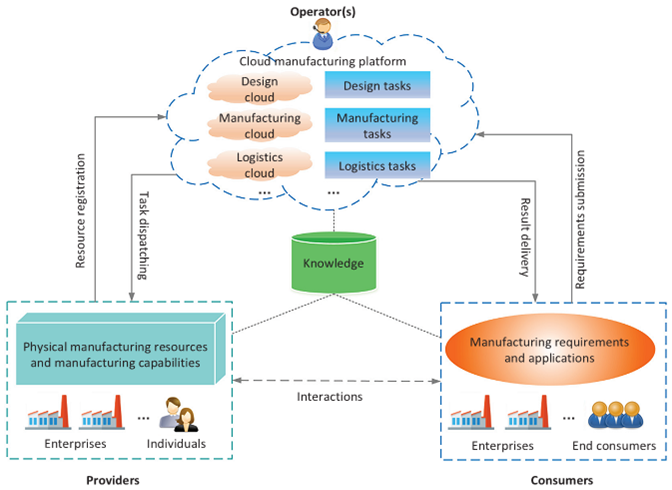
A to Z manufacturing in the cloud represents the complete digital unification of industrial manufacturing processes—from product inception and engineering design to factory execution, supply chain management, and post-sale servicing—hosted on scalable cloud computing platforms. By moving from legacy, siloed software to integrated cloud architectures, manufacturers achieve real-time operational visibility, flexible scaling, and data-driven decision-making across global networks.
Defining End-to-End (A to Z) Cloud Manufacturing
Traditionally, industrial manufacturing relied on fragmented systems across different levels of the plant hierarchy. Under the classical ISA-95 model, systems were divided into distinct layers: field devices at the bottom, Programmable Logic Controllers (PLCs) and Supervisory Control and Data Acquisition (SCADA) systems in the middle, Manufacturing Execution Systems (MES) above them, and Enterprise Resource Planning (ERP) software at the top.
"A to Z manufacturing in the cloud" collapses these operational silos into a unified digital thread. The phrase "A to Z" highlights the comprehensive scope of the technology:
- A (Inception & Design): Computer-Aided Design (CAD), Computer-Aided Engineering (CAE), and Product Lifecycle Management (PLM) running on cloud infrastructure.
- M (Midstream Execution): Industrial Internet of Things (IIoT) edge connectivity, cloud-hosted MES, quality management (QMS), and real-time machine telemetry analytics.
- Z (Delivery & Lifecycle): Enterprise Resource Planning (ERP), Cloud Supply Chain Management (SCM), digital twins, field service operations, and end-of-life recycling tracking.
Rather than maintaining separate servers, databases, and custom middleware across each facility, cloud manufacturing consolidates data into centralized cloud storage and analytics engines hosted on cloud service providers such as Amazon Web Services (AWS), Microsoft Azure, or Google Cloud Platform (GCP). This connectivity enables data generated by a sensor on a CNC machine to instantly update maintenance forecasts, trigger inventory reorders, update job scheduling in the MES, and reflect updated production costs within the enterprise ERP system.
End-to-End Cloud Manufacturing Thread (Continuous Real-Time Data Loop):
- CAD / CAE / PLM: Product Design
- Cloud ERP & SCM: Resource Planning
- Cloud MES & Edge IIoT: Shop Floor Execution
- Field Service & Twin: Post-Sale Operations
- Cloud QMS & Analytics: Predictive Quality
- Customer Feedback: Quality Improvements
Core Pillars of the Cloud Manufacturing Architecture
Building an end-to-end cloud manufacturing environment requires integrating several core software disciplines. Each component handles a specific stage of the production lifecycle while maintaining continuous interoperability through application programming interfaces (APIs) and unified data models.
1. Cloud-Native Product Lifecycle Management (PLM) and CAD
Modern engineering requires distributed teams to collaborate on 3D models, bills of materials (BOMs), and engineering change orders (ECOs) without technical latency or version control conflicts.
Cloud-native PLM platforms (such as PTC Arena, Siemens Xcelerator, and Dassault Systèmes 3DEXPERIENCE Cloud) store central CAD design data in high-performance cloud repositories. Engineers can perform finite element analysis (FEA) and computational fluid dynamics (CFD) simulations in parallel by using cloud compute bursts, eliminating the need for expensive local workstation upgrades. Changes made to a design automatically propagate down to production planning software, ensuring shop floor operators never work from outdated drawings.
2. Cloud Manufacturing Execution Systems (MES)
The MES controls real-time shop floor operations, tracking the transformation of raw materials into finished goods. Cloud-hosted MES solutions replace static on-premises servers with flexible web microservices.
Key features of cloud MES solutions include:
- Dynamic Work Instructions: Interactive step-by-step assembly guides served directly to tablet displays or augmented reality (AR) headsets.
- Operator Dispatching and Scheduling: Real-time job assignment adjustments driven by equipment availability, priority changes, or component shortages.
- Genealogy and Traceability: Automated logging of serial numbers, lot numbers, tool calibrations, and operator badges for full quality audit trails.
3. Industrial Internet of Things (IIoT) and Edge Computing
Physical manufacturing requires low latency for safety protocols and high-frequency control loops. Pure cloud solutions cannot process sub-millisecond control logic over standard internet connections. Therefore, cloud manufacturing relies on a hybrid architecture combining edge computing with central cloud analytics.
Industrial edge gateways run near the physical equipment, communicating via native industrial protocols such as OPC UA, Modbus TCP, PROFINET, or MTConnect. The edge device filters, aggregates, and encrypts raw sensor readings before broadcasting the structured data to the cloud using lightweight messaging protocols like MQTT (Message Queuing Telemetry Transport) or MQTT Sparkplug B. This approach minimizes bandwidth consumption while preserving critical telemetry for cloud-based predictive maintenance models.
4. Cloud Enterprise Resource Planning (ERP) and Supply Chain Planning
Cloud ERP solutions (such as SAP S/4HANA Cloud, NetSuite, or Microsoft Dynamics 365) act as the commercial backbone of the enterprise. When integrated with cloud MES and PLM systems, cloud ERP provides real-time tracking of:
- Material requirements planning (MRP) tied to live plant consumption rates.
- Financial accounting and continuous job-costing calculations.
- Supplier networks and automated purchase order execution based on raw material threshold alerts.
On-Premises vs. End-to-End Cloud Manufacturing
Migrating from traditional infrastructure to a cloud manufacturing ecosystem requires evaluating structural differences in costs, maintenance, data availability, and performance.
| Operational Metric | Legacy On-Premises Manufacturing | End-to-End Cloud Manufacturing |
|---|---|---|
| Capital Expenditures (CapEx) | High upfront costs for dedicated servers, storage area networks (SANs), and software licenses. | Low upfront infrastructure costs; subscription-based operational expenses (OpEx). |
| System Deployment Speed | Months to years per facility due to hardware procurement and manual software configuration. | Days to weeks per site via standardized cloud templates and cloud-edge gateway deployments. |
| Data Accessibility & Visibility | Siloed within individual plants; manual extraction required for corporate reporting. | Centralized real-time visibility across all worldwide manufacturing locations. |
| System Scalability | Scalability is constrained by physical hardware limits; upgrades require downtime and capital budget approval. | Infinite horizontal and vertical cloud scaling; instant resource provisioning based on demand. |
| Software Maintenance & Patching | Manual updates executed by onsite IT teams, often resulting in delayed software updates. | Automated continuous deployment (CI/CD) of software features and security patches managed by software vendor. |
| Disaster Recovery & Redundancy | Costly multi-site hardware mirroring; high risk of localized data loss during catastrophic outages. | Automated multi-region back-ups, continuous failover options, and high availability service level agreements (SLAs). |
| Latency Management | Millisecond response times for local controllers, but disconnected from enterprise systems. | Hybrid edge-cloud setup: edge handles microsecond physical control; cloud handles global optimization. |
Technical Data Flow and Edge-to-Cloud Integration
To achieve a seamless flow of data across the plant floor and cloud services, manufacturers implement standardization standards and event-driven software architectures.
Edge-to-Cloud Data Flow Architecture:
Physical Layer: CNC Machine, Robotic Arm, Temperature Sensor
- Protocol: OPC UA / Modbus / MTConnect
Edge Layer: Industrial Edge Gateway
- Local Logic & Filtering
- Data Translation to JSON
- Protocol: MQTT over TLS 1.3 / AMQP
Cloud Layer: Cloud IoT Ingestion Hub
- Hot Storage / Real-Time: Live Dashboarding, MES Exception Alerts
- Cold Storage / Lake: Long-Term Analytics, AI Machine Learning
Data Generation: Industrial equipment generates continuous operational data (spindle speed, vibration metrics, temperature, cycle execution time).
Edge Ingestion: An on-premises edge gateway ingests unstructured protocols (Modbus, Profibus) and normalizes them into structured formats (such as JSON payloads over OPC UA).
Secure Transmission: Data is transmitted over outbound-only Port 8883 (MQTT secure) using Transport Layer Security (TLS 1.3) encryption to a Cloud IoT Hub (such as AWS IoT Core or Azure IoT Hub).
Routing and Stream Processing: The cloud broker streams high-priority alerts (such as machine fault codes) directly to the Cloud MES for immediate dispatching, while routing bulk continuous data to a cloud data lake for machine learning analysis.
Analytics and Closed-Loop Feedback: Machine learning models identify subtle patterns indicating tool wear. The cloud system issues an automated work order ticket to the MES and triggers a purchase order in the ERP for a replacement tool bit before failure occurs.
Cybersecurity, Regulatory Compliance, and Governance
A primary concern for industrial organizations transitioning to cloud manufacturing is protecting intellectual property (IP) and fulfilling strict regulatory compliance mandates. Migrating industrial control data out of physically isolated plants requires robust defense-in-depth security strategies.
Security Frameworks and Best Practices
- Zero Trust Architecture (ZTA): No device, user, or application on the factory network or remote location is trusted by default. Every transaction must be authenticated, authorized, and encrypted before accessing cloud manufacturing resources.
- Outbound-Only Edge Connectivity: Industrial edge devices operate using outbound connection topologies. By establishing connections to cloud brokers over outbound ports, plant networks maintain inbound firewall blocks, minimizing exposure to external cyber threats.
- Data Encryption Standards: Information must be secured in transit using TLS 1.3 and at rest using AES-256 bit encryption, with cryptographic key management performed in dedicated Hardware Security Modules (HSMs).
Regulatory Compliance Mandates
Depending on the sector, cloud manufacturing deployments must strictly comply with industry standards:
- Aerospace & Defense: Platforms must adhere to International Traffic in Arms Regulations (ITAR) and the Defense Federal Acquisition Regulation Supplement (DFARS). Cloud vendors hosting defense workflows must provide dedicated sovereign infrastructure, such as AWS GovCloud or Azure Government, compliant with the Cybersecurity Maturity Model Certification (CMMC) and NIST SP 800-171.
- Pharmaceuticals & Life Sciences: Cloud software managing medical device or drug production must fulfill 21 CFR Part 11 requirements established by the U.S. Food and Drug Administration (FDA), mandating secure audit trails, digital signatures, and validated system states.
- General Data Governance: Industrial facilities operating globally must ensure that operational and personnel tracking metrics comply with local data sovereignty laws, including the European Union's General Data Protection Regulation (GDPR).
Step-by-Step Implementation Roadmap
Transitioning an enterprise to an A to Z cloud manufacturing architecture requires a phased implementation to prevent operational disruptions.
5-Stage Cloud Migration Roadmap:
- Stage 1: Assessment & Strategy: Define APIs, Security, and Business KPIs
- Stage 2: Connectivity & Edge: Install Edge Gateways & OPC UA Protocol Hubs
- Stage 3: Core Module Migration: Deploy Cloud PLM, MES, and ERP Interfaces
- Stage 4: Integration & Testing: Validate Multi-Plant Data & Micro-Services
- Stage 5: Scaling & Optimization: Deploy Predictive AI & Digital Twin Workflows
Stage 1: Operational Assessment and Data Architecture Mapping
Before selecting cloud software, evaluate the technical maturity of the physical plant floor. Audit legacy machinery to determine connection requirements, identify network bandwidth constraints, and document critical business metrics (e.g., Overall Equipment Effectiveness, scrap rate, lead times). Establish clear data standards and taxonomy definitions across all manufacturing plants.
Stage 2: Edge Infrastructure and Sensor Retrofitting
Install industrial edge gateways and sensor retrofits on legacy machinery lacking native network capabilities. Modernize plant networks by establishing segmented Virtual Local Area Networks (VLANs) to isolate machine traffic from general corporate office traffic. Establish secure, redundant internet connectivity between the physical facilities and cloud providers.
Stage 3: Core Cloud System Deployment
Implement software modules systematically rather than attempting a simultaneous enterprise-wide shift:
- Deploy Cloud PLM: Standardize engineering data structures, centralize part libraries, and streamline design processes.
- Implement Cloud MES: Deploy cloud-based shop-floor interfaces in a single pilot facility to manage work orders, operator tracking, and material execution.
- Connect Cloud ERP: Establish automated data exchange pipelines between the MES and financial systems to automate inventory and cost accounting.
Stage 4: Enterprise Integration and Testing
Validate end-to-end data pipelines across multiple manufacturing plants. Conduct rigorous load testing to ensure the hybrid network handles high data throughput during peak production periods without network latency or data packet loss.
Stage 5: Advanced Optimization and Machine Learning
With historical operational data accumulating within the cloud data lake, implement advanced capabilities such as predictive quality scoring, automated scheduling algorithms, and computer-vision-based quality inspection at the edge.
Financial Considerations and ROI Drivers
Adopting an A to Z cloud manufacturing platform shifts financial structures from heavy upfront capital investments to predictable, recurring operational expenditures.
Direct Cost Drivers
- Software Subscriptions (SaaS): Recurring licensing fees calculated based on active user licenses, connected machine nodes, or processed transactional volume.
- Cloud Infrastructure Usage: Variable expenses tied to computational processing power, data ingress/egress, serverless execution runs, and storage capacity.
- Edge Hardware and Retrofitting: One-time purchases of industrial edge gateways, sensors, network cabling, and smart operator displays.
- Systems Integration Services: Professional service costs paid to internal engineers or third-party integrators for middleware customization and legacy data migration.
Return on Investment (ROI) Metrics
Organizations typically validate cloud manufacturing investments through continuous improvements in operational performance:
- Reduction in Unplanned Downtime: Real-time machine monitoring and predictive maintenance algorithms reduce equipment failure rates by identifying operating anomalies before catastrophic breakdowns occur.
- Increased Overall Equipment Effectiveness (OEE): Automated dispatching, dynamic job re-routing, and instant work-instruction updates eliminate micro-stoppages and optimize tool utilization across the plant.
- Lower Inventory Holding Costs: Direct synchronization between real-time shop floor raw material consumption (MES) and global purchasing (ERP) reduces the need for safety stock inventories.
- Accelerated Time-to-Market: Real-time engineering design changes (PLM) seamlessly flow down to shop floor production systems (MES), reducing change-order execution times from weeks to hours.
Frequently Asked Questions
What happens to cloud manufacturing operations if the local factory loses internet access?
Cloud manufacturing implementations use hybrid edge architectures to maintain operational resilience. Edge gateways located within physical plants store local control configurations, production queues, and work instructions. If internet connectivity drops, the edge gateway buffers machine telemetry data locally while continuing to run shop-floor interfaces. Once connectivity is restored, the edge gateway automatically resynchronizes its data buffer with the central cloud.
Can legacy equipment without network interfaces be integrated into cloud manufacturing systems?
Yes. Legacy machinery can be integrated using external IIoT retrofit kits. Engineers install external current transformers, vibration sensors, photo-eye optical sensors, or auxiliary digital input/output modules connected directly to an industrial edge gateway. This approach enables legacy equipment to report operational statuses, cycle counts, and machine state updates to the cloud without requiring retrofits to internal machine controllers.
Is cloud manufacturing safe for companies with strict defense contracts (e.g., ITAR)?
Yes, provided the cloud deployment utilizes specialized government-dedicated cloud regions that meet strict federal security standards. Major cloud infrastructure providers maintain isolated cloud regions designed specifically to comply with ITAR, EAR, CMMC Level 2/3, and NIST SP 800-171 guidelines. Access to these environments is strictly restricted to verified U.S. citizens, preserving statutory compliance for sensitive defense manufacturing.
How does cloud manufacturing address data latency for high-speed machine control?
Cloud manufacturing does not place closed-loop real-time control (such as microsecond motion control or emergency stop loops) in the cloud. Physical control logic remains locally executed on Programmable Logic Controllers (PLCs) or edge controllers on the plant floor. The cloud serves high-level analytical, planning, optimization, and reporting roles where latency in the range of hundreds of milliseconds to seconds is acceptable.
What is the typical timeframe required to implement cloud manufacturing systems?
Implementation timelines depend on factory complexity, legacy systems, and deployment scope. A single-plant pilot focusing on IIoT machine monitoring and basic cloud MES workflows can achieve initial operational status in 8 to 12 weeks. Enterprise-wide deployments spanning multiple international facilities and integrating full PLM, MES, and ERP systems typically follow phased roadmaps lasting 12 to 24 months.
Strategic Recommendations for Industrial Leaders
Transitioning to an A to Z cloud manufacturing strategy requires balancing long-term digital transformation goals with immediate operational stability. Technical executives and manufacturing leaders planning a transition should focus on clear initial objectives:
- Standardize Data Schemas First: Avoid uploading unstructured, inconsistent factory data to the cloud. Establish enterprise-wide naming conventions, metric definitions, and asset structures across all plant locations before deploying cloud pipelines.
- Prioritize Modular Microservices: Select cloud software solutions that feature open REST APIs, GraphQL endpoints, and support standard protocols like OPC UA and MQTT. Avoid vendor lock-in by favoring modular microservices architectures over monolithic legacy software platforms.
- Invest in Change Management and Skills Development: System integration efforts succeed only when shop floor personnel adapt to digital workflows. Involve operators, line leads, and plant engineers early during prototype design to build user-friendly interfaces and accelerate system adoption.
- Adopt a Hybrid Edge-First Deployment Plan: Deploy reliable edge infrastructure inside each facility to ensure production resilience against network interruptions. Use local edge compute resources for microsecond processing while delegating continuous optimization, cross-facility scheduling, and deep analytics to the cloud.