You are generally not taxed on the money you put into a whole life insurance policy because premiums are paid with after-tax dollars, creating a "cost basis." Furthermore, the cash value grows tax-deferred, and you can typically access your total contributions tax-free through withdrawals or policy loans.
Whole life insurance is often marketed as a versatile financial tool, combining permanent death benefit protection with a cash value component that acts as a living benefit. However, the complexity of the tax code surrounding these policies frequently leads to confusion. As of 2026, the tax advantages of whole life insurance remain a cornerstone of estate planning and wealth preservation strategies. To maximize these benefits, it is essential to understand the distinction between your "cost basis," tax-deferred growth, and the potential pitfalls of overfunding a policy.
The Foundation: Why Premiums Are Paid with After-Tax Dollars
The money you use to pay your whole life insurance premiums is almost always "after-tax" income. This means you have already paid federal and state income taxes on those earnings before they are sent to the insurance carrier. Because of this, the Internal Revenue Service (IRS) does not tax you a second time on the principal amount you contribute to the policy.
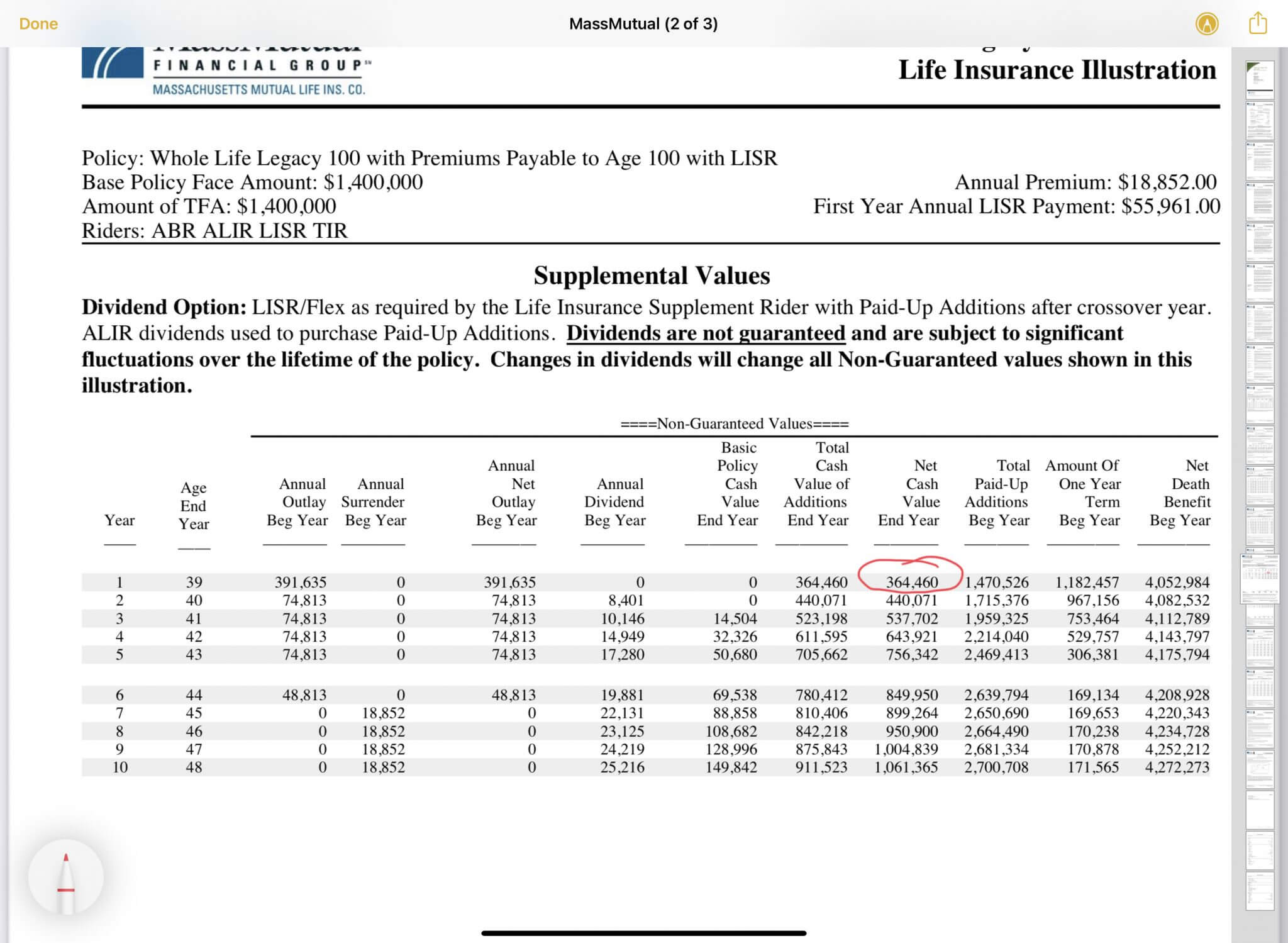
In technical terms, the sum of all premiums you pay—minus any dividends received in cash or used to reduce premiums—constitutes your cost basis. This basis is a critical figure because it represents the threshold below which you can generally withdraw funds without triggering an income tax liability. Unlike contributions to a traditional 401(k) or a Traditional IRA, premiums for personal life insurance are not tax-deductible. While this may seem like a disadvantage initially, it sets the stage for the tax-free recovery of your principal later in life.
The Corporate Exception
There are specific, narrow circumstances where premiums might be handled differently, such as in certain business-owned life insurance (BOLI) arrangements or executive bonus plans (Section 162 plans). However, even in these cases, the tax burden usually falls on the employee as imputed income, or the employer loses the deduction. For the vast majority of individual policyholders in 2026, the rule remains firm: premiums are not deductible, and they form your tax-free cost basis.
Tax-Deferred Growth: The Engine of Whole Life Insurance
One of the most significant advantages of whole life insurance is that the cash value within the policy grows on a tax-deferred basis. Under Internal Revenue Code Section 7702, the interest and dividends credited to your policy’s cash value are not recognized as taxable income as they accumulate.
This creates a powerful compounding effect. In a standard brokerage account, you might be required to pay capital gains taxes or taxes on interest earned every year. These annual tax "drags" reduce the total amount of capital available to reinvest. Inside a whole life policy, every dollar of growth remains in the policy to generate further growth. This tax deferral lasts as long as the policy remains in force. If you hold the policy until death, the accumulated growth is eventually paid out as part of the death benefit, which is generally income-tax-free to beneficiaries under IRC Section 101(a)(1).
Accessing Your Money: The FIFO Rule
When you decide to take money out of your whole life insurance policy, the IRS applies the First-In, First-Out (FIFO) accounting method. This is a highly favorable tax treatment that distinguishes whole life insurance from many other financial products.
Under FIFO, the first dollars you withdraw from your policy are considered to be a return of your premiums (your cost basis). Since you already paid taxes on that money before putting it in, the withdrawal is tax-free. You only begin to owe income taxes if your total withdrawals exceed the total amount of premiums you have paid into the policy.
Example of FIFO in Action
Imagine you have paid $100,000 in premiums over 15 years, and your total cash value has grown to $150,000.
- If you withdraw $50,000, that entire amount is tax-free because it is less than your $100,000 basis.
- If you withdraw $110,000, the first $100,000 is tax-free, but the remaining $10,000 is taxed as ordinary income because it represents the growth (earnings) of the policy.
The Strategy of Policy Loans
While withdrawals are subject to the FIFO rule, policy loans offer an even more flexible way to access capital. In 2026, many policyholders prefer loans over withdrawals because loans are generally not considered taxable distributions by the IRS, even if the loan amount exceeds the policy's cost basis.
When you take a policy loan, you are technically borrowing against the cash value, using it as collateral. Because the money is a loan and not a sale or a permanent distribution, it does not trigger a taxable event. The cash value continues to sit in the policy, often still earning interest or dividends (depending on whether the company uses direct or non-direct recognition).
Critical Caution: If a policy lapses or is surrendered while a loan is outstanding, the unpaid loan balance is treated as a distribution. If that balance plus any previous withdrawals exceeds your cost basis, you could face a significant "tax bomb," as the excess is taxed as ordinary income in the year the policy terminates.
Dividends and Their Tax Status
If you own a "participating" whole life policy from a mutual insurance company, you may receive annual dividends. In the eyes of the IRS, these dividends are not "income" in the traditional sense. Instead, they are legally defined as a return of unused premium.
Because dividends are considered a refund of a portion of the premium you paid, they are not taxable until the total amount of dividends received exceeds the total premiums paid into the policy.
- Dividends used to buy Paid-Up Additions (PUAs): Not taxable. They increase your death benefit and cash value.
- Dividends left to accumulate at interest: The dividend itself isn't taxed, but the interest earned on those dividends is taxable as ordinary income in the year it is credited.
- Dividends taken in cash: Not taxable until they exceed the cost basis.
- Dividends used to reduce premiums: Not taxable.
The MEC Trap: When Tax Advantages Disappear
The most significant risk to the tax-favored status of a whole life policy is the Modified Endowment Contract (MEC) classification. This status was created by the Technical and Miscellaneous Revenue Act of 1988 (TAMRA) to prevent people from using life insurance purely as a tax-sheltered investment vehicle.
A policy becomes a MEC if it fails the 7-pay test, which limits the amount of money you can put into a policy during its first seven years. If you overfund the policy beyond these limits, it permanently loses its FIFO tax status.
- LIFO Taxation: Withdrawals from a MEC are taxed on a Last-In, First-Out basis. This means the earnings (the taxable part) come out first.
- Penalty Tax: If you are under age 59½, withdrawals or loans from a MEC are subject to a 10% IRS penalty on the taxable portion, similar to an early withdrawal from an IRA.
As of 2026, insurance companies are required to monitor policies for MEC status and will typically warn you if a premium payment will push the policy over the limit.
Tax Treatment Comparison Table
| Component | Tax Status (Non-MEC Policy) | Tax Status (MEC Policy) |
|---|---|---|
| Premiums Paid | Not tax-deductible (Paid with after-tax dollars) | Not tax-deductible |
| Cash Value Growth | Tax-deferred | Tax-deferred |
| Withdrawals | Tax-free up to cost basis (FIFO) | Taxed as income first (LIFO) |
| Policy Loans | Generally tax-free while policy is in force | Taxed as income if gains exist; 10% penalty if <59.5 |
| Dividends | Generally tax-free (return of premium) | Taxed as income first (LIFO) |
| Death Benefit | Generally income-tax-free to beneficiaries | Generally income-tax-free to beneficiaries |
Surrendering a Policy: The Final Tax Calculation
If you decide to cancel (surrender) your whole life policy in 2026, you will receive the "net cash surrender value." At this point, the IRS performs a final accounting. You must calculate your total gain by subtracting your total premiums paid (minus any dividends received in cash or used to pay premiums) from the total amount you receive upon surrender.
Any amount received above your cost basis is taxed as ordinary income, not as capital gains. This is a common point of confusion; even if you held the policy for 30 years, the growth is not eligible for the lower long-term capital gains tax rates. This makes surrendering a highly appreciated policy less tax-efficient than taking loans or allowing it to pay out as a death benefit.
Estate Taxes and the Death Benefit
While the death benefit of a whole life policy is generally free from income tax, it may still be subject to federal estate tax. In 2026, the estate tax exemption limits are a primary concern for high-net-worth individuals.
If you own the policy on your own life, the entire death benefit is included in your "gross estate" for tax purposes. If your total estate exceeds the prevailing exemption threshold, the life insurance proceeds could be taxed at rates up to 40%. To avoid this, many individuals use an Irrevocable Life Insurance Trust (ILIT). By having the trust own the policy, the death benefit is removed from the insured's estate, allowing the full amount to pass to heirs tax-free.
Frequently Asked Questions
Is the death benefit of whole life insurance taxable to my beneficiaries?
Generally, no. Under Section 101(a) of the Internal Revenue Code, life insurance proceeds paid because of the death of the insured are not included in the beneficiary's gross income. However, if the insurance company holds the proceeds for a period and pays interest on them, that interest portion is taxable as ordinary income.
Can I deduct whole life insurance premiums on my taxes?
For individuals, no. Life insurance premiums are considered a personal expense and are not deductible. If you are a business owner and the insurance is used for a purpose like a group term policy (up to $50,000), there may be deductions, but standard whole life premiums for personal protection are paid with after-tax funds.
What happens if I borrow from my policy and never pay it back?
If the loan remains outstanding when you die, the balance (plus accrued interest) is deducted from the death benefit paid to your beneficiaries. This is not a taxable event. However, if the policy lapses or you surrender it while the loan is outstanding, any portion of the loan that represents "gain" in the policy becomes immediately taxable as ordinary income.
Are there limits to how much I can put into a policy tax-free?
Yes. The 7-pay test determines if a policy is a "Modified Endowment Contract." Each policy has a specific limit based on its death benefit and the age of the insured. If you exceed this limit, you lose the favorable FIFO withdrawal treatment. Most modern policies are designed to stay just under this limit to maximize cash growth while maintaining tax advantages.
Does the "Cost Basis" include the interest paid on policy loans?
Generally, no. Interest paid on a personal policy loan is typically considered a personal interest expense and is not deductible, nor does it increase your cost basis in the policy. You are essentially paying interest to the insurance company to compensate them for the funds they have "advanced" you from their general account.
Final Recommendation
Managing the taxation of a whole life insurance policy requires ongoing diligence. To ensure your policy remains a tax-efficient asset in 2026, you should request a "Cost Basis Report" from your insurance carrier annually. This report will help you track exactly how much you can withdraw tax-free. Furthermore, before taking any significant withdrawals or loans, confirm with your financial advisor that the action will not inadvertently trigger a MEC status or cause the policy to lapse. If you have a high net worth, consider consulting an estate planning attorney to discuss whether an ILIT is necessary to protect your death benefit from federal estate taxes.