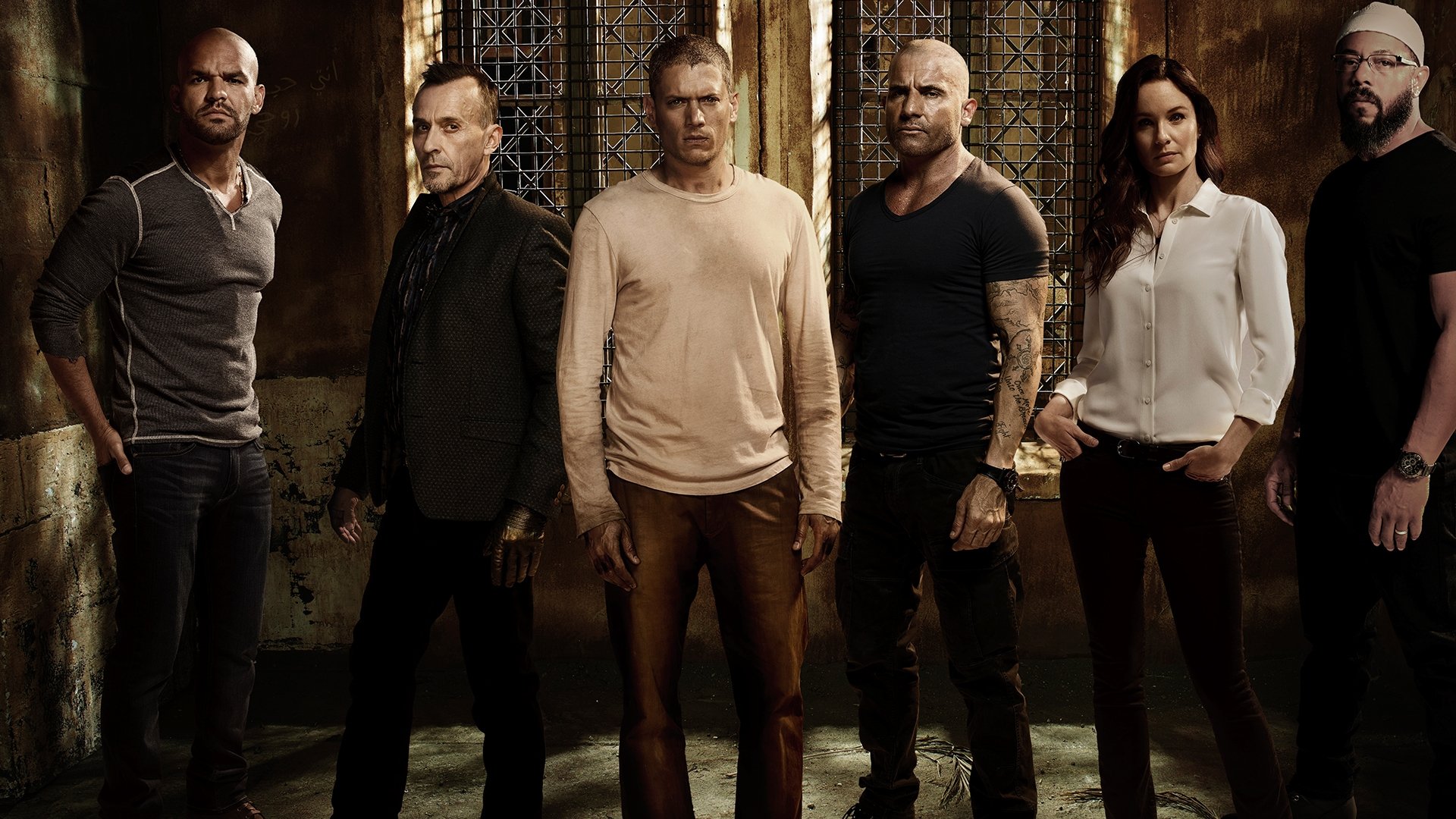
Prison Break Season 5, subtitled "Resurrection," functions as a limited event series that bridges the gap between the original series finale and the modern landscape of high-stakes television. By revisiting Michael Scofield’s tactical ingenuity and the complex web of political conspiracy established in the early 2000s, the season attempts to modernize the show's signature "escape-at-all-costs" tension while contending with the narrative fatigue often associated with long-dormant franchises.
The Context of the 2017 Revival
To understand Season 5, one must first look at the state of the television industry in 2017. The trend of reviving iconic series—often termed "event series"—was at its zenith. Prison Break, which originally concluded in 2009 with the television movie The Final Break, left a legacy of high-octane drama and a massive global fanbase. When Fox announced the return of the show, the intent was clear: to leverage existing brand equity to capture a multi-generational audience.
The context of this review is not just as a standalone story, but as a test of whether a serialized, plot-driven thriller can successfully transplant its specific brand of heightened reality into a more cynical, fast-paced media environment. Unlike the original series, which relied on the slow-burn development of a prison breakout, Season 5 was constrained by a nine-episode format. This necessitated a shift from the methodical pacing of the Fox River State Penitentiary era to a globe-trotting, espionage-heavy narrative style.
Narrative Mechanics and Character Arc Continuity
The primary challenge faced by the showrunners in Season 5 was the resurrection of Michael Scofield, whose death was the emotional anchor of the series finale. The revival attempts to ground this return in the logic of the "Poseidon" conspiracy, casting Michael as an operative caught in a complex geopolitical game.
For the returning audience, the show offers a familiar comfort: the intellectual duel between Michael and his captors. However, the context of the series has fundamentally shifted. While the original series was a blue-collar fight against the system, Season 5 places Michael in a more abstract, international conflict. This transition highlights a common pitfall of legacy sequels: the struggle to maintain the "everyman" stakes while ballooning the scope to global proportions.
The Evolution of the Ensemble
The return of the core cast—Wentworth Miller (Michael), Dominic Purcell (Lincoln Burrows), Sarah Wayne Callies (Sara Tancredi), and Robert Knepper (T-Bag)—serves as the primary engine of the narrative. Analyzing their performances in context:
- Michael Scofield: Miller’s performance is marked by a deliberate coldness that contrasts with the vulnerability seen in the first two seasons. This reflects his trauma and the necessity of his role as "Kaniel Outis."
- Lincoln Burrows: His character arc completes the cycle started in Season 1, where he was the one in need of saving. In the revival, he takes on the mantle of the proactive protector, grounding the high-concept espionage in a visceral, street-level reality.
- T-Bag: Often the show's most controversial variable, T-Bag remains the bridge between the original series and the revival. His involvement in the Yemen-based plot provides the necessary moral ambiguity to keep the stakes feeling dangerous.
Technical Execution and Pacing
The production value of Season 5 represents a significant leap from the original series. Filmed partially in Morocco to double for Yemen, the visual language is sharper and more cinematic. However, technical polish does not always translate to narrative cohesion. The nine-episode structure forces the plot to move at an accelerated pace, often at the expense of the character-driven "breather" moments that defined the show's earlier seasons.
Table 1 provides a comparison of the structural differences between the original series and the Season 5 revival.
| Metric | Original Series (S1-S4) | Season 5 (Resurrection) |
|---|---|---|
| Primary Setting | Prison / Institutional | International / Global |
| Episode Count | 13–22 per season | 9 episodes total |
| Plot Focus | Tactical Breakout | Geopolitical Espionage |
| Narrative Style | Slow-burn character study | Fast-paced thriller |
| Emotional Core | Familial sacrifice | Redemption and identity |
Challenges of Modernizing a Legacy Franchise
When reviewing Season 5 within the context of contemporary television, it is impossible to ignore the "legacy series" syndrome. Audiences today are accustomed to shorter, more dense narrative structures (such as those found on streaming platforms). Prison Break Season 5 attempts to appease this by trimming the fat, yet in doing so, it risks losing the intimate connection viewers had with the geography of the prison walls.
The "in-context" critique must acknowledge that the show was not designed for the modern binge-watch era; it was designed for the legacy viewer. By maintaining a serialized cliffhanger format, the show remains faithful to its roots but may feel jarring to audiences who prioritize character complexity over plot twists.
Critical Reception and Fan Expectations
Public and critical reception at the time of release was polarized. The nostalgia factor was a significant driver of viewership, yet the narrative reliance on "secret government" tropes was viewed by many critics as a retread of Season 4's The Company arc.
However, when viewed as a conclusion rather than a continuation, Season 5 offers a necessary sense of closure that the original finale struggled to provide. The show manages to effectively answer the "how" of Michael’s survival, even if the "why" remains largely steeped in the stylized, comic-book-adjacent logic that the show has utilized since its inception.
Common Criticisms and Troubleshooting the Narrative
Readers often ask why the show felt different from the original experience. The primary reason is the shift in stakes. In the original series, the prison was a tangible object—a physical barrier that required engineering to overcome. In Season 5, the "prison" is political, which is an abstract concept that is harder to visualize and harder to root for.
- Plot Holes vs. Stylistic Choice: Many reviewers criticized the rapid resolution of complex political scenarios. In context, these are not necessarily "plot holes" but rather the result of a short episode order.
- Lack of Supporting Cast: The absence of key characters (such as Alexander Mahone) left a void in the analytical depth of the ensemble, which fans frequently cite as a primary critique.
- The "Outis" Identity: The use of a false identity serves as a plot device to keep the audience guessing, but it also creates distance between the viewer and the protagonist.
Frequently Asked Questions
Is it necessary to re-watch the original series to understand Season 5? While the plot of Season 5 is technically self-contained, a deep understanding of the characters' relationships—specifically the bond between Michael and Lincoln—is essential to appreciate the stakes of the revival. The emotional payoff is entirely dependent on the history established in Seasons 1 through 4.
Why does Season 5 have so few episodes compared to the original? The industry moved toward shorter "event" formats in the mid-2010s to ensure high production values and to attract talent that might not commit to a traditional 22-episode network season. Nine episodes allowed the writers to maintain a tighter, more focused story arc without the filler required for longer seasons.
Does Season 5 provide a definitive ending to the series? Yes. Season 5 functions as a concluding chapter. It wraps up the primary unresolved threads regarding Michael's fate and the brothers' relationship with the law, effectively serving as a bookend to the journey that began in the pilot.
How does the portrayal of the geopolitical setting impact the series' realism? The series utilizes real-world conflicts as a backdrop for a heightened, fictionalized thriller. It does not attempt to be a documentary or a political drama. Therefore, the "realism" of the setting should be viewed through the lens of a pulp thriller rather than a geopolitical analysis.
Is the revival considered canon? Yes, the events of Season 5 are part of the official Prison Break canon, continuing directly from the timeline established in the original series finale and The Final Break television movie.
Final Recommendation
If you are approaching Prison Break Season 5 in 2026, evaluate it as an epilogue. It is most effective when viewed as an opportunity to spend time with characters you have followed for years, rather than as a reinvention of the thriller genre. For those who prioritize tight, realistic plotting, the show may fall short; however, for those who value the legacy of Michael Scofield and the unique chemistry of the original cast, the revival provides a satisfying, high-energy conclusion to the saga.
For the best experience, avoid bingeing the entire season in one sitting. Treat each episode as an individual "mission" to better appreciate the tactical pacing and the scale of the international locations, which were designed to offer a spectacle-heavy contrast to the confined spaces of the original Fox River setting.