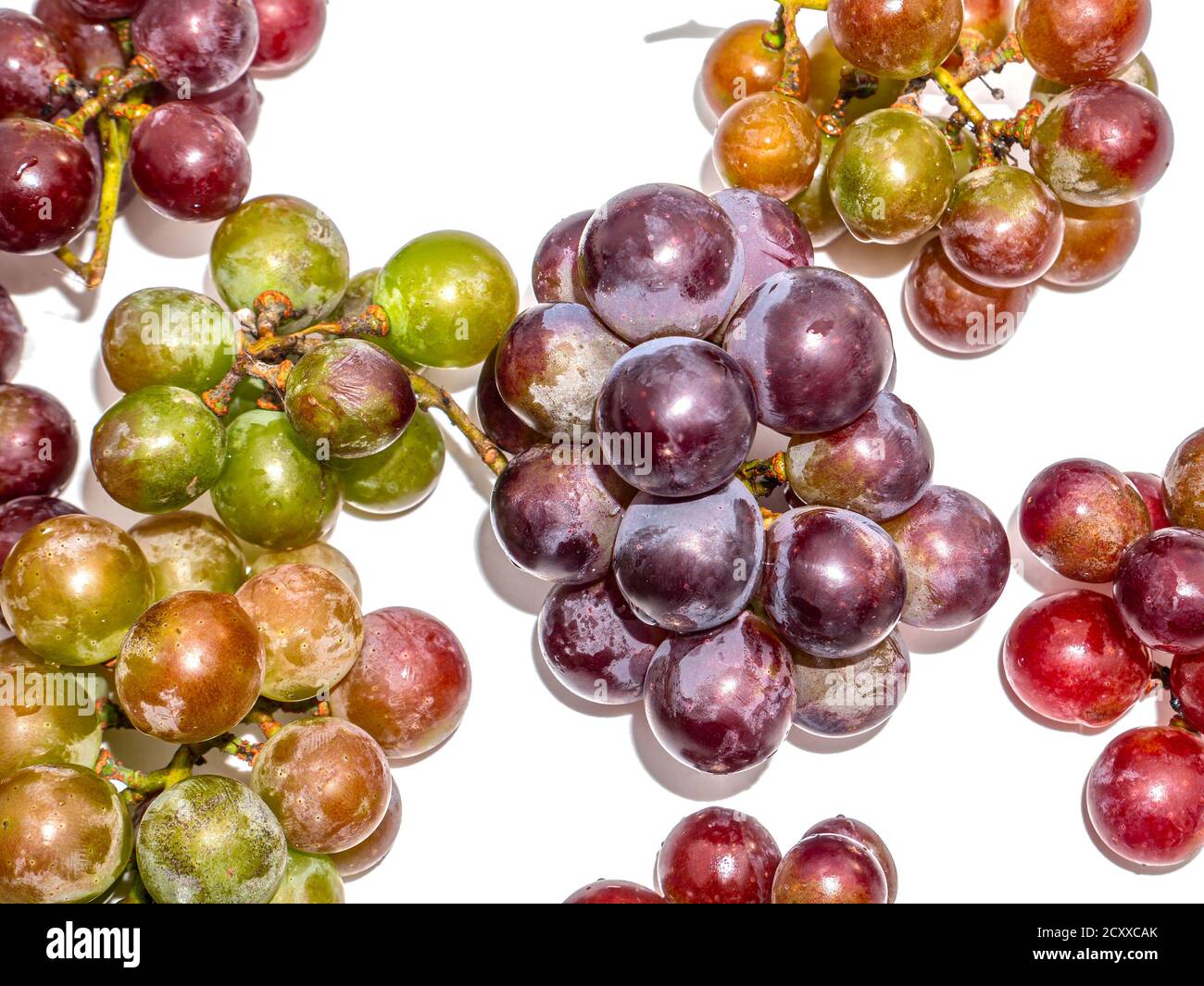
Yes, botanically speaking, grapes are true berries. While many fruits we call "berries" in the kitchen do not meet the scientific criteria, grapes develop from a single ovary of a single flower and possess three distinct fleshy layers—the exocarp, mesocarp, and endocarp—required to be classified as a berry by botanists.
The Botanical Definition of a Berry
To understand why a grape is a berry, one must first look past the grocery store definition and examine the scientific requirements established by plant morphology. In botany, a berry is a specific type of fleshy fruit produced from a single ovary. This definition is significantly more restrictive than the common usage of the word, which usually refers to any small, edible, roundish fruit.
The structure of a botanical berry is defined by the pericarp, which is the wall of the fruit that develops from the ovary wall. The pericarp is divided into three distinct layers:
- Exocarp: The outermost layer, which we commonly call the "skin." In a true berry, this layer is usually thin and edible.
- Mesocarp: The middle layer, which constitutes the majority of the fleshy, juicy part of the fruit.
- Endocarp: The innermost layer that surrounds the seeds. In a true berry, the endocarp is fleshy or slimy, not hard or stony.
For a fruit to be classified as a true berry, it must be "multiseeded" (though some may have only one or two seeds) and develop from a single ovary of a single flower. Because grapes possess a thin skin, a fleshy middle, and a soft interior containing seeds, all while originating from a single floral ovary, they are the quintessential example of a botanical berry.
Why Grapes Qualify as True Berries
Grapes (Vitis vinifera and other species) are the fruit of the deciduous woody vines of the flowering plant genus Vitis. When we analyze the development of a grape from bloom to harvest, its classification becomes clear through its reproductive biology.
Single Flower, Single Ovary
A grape cluster begins as a group of small, inconspicuous green flowers. Each individual flower on the rachis (the stem of the cluster) contains a single superior ovary. As pollination occurs, this single ovary begins to swell and transform into the fruit. Because it does not incorporate multiple ovaries from the same flower (like a raspberry) or multiple flowers (like a pineapple), it meets the first primary criterion of a berry.
The Three Fleshy Layers
As the grape matures in 2026, its cellular structure remains consistent with berry morphology. The exocarp (skin) contains essential compounds such as tannins and anthocyanins, which provide color and protection. Beneath the skin lies the mesocarp, which is the primary pulp consisting of large, water-filled cells containing sugars and acids.
Most importantly, the endocarp—the area immediately surrounding the seeds—remains soft and fleshy. In contrast, fruits like peaches or cherries (known as drupes) have a "stony" endocarp (the pit) that protects the seed. Because the grape’s interior remains entirely succulent, it fulfills the final requirement of the berry definition.
Seed Placement and Development
True berries typically contain multiple seeds embedded within the pulp. While modern viticulture has produced "seedless" varieties through a process called stenospermocarpy (where pollination occurs but the seeds abort), these fruits are still botanically classified as berries. The biological blueprint remains the same; the seeds are simply halted in their development.
The Berry Paradox: Why Common Names Are Misleading
The confusion surrounding grapes often stems from the "Berry Paradox." In common English, the word "berry" is used as a culinary descriptor for small, sweet, fleshy fruits. However, many of the fruits that carry "berry" in their name are not botanical berries at all.
Aggregate Fruits vs. True Berries
Strawberries, raspberries, and blackberries are not true berries. Instead, they are aggregate fruits.
- Raspberries and Blackberries: These are composed of many tiny "drupelets." Each small bump on a raspberry is actually an individual fruit with its own tiny stone (endocarp) inside.
- Strawberries: These are accessory fruits. The sweet, red fleshy part we eat is actually the enlarged receptacle of the flower, while the "seeds" on the outside (called achenes) are the true botanical fruits.
Why Grapes Stand Out
Grapes sit on the opposite side of this linguistic divide. While they don't have "berry" in their name, they perfectly match the scientific definition that strawberries and raspberries fail. This discrepancy is a result of historical naming conventions that predated modern botanical classification. Early humans named fruits based on size and edibility rather than reproductive morphology.
Other Surprising Botanical Berries
To further contextualize the grape's status, it is helpful to look at other fruits that share its classification. You might be surprised at what qualifies as a berry under the same rules that apply to grapes:
- Bananas: These develop from a single ovary and have three fleshy layers. Even the tiny black dots in the center are the remains of seeds, making the banana a true botanical berry.
- Tomatoes: Botanically, tomatoes are berries. They have a thin skin, a fleshy middle, and a pulpy interior housing the seeds.
- Watermelons and Pumpkins: These are a specialized type of berry known as a pepo. They have a hard, leathery exocarp (the rind), but they still develop from a single ovary and are fleshy throughout.
- Citrus Fruits: Lemons, oranges, and limes are modified berries called hesperidiums. They have a leathery rind and juice-filled sections, but they still follow the single-ovary, fleshy-layer rule.
The Anatomy of a Grape: A Deep Dive
Understanding the grape as a berry requires looking at its specific internal components. Each part of the grape berry serves a function, either for the plant’s reproduction or as a defense mechanism.
The Skin (Exocarp)
The skin of the grape is more than just a container. It is a complex organ that regulates gas exchange and protects the fruit from pests and UV radiation. In 2026, viticulturists continue to focus on skin thickness and composition, as the skin contains the majority of the fruit's aromatic compounds and polyphenols. In red grapes, the skin is the source of resveratrol, a potent antioxidant.
The Pulp (Mesocarp and Endocarp)
The pulp of the grape berry is where the plant stores energy in the form of glucose and fructose. As the berry ripens—a stage known as veraison—the acids (mostly tartaric and malic acid) decrease while sugars increase. The fleshy nature of the pulp is an evolutionary strategy to encourage animals to eat the fruit and disperse the seeds.
The Seeds
A standard grape berry usually contains one to four seeds. These seeds are rich in oils and tannins. In the context of botanical berries, the seeds must be embedded directly in the flesh. If you slice a grape in half, you can see the seeds are held within the soft tissue of the endocarp, confirming its status.
Comparison of Botanical and Culinary Classifications
The following table highlights the differences between how we classify fruits in the kitchen versus how scientists classify them in the lab.
| Fruit | Culinary Category | Botanical Category | Reason for Classification |
|---|---|---|---|
| Grape | Fruit | True Berry | Develops from one ovary; fleshy pericarp throughout. |
| Strawberry | Berry | Accessory Fruit | Fleshy part is the receptacle, not the ovary. |
| Raspberry | Berry | Aggregate Fruit | A cluster of tiny drupelets from multiple ovaries. |
| Banana | Fruit | True Berry | Fleshy endocarp and mesocarp from a single ovary. |
| Tomato | Vegetable | True Berry | Technically a fruit; fits all berry criteria. |
| Blueberry | Berry | True Berry | Develops from a single ovary; thin skin and fleshy interior. |
| Blackberry | Berry | Aggregate Fruit | Collection of individual drupelets. |
The Role of Grapes in Modern Botany and Agriculture
As of 2026, the study of grapes as berries remains vital for global agriculture. Because grapes are true berries, they respond to growth regulators and environmental stressors in specific ways. For instance, the application of gibberellic acid is often used in the production of table grapes to increase the size of the "berry" and loosen the cluster.
Understanding that grapes are berries also helps plant pathologists manage diseases. Fungal infections like Botrytis cinerea (noble rot) specifically target the thin exocarp of the grape berry. Because the grape is a fleshy berry with high water content, it is particularly susceptible to changes in osmotic pressure, which can cause the skin to crack during heavy rains.
Frequently Asked Questions
Why aren't strawberries considered berries if grapes are?
Strawberries are not berries because the fruit does not develop solely from the ovary of the flower. Instead, the red fleshy part is the "receptacle," which is the base of the flower. The true fruits of the strawberry are the tiny "seeds" on the outside, which are technically called achenes. Grapes, however, develop their flesh directly from the ovary wall, making them true berries.
Is a blueberry a true berry?
Yes, blueberries are true botanical berries. Like grapes, they develop from a single ovary and have a fleshy interior with seeds embedded directly in the pulp. Both grapes and blueberries satisfy all the scientific requirements for the classification.
What is the difference between a berry and a drupe?
The primary difference lies in the endocarp (the inner layer). In a berry, like a grape, the endocarp is fleshy or soft. In a drupe, like a peach, plum, or cherry, the endocarp hardens into a "pit" or "stone" that protects a single seed inside.
If grapes are berries, are they also considered a citrus?
No. While citrus fruits (oranges, lemons) are a type of modified berry called a hesperidium, grapes belong to a different family (Vitaceae). Citrus fruits are characterized by a leathery rind and juice-filled segments, which grapes do not have.
Are seedless grapes still berries?
Yes. Seedless grapes are still berries. The botanical classification is based on the structure of the ovary and the layers of the fruit wall. Even though the seeds fail to develop fully in seedless varieties, the fruit's origin and fleshy structure remain identical to seeded berries.
Recommendation for Further Exploration
If you are interested in the intersection of botany and culinary arts, the best next step is to observe these structures firsthand. Next time you have a variety of fruits, cut a grape and a strawberry in half. Note the location of the seeds and the texture of the inner walls. For those interested in the scientific side of viticulture, resources from the University of California, Davis - Department of Viticulture and Enology or the American Society for Enology and Viticulture provide deep insights into how the berry structure of the grape influences everything from juice yield to wine quality. Understanding the botanical reality of the food we eat offers a deeper appreciation for the complexity of the natural world and the precision of scientific classification.