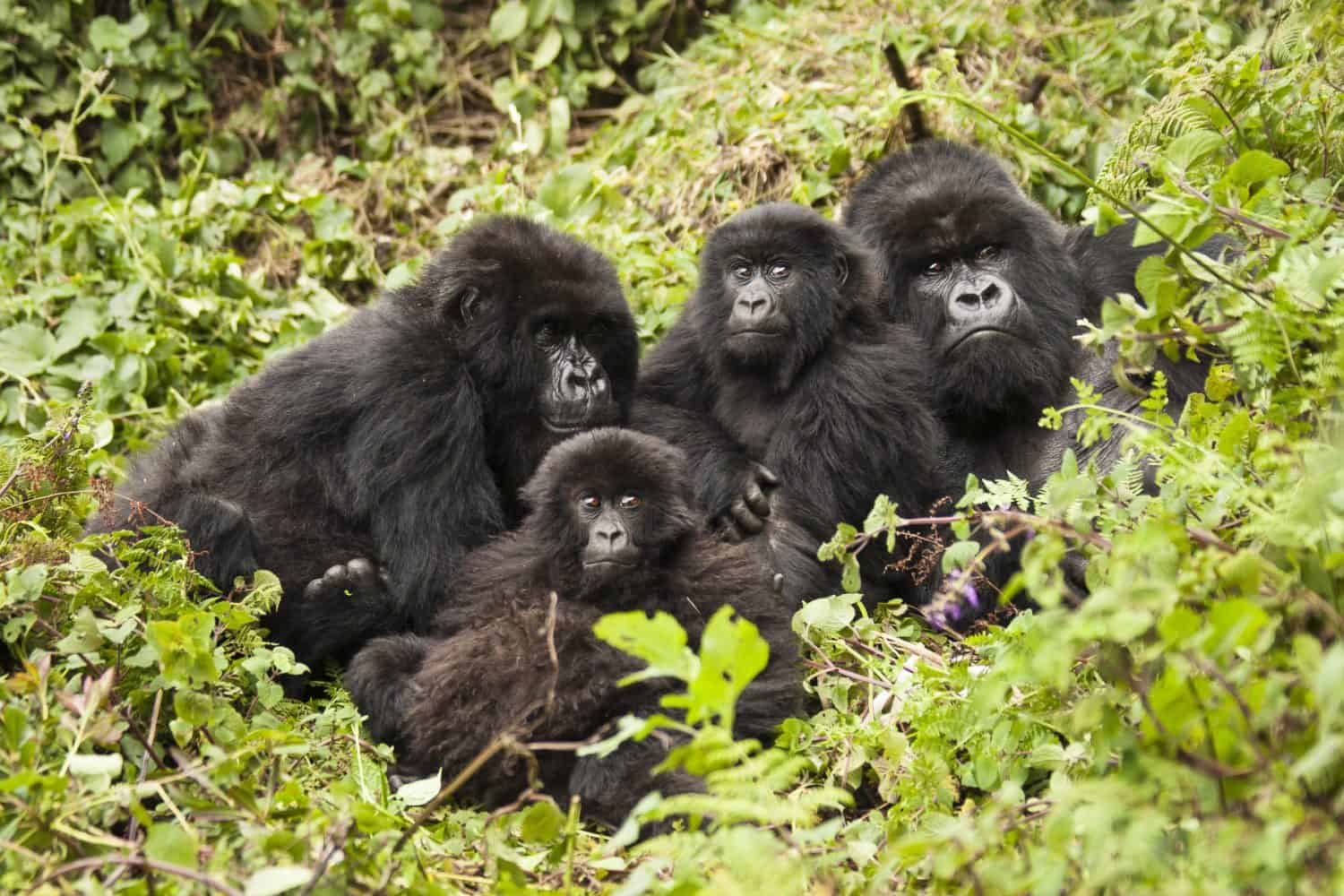
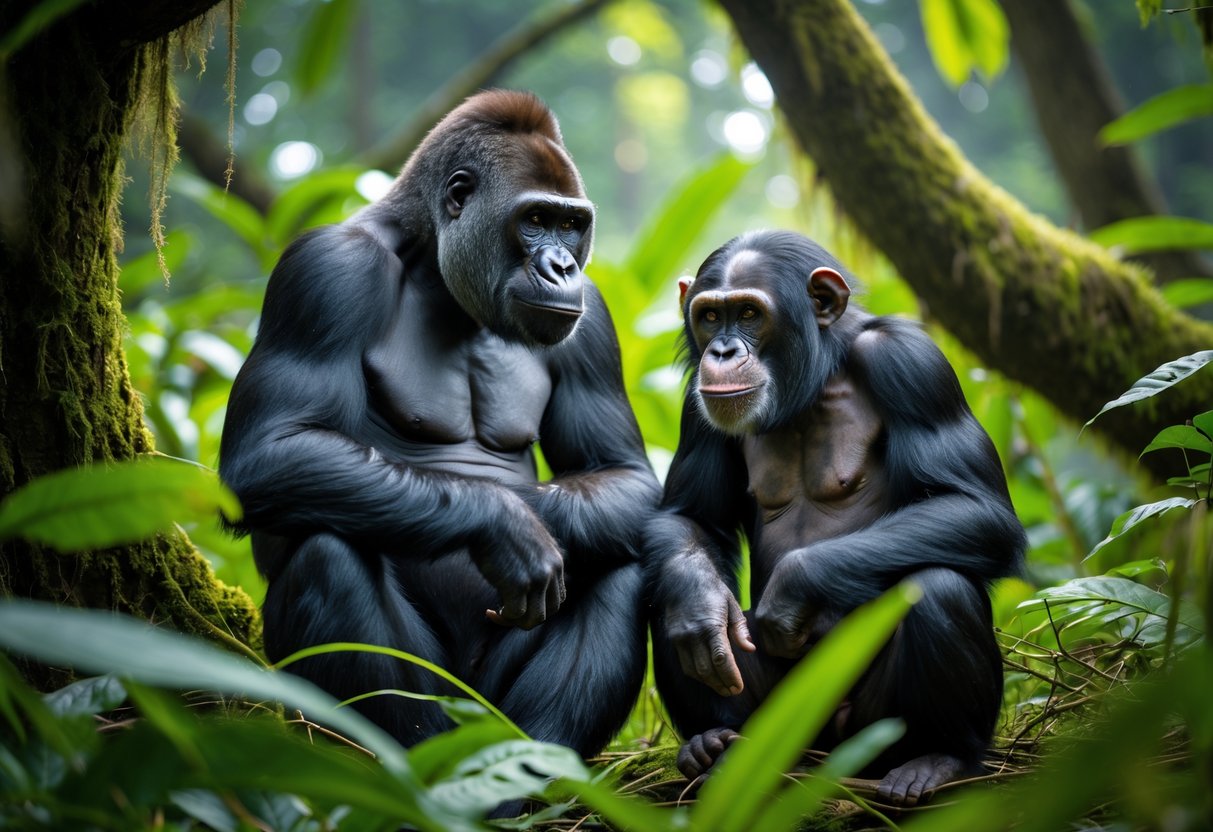
Gorillas are highly social animals that live in stable, cohesive groups known as troops or harems. Led by a dominant adult male called a silverback, these groups provide essential protection, facilitate foraging, and allow for the complex rearing of offspring. Their social lives are defined by deep emotional bonds, intricate communication, and a clear hierarchical structure.
In the field of primatology as of 2026, the study of gorilla sociality has moved beyond simple observations of group size to a deep understanding of emotional intelligence and social networking. Gorillas do not merely live together for survival; they form lifelong attachments, exhibit signs of grief, and maintain a sophisticated "etiquette" that prevents internal conflict. Understanding the social nature of gorillas is vital for both conservation efforts and for gaining insight into the evolutionary roots of human social behavior.
The Social Architecture of the Gorilla Troop
The fundamental unit of gorilla society is the troop. While the size of these groups can vary significantly based on subspecies and habitat, the underlying structure remains remarkably consistent. A typical troop consists of one dominant silverback, several adult females, and their various offspring, including infants, juveniles, and sub-adult males known as "blackbacks."
The Centrality of the Silverback
The silverback is the undisputed leader of the troop. His role is multifaceted: he is the primary protector, the ultimate decision-maker regarding movement and foraging, and the mediator of internal disputes. The silverback earns his position through a combination of physical prowess and social diplomacy. Contrary to the "brute" stereotype, a successful silverback is often a calm and charismatic leader.
Females choose to stay with a silverback not just for his strength, but for his ability to provide a stable environment for their young. In the wild, the greatest threat to an infant gorilla is often infanticide by a rival male who wishes to take over a troop. The silverback’s presence acts as a massive deterrent against such threats. If a silverback dies, the troop usually dissolves, with females seeking out new males to join, highlighting how central his individual persona is to the group's cohesion.
Female Relationships and Hierarchy
While the silverback is the focal point, the relationships between females form the day-to-day fabric of the troop. Female gorillas are not usually related to one another because both males and females typically leave their birth groups to join new ones—a process called natal dispersal. This prevents inbreeding but means that females must work to build social bonds with non-kin.
Female hierarchies exist but are often subtle. A female's rank may be influenced by her age, how long she has been with the troop, or her relationship with the silverback. High-ranking females often enjoy better access to preferred feeding spots and more "protection" time from the silverback. However, these hierarchies are rarely maintained through overt aggression; instead, they are reinforced through subtle body language and vocalizations.
Species Variations in Sociality
It is a common misconception that all gorillas behave identically. As of 2026, research continues to highlight the distinct social nuances between Mountain Gorillas (Gorilla beringei beringei) and Western Lowland Gorillas (Gorilla gorilla gorilla). These differences are largely driven by their environments and the distribution of food resources.
| Feature | Mountain Gorillas | Western Lowland Gorillas |
|---|---|---|
| Average Troop Size | 10 to 30 individuals | 5 to 10 individuals |
| Social Cohesion | Extremely high; groups rarely separate | Moderate; groups may "fission-fusion" for food |
| Male Tolerance | Can have multi-male groups (several silverbacks) | Almost exclusively one-male (single silverback) |
| Dietary Influence | High leaf/foliage diet; food is abundant | High fruit diet; food is seasonal and scattered |
| Interaction Frequency | Frequent grooming and play | More spread out; less frequent physical contact |
Mountain Gorilla Sociality
Mountain gorillas live in high-altitude environments where food (leaves, stems, and shoots) is abundant and evenly distributed. Because they don't have to compete heavily for food, they can afford to live in larger groups. In some cases, Mountain Gorilla troops can include multiple silverbacks. Usually, these are sons or brothers of the dominant male who choose to stay rather than disperse. This leads to a complex "co-dominance" or a clear alpha-beta male relationship that provides even greater protection for the troop.
Western Lowland Gorilla Sociality
In contrast, Western Lowland Gorillas inhabit dense rainforests where fruit is a major part of their diet. Since fruit trees are often scattered and have limited yields, these gorillas live in smaller groups to avoid over-exploiting a single food source. They are also more likely to engage in "fission-fusion" behavior, where the group may temporarily split up during the day to forage and reunite later. Their social bonds are still strong, but their physical proximity is more flexible than their mountain cousins.
Communication: The Language of the Troop
To maintain such a complex social structure, gorillas have developed a sophisticated system of communication. This involves vocalizations, physical gestures, facial expressions, and even scent. Communication is the primary tool used to prevent physical fighting, which is risky for animals of such immense strength.
Vocalizations
Researchers have identified at least 25 distinct vocalizations used by gorillas.
- Belch Vocalizations: These are low-frequency sounds that indicate contentment. They are commonly heard during feeding sessions and signal to the rest of the troop that everything is safe and the food is good.
- Hoots and Barks: These are used to locate other group members or to signal curiosity or mild alarm.
- Roars and Screams: These are reserved for high-stress situations, such as a silverback defending his group against a predator or a rival male.
- Whinnies and Cries: Often used by infants to get the attention of their mothers.
Visual and Physical Signals
The "chest-beat" is perhaps the most famous gorilla gesture. While often portrayed as an act of pure aggression, it is actually a highly ritualized communication tool. A silverback beats his chest to announce his presence, indicate his size and strength, or release pent-up tension. It often prevents a physical fight by convincing a rival that a confrontation would be unwise.
Facial expressions are also critical. A "play-face" (an open mouth with tucked-in teeth) signals that a mock fight is just for fun, preventing juveniles from accidentally triggering a real conflict. Conversely, a "stare" with tight lips is a clear warning to back off.
The Importance of Grooming and Play
Physical contact is the "social glue" of the gorilla world. For many social animals, grooming is about more than just removing parasites; it is a way to build trust and reduce stress.
Social Grooming
While gorillas groom each other less frequently than chimpanzees or baboons, it remains a vital social activity. Females will groom the silverback to maintain their bond with him, and mothers spend significant time grooming their infants. This physical contact releases oxytocin, a hormone that promotes bonding and relaxation. In 2026, stress-hormone analysis of wild gorillas has confirmed that individuals who engage in regular social grooming have lower cortisol levels, making them more resilient to environmental stressors.
The Role of Play
Play is essential for the development of young gorillas. It is through play that juveniles learn the social "rules" of the troop and develop the physical skills they will need as adults. Play often involves wrestling, somersaults, and chasing. Even silverbacks are known to join in on the play, showing a gentle side that reinforces their bond with the younger generation. For a young male, play-fighting is a safe way to test his strength and learn the nuances of dominant and submissive posturing.
Dispersal: The Social Crossroads
A defining moment in a gorilla's social life is the decision to leave the birth troop. This usually happens when an individual reaches sexual maturity (around age 8 for females and age 11 for males).
Female Dispersal
Females typically leave their natal group to find a silverback in another group or to join a lone male starting a new troop. This is a strategic move; they are looking for a male who offers the best protection and resources. A female may transfer groups multiple times throughout her life if she feels her current silverback is no longer providing adequate security or if she fails to produce surviving offspring with him.
Male Dispersal and Bachelor Groups
Males face a tougher path. When a young "blackback" begins to challenge the dominant silverback or reaches a certain age, he is often encouraged or forced to leave. These males may live a solitary life for several years, roaming the forest alone while they grow into full silverbacks. In some instances, these solitary males form "bachelor groups"—all-male troops where they can socialize and hone their fighting skills until they are strong enough to attract females and start their own troop.
Conflict Resolution and Emotional Intelligence
Gorilla society is surprisingly peaceful. While a silverback is capable of immense violence, his goal is almost always to maintain order with the least amount of physical exertion. Conflict resolution often involves a series of escalating displays. If a younger male is being disruptive, the silverback may start with a sharp "cough-bark." If that fails, he may move to a "stare-down," and finally a charge or chest-beat. Physical contact in a fight is a last resort.
Empathy and Grief
Observations in the wild and in controlled environments have shown that gorillas possess significant emotional depth. There are documented cases of gorillas "mourning" deceased troop members, staying with the body for days, and showing signs of lethargy and sadness. This capacity for empathy is a hallmark of highly social species. It suggests that their social structures are not just based on utility (food and protection), but on genuine emotional connections.
The Impact of External Factors on Gorilla Sociality
As we move through 2026, the social lives of gorillas are increasingly impacted by human activity. Habitat fragmentation is one of the most significant threats to their social health. When forests are cut down, troops become isolated, making it difficult for maturing individuals to disperse and find new groups. This can lead to inbreeding and increased tension within troops as they are forced into smaller territories.
Conservation programs, such as those led by the Dian Fossey Gorilla Fund, emphasize that protecting the social integrity of the troop is just as important as protecting the individuals. A troop that loses its silverback to poaching or disease doesn't just lose a member; it loses its social foundation, often leading to the death of infants and the displacement of females.
Current Research Trends in 2026
Modern technology has revolutionized how we study gorilla sociality. Non-invasive techniques allow researchers to map complex social networks without habituating the animals to human presence.
- DNA Analysis from Fecal Samples: This allows scientists to track the movement of individuals between groups and understand the genetic health of entire populations.
- Acoustic Monitoring: High-fidelity recorders placed in the forest can capture the "chatter" of a troop, allowing AI to decode social interactions and emotional states based on vocal frequency and rhythm.
- Remote Sensing: Satellites and drones track the movement of troops in relation to food availability, providing data on how social groups adapt to a changing climate.
Summary of Gorilla Social Traits
To visualize the complexity of their lives, we can look at the core pillars of gorilla sociality:
- Leadership: One dominant male (usually) who provides security and direction.
- Bonding: Maintenance of relationships through grooming, vocalizations, and play.
- Communication: A library of 25+ sounds and dozens of gestures to prevent conflict.
- Flexibility: The ability to adjust group size and movement based on the environment.
- Emotion: Deep capacity for attachment, empathy, and grief.
Frequently Asked Questions
Can a gorilla survive alone?
While a silverback can survive alone as a "solitary male" for several years, it is not their natural or preferred state. Female gorillas almost never live alone, as they lack the physical size to defend themselves against predators or aggressive males. For males, a solitary period is usually a transitional phase between leaving their birth troop and forming a new one. Prolonged isolation in such a social species often leads to psychological stress.
Do gorillas fight each other often?
Actual physical combat is rare. Most "fights" are ritualized displays intended to intimidate the opponent without causing injury. A silverback will use chest-beating, lunging, and vocalizations to settle disputes. Serious fights usually only occur when a lone male attempts to take over an established troop, which can lead to significant injuries or death for the males involved.
How do gorillas show affection?
Affection is primarily shown through physical proximity and grooming. Mothers are extremely affectionate with their infants, carrying them, cradling them, and grooming them constantly. Between adults, sitting close to one another (known as "huddling") and soft belch-like vocalizations are signs of mutual comfort and affection.
What happens to a troop if the silverback dies?
The death of a silverback is a catastrophic event for the troop. Without his protection, the females are vulnerable. Usually, the troop will disband. The females will seek out other established silverbacks or lone males to join. If there is a "blackback" (younger male) in the group who is old enough, he may attempt to take over leadership, but this is only successful if the females accept his authority.
Do different gorilla species interact socially?
Mountain Gorillas and Western Lowland Gorillas are geographically separated by large distances and different habitats, so they do not interact in the wild. Even if they were to meet, their subtle differences in "language" and social etiquette might lead to friction, though their fundamental social structures are similar enough that they would likely recognize the social cues of the other.
Final Recommendation: Supporting Social Integrity
For those interested in the welfare of these magnificent primates, the focus should remain on habitat preservation. Because gorillas are so social, they require large, contiguous areas of forest to allow for the natural dispersal of young adults and the formation of new troops. Supporting organizations that protect the "Great Ape Corridors" is the most effective way to ensure that gorilla social structures remain intact for generations to come. If you are visiting gorillas through eco-tourism, always follow the "7-meter rule" to prevent the transmission of human diseases, which can decimate a socially close-knit troop in a matter of weeks.