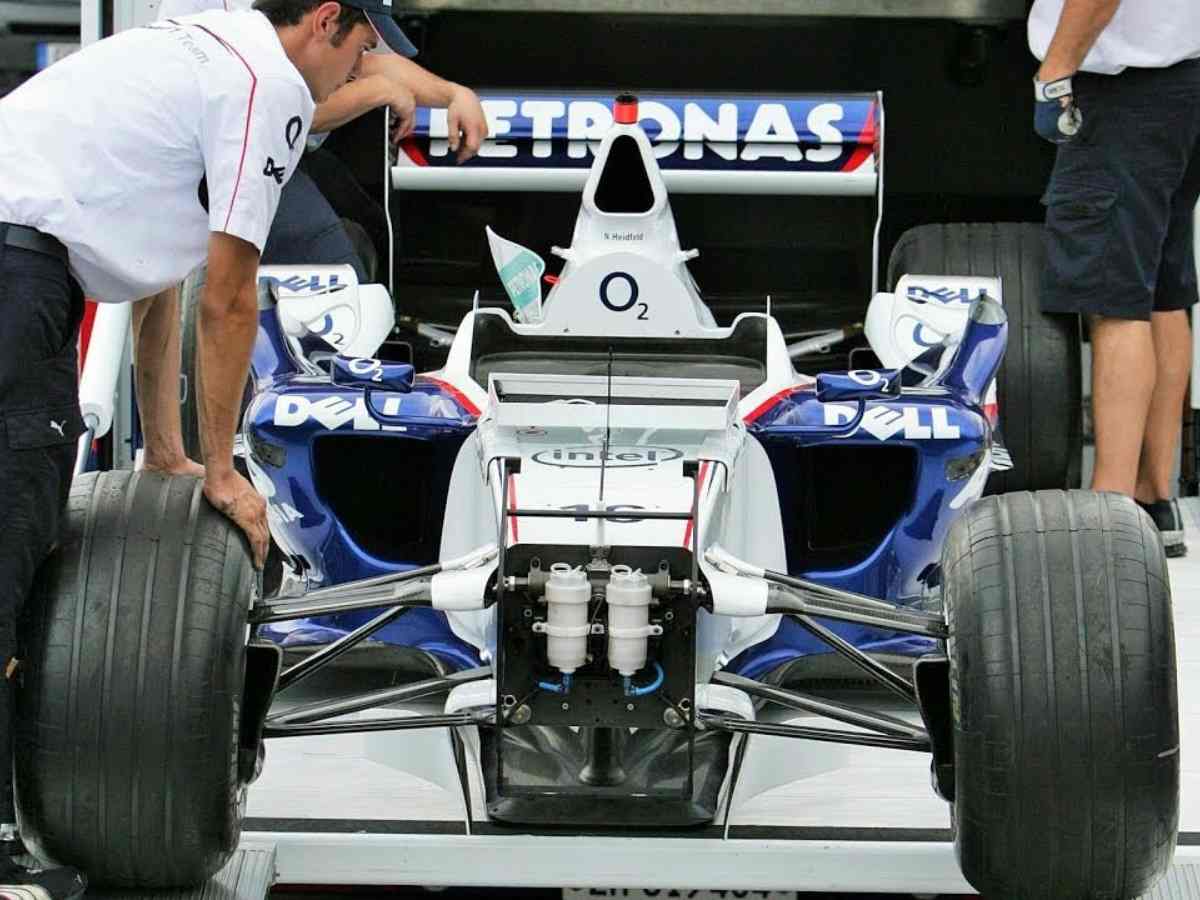
Yes, Formula 1 cars are significantly faster than NASCAR stock cars in nearly every performance metric, including acceleration, cornering, and lap times. While a NASCAR Cup Series car can reach 200 mph on ovals, a Formula 1 car’s superior power-to-weight ratio and advanced aerodynamics allow it to achieve higher top speeds and far greater agility.
The debate between Formula 1 (F1) and NASCAR often centers on which represents the pinnacle of automotive speed. To the casual observer, both involve high-powered machines racing at blistering speeds, but the engineering philosophies behind them are worlds apart. As of 2026, with F1 entering a new era of hybrid power regulations and NASCAR continuing to refine its "Next Gen" platform, the performance gap remains stark. To understand why an F1 car is faster, one must look past the speedometer and examine the physics of weight, aerodynamics, and energy recovery.
The Engineering Philosophy: Prototype vs. Production-Based
The fundamental difference between the two disciplines lies in their design DNA. Formula 1 cars are "prototypes"—purpose-built single-seaters designed for maximum aerodynamic efficiency and minimum weight. Every component is crafted from carbon fiber and exotic alloys to shave milligrams. In contrast, NASCAR (National Association for Stock Car Auto Racing) is rooted in the "stock car" tradition. Although modern NASCAR vehicles are sophisticated racing machines, they are designed to look like production sedans, such as the Chevrolet Camaro, Ford Mustang, or Toyota Camry.
NASCAR’s "Next Gen" car, which has been the standard since 2022, features a spec chassis and bodies designed to promote close-quarters racing and durability. These cars are built to withstand heavy impacts and drafting at high speeds. Because they must maintain a silhouette resembling a street car, they are inherently less aerodynamic than the low-slung, open-wheel F1 cars. This drag penalty, combined with a much higher curb weight, creates a significant performance ceiling that NASCAR simply cannot breach without a total redesign of its formula.
Power-to-Weight Ratio: The Deciding Factor
The most critical metric in racing performance is the power-to-weight ratio. This determines how quickly a vehicle can accelerate out of a corner and how much energy is required to change its direction.
As of the 2026 season, Formula 1 power units produce approximately 1,000 horsepower. This power comes from a highly complex 1.6-liter V6 turbocharged engine paired with an advanced Energy Recovery System (ERS). The 2026 regulations have shifted the balance to a nearly 50/50 split between internal combustion and electrical power. An F1 car’s minimum weight is roughly 798 kilograms (approx. 1,760 lbs), including the driver but excluding fuel. This results in a power-to-weight ratio of roughly 1.25 horsepower per kilogram.
NASCAR Cup Series cars utilize a 5.86-liter naturally aspirated V8 engine. Depending on the track—whether it is a short track, a road course, or a "superspeedway" like Talladega—these engines are restricted to either 670 horsepower or 510 horsepower to ensure safety and competitive parity. A NASCAR stock car weighs approximately 3,200 pounds (approx. 1,451 kg) without the driver and fuel. When fully loaded, a NASCAR vehicle is nearly double the weight of an F1 car while producing significantly less horsepower.
Because NASCARs are so heavy, they possess immense inertia. This makes them slower to accelerate, slower to brake, and less capable of changing direction rapidly. An F1 car can accelerate from 0 to 60 mph in about 2.6 seconds, but its true strength is 0 to 180 mph, a feat it accomplishes in under 10 seconds. A NASCAR Cup car takes significantly longer to reach those same milestones.
Aerodynamics and Cornering G-Forces
Speed is not just about straight-line velocity; it is about how much speed a car can carry through a corner. This is where the gap between F1 and NASCAR becomes a chasm.
Formula 1 cars are masterpieces of fluid dynamics. Their front and rear wings, floor-mounted venturi tunnels, and intricate bodywork are designed to create "downforce"—an aerodynamic force that pushes the car into the track. At high speeds, an F1 car generates enough downforce to theoretically drive upside down on the ceiling of a tunnel. This allows F1 drivers to take corners at speeds that would send a NASCAR vehicle sliding into the barrier. In a high-speed corner, an F1 driver might experience lateral forces of up to 5G or 6G, whereas a NASCAR driver typically experiences between 2G and 3G.
NASCAR aerodynamics are designed for "drafting" and "side-force." On an oval, the goal is to reduce drag to stay in the slipstream of the car ahead. While the Next Gen NASCAR does utilize a rear diffuser and an underbody tray to generate some ground-effect downforce, it is a fraction of what an F1 car produces. On a road course with tight turns, the NASCAR must rely almost entirely on the mechanical grip of its tires, whereas the F1 car uses the air itself to stay glued to the asphalt.
Braking Performance: Carbon-Carbon vs. Steel
Stopping is just as important as going when it comes to lap times. The braking systems in these two series reflect their specific needs. Formula 1 cars use carbon-carbon brake discs and pads, which are capable of operating at temperatures exceeding 1,000 degrees Celsius. These brakes allow an F1 car to decelerate from 200 mph to 50 mph in a matter of seconds and over a very short distance.
NASCAR vehicles use heavy steel rotors. While the Next Gen car introduced larger brakes and better cooling than previous generations, steel cannot match the thermal efficiency or the sheer stopping power of carbon-carbon. Because a NASCAR is heavier, its brakes have to work much harder to dissipate the kinetic energy. Consequently, NASCAR drivers must begin braking much earlier for a corner than an F1 driver, which adds seconds to their lap times on road courses.
Comparative Performance Metrics (2026 Data)
The following table compares the technical specifications and performance capabilities of a 2026 Formula 1 car and a 2026 NASCAR Cup Series (Next Gen) car.
| Feature | Formula 1 (2026 Regs) | NASCAR Cup Series (Next Gen) |
|---|---|---|
| Engine Type | 1.6L V6 Turbo Hybrid | 5.86L Naturally Aspirated V8 |
| Horsepower | ~1,000 hp (System Total) | 510 hp - 670 hp (Restricted) |
| Weight (Min) | ~798 kg (1,760 lbs) | ~1,451 kg (3,200 lbs) |
| Top Speed | ~220-235 mph (354-378 km/h) | ~190-200 mph (305-322 km/h) |
| 0-60 mph | ~2.6 Seconds | ~3.4 Seconds |
| Brake Material | Carbon-Carbon | Steel |
| Tires | Pirelli (Slicks/Wets) | Goodyear (Slicks/Wets) |
| Chassis | Carbon Fiber Monocoque | Steel Tube Frame w/ Composites |
Case Study: The Circuit of the Americas (COTA)
The best way to visualize the speed difference is to look at a track where both series compete. The Circuit of the Americas (COTA) in Austin, Texas, is a regular stop for both Formula 1 and the NASCAR Cup Series.
In a typical qualifying session, a Formula 1 car will lap COTA in approximately 1 minute and 34 seconds. In contrast, a NASCAR Cup Series car laps the same circuit in roughly 2 minutes and 10 seconds. This is a difference of nearly 36 seconds per lap. To put that in perspective, by the time the NASCAR driver completes three laps, the F1 driver would almost be an entire lap ahead.
The F1 car gains time everywhere: it reaches a higher top speed on the back straight, it brakes much later into Turn 12, and its cornering speed through the "Esses" (Turns 3 through 6) is nearly double that of the NASCAR. The NASCAR, while impressive in its own right for a heavy vehicle, looks cumbersome and slow when compared directly to the surgical precision of an F1 machine on a road course.
Oval Racing: Where the Comparison Shifts
While F1 is objectively faster on a road course, the comparison becomes more nuanced when discussing oval racing. Formula 1 cars are not designed for ovals; their suspension geometry, thin tires, and high-downforce wings are optimized for circuits with both left and right turns. If an F1 car were to race on a high-banked oval like Daytona, it would likely reach incredible speeds on the straights, but the sustained high-G loading on the suspension and tires would likely cause mechanical failure.
NASCAR, however, is the king of the oval. The cars are built for durability and are capable of running inches apart at 190 mph for 500 miles. While they are "slower" in terms of lap time and acceleration, the skill required to manage aerodynamic "drafting" and tire wear over a four-hour race is immense. In a pure speed test on an oval, an IndyCar (which is similar to F1 but built for ovals) would be faster than a NASCAR, but a modern F1 car would require significant modifications to even finish an oval race safely.
The Role of the Driver and Technology
Speed is also a product of the technology available to the driver. F1 drivers use highly sophisticated steering wheels with dozens of buttons to adjust brake bias, engine maps, and differential settings on the fly. They also benefit from DRS (Drag Reduction System), which opens a flap in the rear wing to reduce drag and increase top speed on straights.
NASCAR drivers have a much more "analog" experience. While the Next Gen car has moved to a sequential transaxle and independent rear suspension, it lacks the electronic driver aids and real-time mapping adjustments found in F1. The "speed" in NASCAR often comes from the driver’s ability to "feel" the air and position the car to take advantage of the draft, rather than the raw technological output of the vehicle.
Frequently Asked Questions
Could a NASCAR beat an F1 car in a drag race?
No. Because a Formula 1 car has a vastly superior power-to-weight ratio and better traction control systems, it would win a standing-start drag race easily. Even if the NASCAR were unrestricted, the F1 car’s lightweight construction allows it to reach high speeds much faster than the 3,200-lb stock car.
Which car has a higher top speed?
Formula 1 cars generally have a higher top speed. On tracks like Monza (Italy) or Mexico City, F1 cars can exceed 220 mph. NASCAR cars are usually restricted to around 190–200 mph on superspeedways for safety reasons. Without restrictions, a NASCAR might reach 210 mph, but it still struggles against the aerodynamic efficiency of an F1 car.
Why is NASCAR so much heavier than Formula 1?
NASCAR vehicles are heavier because they are designed for "full-contact" racing. They feature a heavy steel roll cage for driver safety during high-speed oval impacts and use components that are designed to last for hundreds of miles of high-stress racing. F1 cars prioritize weight savings, using expensive carbon fiber that is strong but brittle.
Do F1 cars race on ovals?
No, modern Formula 1 cars do not race on ovals. The last time F1 used an oval-style track was the Indianapolis Motor Speedway road course, which used only a portion of the famous oval. The cars are technically optimized for road and street circuits.
Is NASCAR "slower" because it's less advanced?
Not necessarily. NASCAR is slower by design. The regulations are written to ensure that the cars are heavy and have limited aerodynamic grip to keep the field close together and encourage passing. If NASCAR wanted to make their cars as fast as F1, they would have to move away from the "stock car" identity that defines the sport.
Summary of Speed
When asking "Are Formula 1 cars faster than NASCAR?" the answer remains a definitive yes. Whether you measure success by lap times, 0-60 acceleration, or cornering speeds, the Formula 1 car's prototype nature and extreme power-to-weight ratio give it a massive advantage. While NASCAR offers a unique brand of high-speed endurance and tactical drafting that F1 cannot replicate, it cannot compete with the raw physical performance of a car designed to be the fastest racing machine on the planet. For those interested in seeing these differences in person, attending a race at a shared venue like the Circuit of the Americas provides the ultimate perspective on just how fast "fast" can be.