In 2026, Florida remains one of the most active real estate markets for institutional and private investors. To determine if they are buying in your neighborhood, look for high volumes of cash sales, properties owned by LLCs in public records, and a surge in unsolicited purchase offers via mail or text.
For many Florida residents, the sight of a "We Buy Houses" sign or a neighbor moving out only for the home to become a rental property has become a common experience. As we navigate the housing landscape of 2026, the question of whether investors are targeting specific ZIP codes is no longer just a matter of curiosity—it is a critical factor in understanding property values, community stability, and the long-term character of a neighborhood. While the frantic buying spree seen in the early 2020s has evolved, the Sunshine State continues to be a primary destination for capital looking for yield in the residential sector.
Identifying investor activity requires looking past the surface level of "For Sale" signs. It involves analyzing transaction patterns, understanding the motivations of different types of buyers, and utilizing public data to see who is actually signing the deeds.
The State of Florida Real Estate Investment in 2026
The Florida market in 2026 is defined by a paradox: rising property insurance premiums and climate concerns are balanced by an unrelenting influx of new residents from higher-tax states. This migration creates a "floor" for housing demand that investors find incredibly attractive. Unlike individual homebuyers who may be deterred by high mortgage rates or insurance complexities, many large-scale investors operate with cash or sophisticated financing structures that allow them to absorb these costs more effectively.
Institutional investors—such as Real Estate Investment Trusts (REITs) and private equity firms—have shifted their focus from "scattered-site" single-family homes toward "build-to-rent" communities. However, they still maintain significant holdings in established neighborhoods in metropolitan areas like Tampa, Orlando, Jacksonville, and the South Florida corridor. Meanwhile, local "fix-and-flip" investors remain active in older neighborhoods where properties require modernization to meet the demands of today’s buyers.
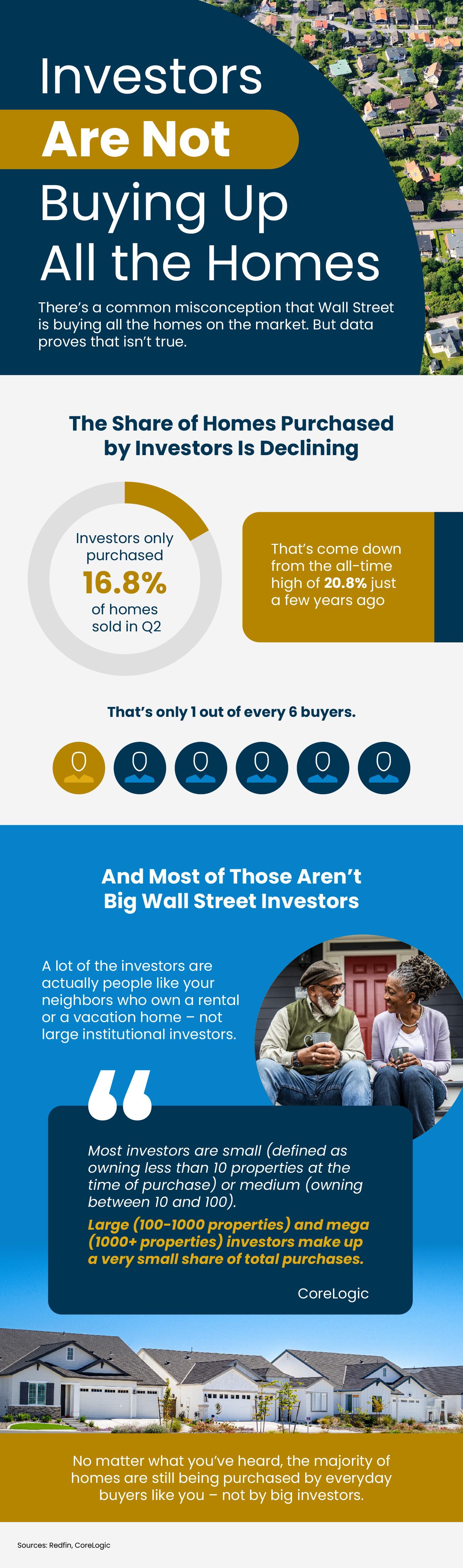
Understanding the volume of this activity is essential. In many Florida counties, investors still account for 20% to 30% of all residential purchases. When a significant portion of a neighborhood’s housing stock is removed from the "owner-occupied" pool, it creates a ripple effect on school district stability, HOA governance, and local tax bases.
How to Identify Investor Activity in Your Neighborhood
You do not need to be a real estate professional to spot the signs of a neighborhood being targeted by investors. There are several physical and digital indicators that point toward a high concentration of investment capital.
High Frequency of Unsolicited Offers
One of the most immediate signs of investor interest is a sudden increase in "off-market" solicitations. These usually arrive as postcards, "yellow letters" (handwritten-style notes), or automated text messages asking if you have considered selling your property. These are often sent by "wholesalers"—individuals who secure a contract on your home and then sell that contract to a deep-pocketed investor for a fee. If you and your neighbors are receiving these weekly, your ZIP code is likely flagged as a high-growth area in an investor’s database.
The Rise of LLC Ownership
In Florida, it is standard practice for investors to hold property in a Limited Liability Company (LLC) to protect their personal assets and provide a layer of anonymity. You can check your local County Property Appraiser’s website to see the names of owners in your street. If you see names like "Main Street Renewal LLC," "SFR Florida Owner LLC," or various "Homes 4 Rent" entities, you are looking at institutional footprints. Even smaller local investors will often use names like "123 Sunshine Dr LLC" to manage their portfolios.
"The Flipper Aesthetic"
If you notice several homes in your area being renovated simultaneously with a very specific, modernized look—often involving white or light gray exteriors, black hardware, and "luxury vinyl plank" (LVP) flooring visible through the windows—you are likely seeing the work of fix-and-flip investors. These homes are typically listed for sale within 60 to 90 days of the previous purchase, often at a significant markup.
Cash Transactions and Rapid Closings
Investors often win bidding wars because they offer "all-cash" deals with no appraisal contingencies. While you might not know the terms of a neighbor’s sale immediately, you can often infer it from how quickly the house goes from "Active" to "Closed." A traditional sale with a mortgage usually takes 30 to 45 days; an investor cash deal can close in as little as 7 to 14 days.
Why Florida Continues to Attract Investors in 2026
Despite the headlines regarding insurance volatility, Florida’s fundamental economic drivers remain robust. Understanding these drivers helps explain why investors are willing to pay premiums for homes in your neighborhood.
- Demographic Shifts: Florida’s population continues to grow at a rate that outpaces housing starts. Investors look for "supply-constrained" markets. If your neighborhood is close to a major employment hub (like the medical city in Lake Nona or the tech corridor in Tampa), it is a prime target.
- Yield and Rent Growth: As homeownership becomes more expensive due to high interest rates, the "renter-by-necessity" population grows. This allows investors to push rents higher, ensuring their "cap rate" (capitalization rate) remains healthy.
- Favorable Landlord-Tenant Laws: Compared to states like New York or California, Florida’s legal environment is generally viewed as more favorable for property owners regarding evictions and lease enforcement.
- Tax Benefits: The lack of state income tax in Florida allows both individual and corporate investors to keep a larger portion of their rental profits compared to other regions.
Comparing Types of Florida Home Investors
Not all investors have the same impact on a neighborhood. It is important to distinguish between a "mom-and-pop" landlord and a multi-billion-dollar hedge fund.
| Investor Type | Primary Goal | Typical Impact on Neighborhood | Holding Period |
|---|---|---|---|
| Institutional (REITs) | Long-term rental yield | Increases rental density; professional management but less "neighborly" | 10+ Years |
| iBuyers (Algorithms) | Transaction fees/quick flip | Provides liquidity; usually prices homes near market value | < 6 Months |
| Fix-and-Flip | Capital gains on renovation | Improves housing stock quality; can drive up property taxes | 3-6 Months |
| Mom-and-Pop | Retirement income/Equity | Minimal impact; often behave like traditional homeowners | 5-20 Years |
| Short-Term Rental (STR) | High-frequency cash flow | Can lead to noise/parking issues; "hotel-ification" of streets | Indefinite |
How to Use Public Records to Verify Investor Ownership
If you suspect your neighborhood is being bought up, you can verify this through official channels. Florida has excellent transparency laws regarding real estate.
Step 1: Visit the County Property Appraiser Website
Search for " [Your County] Property Appraiser." Most counties (like Miami-Dade, Orange, or Duval) have a searchable map or text database. Use the "Address Search" or "Map Search" function to look at your street.
Step 2: Analyze Owner Names
Look at the "Owner Name" column. If the address of the owner (the "Mailing Address") is different from the "Situs Address" (the physical location of the house), the home is likely an investment property. If the mailing address is a P.O. Box or an office in another state (like Charlotte, NC, or Scottsdale, AZ), it is almost certainly an institutional investment.
Step 3: Check the Official Records (Clerk of Court)
For more detail, visit the County Clerk of Court website and search the "Official Records." Here, you can find the actual deeds. Look for the "Documentary Stamp Tax" paid on the deed. This allows you to calculate the purchase price if it isn’t listed. You can also see if the buyer took out a mortgage; if there is no "Mortgage" document filed alongside the "Warranty Deed," it was a cash purchase.
The Pros and Cons of Investor Presence
The presence of investors is a double-edged sword for current Florida homeowners. Understanding both sides of the coin is essential for making informed decisions about your own property.
The Advantages:
- Price Floors: Investors provide a "floor" for property values. They are often willing to buy homes that are in poor condition ("as-is"), which helps keep the neighborhood from having eyesores that drag down everyone’s value.
- Liquidity: If you need to sell quickly for a job relocation or family emergency, having a market full of investors ensures you can exit the property in days rather than months.
- Renovation Capital: Investors often have the capital to perform major structural or aesthetic upgrades that individual homeowners might not be able to afford, improving the overall look of the street.
The Disadvantages:
- Reduced Inventory: High investor activity makes it much harder for first-time homebuyers and young families to enter the market, as they cannot compete with all-cash offers.
- Neighborhood Character: Renters often have less "skin in the game" regarding long-term maintenance or community involvement compared to owner-occupants.
- HOA Challenges: A high percentage of non-owner-occupied homes can sometimes make it difficult for an HOA to get a quorum for votes or can even affect the ability of future buyers to get traditional FHA financing.
Frequently Asked Questions
Is it legal for an investor to buy every house on a block?
Yes, in Florida, there are no state-level laws that prevent an individual or entity from buying multiple properties in a single neighborhood. However, some Homeowners Associations (HOAs) have bylaws that limit the percentage of homes that can be rented at any one time or require a minimum period of ownership (e.g., one or two years) before a home can be used as a rental.
How do I stop investors from calling and texting me?
To reduce solicitations, you should register your number on the National Do Not Call Registry. For physical mail, you can use services like DMAchoice to opt-out of prospective marketing. However, because real estate "wholesalers" often operate as individuals rather than large corporations, they may ignore these lists. Blocking the numbers and marking the mail as "Refused" is the most direct action.
Do investors pay more or less than market value?
It depends on the type of investor. iBuyers and institutional REITs often pay close to fair market value but charge "convenience fees." Fix-and-flip investors and wholesalers typically look for a discount—often 70% of the After Repair Value (ARV) minus renovation costs. If your home is in pristine condition, an investor will likely offer you less than a traditional family would.
Will the "Investor Trend" in Florida crash in 2026?
While "crash" is a strong word, the market is seeing a "normalization." In 2026, the cost of capital is higher than it was in 2021, and the cost of insurance is a significant drag on profits. This has caused some smaller investors to exit the market. However, large institutions with long-term horizons still see Florida as a safe bet due to the state’s continued economic growth and population trends.
How can I tell if a house is a short-term rental (Airbnb)?
Look for external signs like keypad locks on the front door, small signs with "house rules" or parking instructions, and a high turnover of different cars in the driveway. You can also check sites like AirDNA or simply search the address on Airbnb or VRBO to see if a listing exists. Many Florida municipalities now require short-term rentals to display a registration number or permit.
Recommended Actions for Homeowners
If you find that investors are buying heavily in your Florida neighborhood, your first step should be to review your HOA bylaws. If you want to preserve the owner-occupant character of your street, consider proposing amendments that limit short-term rentals or set rental caps.
Secondly, monitor your equity. Investor activity often drives up "comps" (comparable sales), which might mean your home is worth more than you realize. This is a good time to consult with a local real estate professional to get a "Broker Price Opinion" (BPO) so you know exactly where you stand in the 2026 market.
Finally, if you are approached by an investor to sell, always get a second opinion. The convenience of a cash offer is tempting, but in a high-demand state like Florida, you may be leaving tens of thousands of dollars on the table by not listing the home on the open market (MLS) where you can trigger a bidding war among both families and investors.