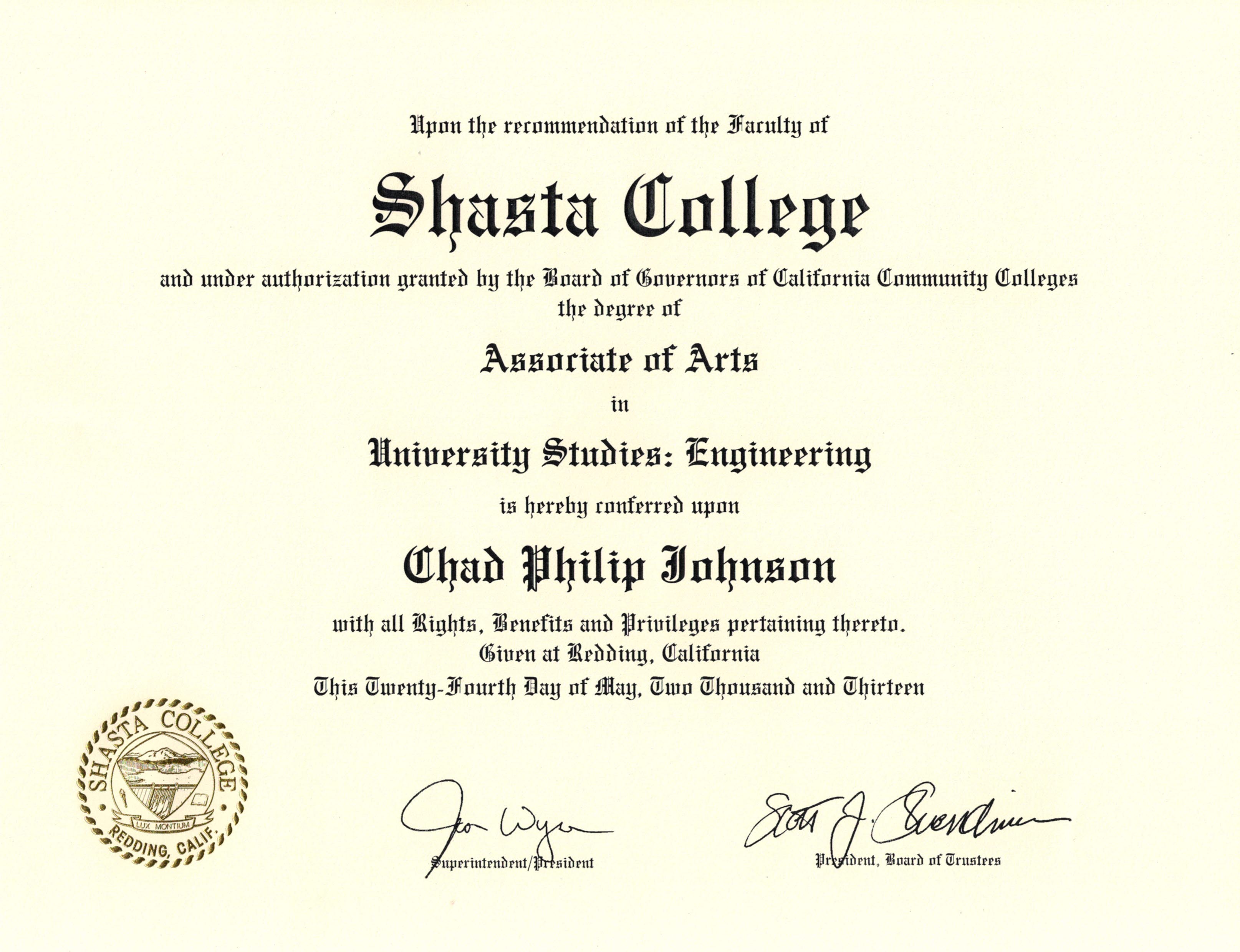
An Associate of Arts (AA) degree is a foundational undergraduate academic program that typically requires two years of full-time study and approximately 60 credit hours. It focuses on a broad liberal arts curriculum, including humanities and social sciences, designed primarily to prepare students for transfer into a four-year Bachelor of Arts program.
The Associate of Arts degree remains one of the most popular entry points into higher education in 2026. Often viewed as the "first half" of a bachelor's degree, it provides a flexible educational framework that allows students to explore various disciplines before committing to a specific major. Whether you are a high school graduate looking for an affordable start or a working professional seeking a career pivot, understanding the nuances of the AA degree is essential for making an informed academic decision.
Defining the Associate of Arts (AA) Degree
The Associate of Arts is a sub-baccalaureate degree awarded by community colleges, junior colleges, and some four-year universities. Its primary characteristic is its emphasis on a "well-rounded" education. Unlike vocational degrees that focus on specific technical skills, the AA degree prioritizes critical thinking, communication, and a broad understanding of the human experience.
In the current 2026 academic landscape, the AA degree serves two main purposes. First, it acts as a "transfer degree." Most students who earn an AA do so with the intention of transferring their credits to a university to complete a Bachelor of Arts (BA). Second, it serves as a terminal degree for entry-level positions in fields where a general post-secondary education is required but a specialized four-year degree is not.
The Core Philosophy of Liberal Arts
At the heart of the Associate of Arts meaning is the concept of "Liberal Arts." Historically, this term refers to the branches of knowledge—such as philosophy, literature, and history—that were considered essential for a free person to participate in civic life. In a modern context, a liberal arts education through an AA degree provides students with a versatile toolkit. Students learn how to analyze complex texts, write persuasively, understand historical context, and engage with diverse perspectives. These are often referred to as "soft skills," which 2026 employers increasingly value over narrow technical training that may become obsolete as technology evolves.
Structure and Credit Requirements of an AA Degree
To earn an Associate of Arts, a student must typically complete 60 semester credits or 90 quarter credits. For a full-time student taking 15 credits per semester, this process takes exactly four semesters or two academic years. However, part-time enrollment is common, allowing students to complete the degree over a longer period.
General Education Requirements
The bulk of an AA program consists of General Education (GenEd) requirements. These are standardized courses that ensure every graduate has a baseline of knowledge across multiple fields. While specific requirements vary by institution and state, they generally include:
- Communications (6–9 credits): English Composition I and II, and often Public Speaking.
- Humanities and Fine Arts (9–12 credits): Philosophy, Art History, Music Appreciation, Literature, or Foreign Languages.
- Social and Behavioral Sciences (9–12 credits): Psychology, Sociology, History, Political Science, or Economics.
- Natural Sciences (7–10 credits): Biology, Chemistry, Physics, or Geology, usually including at least one laboratory component.
- Mathematics (3–6 credits): College Algebra, Statistics, or Quantitative Reasoning.
Electives and Concentrations
Beyond the GenEd core, students use their remaining 15 to 20 credits for "electives." These courses allow students to dive deeper into a subject of interest or begin fulfilling the lower-division requirements for their intended bachelor’s major. For example, a student planning to major in Psychology at a four-year university would use their AA electives to take Developmental Psychology or Abnormal Psychology.
In 2026, many community colleges offer "AA with a Concentration." This means that while the degree is still a general Associate of Arts, the transcript reflects a specific focus, such as English, History, or Communication Studies. This concentration helps streamline the transfer process by ensuring the student takes the specific prerequisites needed for their future major.
Associate of Arts vs. Associate of Science vs. Associate of Applied Science
When researching associate degrees, it is vital to distinguish the AA from other common types, as the "meaning" of the degree changes based on its designation.
| Feature | Associate of Arts (AA) | Associate of Science (AS) | Associate of Applied Science (AAS) |
|---|---|---|---|
| Primary Focus | Humanities, Social Sciences, Fine Arts | STEM, Math, Business, Health | Technical, Vocational, Trade Skills |
| Goal | Transfer to a Bachelor of Arts (BA) | Transfer to a Bachelor of Science (BS) | Immediate Entry into Workforce |
| Curriculum | Broad Liberal Arts | Mathematics and Science Heavy | Hands-on, Job-Specific Training |
| Transferability | Very High | High | Low to Moderate |
| Typical Majors | English, History, Sociology, Art | Biology, Engineering, Computer Science | Welding, Nursing (ADN), Paralegal |
The Associate of Arts is the most flexible of the three. If you are unsure of your long-term career goal but know you want a college degree, the AA is generally the safest path. The Associate of Science (AS) is similarly designed for transfer but focuses on the analytical and scientific rigor required for STEM fields. The Associate of Applied Science (AAS) is fundamentally different; it is designed for students who want to enter a specific trade immediately upon graduation. While some AAS credits may transfer, many are considered "terminal" and might not satisfy the requirements of a four-year university's liberal arts core.
The Transfer Process: Moving from AA to BA
The primary intent for most AA students is the "2+2" pathway: two years at a community college followed by two years at a university. This path is financially savvy and academically strategic.
Articulation Agreements
To facilitate this move, many states and institutions have "articulation agreements." These are formal contracts between community colleges and four-year universities that guarantee credits earned in an AA program will transfer seamlessly. In 2026, many state systems have "Common Course Numbering," which means English 101 at a local community college is identical to English 101 at the state's flagship university.
When a student completes an AA degree under a statewide transfer agreement, they are often granted "junior status" at the four-year institution. This means they have already satisfied all general education requirements and can focus entirely on their major-specific courses for the remaining two years. This path significantly reduces the overall cost of a bachelor’s degree, as tuition at community colleges is a fraction of university rates.
Career Opportunities with an Associate of Arts
While many use the AA as a stepping stone, the degree itself holds value in the 2026 job market. It signals to employers that the candidate possesses the discipline to complete a post-secondary program and has mastered essential communication and organizational skills.
Top Industries for AA Graduates
- Education: AA graduates often find work as teacher assistants, preschool teachers, or instructional aides. Some states require at least an associate degree for classroom support roles in public schools.
- Business and Administration: Roles such as administrative assistant, office manager, or customer service lead are common. The broad education of an AA degree prepares individuals to handle diverse tasks, from drafting reports to managing client relations.
- Social Services: Entry-level positions in community organizations, non-profits, and social advocacy groups often accept an AA degree. Common titles include social service assistant or community outreach worker.
- Sales and Retail Management: The communication skills inherent in an AA program are highly transferable to sales roles and retail management positions, where understanding human behavior and clear expression are key.
- Legal Support: While many paralegals hold specialized AAS degrees, an AA in a related field like political science or history can serve as a foundation for entry-level legal assistant roles.
Cost and Financial Considerations in 2026
The financial meaning of an Associate of Arts degree is perhaps its most compelling feature. As of 2026, the average annual tuition at a public two-year college remains significantly lower than at four-year public or private institutions.
- Lower Tuition: Students can save tens of thousands of dollars by completing their first two years of college at a community college.
- Financial Aid: AA students are eligible for federal and state financial aid, including Pell Grants and student loans.
- Scholarships: Many four-year universities offer specific "Transfer Scholarships" for students who graduate with an AA degree and a high GPA, further incentivizing this path.
- Reduced Debt: By paying out-of-pocket or using grants for the first two years, students can drastically reduce the amount of debt they accumulate by the time they finish their bachelor’s degree.
Advantages and Disadvantages of Pursuing an AA Degree
Deciding to pursue an Associate of Arts requires weighing its benefits against its limitations.
Advantages
- Flexibility: It is an ideal "exploratory" degree. If you haven't decided on a career, the AA exposes you to different fields without wasting time or money.
- Accessibility: Community colleges typically have "open enrollment" policies, meaning they accept all students with a high school diploma or GED, regardless of past academic performance.
- Bridge to University: For students who were not ready for a large university environment out of high school, the AA provides a smaller, more supportive environment to build academic confidence.
Disadvantages
- Lower Initial Earning Potential: Compared to specialized technical degrees (like Nursing or Cybersecurity), a general AA degree often leads to lower starting salaries if the student does not pursue a bachelor's degree.
- Transfer Hurdles: Despite articulation agreements, some private or out-of-state universities may not accept all credits, potentially extending the time needed to graduate.
- Perception: Although decreasing, some stigma remains regarding community college education compared to "starting" at a four-year university. However, in 2026, employers and graduate schools increasingly focus on the final degree-granting institution and overall GPA.
Frequently Asked Questions (FAQ)
Is an Associate of Arts degree worth it in 2026?
Yes, an AA degree is highly valuable as a cost-saving measure and a foundational credential. In a 2026 economy that prioritizes adaptable skills, the liberal arts focus of an AA degree provides a versatile base that can be applied to numerous industries or advanced studies. It is particularly "worth it" for those planning to earn a bachelor's degree but wanting to minimize student debt.
Can I get a job with just an Associate of Arts?
Yes, you can secure entry-level positions in various fields including administration, sales, social services, and early childhood education. While some high-paying technical roles require more specialized training, the AA degree meets the "some college" or "associate degree" requirement for many corporate and civil service jobs.
How long does it take to get an AA degree?
A standard Associate of Arts degree takes two years of full-time study. This typically involves four 15-week semesters. However, many institutions offer accelerated summer terms or 8-week "mini-mesters," allowing motivated students to finish in 18 months. Part-time students may take three to five years depending on their course load.
What is the difference between an AA and a BA?
The primary difference is the depth and duration of study. An Associate of Arts (AA) is a two-year degree covering general education and introductory courses. A Bachelor of Arts (BA) is a four-year degree that includes those same first two years but adds two more years of specialized, upper-division coursework in a specific major. You usually need an AA (or equivalent credits) to earn a BA.
Can I earn an Associate of Arts online?
By 2026, almost all community colleges and many universities offer the Associate of Arts entirely online. Because the AA focus is on theoretical and communicative subjects rather than lab-intensive or hands-on trades, it is one of the most accessible degrees to complete in a virtual environment.
Final Recommendation
If your goal is to eventually earn a bachelor’s degree in a field like English, Psychology, History, Communication, or Business, the Associate of Arts is your most logical starting point. It offers a structured yet flexible path that maximizes credit transferability while minimizing costs.
For those who are unsure of their career path, the AA serves as an excellent "buffer," providing a high-quality education that keeps all your options open. Before enrolling, ensure you meet with an academic advisor to discuss your transfer goals and confirm that your chosen community college has a strong articulation agreement with your target four-year university. This proactive step ensures that every credit you earn moves you closer to your ultimate academic and professional objectives.