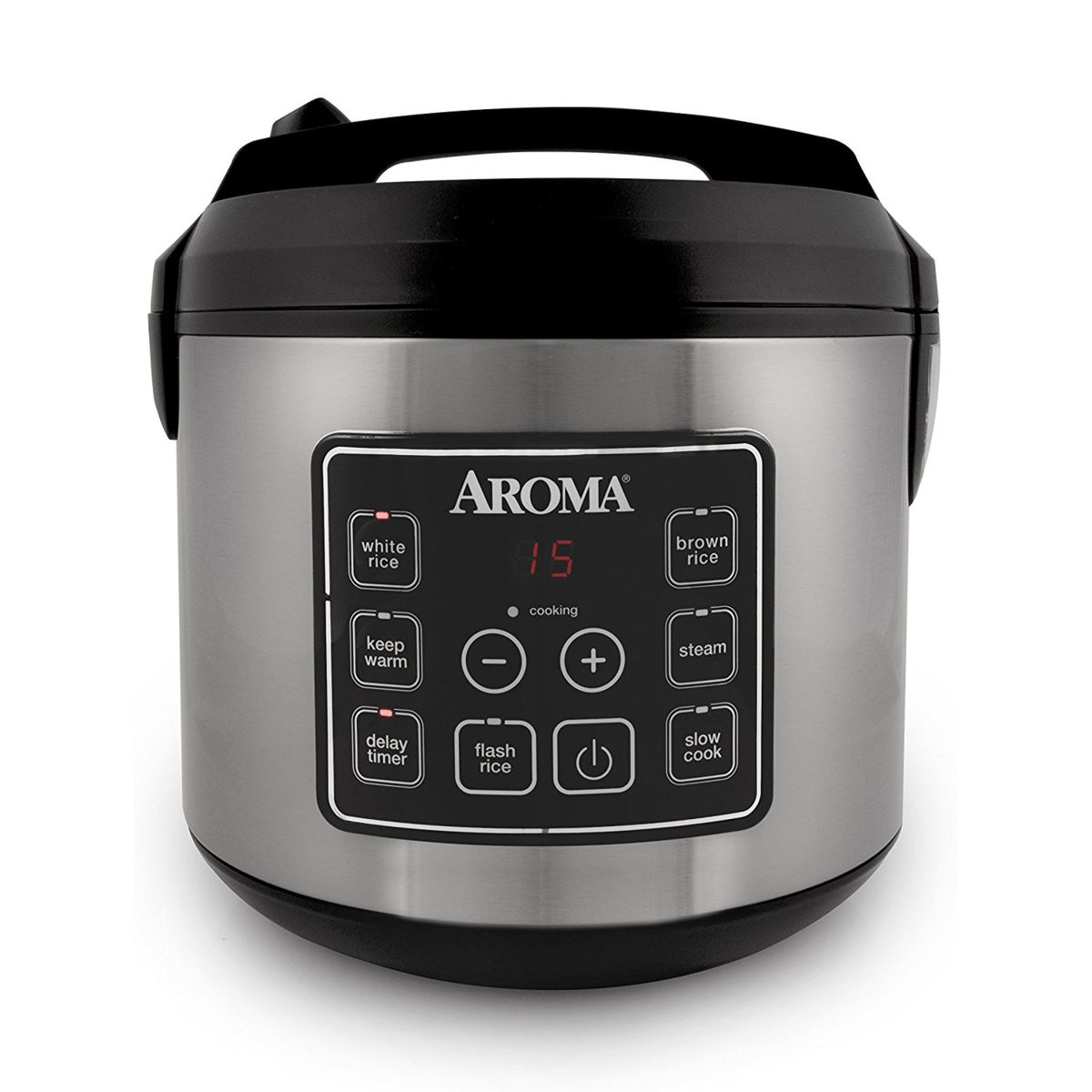
An Aroma rice cooker typically takes 20 to 35 minutes to cook standard white rice and 45 to 60 minutes for brown rice. These durations include the time needed for the water to reach a boil and the grain to absorb the moisture. Specific times vary based on the rice variety, water volume, and the specific model's heating technology.
Understanding Aroma Rice Cooker Technology
To understand how long rice takes in an Aroma cooker, one must first understand the mechanism behind these appliances. Aroma Housewares has long been a leader in the kitchen appliance market, and as of 2026, their product line ranges from simple "on/off" pot-style cookers to advanced digital models utilizing Fuzzy Logic and Induction Heating (IH) technology.
In a basic manual Aroma rice cooker, the process is governed by a simple thermal sensor. The unit heats the internal pot until the temperature exceeds the boiling point of water (212°F or 100°C). Since liquid water cannot exceed this temperature at standard atmospheric pressure, the sensor knows that once the temperature rises above this threshold, the water has been fully absorbed or evaporated. At this precise moment, the cooker automatically switches from "Cook" to "Warm."
Digital Aroma models are more sophisticated. They often incorporate a "soak" period at the beginning and a "steam" period at the end of the cycle. This is why a digital Aroma rice cooker might appear to take longer than a manual one; it is prioritizing the texture and enzymatic breakdown of the starch over raw speed.
Average Cooking Times by Rice Variety
The variety of rice is the single most significant factor in determining your wait time. Different grains have different bran thicknesses and starch compositions, requiring varying amounts of heat and hydration time.
White Rice (Long-Grain, Jasmine, Basmati)
White rice has had its husk, bran, and germ removed. Because the tough outer layers are gone, water penetrates the grain quickly.
- 1 to 2 Cups: 20–25 minutes.
- 3 to 5 Cups: 25–30 minutes.
- 6+ Cups: 30–40 minutes.
Jasmine and Basmati rice typically fall on the shorter end of these spectrums because they are often aged or processed to be lighter and fluffier.
Brown Rice (Whole Grain)
Brown rice retains its nutrient-rich bran and germ layer. This layer acts as a waterproof barrier, significantly slowing down the absorption of water.
- 1 to 2 Cups: 40–50 minutes.
- 3 to 5 Cups: 50–60 minutes.
- 6+ Cups: 60–70 minutes.
Aroma digital cookers usually have a dedicated Brown Rice button. This setting includes a preliminary "warm soak" that softens the bran before the high-heat boiling phase begins. Without this soak, the rice would likely be "blown out" on the outside while remaining crunchy in the center.
Specialty Grains
As of 2026, many Aroma models include presets for specialized grains.
- Sushi Rice: 30–35 minutes. It requires slightly more precision in the cooling and steaming phase to achieve the "sticky" consistency.
- Quinoa: 15–20 minutes. Quinoa is technically a seed and cooks much faster than traditional cereal grains.
- Wild Rice: 50–60 minutes. Often tougher than brown rice, wild rice requires the maximum duration of heat.
The "Flash Rice" Function and Speed Cooking
Many Aroma Professional and digital series cookers feature a Flash Rice (or Quick Rice) function. This setting is designed to shave off approximately 5–10 minutes from the standard white rice cycle.
The "Flash Rice" setting works by bypassing the preliminary soaking phase and moving straight to high-intensity boiling. While this is efficient for busy weeknights, it comes with a trade-off. Rice cooked on the Flash setting may be slightly firmer and may not have the same level of sweetness, as the rapid heating doesn't allow for the same enzymatic conversion of starches into sugars.
It is generally recommended to only use Flash Rice for white rice. Attempting to "Flash Cook" brown rice usually results undercooked, indigestible grains because the bran layer simply cannot be hydrated that quickly.
Factors That Change Your Cook Time
While the averages provided above are reliable, several environmental and procedural factors can fluctuate the duration by 5 to 15 minutes.
1. Water Temperature
If you fill your Aroma rice cooker with ice-cold water from a filtered pitcher, the heating element must work longer to bring that water to a boil. Using room-temperature or slightly warm water can decrease the total cycle time. However, never use boiling water to start the process, as this can confuse the internal sensors and lead to unevenly cooked rice.
2. Altitude and Atmospheric Pressure
At higher altitudes, the boiling point of water is lower. If you are cooking in a high-altitude city (like Denver or Mexico City), the water evaporates more quickly at a lower temperature. Aroma cookers may shut off earlier than intended, or the rice may require a longer duration to soften because the "boil" isn't as hot as it would be at sea level. In these cases, adding an extra 2–3 tablespoons of water per cup can help compensate.
3. The Power of the Heating Element
The wattage of your specific Aroma model plays a role. A small 6-cup (cooked) "Select Stainless" pot usually has a lower wattage heating element than a 20-cup "Professional" Digital model. Larger units have more powerful elements to handle larger volumes of water, but they can also bring small amounts of rice to a boil more aggressively.
4. Rinse vs. Non-Rinse
Washing your rice removes excess surface starch. While this primarily affects texture (preventing gumminess), it also slightly alters how the water interacts with the grain surface. Unwashed rice creates a thicker, starchy liquid that may reach "boiling" bubbles faster, potentially triggering sensors a minute or two earlier than washed rice.
Aroma Rice Cooker Timing Reference Chart
The following table provides estimated times for standard Aroma models (Digital and Manual) based on 2026 performance standards.
| Rice Type | Uncooked Rice Amount | Water Ratio (Rice:Water) | Estimated Time (Minutes) |
|---|---|---|---|
| White Rice | 1 Cup | 1 : 1.5 | 20–25 |
| White Rice | 3 Cups | 1 : 1.25 | 25–35 |
| Brown Rice | 1 Cup | 1 : 2 | 45–55 |
| Brown Rice | 3 Cups | 1 : 1.75 | 55–65 |
| Flash Rice | 2 Cups | 1 : 1.5 | 15–20 |
| Sushi Rice | 2 Cups | 1 : 1.1 | 30–35 |
| Quinoa | 1 Cup | 1 : 2 | 15–18 |
| Barley | 1 Cup | 1 : 2.5 | 45–50 |
Note: The "Rice:Water" ratio uses the Aroma measuring cup (180ml) included with the device.
The Importance of the "Resting" Phase
A common mistake users make is opening the lid as soon as the Aroma rice cooker clicks to "Warm." For the best results, you should factor in an additional 5 to 10 minutes of "rest" time into your schedule.
During this resting phase, the residual steam inside the pot redistributes. The grains at the very bottom, which were in direct contact with the heating surface, lose their excess moisture to the grains at the top. This results in a uniform texture throughout the pot. If you skip this, the bottom layer of rice may be slightly scorched or "crusty" (known in some cultures as tahdig or concon), while the top remains slightly wet.
Troubleshooting Slow or Fast Cooking Times
If your Aroma rice cooker is taking significantly longer than an hour for white rice, or if it is shutting off within 10 minutes, there are several technical issues to investigate.
The Problem: Rice Takes Too Long
- Voltage Issues: If the cooker is plugged into an overloaded circuit or a power strip with multiple high-draw appliances (like a toaster), it may not be receiving full power.
- Sensor Buildup: If the heating plate or the bottom of the inner pot has burnt-on food or mineral deposits, the heat transfer is inefficient. Ensure the exterior of the inner pot is bone-dry and clean before placing it in the cooker.
- Lid Not Sealed: If the steam vent is blocked or if the lid is not sitting flush, steam escapes. The cooker will continue to heat indefinitely because the water never reaches the point of full absorption at the required temperature.
The Problem: Rice Finishes Too Quickly (Underdone)
- Insufficient Water: If you use too little water, the sensor will detect a temperature spike early and switch to "Warm" before the rice is soft.
- Manual Override: Ensure you have selected the correct setting. Using the "White Rice" setting for "Brown Rice" will consistently result in undercooked grains because the cycle is too short.
Maintenance for Consistent Timing
To ensure your Aroma rice cooker maintains its factory-specified cooking times, regular maintenance of the Center Sensor is vital. In most models, this is a small, spring-loaded disk in the center of the heating plate.
- Check the Spring: Press down on the center disk. It should move freely and spring back up. If it is stuck, food debris may be interfering with its ability to accurately measure the pot's weight and temperature.
- Clean the Plate: Use a damp cloth to wipe the heating plate once it has cooled. Carbonized starch on the plate acts as an insulator, slowing down the cooking time.
- Inspect the Gasket: On digital models with locking lids, the silicone gasket must be clean. A leak in the gasket prevents the internal pressure from stabilizing, which can add 10+ minutes to the cooking cycle.
FAQs
Can I open the lid to check the rice?
It is strongly discouraged to open the lid during the cooking cycle. Aroma rice cookers rely on trapped steam to cook the top layers of the grain. Every time you lift the lid, you release the accumulated heat and pressure, which can add several minutes to the cooking time and result in unevenly cooked rice.
Why does my 20-cup cooker take longer for small portions?
Even if you are only cooking one cup of rice, a larger 20-cup unit has a bigger internal volume (air space) that needs to be saturated with steam. It also has a heavier inner pot that takes longer to heat up than the thin pot of a 6-cup model.
Is the "Warm" setting still cooking the rice?
The "Keep Warm" setting typically maintains a temperature between 140°F and 160°F (60°C–71°C). This is above the food safety "Danger Zone" defined by the USDA, but it is not hot enough to continue the cooking process. It is designed only to maintain the temperature for serving.
Does the age of the rice affect the cooking time?
Yes. "New crop" rice (harvested recently) contains more internal moisture and cooks slightly faster. "Old crop" rice is drier and may require an extra 2–5 minutes of cooking time and a slightly higher water-to-rice ratio.
Can I use the timer to start cooking later?
Most Aroma digital models have a Delay Timer. This allows you to place the rice and water in the cooker and set it to finish up to 15 hours later. Note that the rice will soak in the water during this entire period, which often leads to a softer texture and a slightly shorter actual "heating" time once the cycle begins.
Final Recommendation for Aroma Users
To achieve the most consistent results, always use the measuring cup provided by Aroma, as it follows the Japanese standard of 180ml rather than the US standard of 240ml. For a standard meal, plan for 30 minutes for white rice and 60 minutes for brown rice to account for both the cooking cycle and the essential 10-minute rest period. If you are in a rush, utilize the Flash Rice setting for white varieties, but avoid it for whole grains to ensure food quality and digestibility.