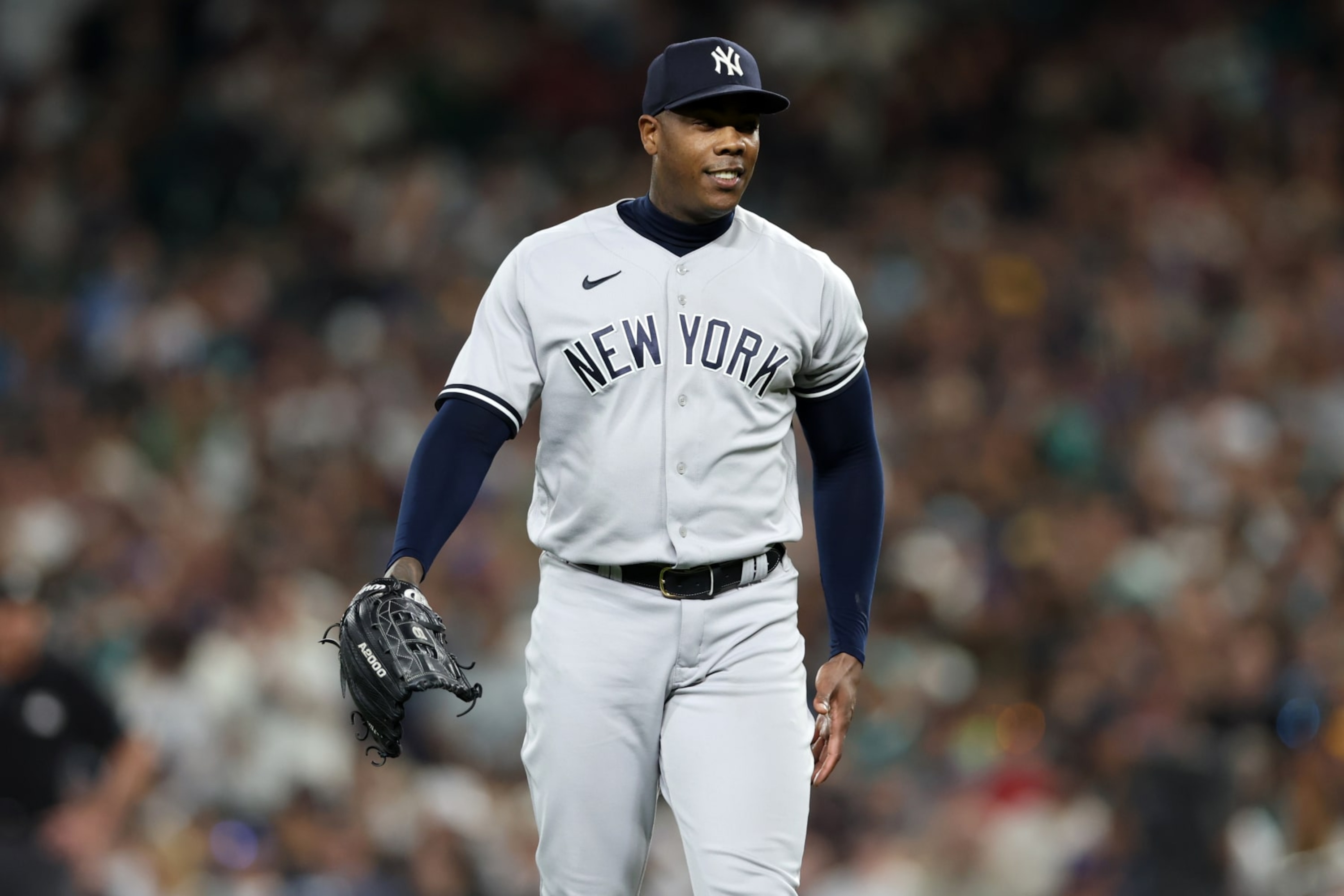
Aroldis Chapman’s career in Major League Baseball has been defined as much by his record-breaking velocity as by the significant financial benchmarks he has set as one of the game's most elite relief pitchers. Since his defection from Cuba and subsequent signing with the Cincinnati Reds in 2010, Chapman has navigated multiple high-value contracts, record-setting free agency deals, and high-profile trades, cementing his status as a premier closer through various stages of his professional tenure.
The Foundation: The Cincinnati Reds Era (2010–2015)
Aroldis Chapman’s entry into Major League Baseball was a watershed moment for international scouting and contract valuation. In January 2010, the Cincinnati Reds signed the then-22-year-old left-hander to a six-year, $30.25 million contract. At the time, this was a massive commitment for a player who had not yet faced MLB competition, but the Reds were banking on his documented, triple-digit fastball.
This initial contract was structured as a major league deal that provided the necessary security for Chapman to transition from the Cuban national system. It covered his formative years in the big leagues, during which he quickly transformed from a developmental prospect into one of the most feared late-inning weapons in the sport. Throughout this tenure, his salary evolved through standard arbitration processes, but the stability of that original deal allowed him to establish his professional footprint in North America before ever hitting the open market.
The Move to the Big Market: New York and Chicago (2016)
The 2016 season proved to be a pivotal point in Chapman’s financial career. Entering the final year of his original contract, Chapman was traded from the Cincinnati Reds to the New York Yankees in December 2015. This trade set the stage for what would become one of the most lucrative periods for a relief pitcher in baseball history.
Midway through the 2016 season, the Yankees traded Chapman to the Chicago Cubs as a rental player. The move was highly publicized, with the Cubs aiming to shore up their bullpen for a World Series run. While this trade did not change the terms of his existing contract, it placed Chapman in the center of the postseason spotlight. His performance during the Cubs’ historic championship run significantly bolstered his leverage heading into the subsequent offseason, where he was slated to become an unrestricted free agent for the first time.
The Record-Setting Yankees Extension (2017–2022)
Following the 2016 season, Aroldis Chapman re-signed with the New York Yankees in December 2016. The deal was historic: a five-year, $86 million contract. At the time of signing, it was the largest contract ever awarded to a relief pitcher, emphasizing the premium value placed on elite late-inning stabilizers.
The contract included several complex clauses, including a limited no-trade provision and an opt-out clause after the third season. By signing this deal, Chapman bypassed the traditional risks of the closer market, securing an average annual value (AAV) of $17.2 million. This contract served as the centerpiece of his career earnings, providing him with a long-term home in the Bronx and establishing a new market floor for top-tier relievers.
In November 2019, rather than opting out of the remaining two years of his deal, Chapman and the Yankees agreed to an extension. The sides added one year to the existing contract, keeping him in pinstripes through 2022. This amendment increased the total value of his commitment to the Yankees and demonstrated a mutual desire to maintain the relationship despite the high financial stakes involved.
Transitioning Through One-Year Deals (2023–2026)
As Chapman entered the post-Yankees phase of his career, his contract structure shifted from long-term stability to high-upside, short-term agreements. This transition reflects the common path for veteran relief pitchers who, while still effective, operate on a year-to-year basis as they navigate their late 30s.
In January 2023, Chapman signed a one-year, $3.75 million contract with the Kansas City Royals. This "prove-it" deal was designed to revitalize his market value after a difficult final season in New York. Following a productive stint in Kansas City, he was traded to the Texas Rangers, where he played a key role in their 2023 championship success.
Entering the 2024 season, Chapman sought to capitalize on his late-season momentum with the Rangers. He signed a one-year, $10.5 million contract with the Pittsburgh Pirates. This deal reflected a significant increase from his previous year’s salary, signaling that front offices still valued his strikeout ability and high-leverage experience. In 2025 and 2026, Chapman continued his career trajectory through veteran-focused contracts, prioritizing roster situations that provided opportunities to close games and maintain his statistical profile.
Comparative Analysis: Relief Pitcher Market Valuations
To understand the scope of Chapman's financial history, it is helpful to look at how his contracts compared to the broader relief pitcher market during his prime years. The following table highlights key milestones in his compensation relative to industry standards.
| Period | Team | Contract Type | Significance |
|---|---|---|---|
| 2010–2015 | Cincinnati | Rookie Major League Deal | Established entry point for elite international talent. |
| 2017–2022 | New York (AL) | Multi-year Free Agent Deal | Set the then-record for total value for a reliever ($86M). |
| 2023 | Kansas City | One-year "Showcase" Deal | Pivot to market re-entry after tenure in NY. |
| 2024 | Pittsburgh | Veteran One-year Deal | Market correction reflecting continued elite strikeout rates. |
Key Factors Influencing Contract Negotiations
Several variables have influenced the trajectory of Aroldis Chapman’s earnings throughout his career. Understanding these factors provides context for why his contract values have fluctuated between record-breaking multi-year deals and shorter, high-AAV veteran contracts.
1. The "Closer" Premium
Teams have consistently been willing to pay a premium for relief pitchers who can reliably record the final three outs of a game. Chapman’s ability to maintain a strikeout-per-nine-innings rate significantly higher than the league average made him a unique asset during the mid-2010s, justifying the $86 million contract he secured from the Yankees.
2. Performance Volatility
Relief pitching is inherently volatile. Unlike starting pitchers who provide volume, relievers are subject to the "relief paradox," where a single bad month can drastically alter their perceived value. Chapman’s history shows that when his command wavered, his market value dipped, leading to the one-year contracts that became common for him in the mid-2020s.
3. Age and Physicality
As a player relies on extreme velocity, the physical toll is substantial. As Chapman moved into his mid-to-late 30s, team front offices shifted their risk assessment. They moved away from long-term guarantees, preferring one-year deals that minimized long-term financial exposure while still providing access to his specialized skillset.
Frequently Asked Questions
What was the total value of Aroldis Chapman’s largest contract? Aroldis Chapman’s largest contract was the five-year, $86 million deal he signed with the New York Yankees in December 2016. This contract, which included an opt-out clause and was later extended, stands as the most significant financial agreement of his career.
Why did Chapman move to one-year contracts in 2023 and beyond? As Chapman reached his mid-30s, the market for relief pitchers shifted toward shorter, incentive-laden contracts. This structure allows veteran players to maximize their immediate earnings based on current performance while allowing teams to mitigate the risks associated with the aging curve of high-velocity pitchers.
Did trade deadlines impact Chapman’s career earnings? While trades themselves do not directly change a player's contract, they have historically been critical for Chapman. By being traded to championship-contending teams like the 2016 Chicago Cubs and 2023 Texas Rangers, he maintained high visibility and demonstrated his value in high-leverage situations, which helped sustain his market value during free agency.
What is the role of an opt-out clause in a contract like Chapman’s? An opt-out clause allows a player to terminate their contract early and return to free agency. Chapman’s 2016 Yankees contract included such a clause, giving him the leverage to test the market again if his performance warranted a new, more lucrative deal, or if the market for relief pitchers had shifted favorably in his direction.
How do performance incentives work in his recent contracts? Recent one-year contracts for veteran relievers often include performance-based bonuses tied to games finished, appearances, or roster status. These incentives protect the team from paying for performance they don't receive while providing the player with a path to earn a higher total salary if they remain healthy and effective.
Strategic Financial Outlook
For players in Aroldis Chapman’s position, the final stages of a career are often about balancing remaining competitive with maximizing current-year salary. The shift toward one-year agreements is a strategic decision that favors liquidity and flexibility. For observers of MLB finances, Chapman’s journey illustrates the transition from a "top-of-market" asset to a "veteran-depth" asset.
His history serves as a case study for future relief pitchers: the importance of securing a long-term "guarantee" deal while in one's physical prime, and the necessity of maintaining adaptability when the market shifts toward shorter-term commitments. As of 2026, Chapman remains a fixture in the relief market, continuing to command interest from clubs that value his deep experience in high-pressure postseason environments and his enduring ability to impact games in short bursts.