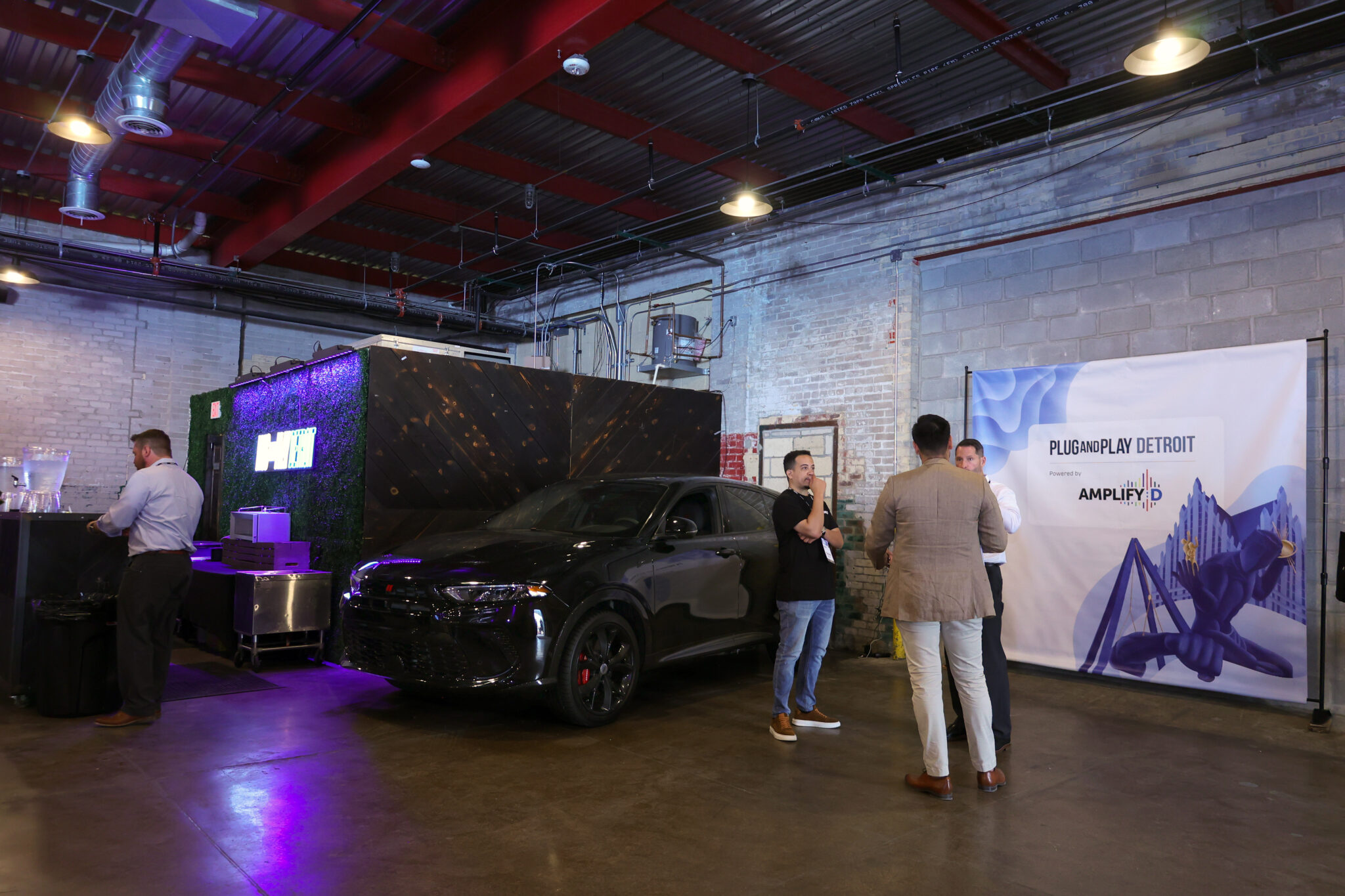
Detroit has transformed from a traditional automotive manufacturing center into a global epicenter for smart mobility, integrating electric vehicle (EV) infrastructure, autonomous testing, and multimodal transit systems. By 2026, the Michigan Central innovation district and the nation’s first wireless charging roadways have solidified the city’s role as the primary testing ground for the future of transportation in America.
The narrative of Detroit has long been synonymous with the internal combustion engine, but the mid-2020s have signaled a decisive pivot. This transition is not merely about changing the propulsion systems of vehicles; it is a fundamental reimagining of how people, goods, and information move through an urban environment. As of 2026, the synergy between public policy, private investment, and academic research has turned Detroit into a "living laboratory" where the future of mobility is being coded, tested, and deployed in real-time.
The Michigan Central Innovation District: A Global Hub
At the heart of Detroit’s mobility revolution is the Michigan Central innovation district. Once a symbol of urban decay, the restored Michigan Central Station in Corktown now serves as the anchor for a 30-acre campus dedicated to the future of transportation. By 2026, this district has become a magnet for global talent, housing a mix of legacy automakers, nimble startups, and venture capital firms.
The district operates on an "open platform" philosophy. Unlike the siloed R&D centers of the past, Michigan Central encourages collaboration between competitors. For example, Ford Motor Company—the primary catalyst behind the project—shares the space with tech giants and urban planners to solve "last-mile" delivery challenges and develop sophisticated vehicle-to-everything (V2X) communication protocols.
One of the standout features of the district in 2026 is the Newlab at Michigan Central. This facility provides startups with access to advanced prototyping equipment, including 3D printing labs, robotics testing zones, and high-speed data networks. The focus here is on "hard tech"—the physical components and infrastructure required to make autonomous and electric flight (AAM) and ground transport a reality. This ecosystem has significantly reduced the time it takes for a mobility concept to move from a digital twin simulation to a physical pilot on Detroit’s streets.
Electrification and the Rise of Wireless Charging Infrastructure
In 2026, Detroit is no longer just building EVs; it is building the infrastructure that makes them viable for everyone. A cornerstone of this effort is the implementation of inductive charging technology. Detroit made international headlines with the completion of the first public wireless EV charging road in the United States, located near the Michigan Central district.
This technology allows electric vehicles equipped with specialized receiver pads to charge their batteries while driving or idling over copper inductive charging coils embedded beneath the asphalt. This "dynamic charging" reduces the need for massive battery packs, as vehicles can "sip" energy throughout their journey. For commercial fleets—such as delivery vans and public buses—this has been a game-changer, allowing for 24/7 operation without the long downtimes associated with traditional plug-in charging.
Beyond wireless roads, the city has expanded its Detroit Smart Parking Lab (DSPL). This facility, a collaboration between the Michigan Economic Development Corporation (MEDC), Bedrock, and Bosch, tests automated valet parking and EV charging integration. In 2026, the lab is focusing on "plug-and-charge" standardization, ensuring that any EV can pull into a Detroit parking structure and initiate charging and payment automatically, without the need for multiple apps or membership cards.
Autonomous Vehicles (AVs) and V2X Communication
The dream of autonomous transportation has moved from closed test tracks to the complex streets of Detroit. The city’s approach to AVs is grounded in Vehicle-to-Everything (V2X) technology. By 2026, a significant portion of Detroit’s intersections are equipped with smart sensors and Dedicated Short-Range Communications (DSRC) units that "talk" to vehicles.
This connectivity allows cars to see around corners, receive real-time updates on traffic light timing (Green Light Optimized Speed Advisory), and detect pedestrians or cyclists who may be in a blind spot. The data collected from these intersections is fed into a centralized traffic management system that uses artificial intelligence to optimize traffic flow, reducing idle times and lowering carbon emissions across the city.
The Michigan Mobility Corridor, connecting Detroit to Ann Arbor, serves as a dedicated lane for connected and autonomous vehicles. This project, which reached a high level of operational maturity by 2026, utilizes cellular vehicle-to-everything (C-V2X) technology to coordinate "platooning" for freight trucks. Platooning allows trucks to travel closely together at high speeds, reducing aerodynamic drag and improving fuel efficiency, while automated braking systems ensure safety.
Public Transit and Mobility Equity
A critical challenge for Detroit has been ensuring that the "future of mobility" does not leave behind the residents who rely on public transit. In 2026, the city is addressing this through Mobility as a Service (MaaS) integrations. The Detroit Department of Transportation (DDOT) and the Suburban Mobility Authority for Regional Transportation (SMART) have integrated their ticketing systems with micro-mobility providers like e-scooter and e-bike companies.
Through a single mobile application, a Detroit resident can plan a trip that involves a DDOT bus, a transfer to the QLine streetcar, and a final "last-mile" leg on an electric scooter. For those without smartphones or bank accounts, the city has deployed "Mobility Hubs"—physical kiosks where users can pay for all forms of transit using cash and receive a universal transit card.
Furthermore, the introduction of autonomous micro-shuttles in neighborhoods with limited bus access has begun to bridge the transit gap. These low-speed, electric shuttles operate on fixed loops, providing reliable connections to major transit arteries. By focusing on "mobility equity," Detroit is using high-tech solutions to solve long-standing socio-economic barriers to reliable transportation.
Comparison of Key Mobility Initiatives in Detroit (2026)
The following table summarizes the primary projects defining Detroit's mobility landscape and their current impact.
| Initiative | Primary Technology | Primary Goal | Current 2026 Status |
|---|---|---|---|
| Michigan Central | IoT, Robotics, AI | Cross-industry collaboration | Fully operational innovation district |
| Inductive Roadways | Electromagnetic Induction | Charging EVs while in motion | Active pilot on 14th Street; expanding |
| V2X Smart Corridors | C-V2X, 5G | Traffic safety and optimization | Operational on Detroit-to-Ann Arbor route |
| Detroit Smart Parking | Automated Valet, EV CI | Streamlining urban parking | Multi-deck integration in Downtown/Midtown |
| Autonomous Shuttles | LiDAR, Computer Vision | Last-mile neighborhood transit | Active in Corktown and East Side pilots |
| Aerial Mobility (AAM) | Electric VTOL | Rapid medical and cargo transport | Designated "Drone Zones" for test deliveries |
Economic Impact and the Workforce of the Future
The shift toward mobility-tech has fundamentally altered Detroit's labor market. While traditional manufacturing remains important, the demand for software engineers, data analysts, and battery technicians has surged. In response, the Michigan Mobility Institute and local institutions like Wayne State University have developed specialized curricula to retrain the existing workforce.
By 2026, "Mobility Technician" has become a standardized trade certification, covering the maintenance of EV high-voltage systems and the calibration of autonomous sensor suites. This proactive approach to workforce development has prevented the massive displacement of workers that many feared during the early days of the EV transition.
Moreover, the influx of mobility startups has revitalized Detroit's commercial real estate. Areas like Corktown, Midtown, and the Riverfront are seeing high occupancy rates as companies seek proximity to the Michigan Central ecosystem. This economic growth is providing the tax base necessary for the city to continue investing in the very infrastructure that attracted these companies in the first place.
Addressing the Challenges: Cybersecurity and Privacy
As vehicles become "computers on wheels," the risk of cyberattacks increases. In 2026, Detroit has positioned itself as a leader in automotive cybersecurity. The city hosts the Global Automotive Cybersecurity Center, where researchers work to harden V2X networks against hacking.
Privacy is another paramount concern. With thousands of sensors collecting data on vehicle movements and pedestrian patterns, the City of Detroit has implemented a "Data Privacy Ordinance." This legislation mandates that all data collected by smart city infrastructure must be anonymized and purged after a specific period, ensuring that mobility improvements do not come at the cost of civil liberties. These regulations serve as a model for other American cities grappling with the ethical implications of smart city technology.
Frequently Asked Questions
Why is Detroit considered the leader in mobility in 2026?
Detroit’s leadership stems from its unique combination of legacy automotive expertise and a forward-looking "open innovation" ecosystem. The presence of the Michigan Central district, coupled with aggressive state-level support for EV and AV testing, allows Detroit to implement projects—like wireless charging roads—faster than other traditional tech hubs.
What is the Michigan Central innovation district?
Michigan Central is a 30-acre mobility innovation district in Detroit’s Corktown neighborhood. It is anchored by the restored Michigan Central Station and serves as a collaborative workspace for startups, tech companies, and automakers to develop and test new transportation technologies in a real-world urban environment.
Is autonomous vehicle technology safe for Detroit residents?
Safety is the primary driver of AV development in Detroit. The use of V2X (Vehicle-to-Everything) technology allows vehicles to communicate with city infrastructure, providing a level of redundant safety that on-board sensors alone cannot achieve. Furthermore, the city employs a phased rollout, starting with low-speed shuttles in controlled environments before expanding to more complex scenarios.
How does the future of mobility benefit those who don't own a car?
The 2026 mobility strategy focuses heavily on "Mobility as a Service" (MaaS). By integrating public buses, streetcars, and micro-mobility (scooters/bikes) into a single payment and planning system, the city makes it easier and more affordable for non-car owners to navigate the region. Autonomous shuttles are also being used to provide "last-mile" connectivity in underserved neighborhoods.
Can any electric vehicle use the wireless charging roads?
Currently, a vehicle must be equipped with a specific induction receiver pad to use the wireless charging road. However, by 2026, several major automakers have begun offering these pads as optional or standard equipment on new EV models. The technology is primarily used for commercial fleets and public transit buses to demonstrate the viability of the system.
Practical Recommendations for Stakeholders
For businesses, investors, and residents looking to engage with Detroit’s mobility future, the following actions are recommended:
- For Entrepreneurs: Engage with Michigan Central and Newlab to access prototyping resources and pilot opportunities. The barrier to entry for mobility hardware is significantly lower within this ecosystem.
- For Workers: Pursue certifications in EV maintenance, cybersecurity, or data science through the Michigan Mobility Institute. The 2026 job market favors those with "cross-functional" skills that bridge mechanical engineering and software.
- For Residents: Utilize the integrated mobility apps provided by DDOT and SMART to take advantage of multimodal transit. Participating in city hall meetings regarding the "Data Privacy Ordinance" is also encouraged to stay informed on how urban data is handled.
- For Policy Makers: Continue to prioritize "mobility equity" to ensure that infrastructure investments benefit the entire population, not just those in high-tech corridors.
The future of mobility in Detroit is a testament to the city’s resilience. By leveraging its industrial heritage to fuel a digital future, Detroit has successfully redefined what it means to be the "Motor City" in the 21st century.