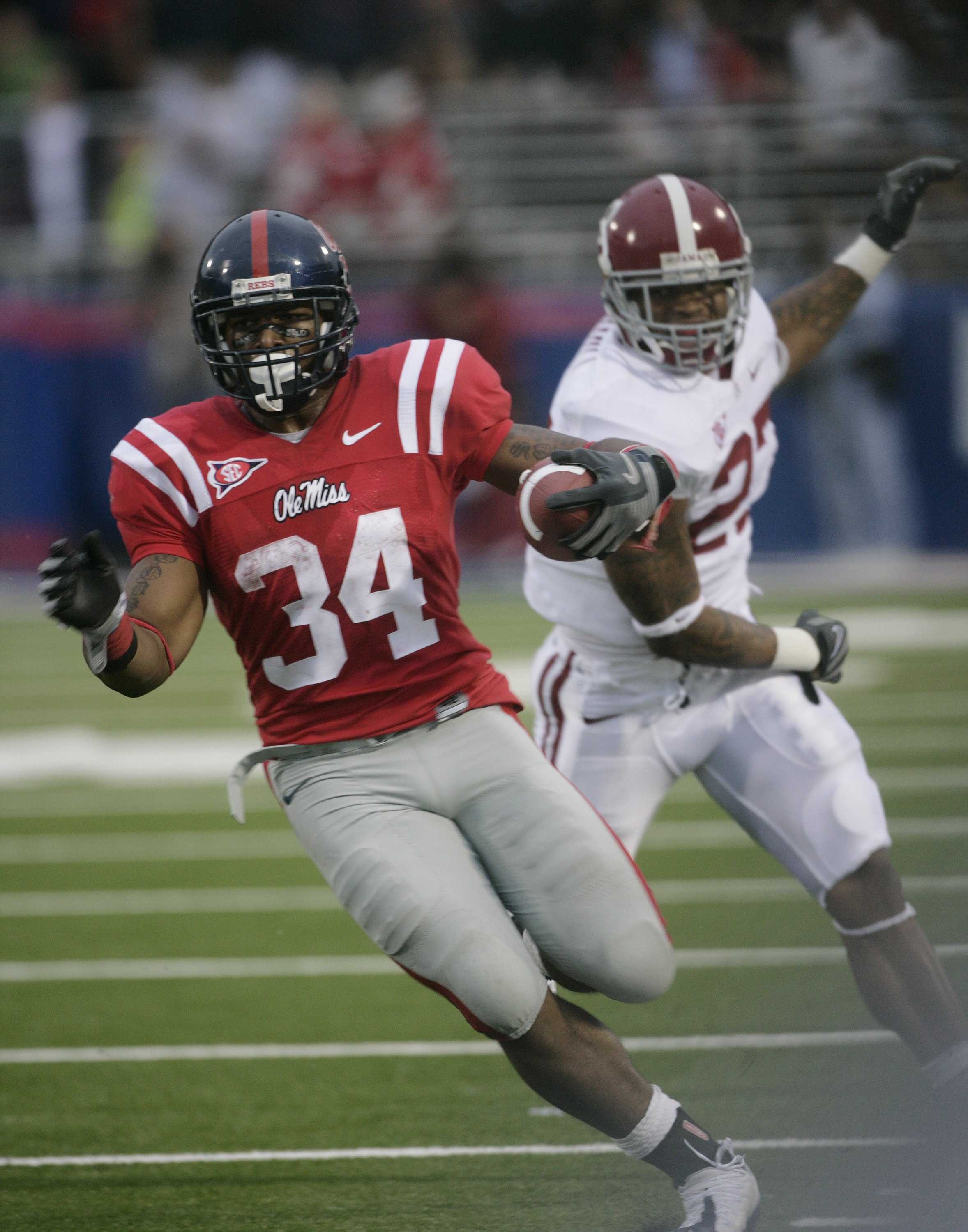
Akylin Dear is a consensus five-star running back from Quitman High School in Mississippi whose rare combination of contact balance, verified breakaway speed, and pass-catching versatility established him as the top running back prospect in the 2025 recruiting class and fundamentally reshaped modern positional evaluation standards.
The Rise of Mississippi's Premier Backfield Weapon
Historically, the state of Mississippi has produced iconic football talent, particularly at skill positions where raw athleticism meets an uncompromising, physical brand of football. From Walter Payton to contemporary college and professional stars, the Magnolia State maintains a distinct reputation for developing hard-nosed runners who thrive in adverse conditions. Akylin Dear, hailing from the small Clarke County town of Quitman, represents the latest and arguably most refined evolution of this tradition.
Dear did not rise to the top of national recruiting boards through polished seven-on-seven circuits alone. Instead, his national reputation was forged on Friday nights at Quitman High School, where he carried the Panthers program on his shoulders. Dominating Class 3A and 4A Mississippi High School Activities Association (MHSAA) competition, Dear routinely faced defensive fronts stacked with eight or nine defenders in the box. Despite opposing coaching staffs designing entire game plans around neutralizing him, Dear produced eye-popping weekly statistical outputs while demonstrating an advanced understanding of running lane mechanics, patience behind pulling linemen, and devastating open-field creativity.
What separated Dear early in his prep career was not merely his statistical dominance, but his physical presence. Listed at approximately 6-foot-0 and 205 pounds throughout his upperclassman prep seasons, he entered the national spotlight possessing the mature frame of a college sophomore. National recruiting networks, including 247Sports, On3, Rivals, and ESPN, quickly adjusted their boards as Dear consistently outpaced his peer group in both verified testing parameters and on-field functional movement.
Athletic Profile and Verified Physical Metrics
Modern talent evaluators no longer rely solely on high school highlight tapes. With the proliferation of verified track-and-field times, laser-timed shuttle drills, and high-resolution tracking data, prospects must substantiate their gridiron production with concrete athletic data. Dear’s athletic profile stands out because his verified metrics directly translate to functional football situations.
Size and Body Composition
Dear possesses a prototypical running back build characterized by a low center of gravity, thick lower base, and broad shoulders. This structural composition allows him to absorb direct contact from downhill linebackers without sacrificing balance or forward momentum. Unlike slender speed-backs who require clear lanes to operate, Dear creates his own yards after contact while maintaining the endurance required to shoulder 25 to 30 touches per contest.
Track Speed and Acceleration
A common pitfall in evaluating high school rushers is mistaking open-field track speed for functional game speed. Dear excels in both arenas. On the track, he posted verified sub-11.0-second 100-meter dash marks during his prep career—an exceptional feat for a back weighing over 200 pounds. This straight-line speed shows up on film when he hits the second level of a defense; angle-taking defensive backs routinely miscalculate his stride frequency, resulting in long-distance touchdown runs where he pulls away from pursuit angles.
Change of Direction and Lateral Agility
While straight-line acceleration creates explosive chunk plays, lateral agility determines down-to-down survivability between the tackles. Dear employs a dynamic jump-cut that functions with minimal deceleration. He can drop his hips, plant on his outside foot, and redirect into an adjacent gap without gathering himself. This short-area burst prevents backfield penetration from turning into lost yardage, turning negative-expectation blocking situations into positive gains.
On-Field Tape Breakdown: How Akylin Dear Wins
Evaluating Dear’s film reveals why he emerged as the consensus top-tier running back in the national 2025 cycle. His game is built on several complementary pillars that project cleanly to elite collegiate competition and future professional consideration.
Vision and Running Track Discipline
Elite running backs do not simply run fast; they set up second-level blocks by manipulating defensive leverage. Dear demonstrates advanced patience on zone-read, outside-zone, and gap-scheme concepts. Rather than sprinting directly into congested traffic, he presses the line of scrimmage, forcing inside linebackers to commit to an interior gap, before exploiting cutback lanes against the flow of the defense.
Zone Run Progression: Snap -> Mesh Point -> Press B-Gap -> Force LB Flow -> Jump-Cut to Cutback Lane -> Second-Level Acceleration
Elite Contact Balance and Pad Level
Contact balance is often described as an innate, unteachable trait. For Dear, it is his primary calling card. He naturally drops his pad level prior to impact, delivering blows rather than absorbing them. Secondary defenders attempting arm tackles or aiming at his waist frequently slide off his frame. Dear's core strength enables him to absorb glancing hits from interior defensive linemen, regain his footing with an active plant step, and continue moving forward for additional yards.
Receiving Capability and Third-Down Utility
The modern game has diminished the value of pure, two-down "plodders." Contemporary offensive coordinators require running backs who can remain on the field in pass-heavy situations, split out wide into the boundary, and run refined route trees against linebackers or safeties. Dear proved at Quitman and on the national camp circuit that he is a natural pass catcher with soft, reliable hands. He catches the ball away from his chest frame, transitions smoothly into a ball-carrier posture, and can execute option routes, wheel routes, and check-downs with polished efficiency.
High School Career Metrics and National Rankings Comparison
Dear's consistent ranking at the pinnacle of national recruiting classes stemmed from how favorably his profile compared to other top-rated rushers across recent recruiting cycles.
| Prospect Attribute | Akylin Dear | Traditional Top-5 RB Prospect | Positional Impact |
|---|---|---|---|
| Height / Weight | 6'0" / 205–210 lbs | 5'10" / 195 lbs | Above-average size with ideal collegiate durability |
| 100m Dash Baseline | Sub-11.0 seconds | 11.1–11.3 seconds | High-end breakaway speed relative to mass |
| Running Scheme Fit | Universal (Zone & Gap) | Scheme-dependent | Immediate versatility across multiple playbooks |
| Down-and-Distance Role | Three-down every-down back | Early-down or change-of-pace | Minimizes substitution predictability |
| Yards After Contact Avg. | Consistently elite (>4.5 YAC) | Moderate (3.0–3.8 YAC) | Generates explosive plays independent of blocking |
Dear’s dominance at Quitman included multiple games exceeding 200 rushing yards, single-game performances with five or more touchdowns, and significant defensive contributions when his team required situational support at safety or linebacker. His senior season cemented his status as a national blue-chip talent, earning him MHSAA Class 3A Mr. Football honors and inclusion on national All-American rosters.
The Recruitment: SEC Powerhouse Battles
Recruiting battles for top-tier Mississippi talent are famously intense, frequently characterized by fierce in-state competition between the Ole Miss Rebels and Mississippi State Bulldogs, alongside heavy pursuit from historic Southeastern Conference (SEC) powers like Alabama, Georgia, and LSU. Dear’s recruitment served as a masterclass in modern college football roster construction.
The In-State Tug-of-War
Early in his high school career, Lane Kiffin and the Ole Miss coaching staff made Dear a cornerstone priority for their offensive future. The Rebels secured an early verbal commitment from Dear in the spring of 2024, pitching him as the ultimate offensive weapon in Kiffin's high-tempo, space-oriented rushing scheme—a system that had recently elevated players like Quinshon Judkins to national stardom.
However, recruitment in the modern era rarely concludes with an early commitment. Program visits, coaching stability, schematic longevity, and roster depth charts continuously factor into a player’s ultimate decision leading up to the National Signing Day periods.
The Alabama Pursuit and Commitment Flip
Following the retirement of Nick Saban, new Alabama head coach Kalen DeBoer and his offensive staff—spearheaded by running backs coach Robert Gillespie—identified Dear as an indispensable priority to anchor their inaugural full recruiting class. Gillespie, renowned for his development of elite rushers like Jahmyr Gibbs and Jase McClellan, maintained persistent communication with the Quitman standout.
In the summer of 2024, Dear reopened his recruitment by decommitting from Ole Miss. Shortly thereafter, following pivotal campus visits to Tuscaloosa, Dear officially committed to the University of Alabama. The Crimson Tide successfully demonstrated how Dear’s downhill, physical style meshed with DeBoer’s explosive, spread-pro offensive philosophy, proving that the program's elite talent-acquisition engine remained fully operational under new leadership.
How Dear Redefined Positional Evaluation Criteria
For years, the running back position experienced a documented de-emphasis in high-value asset allocation, both at the NFL level and in recruiting circles. Analytics-driven evaluators argued that offensive line play and scheme design dictated rushing success far more than individual ball-carrier talent. Dear’s emergence directly challenged this paradigm, forcing scouts and recruiting analysts to modernize how they assess running back value.
1. The Death of the "System-Dependent" Label
Scouts previously categorized rushers into rigid archetypes: gap/power runners, one-cut zone runners, or third-down satellite backs. Dear demonstrated that an elite modern prospect must execute all three roles at an advanced level before stepping onto a college campus. By proving capable of running power concepts between the tackles, executing wide zone plays to the perimeter, and aligning as an empty-set receiver, Dear altered the baseline checklist for five-star status.
2. Physical Durability Without Heavy Mileage
A critical concern when evaluating high-volume high school running backs is the structural mileage accumulated over three to four varsity seasons. Many high-profile recruits enter college football with lingering soft-tissue wear or joint issues from handling 300+ carries annually. Quitman High School managed Dear’s workload intelligently, utilizing him in critical moments while relying on complementary backfield options during lopsided contests. Evaluators recognized Dear as a prospect possessing peak athletic freshness with substantial untapped growth potential.
3. Immediate Scheme Translation
Dear’s tape revealed collegiate-level footwork mechanics. In high school, many elite athletes get by simply outrunning slower peers around the edge, building bad habits that result in immediate struggles against college defensive ends who set a hard edge. Dear, conversely, consistently demonstrated mature micro-movements: pressing the line to set up his offensive tackles, keeping his shoulders square through contact, and maintaining two hands on the football in heavy traffic.
Offensive Scheme Fits and College Transition
Stepping into an elite college football program involves significant systemic adjustment. The speed of linebackers, the complexity of pre-snap defensive fronts, and the demands of pass protection represent steep learning curves for any true freshman.
Pass Protection Responsibilities
The primary barrier preventing talented young running backs from earning immediate playing time is pass protection. High school rushers are rarely asked to identify blitzing nickelbacks or step up into the "A-gap" to absorb a 240-pound charging middle linebacker.
Dear’s physical frame gives him an innate advantage in pass-pro assignments. His thick base provides an anchor against bull-rush attempts, and his high school coaching emphasized scanning from inside-out against defensive line stunts. Mastering defensive recognition under college offensive coordinators is the final technical bridge Dear must cross to secure an immediate, high-volume role.
Maximizing the RPO (Run-Pass Option) Game
Modern college football offenses leverage Run-Pass Option (RPO) concepts to put defensive coordinators in conflict. Dear is a nightmare matchup in RPO schemes:
- If the Linebacker Drops: The quarterback hands the ball to Dear, who attacks a light box with a numerical advantage.
- If the Linebacker Crashes: The quarterback pulls the ball and hits a receiver in the vacant throwing lane.
- If the Defense Plays Man-to-Man: Dear can flare out into the flat, creating an isolated one-on-one open-field matchup against a defender at an athletic disadvantage.
Tactical Film Breakdown: An Inside-Zone Scenario
To understand why national ranking committees placed Dear in the top tier, consider his execution of a basic Inside-Zone run against a shaded front:
Defensive Front: Over Front (3-Technique to Field, 1-Technique to Boundary) Offensive Play: Inside Zone Left 1. Pre-Snap: Dear aligns at 5.5 yards depth, offset to the quarterback's right. 2. Snap: Dear takes a lateral crossover step toward the aiming point (inside leg of the playside guard). 3. The Read: The playside defensive tackle penetrates slightly upfield, attempting to disrupt the pull. 4. Execution: Rather than bouncing outside prematurely, Dear presses his track right into the back of the double-team block. 5. The Cut: Seeing the Mike linebacker commit to the A-gap, Dear drops his hips and executes a 45-degree cutback into the B-gap. 6. The Finish: He absorbs contact from a pursuing safety at yard 4, drives his knees forward through the collision, and finishes the run at yard 11.
This sequence represents why college coaches view Dear as an immediate-impact asset. He creates positive offensive efficiency on plays where the defense technically executed their initial run-fit assignments.
Frequently Asked Questions
What makes Akylin Dear different from other top running backs?
Dear combines the physical build of a traditional between-the-tackles power back with verified track speed (sub-11.0 100m) and natural pass-catching ability. While many running back prospects specialize in either downhill power or perimeter speed, Dear operates across all downs without necessitating schematic changes or rotational substitutions.
Where did Akylin Dear play high school football?
Dear played for the Quitman High School Panthers in Quitman, Mississippi. He led the program through MHSAA Class 3A and 4A competition, earning numerous statewide accolades, including Class 3A Mr. Football recognition.
What are Akylin Dear’s physical measurements?
Entering his collegiate career, Dear measures approximately 6-foot-0 and weighs between 205 and 210 pounds. This height-to-weight ratio provides ideal structural mass for absorbing SEC-level defensive contact while preserving his lateral quickness.
Which college did Akylin Dear ultimately commit to?
After originally committing to the Ole Miss Rebels in March 2024, Dear reopened his recruitment in June 2024 and officially committed to the Alabama Crimson Tide in August 2024, representing a major recruiting victory for head coach Kalen DeBoer and running backs coach Robert Gillespie.
How does Akylin Dear project for the NFL Draft in the future?
While several seasons of collegiate development remain ahead, Dear’s profile aligns with early-round NFL running back selections: three-down versatility, verified explosive testing numbers, minimal structural wear from prep usage, and elite contact balance that translates across offensive systems.
Verifying Prospect Projections: Strategic Next Actions
For college football analysts, recruiting followers, and talent scouts evaluating running back recruits against the standard established by Akylin Dear, focus on the following evaluation steps:
- Prioritize Verified Athletic Baselines: Do not rely exclusively on self-reported heights, weights, or 40-yard dash times. Prioritize verified track marks (100m, 200m), regional combine shuttle drills, and electronic laser measurements.
- Evaluate Yards After Contact (YAC): Watch full game film rather than curated highlight packages to verify how a prospect performs when blocking breaks down. Top-tier prospects consistently generate 3.5 to 5.0 yards after initial defensive contact.
- Assess Pass-Protection Engagement: True collegiate readiness depends on a running back's willingness and technique when picking up blitzing defenders. Prospect rankings should heavily penalize rushers who show reluctance or poor technique in pass-blocking sets.
Akylin Dear's rise from small-town Mississippi to the peak of national recruiting boards confirms that when elite physical metrics, refined football IQ, and three-down versatility converge, the running back position remains one of the most game-changing assets on the gridiron.