When an airline emergency occurs, the primary objective of the flight crew is to ensure the preservation of life and the safety of the aircraft through standardized, rigorous emergency protocols. Passengers play a critical role by remaining calm, following flight attendant instructions immediately, and adhering to established safety procedures to facilitate efficient cabin evacuations or hazard mitigation.
Understanding the Definition of an Airline Emergency
In the aviation industry, an emergency is not a singular event but a tiered classification system determined by the severity of the threat. The International Civil Aviation Organization (ICAO) and individual national aviation authorities, such as the Federal Aviation Administration (FAA) in the United States or the European Union Aviation Safety Agency (EASA), define these situations based on the status of the aircraft and its occupants.
An "in-flight emergency" typically falls into one of two categories. The first is an urgency situation, where the aircraft and its occupants are not in immediate danger, but the situation requires priority handling by Air Traffic Control (ATC). This could include a medical emergency involving a passenger or a minor mechanical issue that does not compromise flight control. The second category is a distress situation, which implies that the aircraft or its occupants are threatened by serious and/or imminent danger and require immediate assistance. Examples include engine failure, loss of cabin pressure, smoke or fire in the cabin, or severe structural damage.
The Chain of Command and Communication
The flight deck operates under a strict hierarchy. During an emergency, the Captain is the final authority. While the First Officer assists in flying the aircraft and managing systems, the Captain oversees decision-making regarding flight path, potential diversions, and emergency declarations.
Communication is split into two primary streams: internal and external. Internally, the flight deck communicates with cabin crew via the interphone system. Cabin crew are trained to receive specific "brace" commands or instructions to prepare the cabin for landing or evacuation. Externally, the flight crew uses the "Mayday" or "Pan-Pan" radio calls. "Mayday" is the international distress signal indicating an immediate threat to life, while "Pan-Pan" indicates a state of urgency that does not immediately threaten life but requires priority handling.
Passenger Preparation: The Brace Position and Safety Briefings
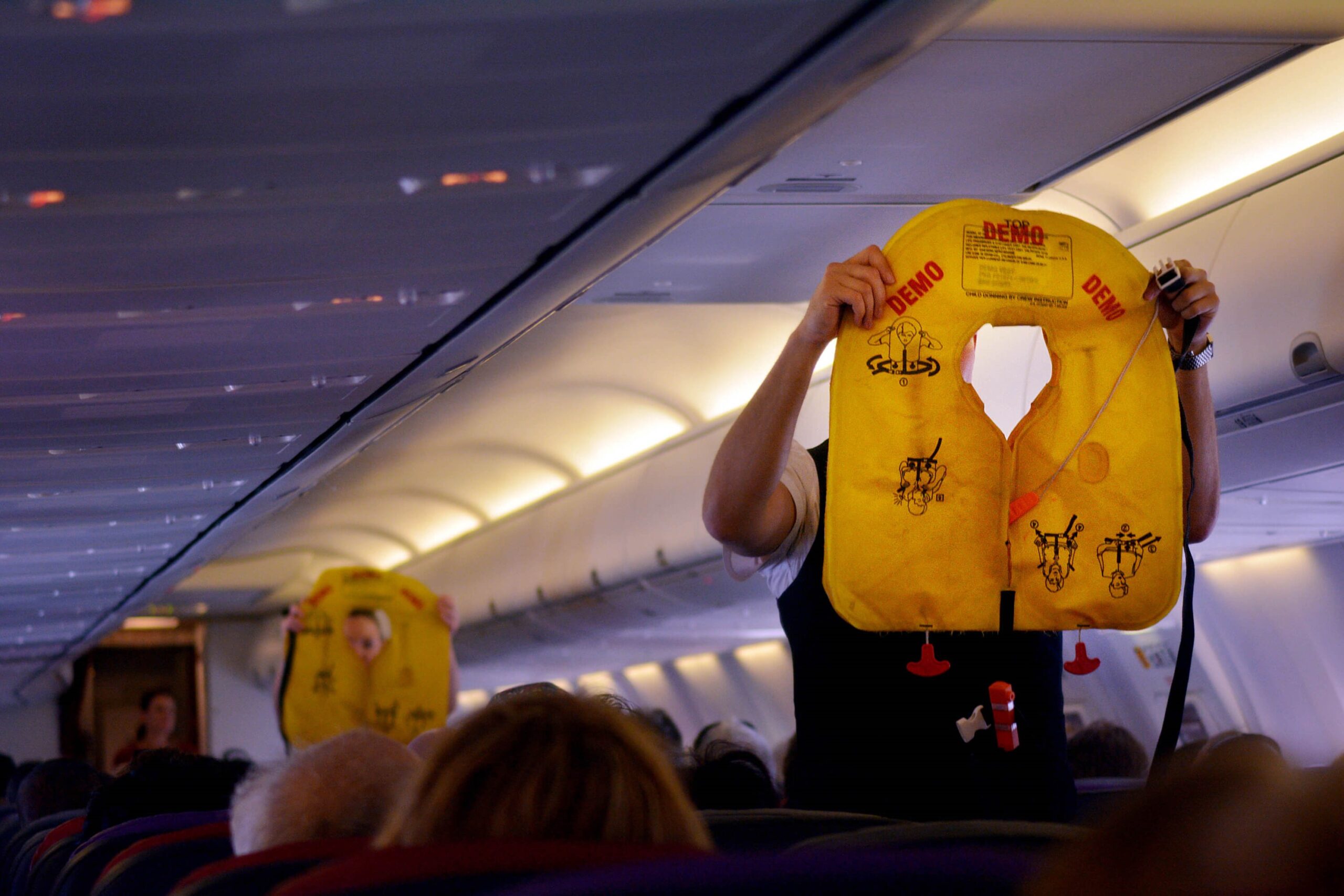
The most common safety measure passengers encounter during a pre-flight briefing is the safety card, which contains specific diagrams regarding emergency exits and the "brace position." Understanding these requirements before an emergency occurs is vital for personal safety.
The brace position is designed to minimize injury during an impact. By tucking the head down and holding the seat in front or the legs, passengers reduce the risk of flailing limbs and blunt force trauma to the head. It is important to note that the exact brace position can vary by aircraft type and seat configuration; always prioritize the specific instructions given by the flight crew if a landing is imminent.
| Procedure | Purpose | Key Action |
|---|---|---|
| Brace Position | Minimize impact injuries | Head down, feet flat, hands secured |
| Oxygen Mask | Prevent hypoxia | Secure over nose/mouth before helping others |
| Emergency Exit | Rapid egress | Check for fire/obstructions before opening |
| Life Vest | Flotation | Do not inflate inside the cabin |
Managing In-Flight Medical Emergencies
Not all airline emergencies involve the flight path of the aircraft. Medical emergencies are the most frequent type of incident encountered in-flight. Airlines are required by aviation authorities to carry specific medical kits, including Automated External Defibrillators (AEDs), basic first-aid supplies, and occasionally advanced cardiac medication.
When a medical crisis occurs, the flight attendants—who are trained in basic life support and identifying symptoms—will assess the patient. They may reach out to passengers who are medical professionals (doctors or nurses) to assist. If the situation is severe enough to exceed the capabilities of the onboard crew, the flight crew will communicate with ground-based medical consultation services. Based on this expert advice, the Captain may decide to divert the aircraft to the nearest suitable airport to ensure the passenger receives professional medical care.
Technical Procedures: Smoke, Fire, and Pressurization
Smoke and fire are considered the most dangerous scenarios in an aviation environment. Flight crews are trained to identify the source of smoke immediately. If the source is an electrical component, the crew will isolate the circuit. If the fire is in a lavatory or galley, they use specialized fire extinguishers and fire-retardant gloves.
Decompression is another critical event. If the cabin pressure drops, oxygen masks are designed to deploy automatically from overhead compartments. The primary rule here is to secure one’s own mask first before attempting to assist children or other passengers. Hypoxia—the lack of oxygen to the brain—can occur rapidly at high altitudes, impairing a passenger's ability to think clearly or react in time.
The Evacuation Process
If an aircraft must be evacuated on the ground, the flight attendants manage the flow of passengers to the exits. Passengers are instructed to leave all carry-on luggage behind. This is not merely a policy—it is a life-safety requirement. Luggage items block the narrow aisles, can puncture evacuation slides, and significantly slow down the speed at which a plane can be emptied.
Once at the exit, passengers should follow the commands to jump onto the slide. The landing zones at the bottom of the slides are designed to be managed by the crew or ground responders, ensuring that the exit remains clear for those following.
Common Misconceptions Regarding Airline Safety
A frequent point of confusion among passengers is the belief that they can override safety instructions if they feel they know better. In an emergency, uniformity is the priority. When a flight attendant directs a passenger to move to a specific seat, relinquish an item, or adopt a certain posture, it is because that individual’s action is part of the coordinated plan to keep the entire cabin safe.
Another common question concerns the use of mobile devices. During an emergency, electronic devices are restricted to ensure that all passengers are focused on safety instructions rather than communication with people outside the aircraft, which could cause panic or misinformation.
Frequently Asked Questions
1. What should I do if I notice smoke in the cabin? Inform a flight attendant immediately. Do not attempt to investigate it yourself. The crew is trained to handle fire threats using equipment specifically rated for the aircraft environment.
2. Should I help other passengers if the oxygen masks drop? Only after you have secured your own mask. If you become hypoxic, you are unable to help yourself or anyone else, effectively becoming a casualty of the emergency rather than a participant in the solution.
3. Why must I leave my bags behind during an evacuation? Personal items are the leading cause of "bottlenecking" in cabin aisles. Every second saved in an evacuation increases the statistical likelihood of survival for everyone on board.
4. Can I choose to ignore the brace position instructions? No. The brace position is calculated based on the specific aerodynamics and interior crash-test simulations of your particular aircraft. Deviating from these instructions significantly increases the risk of serious injury during an emergency landing.
5. How are pilots trained for emergency scenarios? Pilots undergo mandatory, recurring simulator training every six to twelve months. This training requires them to practice engine failures, fire incidents, and landing under extreme conditions until the responses become instinctive.
6. Is an emergency landing always dangerous? Many emergency landings are handled as "precautionary" events. The flight crew will land the plane at a suitable airport to check a minor system error or ensure a passenger’s health, meaning the landing itself is usually performed under controlled, standard conditions.
Final Next Actions
If you are a frequent flyer, familiarize yourself with the "Safety Information" card located in your seat pocket before the flight takes off, regardless of how many times you have flown. Locate your nearest emergency exit and identify the rows between you and that exit. In the unlikely event of an emergency, your preparedness will allow you to act decisively, minimize panic, and follow the crew’s instructions, which is the single most effective way to ensure your safety and the safety of those around you.